Artwork
Bas-relief portion of frieze of Genii with double flutes and lyre
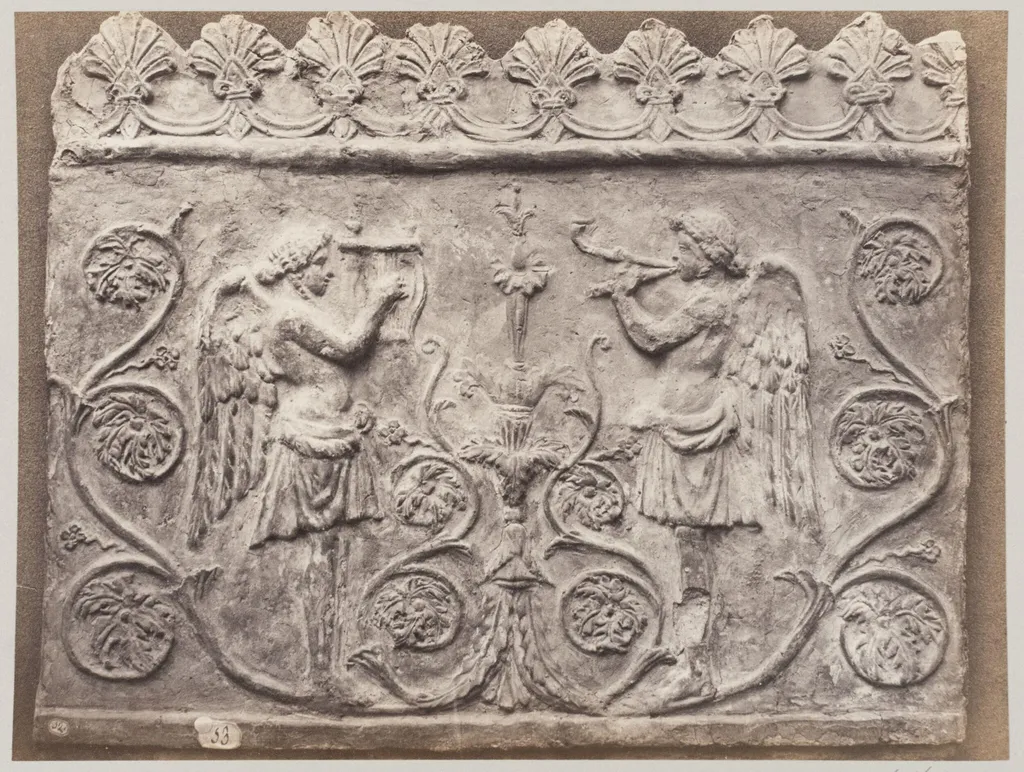
Bas-relief portion of frieze of Genii with double flutes and lyre is a photographic photography by the Impressionist artist Louise Laffon. It dates from 1864 and is held in the collection of the Victoria and Albert Museum.
About this work
It’s a bas-relief portion of a frieze showing figures playing double flutes and a lyre.
Louise Laffon made this photo between 1863 and 1864. It’s a bas-relief portion of a frieze showing figures playing double flutes and a lyre. The work sits in the Impressionist and Realist movements.
The Victoria and Albert Museum has collected photographs since the 1850s. Founding director Henry Cole saw early how photos could help artists and students.
See how Laffon combined sculpture and photography. Next, look up Laffon, Louise.
Overview
This black‑and‑white photograph, taken by Louise Laffon between 1863 and 1864, records a fragment of a classical bas‑relief frieze. The carved panel depicts a group of genii engaged in music, each holding a double flute while a central figure plays a lyre. The image forms part of the Victoria and Albert Museum’s historic photographic collection.
Subject & Meaning
The relief illustrates mythological musicians, a common motif in ancient decorative art that symbolised harmony and divine inspiration. By presenting the instruments together, the composition emphasizes the collective nature of music-making and its association with the celestial realm.
Technique & Style
Laffon employed the wet‑collodion process, the prevailing photographic method of the 1860s, to capture fine detail of the stone carving. The careful lighting highlights the shallow depth of the bas‑relief, rendering the sculptural lines with clarity while preserving the tonal range of the original marble.
History & Provenance
The original relief belonged to the Campana Collection, displayed at the Musée Napoléon III in Paris (now the Louvre). In 1864 the Victoria and Albert Museum acquired 500 photographs of Campana objects from Laffon through the dealer Monsieur E. Cappe, adding this image to its early photographic holdings.
Context
Collected shortly after the museum’s 1852 decision to acquire photographs, the work reflects the institution’s early commitment to using photography as a teaching resource. Laffon, one of the first women admitted to the Société Française de la Photographie, contributed to this educational mission by documenting artworks for scholars and artists.
Artist & collection
Artist
Louise Laffon (1828–1885), was a French photographer and painter. She was one of the first female professional photographers in France. She had a studio in Paris between 1859 and 1876.

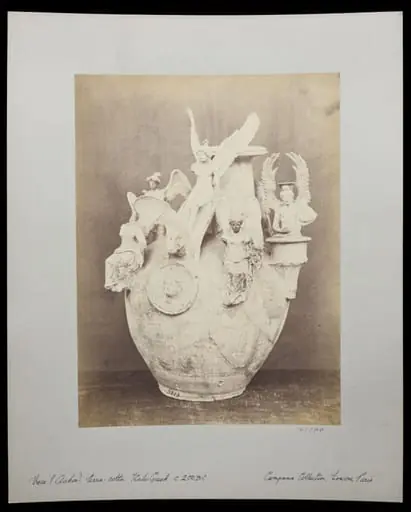 Perfume Burner in terra cotta
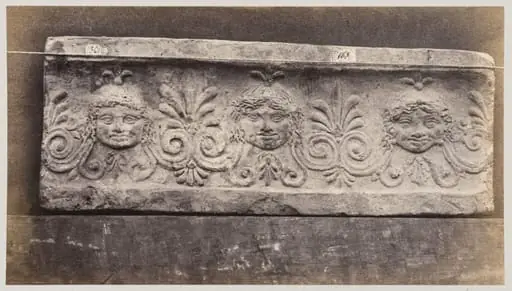 Three masques of gorgons in terra cotta
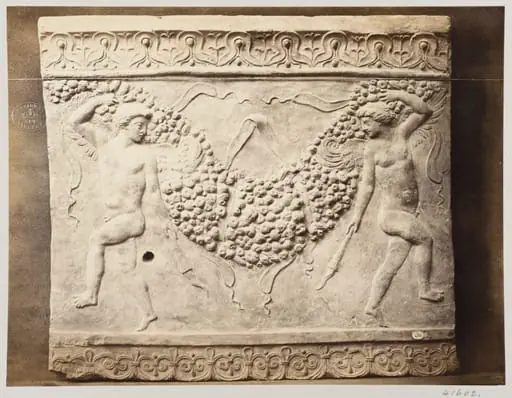 Bas-relief of portion of frieze of dancing figures with torches bearing festoon of fruit in terra cotta
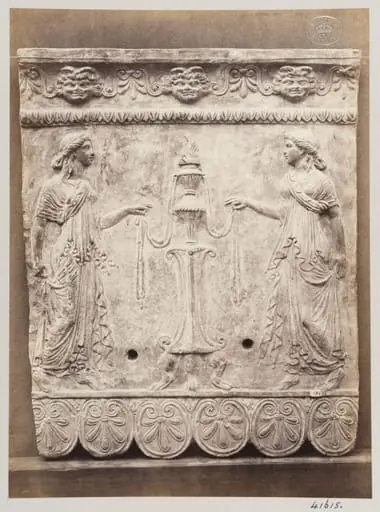 Bas-relief portion of a frieze of two draped females and an altar in terra cotta
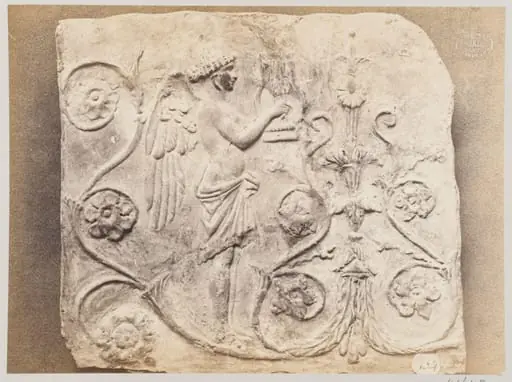 Bas-relief of a geni and a lyre in terra cotta
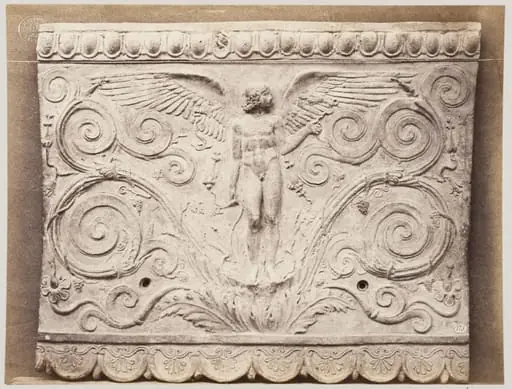 Bas-relief of a portion of frieze of Eros with scrollwork in terra cotta
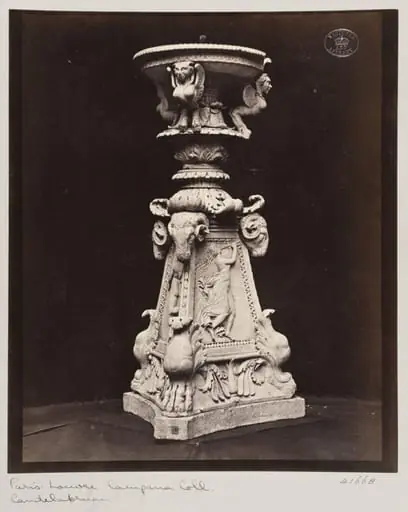 Marble sculptured fountain
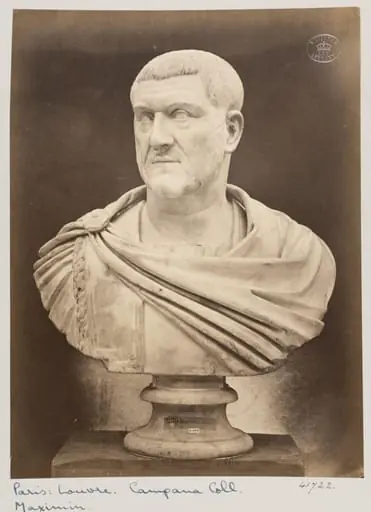 Marble bust of the Emperor Maximian
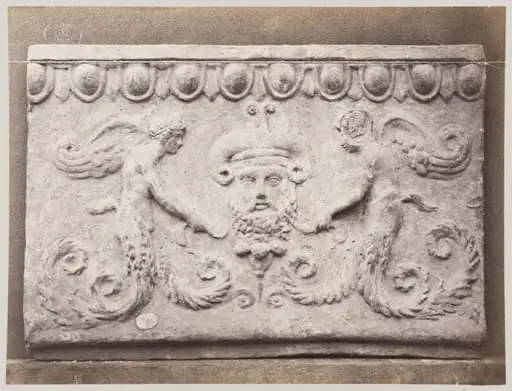 Bas-relief portion of frieze of masque of Ammon and genii in terra cotta
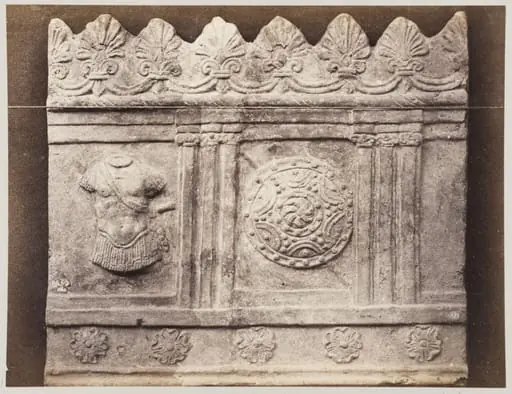 Bas-relief portion of a frieze of with trophies in terra cotta
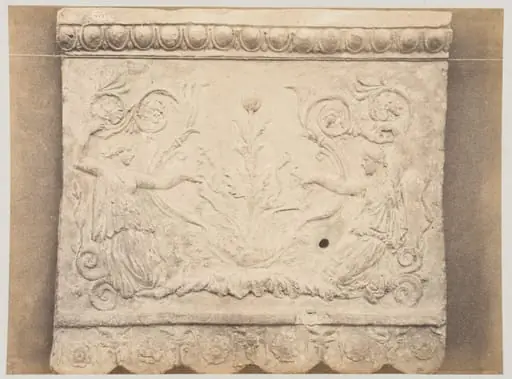 Bas-relief portion of frieze of nymphs with scrollwork in terra cotta
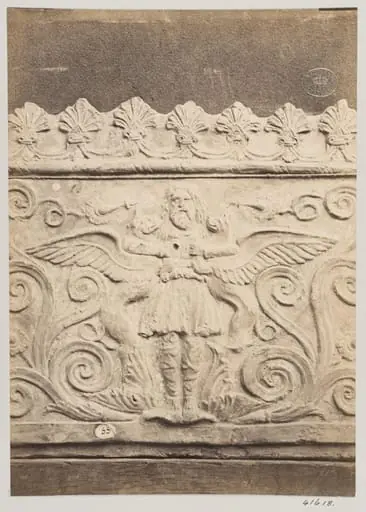 Bas-relief portion of a frieze of a flying genie in terra cotta
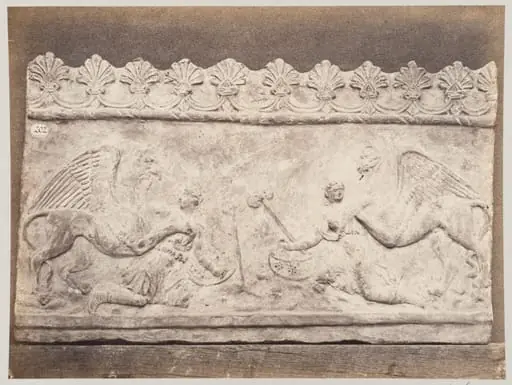 Bas-relief portion of a frieze of a battle with griffons and amazons in terra cotta
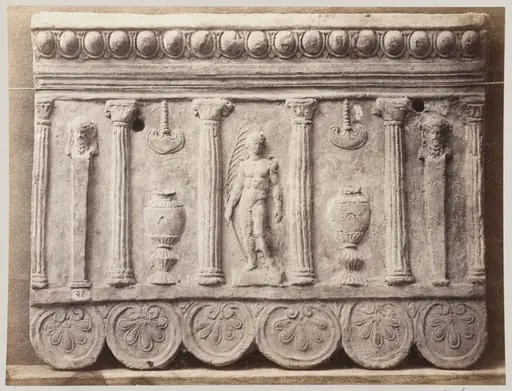 Bas-relief portion of a frieze of Hercules the conqueror in terra cotta
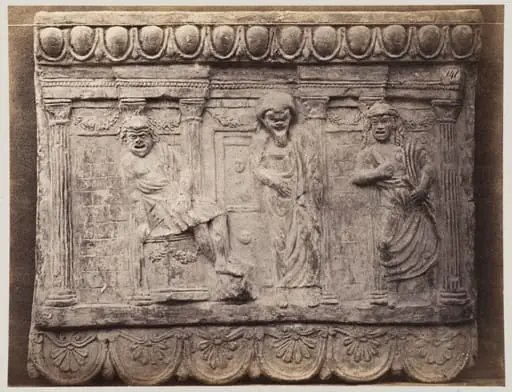 Bas-relief portion of frieze with three comic figures in terra cotta
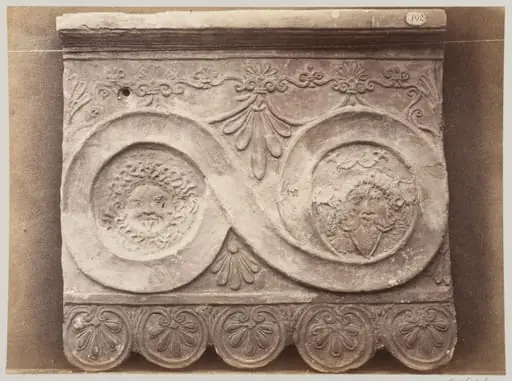 Bas-relief portion of a frieze of scrollwork with masks in terra cotta
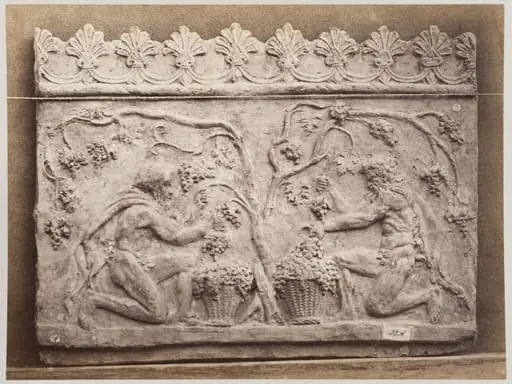 Bas-relief portion of a frieze of two satyrs in terra cotta