Artwork
Marble bust
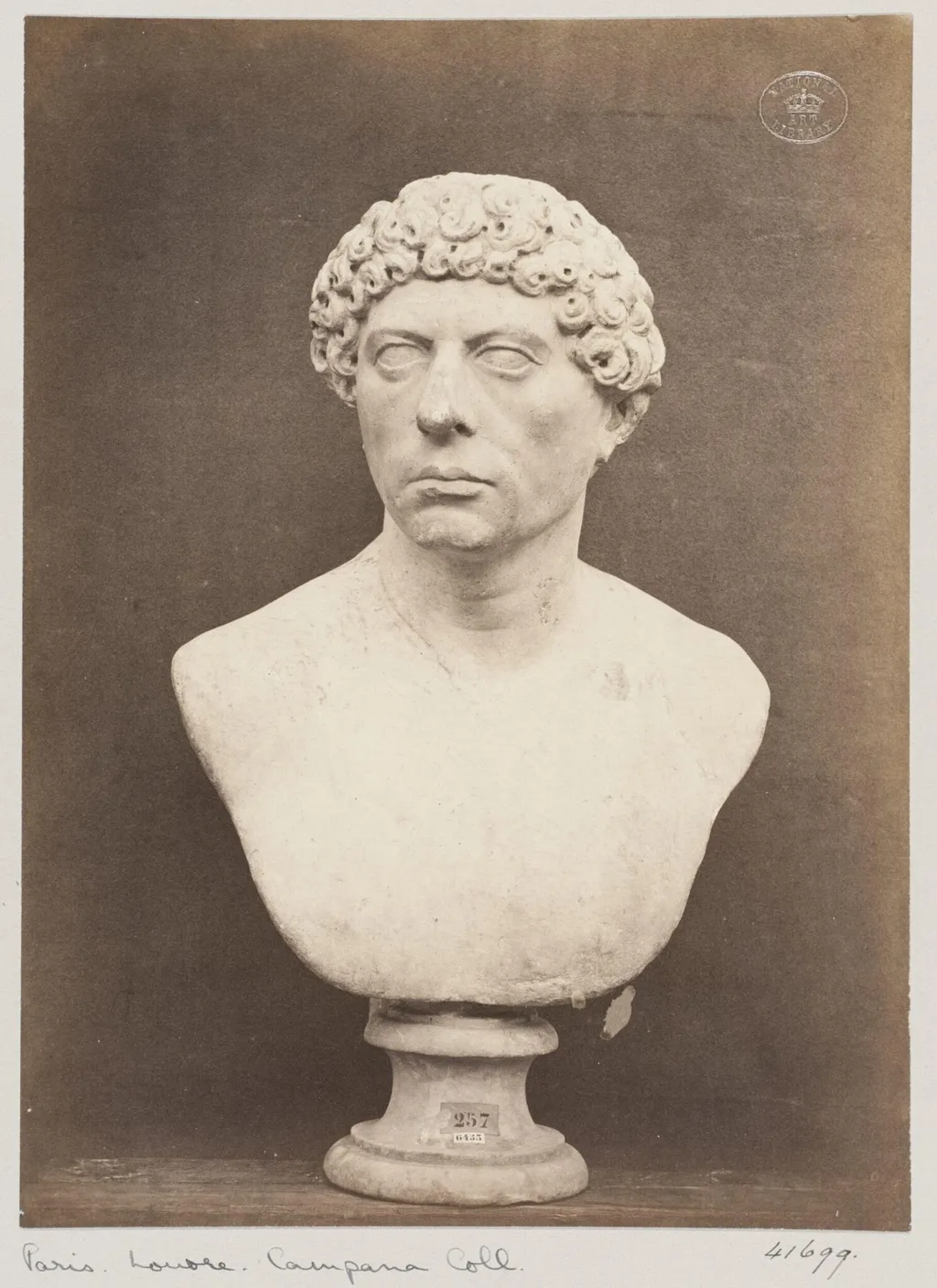
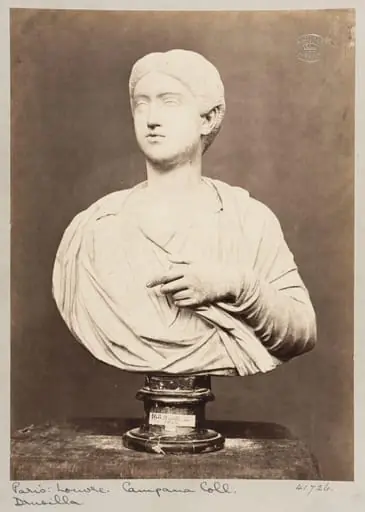
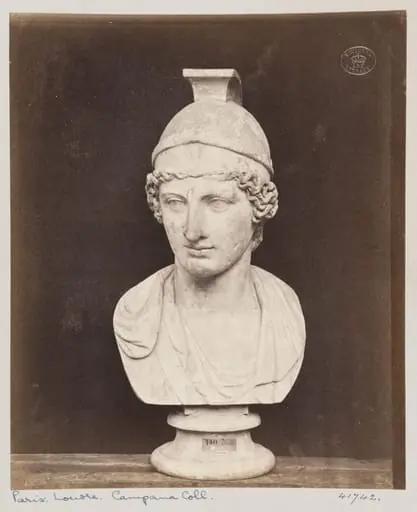
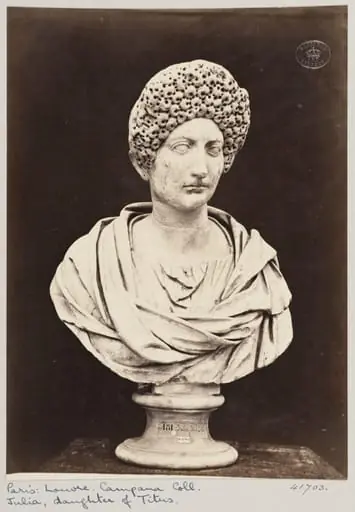
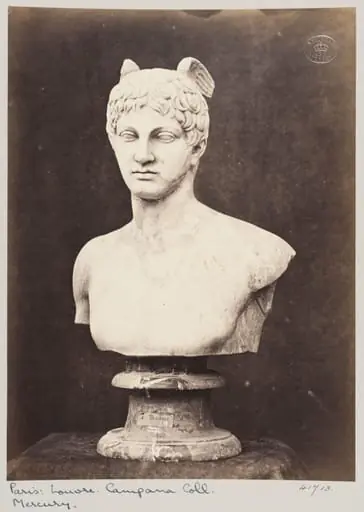
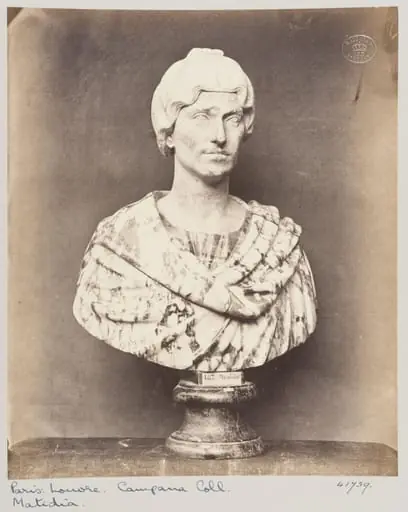
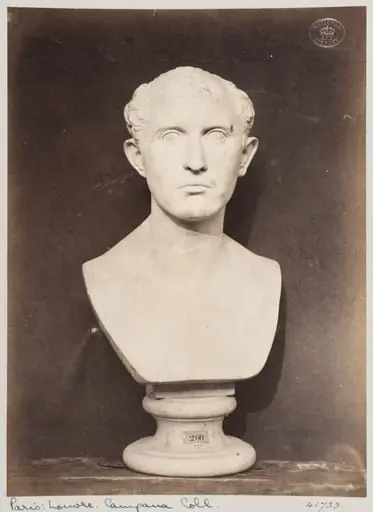
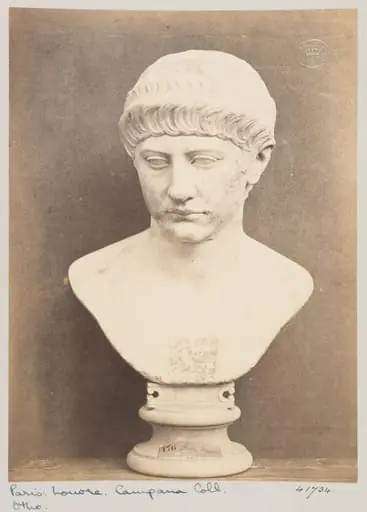
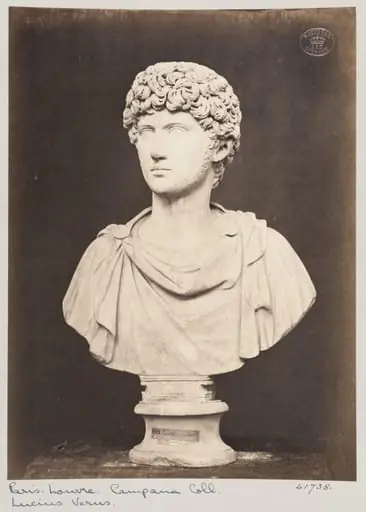
Marble bust is a photographic photography by the Impressionist artist Louise Laffon. It dates from 1864 and is held in the collection of the Victoria and Albert Museum.
About this work
This is a 1863–64 photo of a marble bust. It’s by Louise Laffon, a French photographer. The work sits between Impressionism and Realism.
The Victoria and Albert Museum started collecting photos in 1852. It was the first museum to do both: collect and later display them. That’s pretty unusual for its time.
Check out the Victoria and Albert Museum next.
Overview
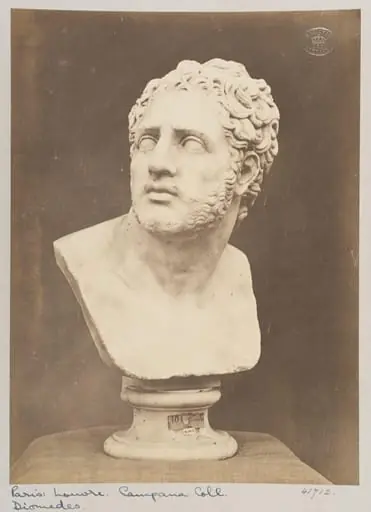
This photograph, taken between 1863 and 1864, captures a marble bust from the Campana Collection. Produced by French photographer Louise Laffon, it was acquired by the Victoria and Albert Museum in 1864 as part of a larger purchase of 500 images. The work reflects the museum’s early commitment to using photography as a documentary and educational tool, rather than as fine art.
Subject & Meaning
The subject is a classical marble bust, likely from antiquity or a Renaissance revival, preserved here through photographic reproduction. Its selection for documentation underscores the museum’s interest in disseminating access to sculptural forms for study. The image serves not as a standalone artwork but as a record meant to support academic and artistic training across Europe.
Technique & Style
Laffon’s approach combines precise detail with subtle tonal gradations, characteristic of mid-19th-century photographic practice.
Laffon’s approach combines precise detail with subtle tonal gradations, characteristic of mid-19th-century photographic practice. The lighting is even and controlled, emphasizing form over atmosphere. While not overtly impressionistic, the softness of the gelatin silver print suggests a move away from rigid documentation toward a more nuanced visual language aligned with emerging realist sensibilities.
History & Provenance
The photograph was part of a series Laffon produced for the Musée Napoléon III in Paris, documenting objects from the Campana Collection. In 1864, the V&A acquired 500 of these images through Parisian agent E. Cappe. Laffon, one of the earliest female members of Le Société Française de la Photographie, contributed to institutional efforts to build visual archives, though her role remained largely unacknowledged until recent scholarship.
Context
At the time, the V&A was pioneering the use of photography in museum education, beginning its collection in 1852 and staging the first public exhibition of photographs in 1858. Under Henry Cole’s leadership, photographs were treated as essential teaching aids, supplementing casts and drawings. Laffon’s work entered this system as part of a broader international network of image exchange between institutions.
Legacy
Laffon’s contribution highlights the often-overlooked role of women in early institutional photography. Her images helped shape how classical sculpture was studied and reproduced in the 19th century. Though her name faded from public view, her photographs remain part of the V&A’s foundational archive, illustrating how photography became integral to the museum’s educational mission.
Artist & collection
Artist
Louise Laffon (1828–1885), was a French photographer and painter. She was one of the first female professional photographers in France. She had a studio in Paris between 1859 and 1876.

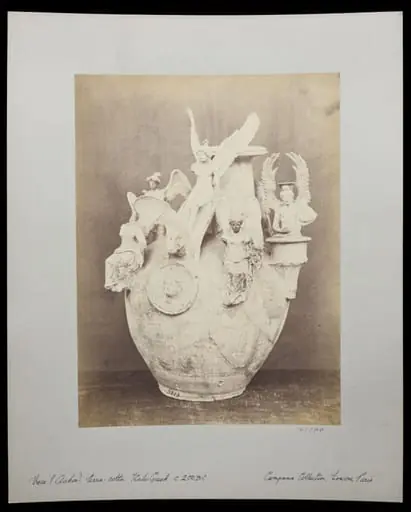 Perfume Burner in terra cotta
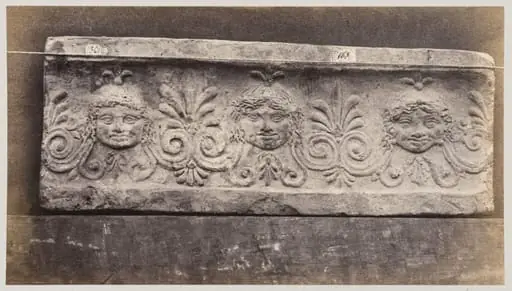 Three masques of gorgons in terra cotta
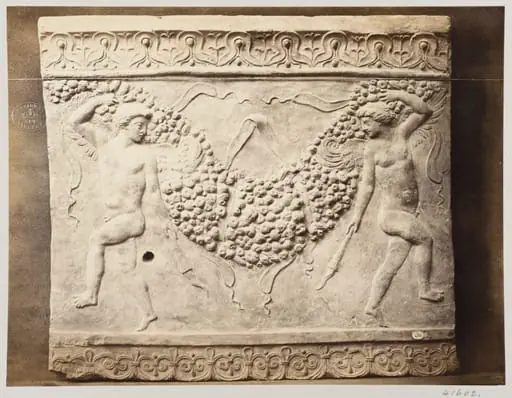 Bas-relief of portion of frieze of dancing figures with torches bearing festoon of fruit in terra cotta
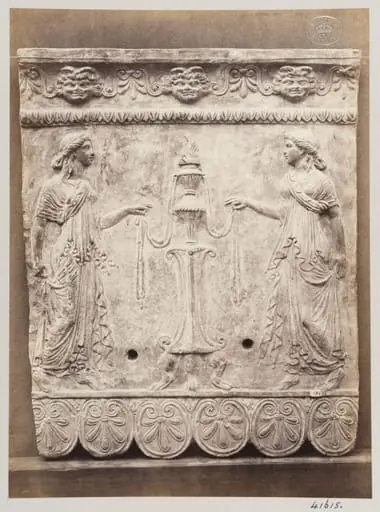 Bas-relief portion of a frieze of two draped females and an altar in terra cotta
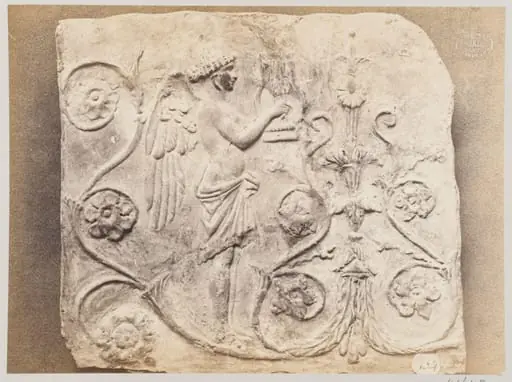 Bas-relief of a geni and a lyre in terra cotta
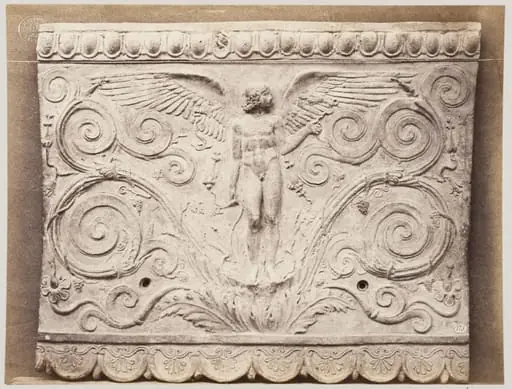 Bas-relief of a portion of frieze of Eros with scrollwork in terra cotta
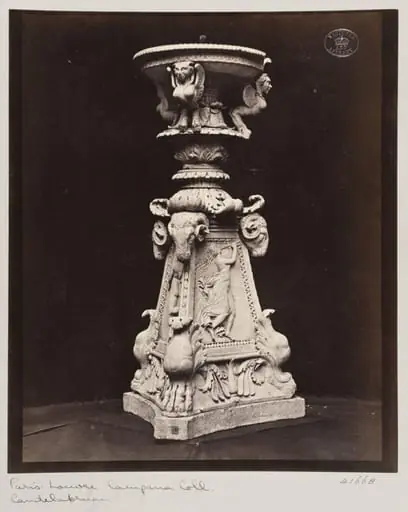 Marble sculptured fountain
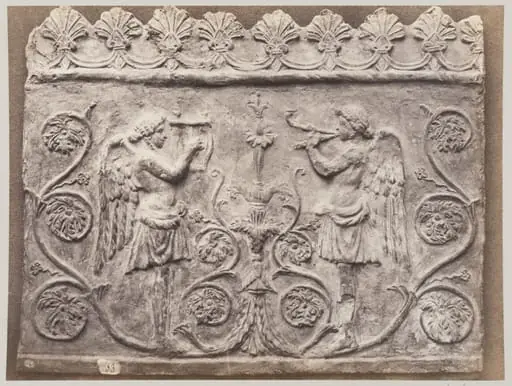 Bas-relief portion of frieze of Genii with double flutes and lyre