Artwork
Battle of the Romans with Pyrrhus
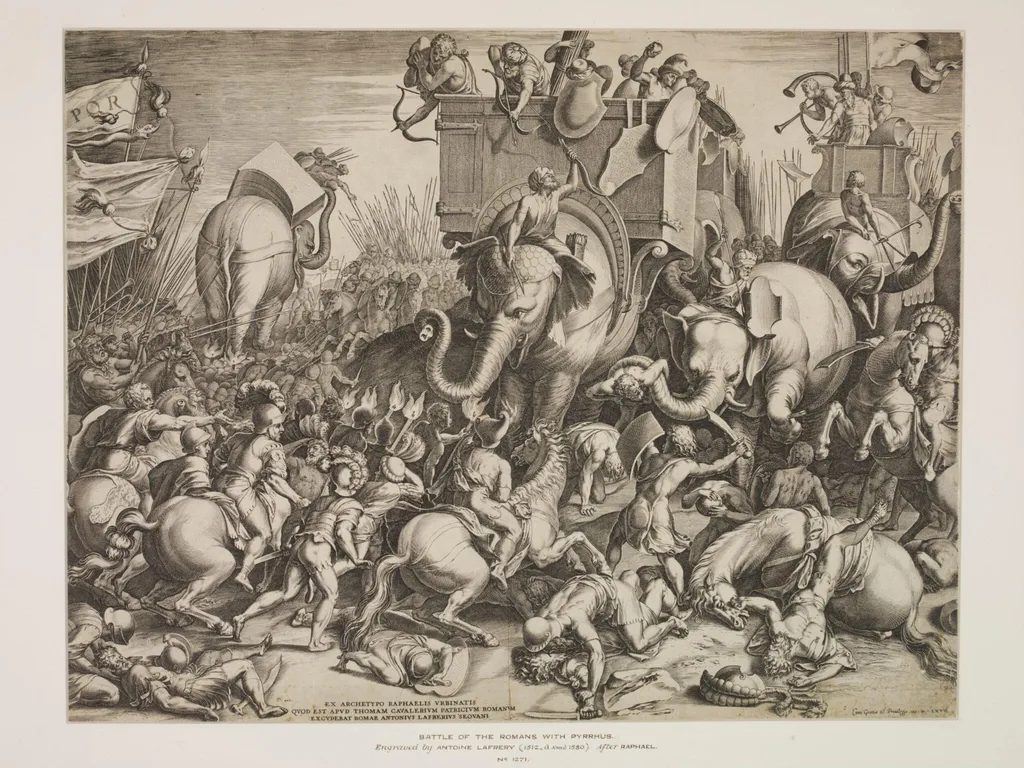
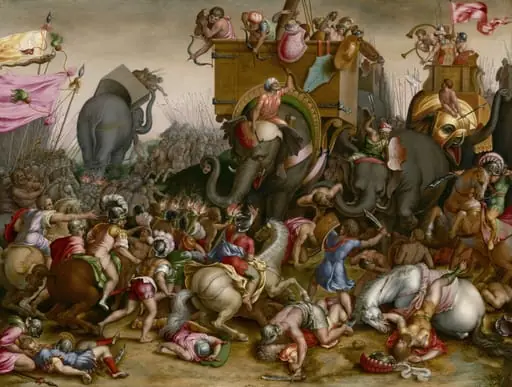
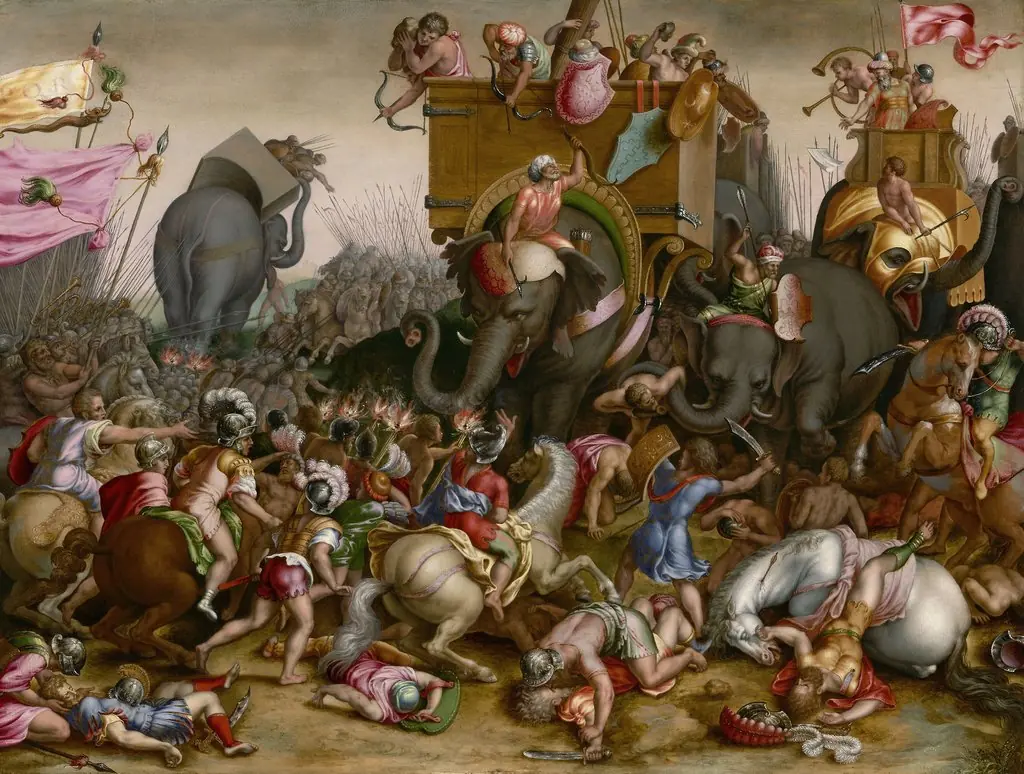
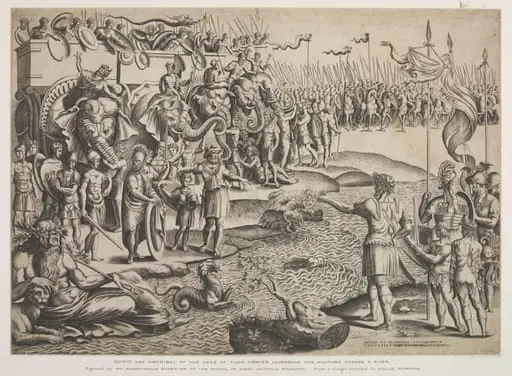
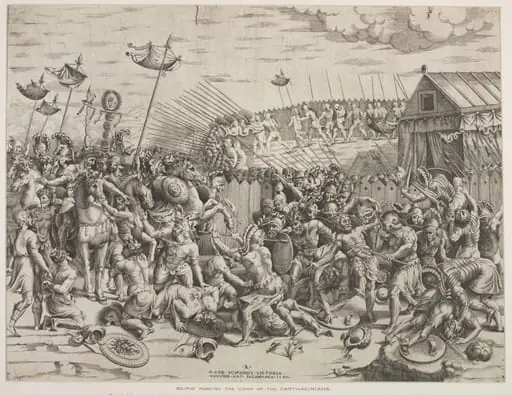
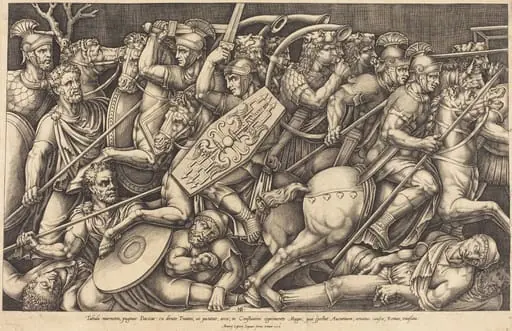
Battle of the Romans with Pyrrhus is a print by the Renaissance artist Antonio Lafréry. It dates from 1525 and is held in the collection of the Victoria and Albert Museum. This print captures a battle between Roman troops and the army of Pyrrhus of Epirus, derived from a design once attributed to Raphael.
About this work
Overview
The work reflects the Renaissance practice of disseminating major artistic ideas through printmaking, allowing broader access to complex historical narratives.
This print captures a battle between Roman troops and the army of Pyrrhus of Epirus, derived from a design once attributed to Raphael. Created as a reproductive engraving on paper, it translates a lost or unverified painted composition into a detailed linear format. The work reflects the Renaissance practice of disseminating major artistic ideas through printmaking, allowing broader access to complex historical narratives.
Subject & Meaning
The scene portrays the chaos of ancient warfare, emphasizing the clash between disciplined Roman legions and Pyrrhus’s forces, which included war elephants. Fallen soldiers, broken weapons, and panicked animals underscore the brutality of conflict. Figures on elevated structures observe the carnage, suggesting a detached, almost theatrical framing of historical violence. The composition conveys the scale and disorder of battle without glorifying any side.
Technique & Style
Fine, dense lines create a tightly packed visual field, with overlapping figures and layered details that fill every available space. The engraving technique allows for sharp contrasts and intricate textures, particularly in armor, animal hides, and architectural elements. The lack of color and reliance on line heightens the sense of urgency and spatial compression, characteristic of reproductive prints of the period.
History & Provenance
The print is based on a design linked to Raphael’s circle, likely produced in the early 16th century as part of a broader effort to circulate his compositions through print. While the original painting no longer survives, multiple engraved versions exist, indicating its popularity among collectors and artists. Its attribution to Raphael remains tentative, reflecting the common practice of associating significant works with leading masters of the era.
Context
During the Renaissance, historical and mythological battles were popular subjects, often used to explore themes of heroism, fate, and civic virtue. Prints like this served both educational and decorative purposes, circulating imagery tied to classical antiquity among educated audiences. The inclusion of elephants and Roman siege equipment aligns with contemporary interest in reconstructing ancient military history through visual means.
Legacy
As a reproductive print, this work contributed to the standardization of visual narratives about classical antiquity in early modern Europe. Its detailed style influenced later engravers and helped preserve compositional ideas that might otherwise have been lost. Though not an original painting, it played a key role in shaping how Renaissance viewers imagined and remembered historical battles.
Artist & collection
Artist
Antonio Lafréry made detailed printed battle scenes in the 1500s, trading in copper plates to churn out views of ancient clashes for a growing market of collectors.