Artwork
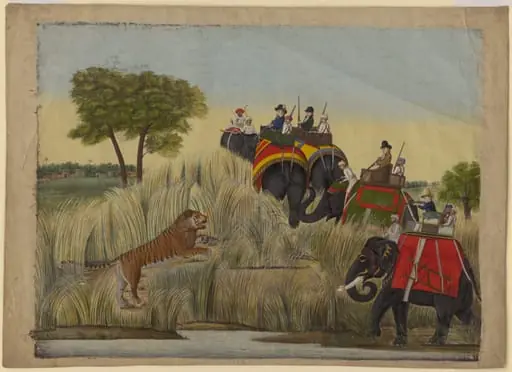
A tiger hunt at Jhajjar, Rohtak District, Panjab
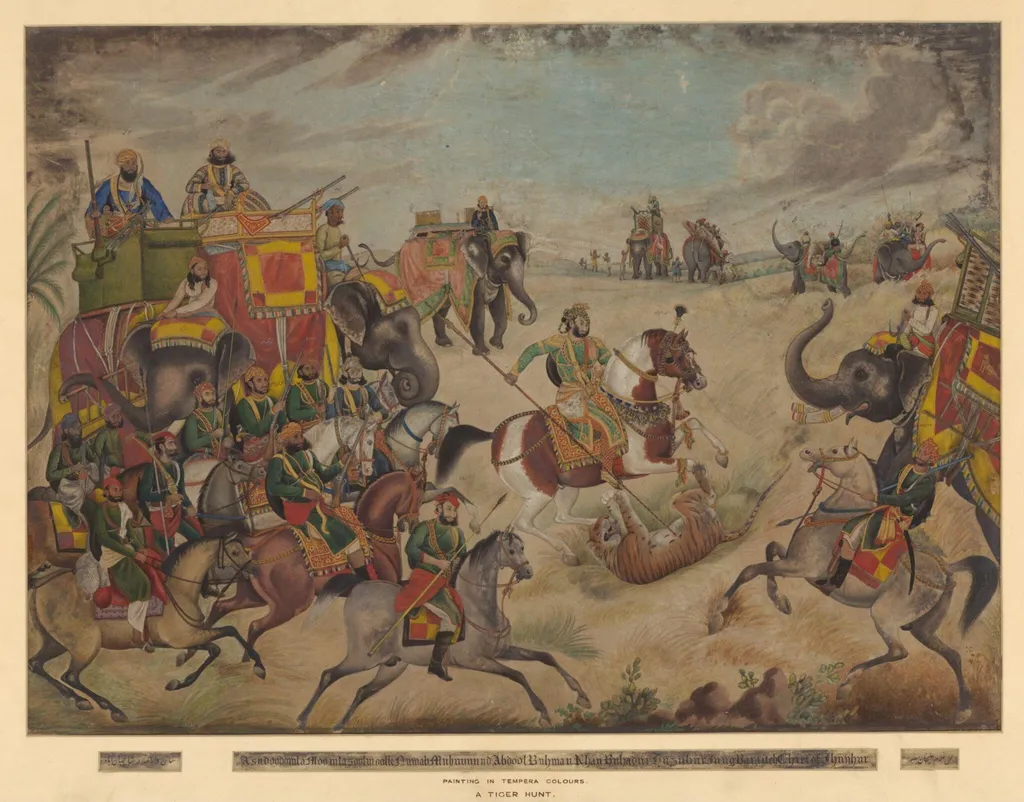
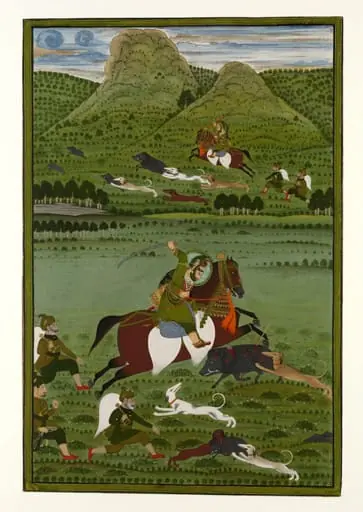
A tiger hunt at Jhajjar, Rohtak District, Panjab is a paint painting by the Patna School of Painting artist Ghulam Ali Khan. It dates from 1855 and is held in the collection of the Victoria and Albert Museum.
About this work
Overview
A watercolour painting by Ghulam Ali Khan, created circa 1855, depicts a tiger hunt in Jhajjar, Panjab. The scene is populated with numerous figures and elephants, many of which are identified by inscriptions in Persian characters.
Subject & Meaning
The painting centres on Nawab Muhammad Abd al-Rahman Khan, who owned the land where the hunt took place, spearing a tiger on horseback. The nawab's involvement in the Indian Mutiny and subsequent execution are historical events referenced by the artwork.
Technique & Style
Ghulam Ali Khan's work is characterized by detailed inscriptions, with nearly all figures and some elephants labeled in small Persian characters, providing insight into the identities of those depicted.
History & Provenance
Ghulam Ali Khan was active in Delhi from around 1820 and was the brother of artist Faiz Ali Khan. The nawab depicted in the painting, Muhammad Abd al-Rahman Khan, rebelled against the British during the Indian Mutiny and was executed in 1857.
Artist & collection
Artist
Ghulam Ali Khan painted delicate Mughal-style portraits and hunting scenes in the early 1800s.