Artwork
Roman Soldiers Fighting the Dacians
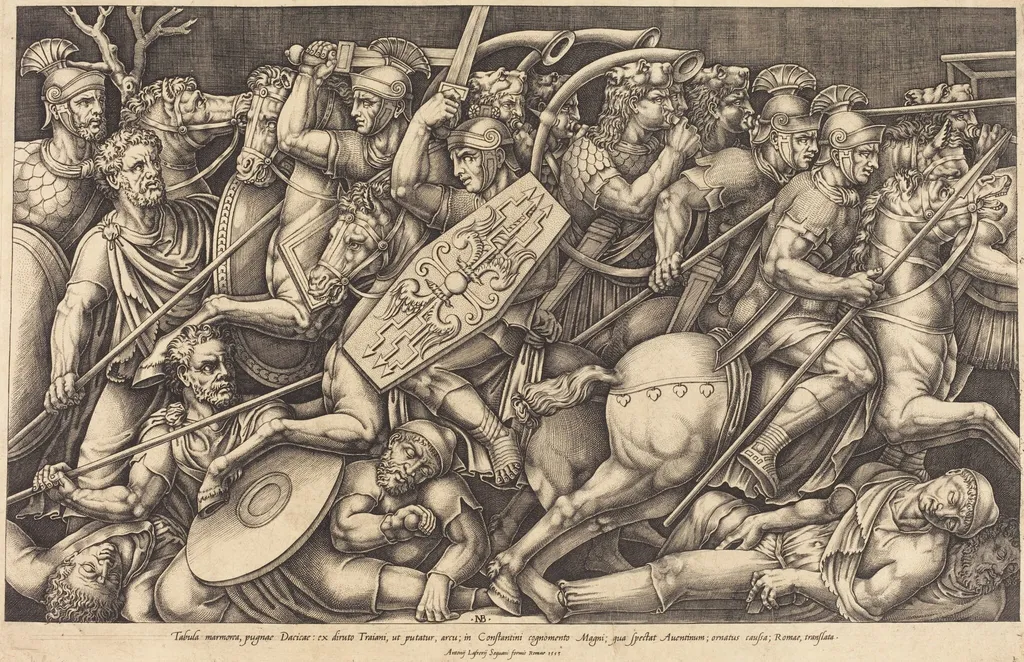
Roman Soldiers Fighting the Dacians is an ink print by the Renaissance artist Nicolas Beatrizet. It dates from 1553 and is held in the collection of the National Gallery of Art.
About this work
Overview
Nicolas Beatrizet’s 1553 engraving titled Roman Soldiers Fighting the Dacians presents a densely packed battlefield. The composition is dominated by a tangle of figures, Roman legionaries in full armor confronting largely unclothed Dacian fighters. The central focus is a Roman soldier bearing a shield marked with a cross motif, anchoring the chaotic action that unfolds across multiple planes.
Subject & Meaning
The print depicts a historic clash between the disciplined forces of Rome and the tribal warriors of Dacia, emphasizing the contrast between Roman military order and the more primitive, spear‑armed Dacians. By highlighting the Romans’ helmets and shields against the Dacians’ bare chests, the work underscores themes of civilization versus barbarism that were common in Renaissance representations of antiquity.
Technique & Style
Executed in the engraving medium, Beatrizet employs incised lines and deep chiaroscuro to convey movement and tension. Sharp, intersecting strokes define musculature and armor, while dense cross‑hatching creates dramatic shadows. The layered arrangement of figures—foreground, middle ground, and background—produces a sense of depth despite the flatness inherent to the print.
History & Provenance
Created in the mid‑sixteenth century, the engraving reflects the period’s fascination with classical warfare. Beatrizet, a French engraver active in Rome, produced the image for a market interested in historical and mythological subjects. Surviving copies are held in several European print collections, indicating its circulation among collectors of antiquarian prints during the Renaissance.
Artist & collection


![Castello S. Angelo di Roma [Castel Sant'Angelo in Rome], by Nicolas Beatrizet](https://artifactworldgallery.com/img/nicolas-beatrizet--castello-s-angelo-di-roma-castel-sant-angelo-in-rome--6c77d3bfe127c436-w320.webp)
![Pantheum Romanum [The Roman Pantheon], by Nicolas Beatrizet](https://artifactworldgallery.com/img/nicolas-beatrizet--pantheum-romanum-the-roman-pantheon--8069db7dd8e6f190-w320.webp)
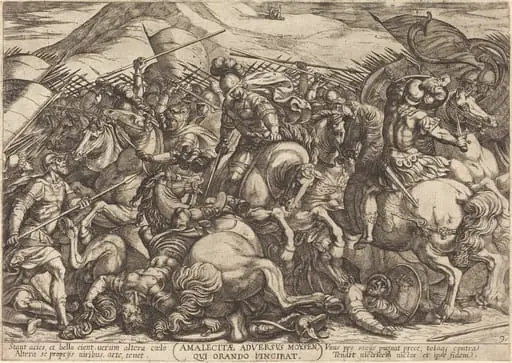 The Defeat of the Amalikits by the Hebrews
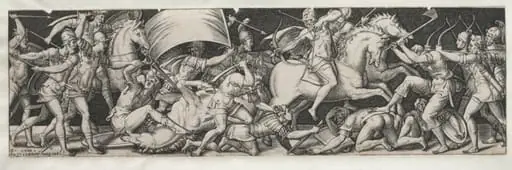 Combats and Triumphs No. 9
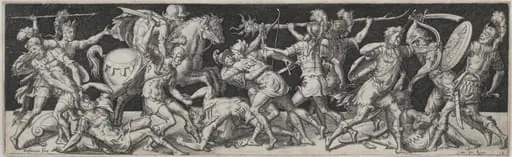 Combats and Triumphs No. 10
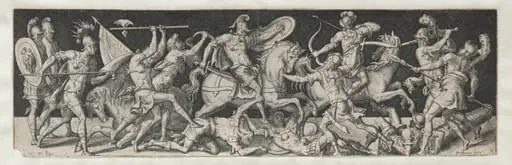 Combats and Triumphs No. 12
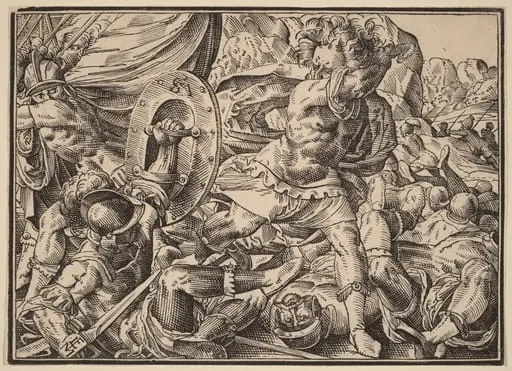 Christ Tells His Disciples of the Last Judgment
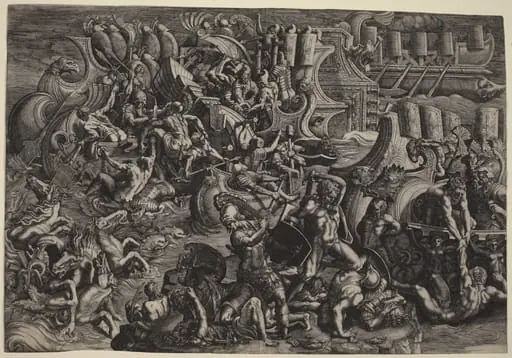 The Trojans Repulsing the Greeks
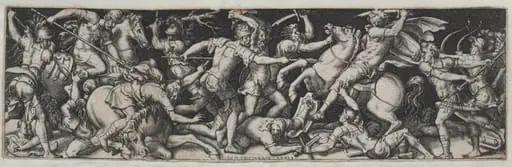 Combats and Triumphs No. 11
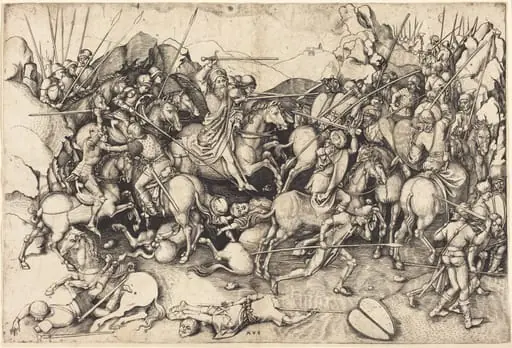 The Battle of Saint James at Clavijo
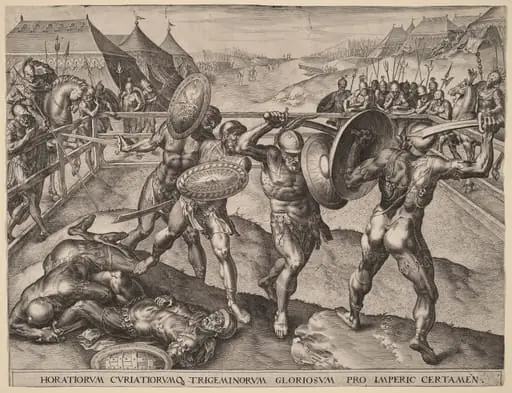 Battle of the Horatii and the Curiatii
 The Crossing of the Red Sea