Artwork
Semiramis on the Lion Hunt
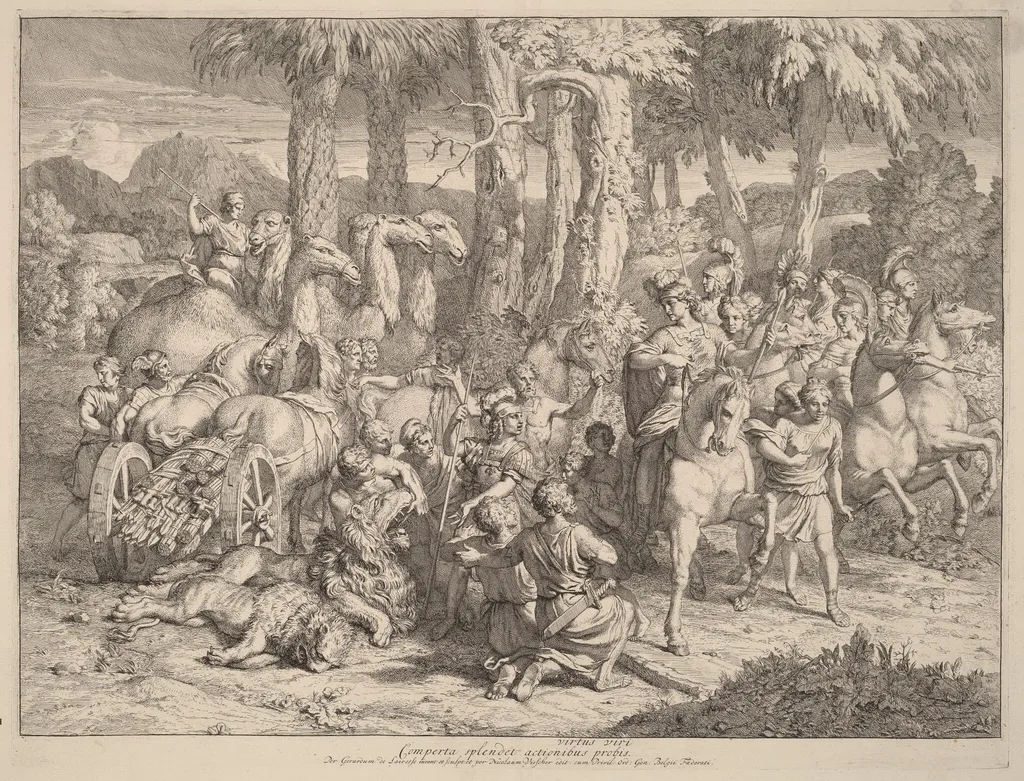
Semiramis on the Lion Hunt is an ink print by the Baroque artist Gerard de Lairesse. It dates from 1676 and is held in the collection of the National Gallery of Art.
About this work
Overview
Semiramis on the Lion Hunt is a 1676 engraving and etching print by Gerard de Lairesse, a prominent Dutch Golden Age artist and theorist. The work exemplifies the classical influences prevalent in late 17th-century European art.
Subject & Meaning
The print depicts a dramatic scene of the ancient Near Eastern queen Semiramis participating in a lion hunt, surrounded by attendants, animals, and a lush forest backdrop. The composition focuses on Semiramis, shown kneeling beside a lion, amidst a flurry of activity.
Technique & Style
Characterized by sharp, dynamic lines, the engraving and etching reflect the technical and stylistic preferences of its time. The detailed, busy composition with multiple elements—such as horsemen and spectators in trees—demonstrates Lairesse's adherence to structured, classical ideals.
History & Provenance
Created in 1676, the print predates Lairesse's influential art treatises published in the early 18th century, which would later solidify his impact on artistic theory. The work's provenance details are not specified here.
Context
Influenced by Cesare Ripa's iconography and the French classicism of artists like Charles le Brun, Semiramis on the Lion Hunt embodies the cross-cultural artistic dialogues of late 17th-century Europe.
Legacy
While the print's direct legacy is not detailed, it represents a significant example of Lairesse's contribution to the artistic practices and theoretical foundations of his era, potentially influencing subsequent generations through his writings.
Artist & collection
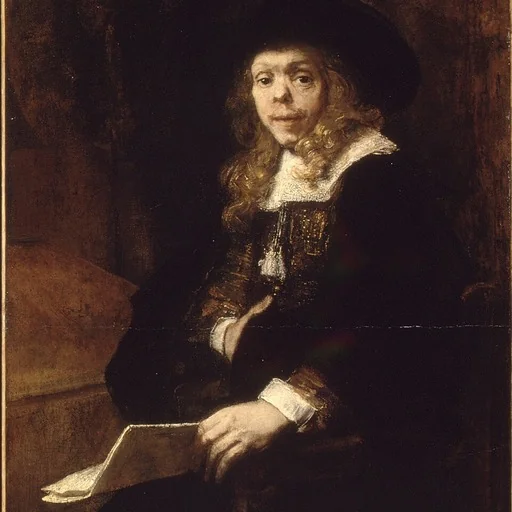
Artist
Gerard or Gérard (de) Lairesse (French pronunciation: ; 11 September 1641 – June 1711) was a Dutch Golden Age painter and art theorist.

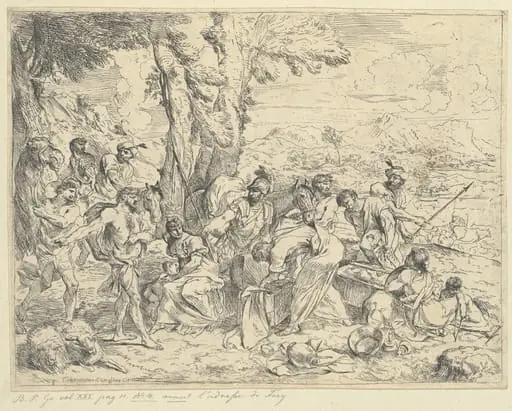 Rachel Concealing Laban's Idols
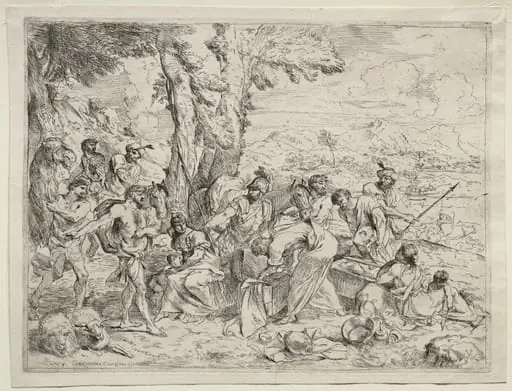 Laban Searching for Idols in Rachel's Baggage
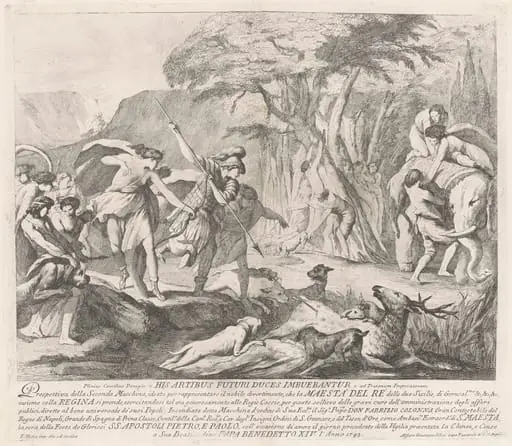 The Seconda Macchina for the Chinea of 1743: The Royal Hunt
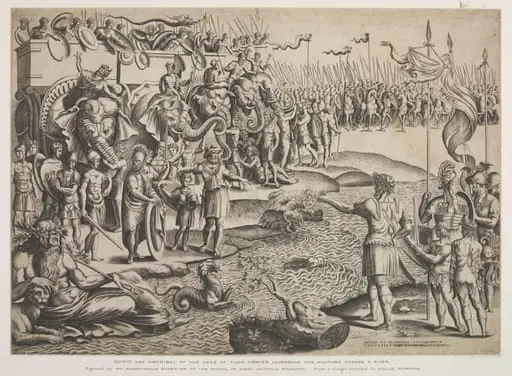 Untitled
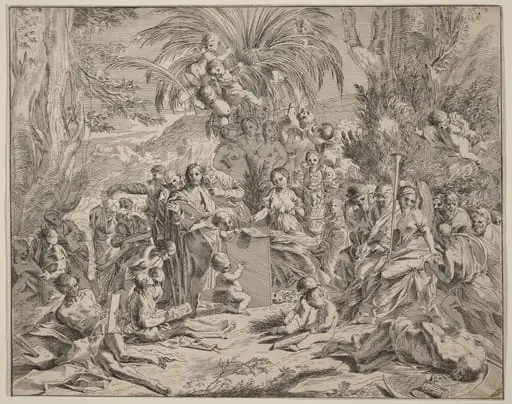 Allegory of Painting
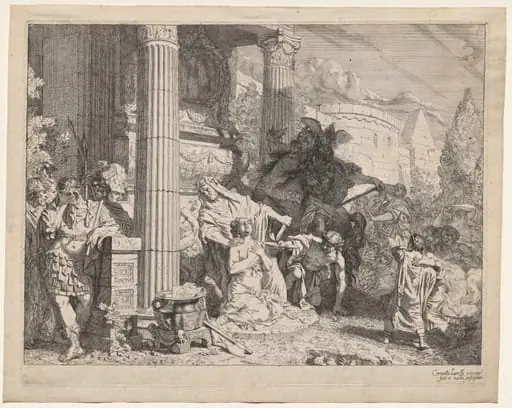 The Sacrifice of Polyxena
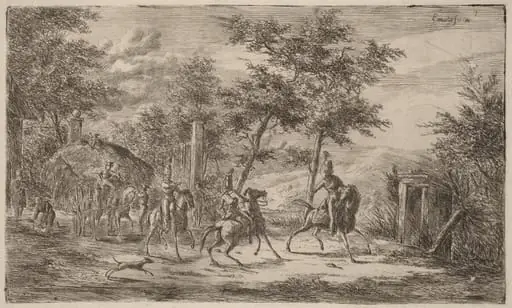 Cavalry and Hay Wagon
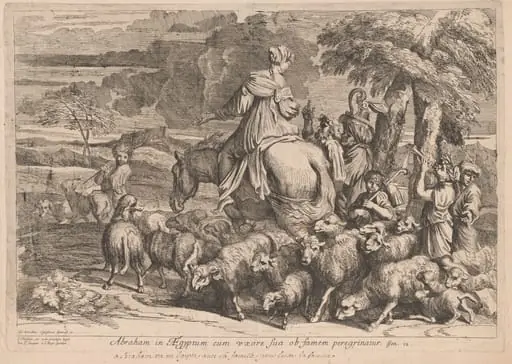 Abraham in Aegyptum (Abraham in Egypt)
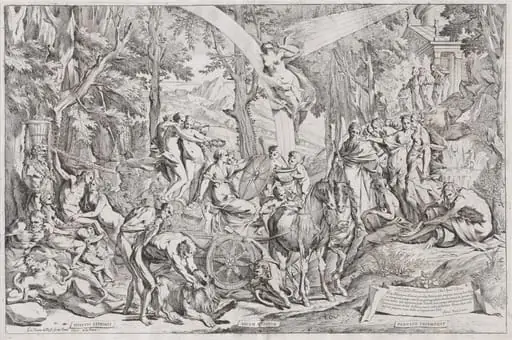 The Triumph of Painting on Parnassus
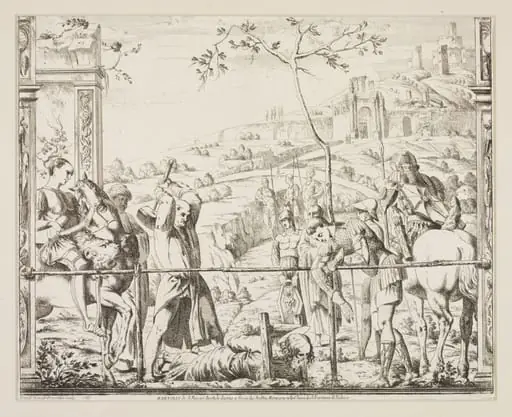 The Martyrdom of St. James and St. Christopher