Artwork
On the Wagon of Death
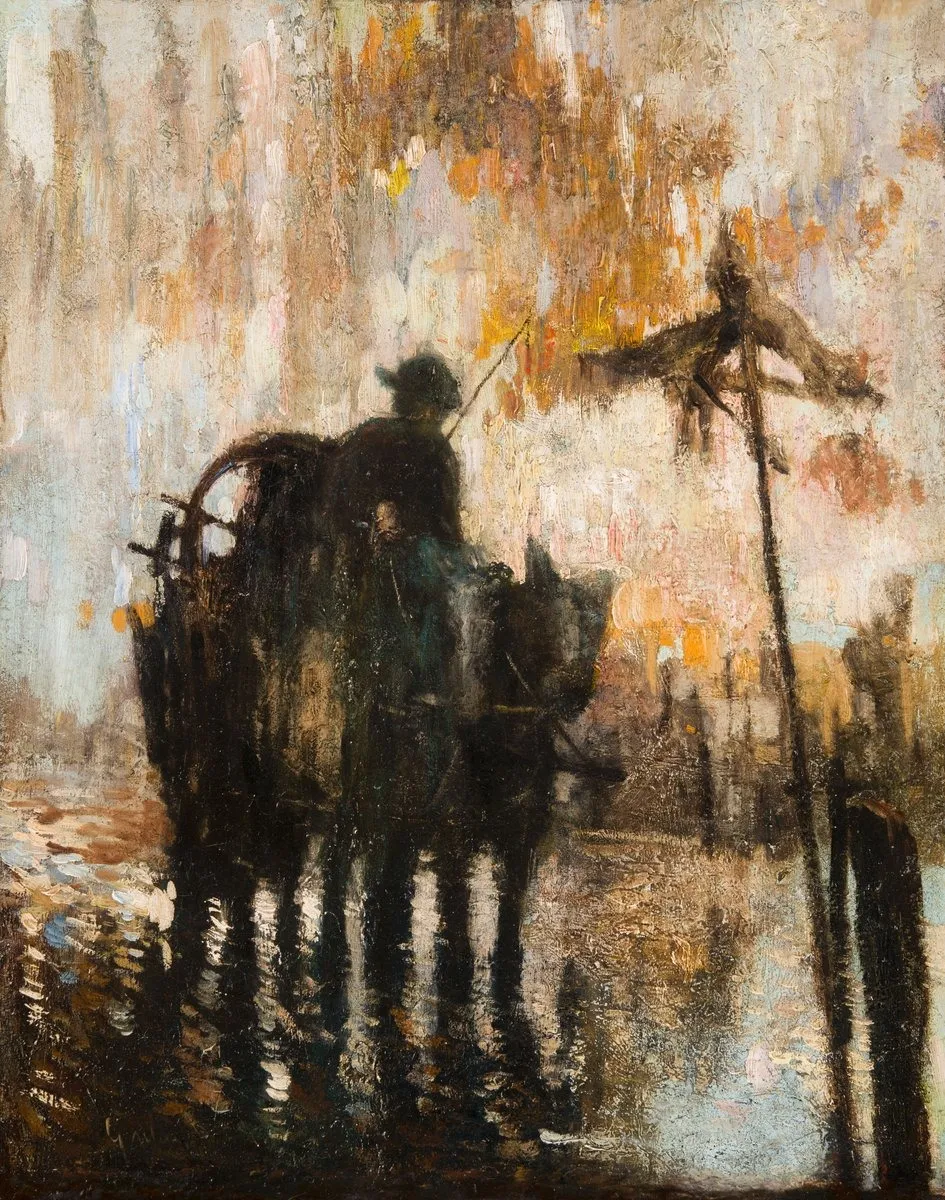
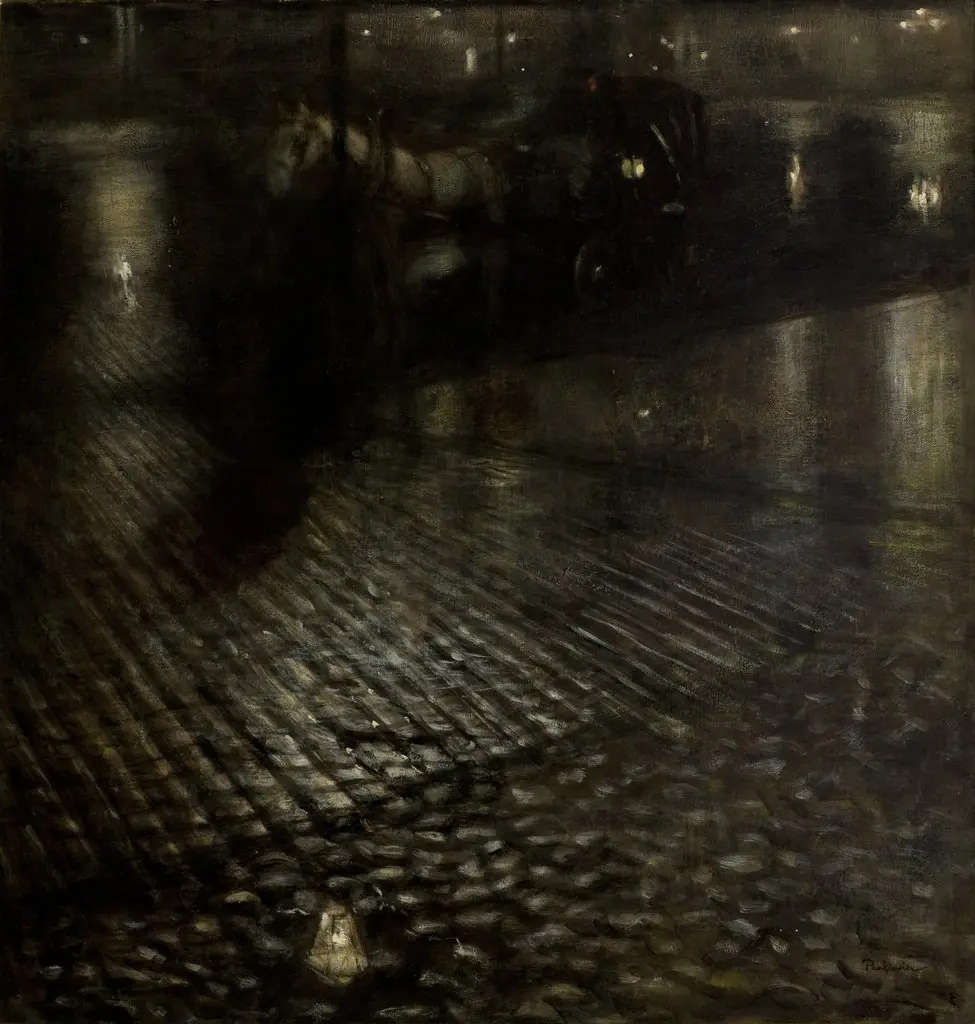
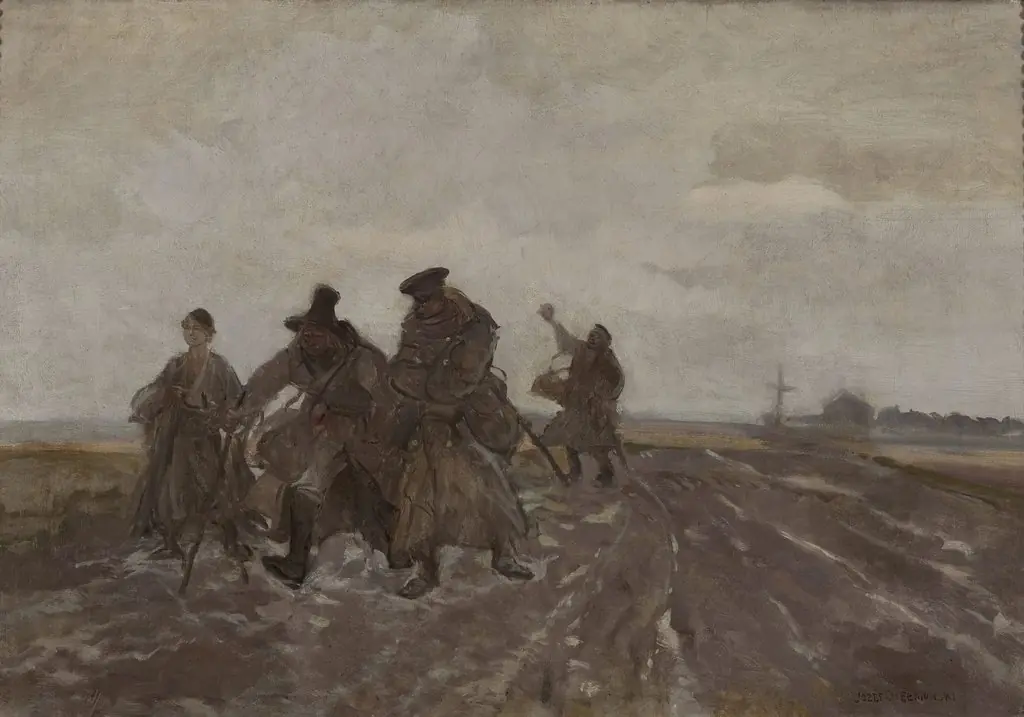
On the Wagon of Death is an oil painting by Lajos Gulácsy. It dates from 1910 and is held in the collection of the Hungarian National Gallery.
About this work
Overview
Lajos Gulácsy, a Hungarian painter trained at Budapest’s Royal Drawing School, completed the oil work *On the Wagon of Death* in 1910. The canvas is part of the Hungarian National Gallery’s collection and exemplifies the artist’s early mature period, marked by a somber palette and atmospheric ambiguity.
Subject & Meaning
The composition depicts a solitary figure perched on a wagon, clutching a long pole that bears a draped banner. The vehicle appears to be drawn by an unseen force, while the surrounding haze and muted light suggest a passage through a bleak, liminal space, evoking themes of mortality and transition.
Technique & Style
Gulácsy employs a loose, expressive brushwork that leaves the texture of the paint visible, reinforcing the painting’s hazy ambience. Strong contrasts between dark tones and occasional orange‑yellow highlights create a chiaroscuro effect, giving the scene a three‑dimensional feel despite its dreamlike quality.
Context
The work reflects Gulácsy’s engagement with Symbolist ideas and the decorative currents of Art Nouveau, while also showing the lingering influence of the Pre‑Raphaelites. These stylistic currents, combined with a personal fascination for the uncanny, foreshadowed later surrealist tendencies in his oeuvre.
History & Provenance
Since its creation, *On the Wagon of Death* has remained in Hungary, entering the national collection where it is displayed at the Hungarian National Gallery. Its acquisition history is tied to the museum’s early 20th‑century efforts to preserve works by native modernists.
Artist & collection
Artist
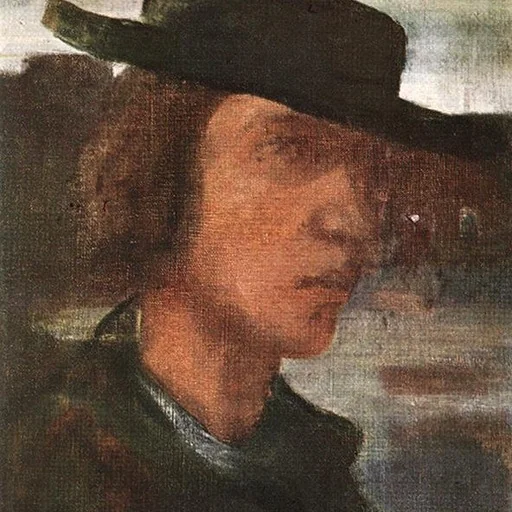
Lajos Gulácsy (12 October 1882 – 21 February 1932) was a Hungarian painter with works collected by the Hungarian National Gallery.