Artwork
Untitled
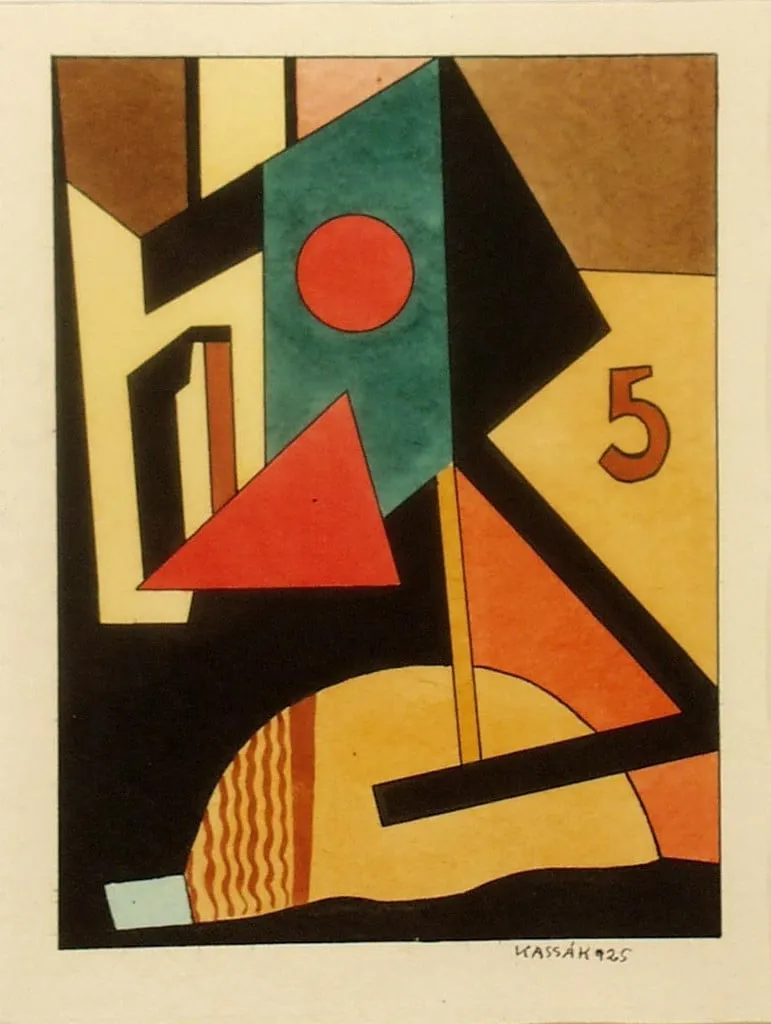
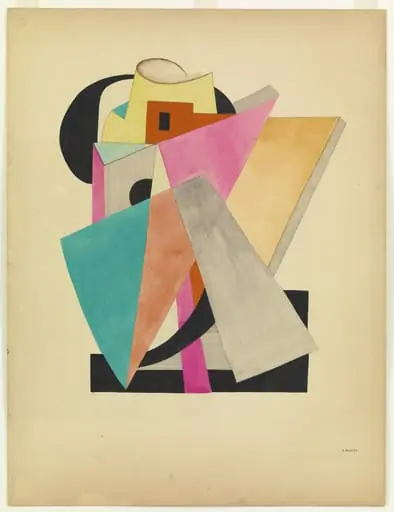
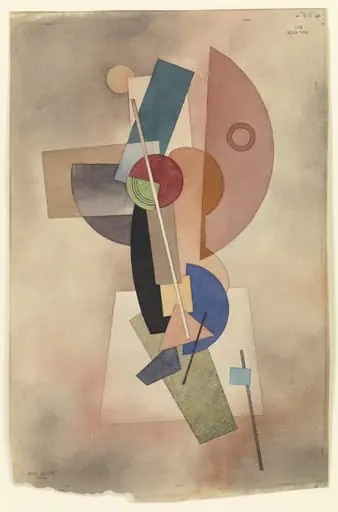
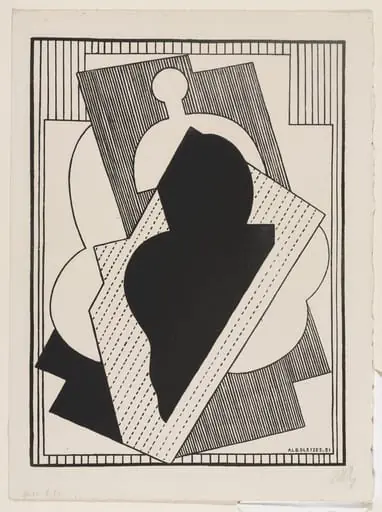
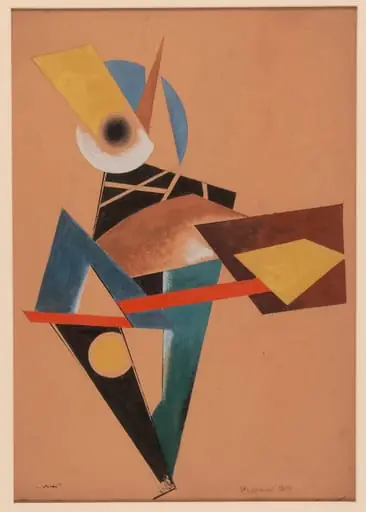
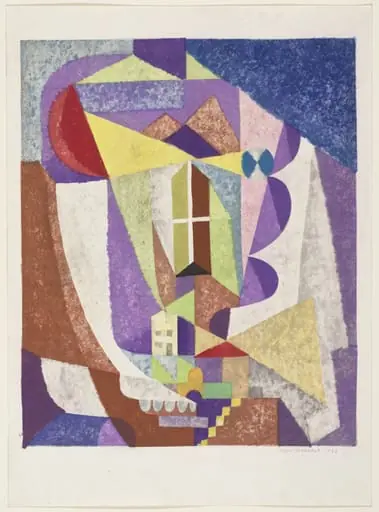
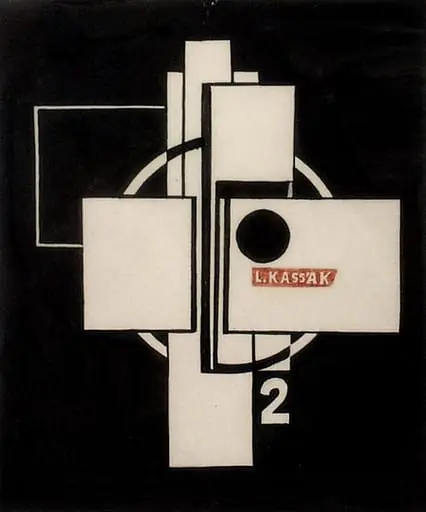
Untitled is a gouache drawing by Lajos Kassák. It dates from 1925 and is held in the collection of the Museum of Modern Art.
About this work
Overview
Created in 1925, this gouache and ink drawing by Hungarian artist Lajos Kassák is part of The Museum of Modern Art’s collection.
Created in 1925, this gouache and ink drawing by Hungarian artist Lajos Kassák is part of The Museum of Modern Art’s collection. Executed on paper, the work reflects Kassák’s engagement with early 20th-century experimental art movements. Its abstract composition eschews figurative representation, favoring dynamic interplays of color and form that align with the radical aesthetic inquiries of the period.
Subject & Meaning
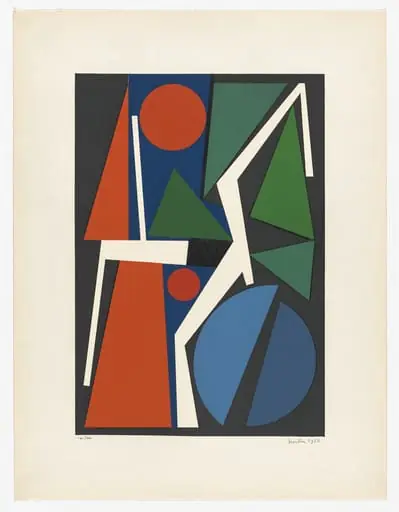
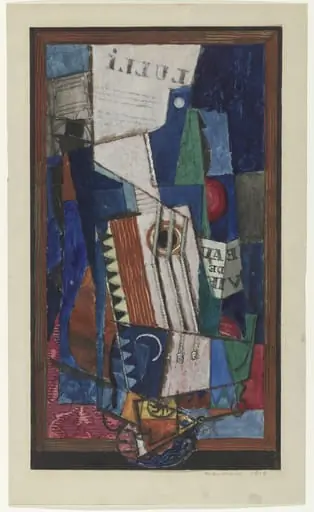
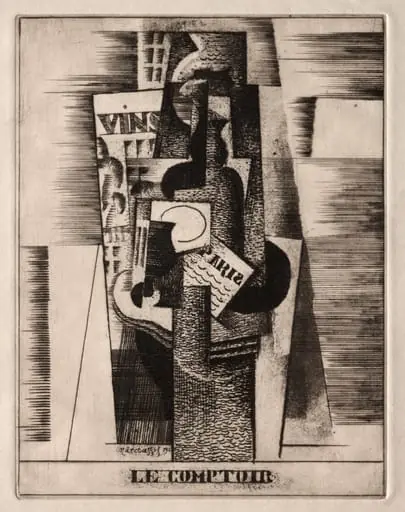
The work carries no literal subject, instead proposing a visual language rooted in abstraction. Kassák’s arrangement of geometric shapes—triangles, circles, rectangles—suggests structural experimentation rather than narrative. The absence of clear symbolism aligns with his broader rejection of traditional artistic conventions, reflecting his commitment to avant-garde principles and the search for new modes of expression beyond representation.
Technique & Style
Kassák employed gouache for opaque, saturated fields of yellow, orange, and brown, accented with red, green, and black ink. Bold, linear strokes contrast with finer, delicate lines, creating rhythmic tension. Overlapping forms generate subtle depth without perspective, while the matte surface of gouache enhances the work’s tactile, non-illusionistic quality. The composition avoids symmetry, embracing controlled chaos characteristic of Dada and Expressionist influences.
History & Provenance
The drawing was produced during Kassák’s active years in Budapest, following his leadership of the influential journal MA and his involvement in socialist artistic collectives. It entered The Museum of Modern Art’s collection as part of a broader effort in the mid-20th century to document European avant-garde practices. Its preservation reflects institutional recognition of Kassák’s role in shaping modernist visual culture beyond Western Europe.
Context
In 1925, Kassák was immersed in transnational avant-garde networks, responding to movements like Futurism, Dada, and Constructivism. His work emerged amid political upheaval in post-war Hungary, where artists sought to redefine culture through abstraction and collective action. This piece aligns with contemporaneous experiments in non-representational art across Central Europe, where form was treated as a vehicle for ideological and aesthetic renewal.
Legacy
Kassák’s abstract drawings, including this one, contributed to the legitimization of non-objective art in Eastern Europe. Though less widely known than his Western peers, his integration of political radicalism with formal innovation influenced later generations of Hungarian artists. The work remains a key example of how abstraction functioned as both aesthetic and ideological practice in interwar modernism.
Artist & collection
Artist
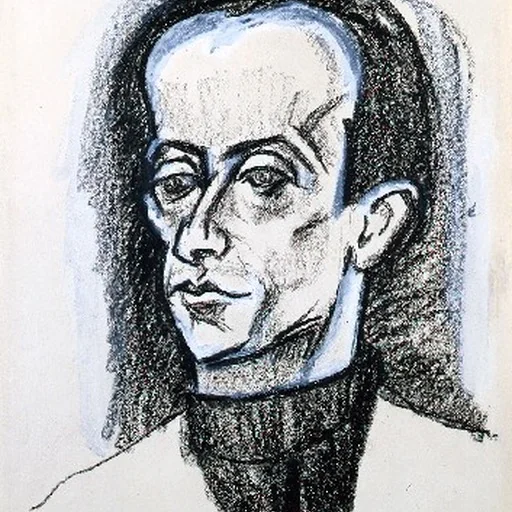
Lajos Kassák (March 21, 1887 – July 22, 1967) was a Hungarian poet, novelist, painter, essayist, editor, theoretician of the avant-garde, and translator.