Artwork
Untitled
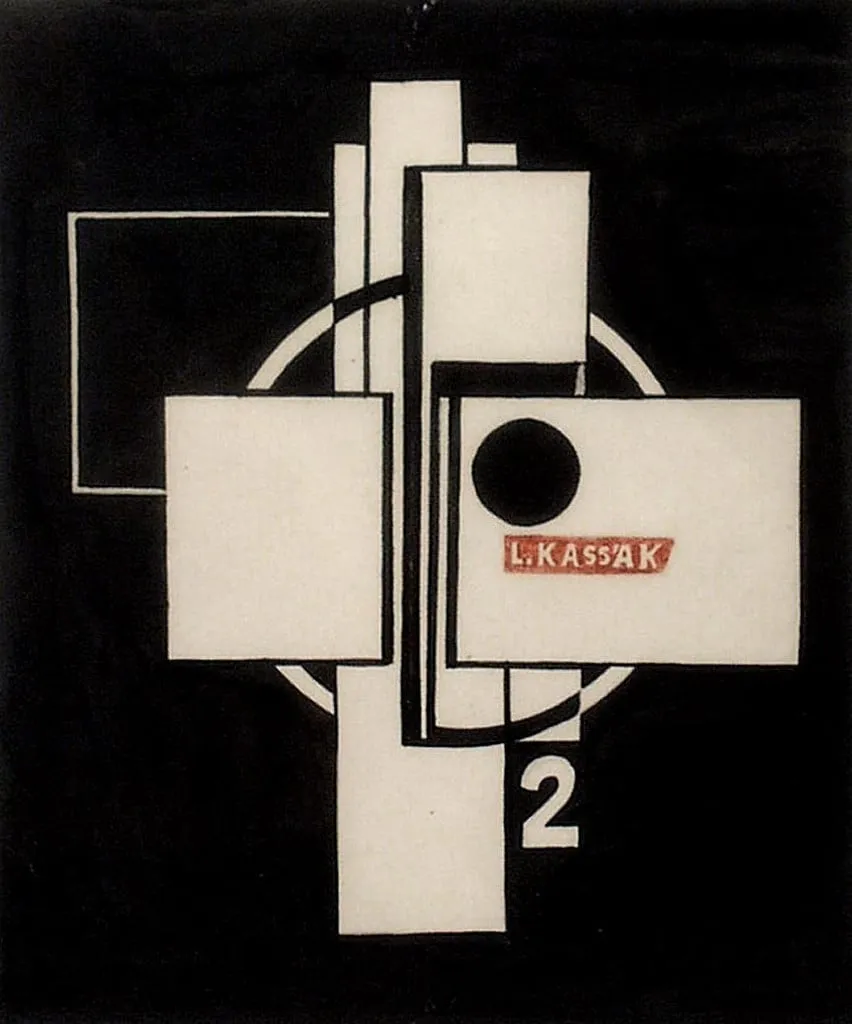
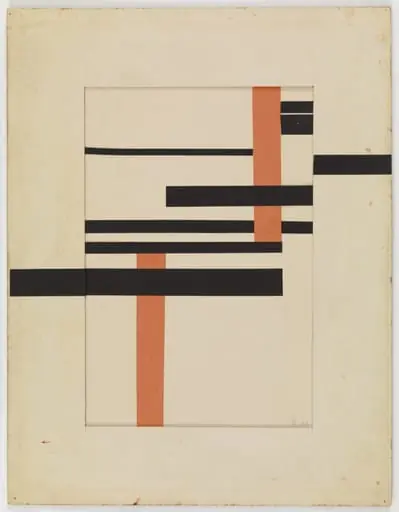
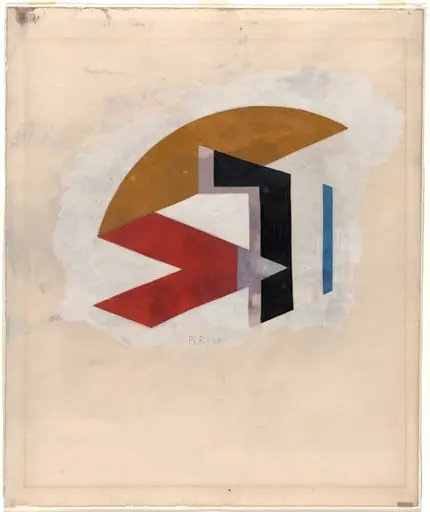
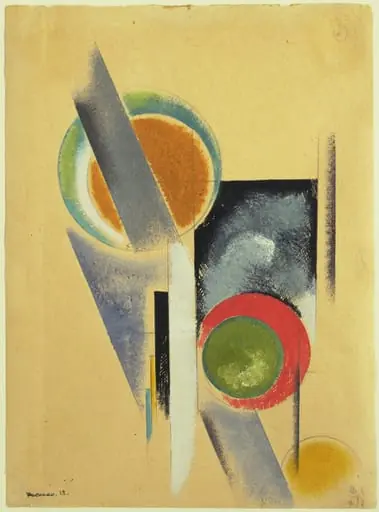
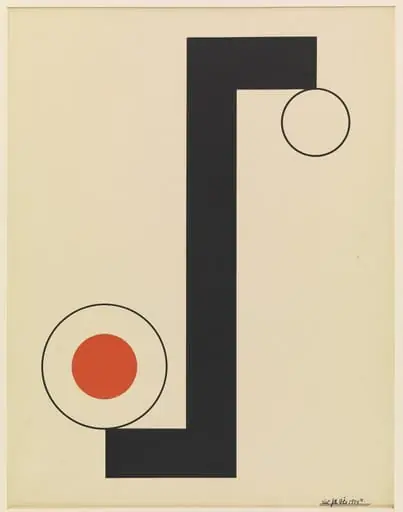
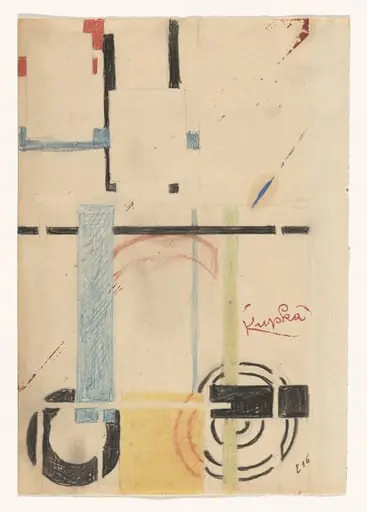
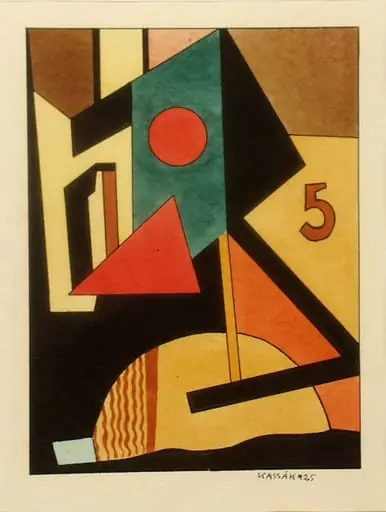
Untitled is a gouache drawing by Lajos Kassák. It dates from 1922 and is held in the collection of the Museum of Modern Art.
About this work
Overview
It belongs to a series of abstract works produced during his most experimental phase, when he sought to break from traditional artistic conventions.
Created in 1922, this ink and gouache drawing by Hungarian artist Lajos Kassák is a non-representational composition built from geometric forms. It belongs to a series of abstract works produced during his most experimental phase, when he sought to break from traditional artistic conventions. The piece is part of The Museum of Modern Art’s collection, reflecting its significance in early 20th-century avant-garde practice.
Subject & Meaning
The work resists literal interpretation, instead presenting a visual language of abstraction. Overlapping white rectangles suggest structural fragments, while the black circle and the artist’s name in red introduce personal markers. The large white '2' at the base may indicate sequence or edition, positioning the piece within a broader experimental system. The composition functions as a coded self-portrait, embedding identity within formal elements.
Technique & Style
Kassák employed gouache for its opaque, matte quality, allowing sharp-edged planes of color to sit distinctly against the black background. Ink defined precise contours, reinforcing the angular, almost architectural quality of the forms. The style merges elements of Dada’s anti-art gesture with Futurist dynamism and Expressionist emotional intensity, resulting in a restrained yet assertive visual rhythm.
History & Provenance
Produced during Kassák’s time in Vienna after his exile from Hungary, the drawing emerged from his engagement with international avant-garde networks. It was likely made in connection with his editorial and artistic activities at the journal *Ma*. The work entered MoMA’s collection in the mid-20th century, recognized for its role in documenting Central European modernism beyond mainstream narratives.
Context
In early 1920s Europe, artists like Kassák sought new modes of expression to reflect social upheaval and technological change. Rejecting figurative tradition, he aligned with movements that valued fragmentation and textual integration. His work intersected with contemporaries in Berlin and Zurich, contributing to a broader shift toward abstraction as a vehicle for political and personal inquiry.
Legacy
Kassák’s abstract drawings influenced later generations of Hungarian and Eastern European artists exploring non-objective form. His integration of text and geometry prefigured conceptual practices of the 1960s and 70s. Though less known internationally than his Western peers, his work remains a vital reference in studies of interwar radical art and the politics of visual language.
Artist & collection
Artist
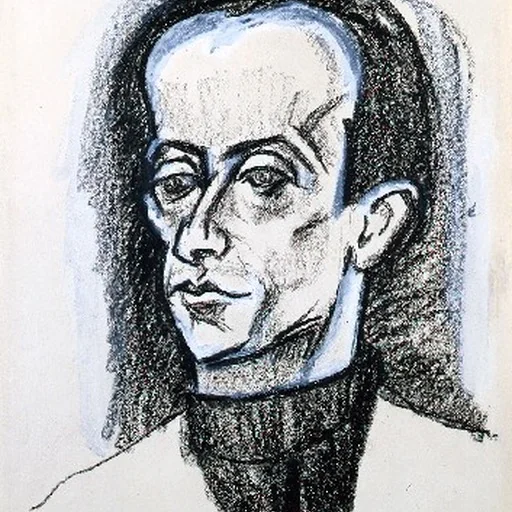
Lajos Kassák (March 21, 1887 – July 22, 1967) was a Hungarian poet, novelist, painter, essayist, editor, theoretician of the avant-garde, and translator.