Artwork
Scheherazade
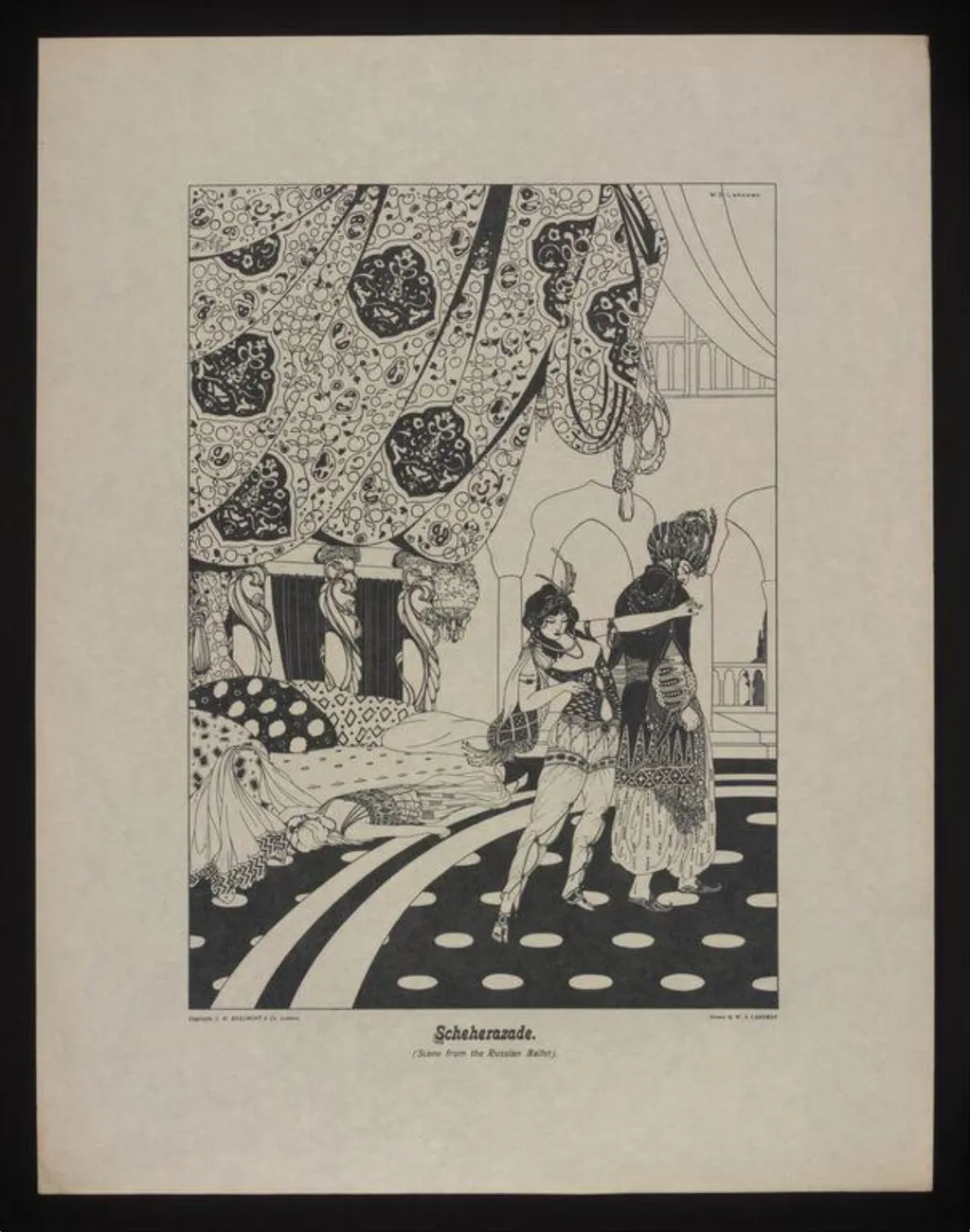
Scheherazade is a print by W. S. Lakeman. It dates from 1924 and is held in the collection of the Victoria and Albert Museum. This black-and-white print, created around 1920 by W.
About this work
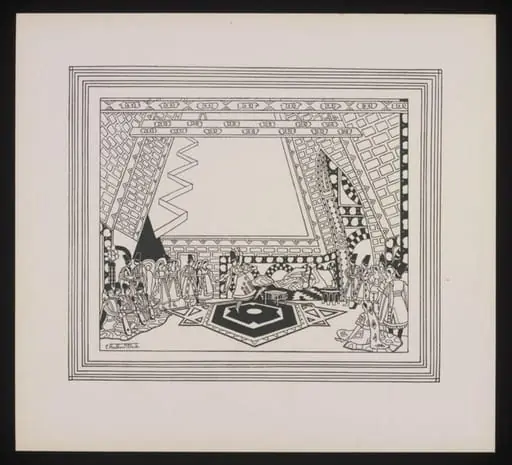
This print shows the final, tragic scene from the famous ballet Scheherazade. W. S. Lakeman captured it in a line drawing around 1920.
The print was made to remember the ballet’s wild success back in 1910. You can see a dead slave on the floor and Zobeida about to take her own life with a dagger.
Head to the Victoria and Albert Museum to see this print in person.
Overview
in London, reflecting the widespread cultural resonance of the Ballets Russes outside Russia.
This black-and-white print, created around 1920 by W. S. Lakeman, depicts the closing moment of Mikhail Fokine’s 1910 ballet Scheherazade. Commissioned as a commercial souvenir, it translates the stage spectacle into a linear drawing, preserving the drama of the final scene for audiences who experienced the ballet through memory or rumor. The print was produced by C. W. Beaumont & Co. in London, reflecting the widespread cultural resonance of the Ballets Russes outside Russia.
Subject & Meaning
The scene portrays Zobeida, the harem queen, plunging a dagger into her chest as Shahryar, the sultan, watches. At her feet lies the body of the favorite slave, slain in a moment of tragic retribution. The composition conveys the ballet’s themes of desire, power, and fatal consequence, drawing from the Arabian Nights tales while transforming them into a psychological drama. The stillness of death contrasts with the violent act, heightening the emotional weight of the moment.
Technique & Style
Lakeman rendered the scene in fine, expressive line work, echoing the graphic aesthetic of Aubrey Beardsley. The absence of color emphasizes contour and pattern, mirroring Leon Bakst’s original stage designs, which prioritized stylized forms over naturalism. Decorative curtains and cushion motifs frame the figures, reinforcing the exoticized Orientalism central to the ballet’s visual language. The drawing’s precision suggests a deliberate adaptation for mass reproduction.
History & Provenance
Produced a decade after the ballet’s premiere, the print served as a tangible relic of a performance that had captivated European audiences. Its publication by a London firm indicates the international reach of Diaghilev’s company. Though the original stage designs by Bakst were celebrated for their color and texture, this monochrome version catered to the print market’s demand for affordable, portable imagery tied to cultural phenomena.
Context
Scheherazade’s 1910 debut in Paris ignited a fascination with Eastern-inspired aesthetics, blending theatrical innovation with Orientalist fantasy. The ballet’s success spurred a wave of derivative imagery, from posters to prints, as public appetite outpaced live performance. Lakeman’s drawing, while not original to the production, participated in this visual economy, translating Bakst’s designs into a format accessible to middle-class homes and collectors.
Legacy
The print endures as evidence of how performance art entered domestic spaces through reproduction. Though overshadowed by Bakst’s original designs, Lakeman’s version preserved the ballet’s emotional climax for audiences who never saw it live. It reflects early 20th-century trends in visual culture, where theatrical spectacle was commodified and reimagined through graphic media, bridging avant-garde theater and popular taste.
Artist & collection
Artist
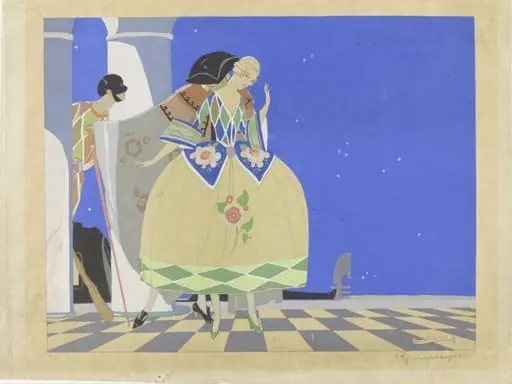
W. S. Lakeman made early 20th-century paintings and prints inspired by ballet and exotic stories. Look at their “Harlequin in 'Le Carnaval', a Ballet by Mikhail Fokine” to see a dancer caught mid-jump in bright costume,…