Artwork
Workmen Gathering Ice at the Water's Edge
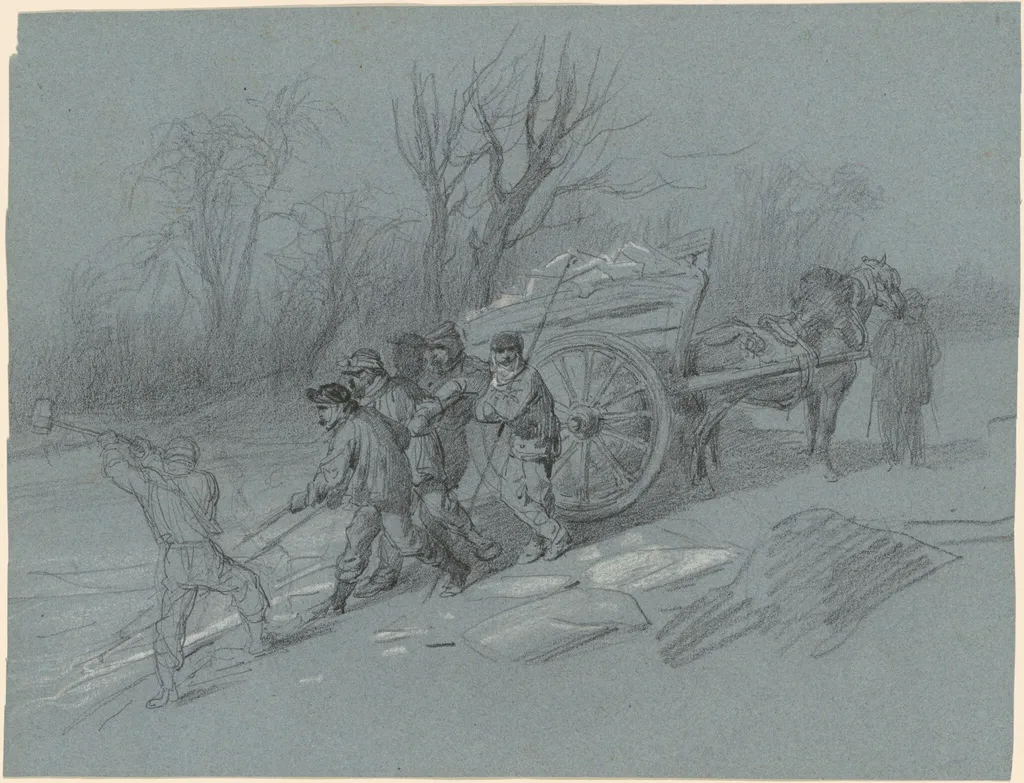
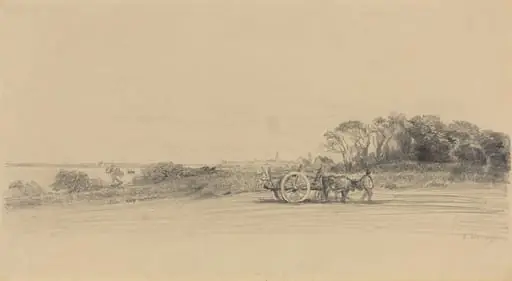
Workmen Gathering Ice at the Water's Edge is a chalk drawing by the Romanticist artist Hippolyte Lalaisse. It dates from 1850 and is held in the collection of the National Gallery of Art.
About this work
The use of black chalk and white on blue paper is an interesting choice, as it allows for a range of tonal values.
This painting is called Workmen Gathering Ice at the Water's Edge.
It was made around 1850 by Hippolyte Lalaisse.
The artist used black chalk and white on blue paper to create the image.
The Romanticism movement influenced this work.
I don't know what the image looks like, but I can tell you about its context.
The use of black chalk and white on blue paper is an interesting choice, as it allows for a range of tonal values.
You can learn more about this style by looking into the movement: Romanticism.
Overview
Created around 1850 by Hippolyte Lalaisse, this drawing depicts laborers collecting ice along a frozen water’s edge. Executed in black chalk with white highlights on blue paper, the work belongs to a tradition of 19th-century French draftsmanship that emphasized naturalistic observation and atmospheric tone. The choice of colored paper suggests a deliberate engagement with light and shadow, common in preparatory studies of the period.
Subject & Meaning
The scene portrays ordinary workers engaged in the seasonal task of harvesting ice, a practical necessity before mechanical refrigeration. Rather than idealizing the laborers, Lalaisse presents them with quiet dignity, focusing on their physical exertion and the harsh conditions of winter. The subject reflects a broader interest in everyday life, aligning with Romanticism’s appreciation for human struggle and nature’s power.
Technique & Style
Lalaisse employed black chalk for broad, expressive lines and white chalk to accentuate highlights, contrasting against the blue paper’s cool undertone. This tripartite medium allowed subtle gradations of tone, enhancing the sense of depth and cold air. The technique, neither fully finished nor sketchlike, suggests a study intended to capture transient effects of light and movement rather than a polished composition.
History & Provenance
The drawing’s early history is undocumented, but its materials and style place it within mid-19th-century French artistic circles. It likely originated as a preparatory study or independent work, possibly linked to landscape or genre scenes exhibited in salons. No record of early ownership or exhibition exists, though its preservation indicates recognition of its technical merit by collectors or institutions.
Context
In the 1850s, French artists increasingly turned to scenes of rural and working-class life, moving away from mythological or historical themes. Lalaisse’s drawing aligns with this shift, echoing contemporaries like Millet who elevated laborers as subjects worthy of artistic attention. The use of colored paper also reflects a broader trend among draftsmen seeking to evoke mood through material choice.
Legacy
Though not widely known today, the drawing exemplifies a quiet but significant strand of Romantic draftsmanship that valued observation over grandeur. Its survival offers insight into how artists of the period engaged with labor and environment through intimate, material-sensitive media. It remains a testament to the artistic value placed on everyday rituals in mid-19th-century France.
Artist & collection


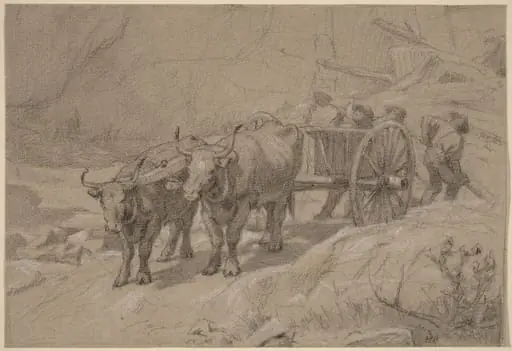 Oxen and Dump Cart
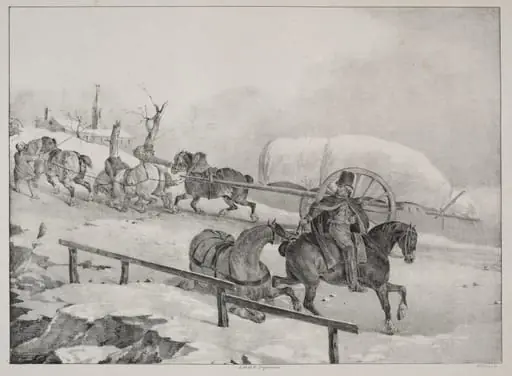 Wagoner Climbing a Hill
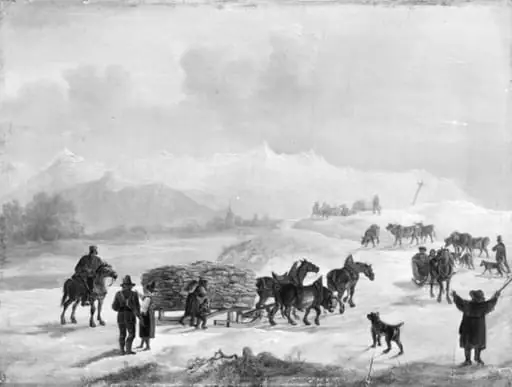 Slædefart i de bajerske bjerge
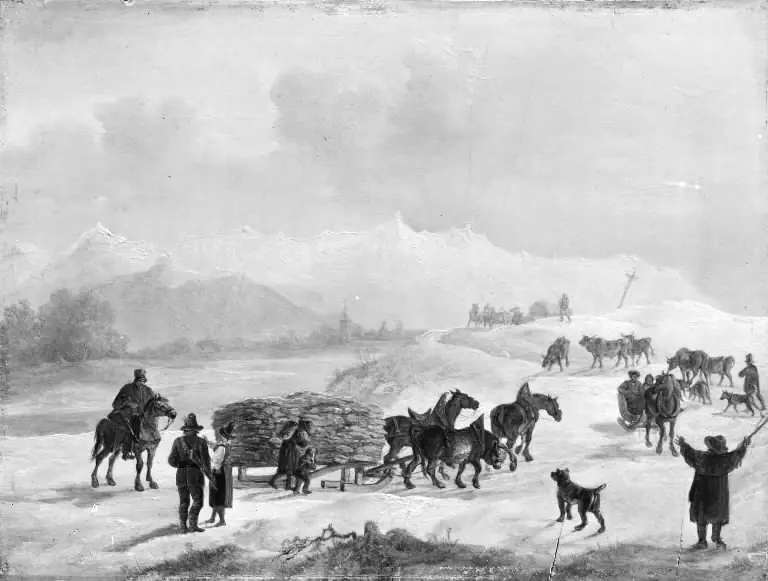 Slædefart i de bajerske bjerge
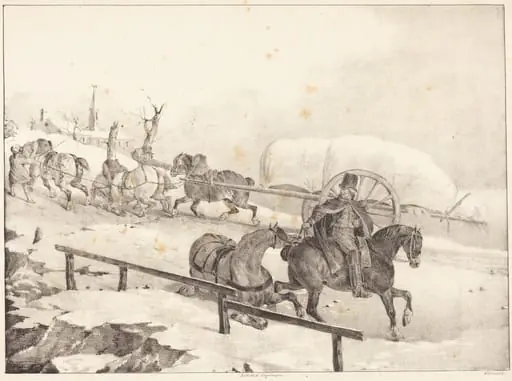 Wagoner Climbing a Hill (Roulier montant une cote)
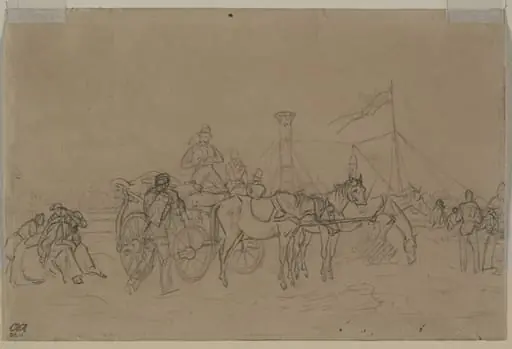 Passengers for Rhine Steamer (verso)
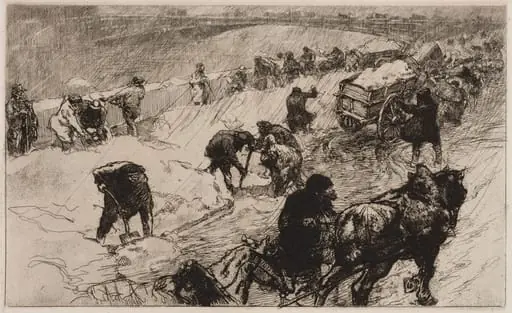 Snowball Fight: Quai aux Fleurs
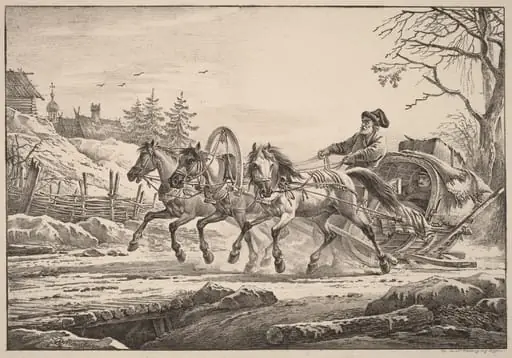 A Hired Coachman in Winter
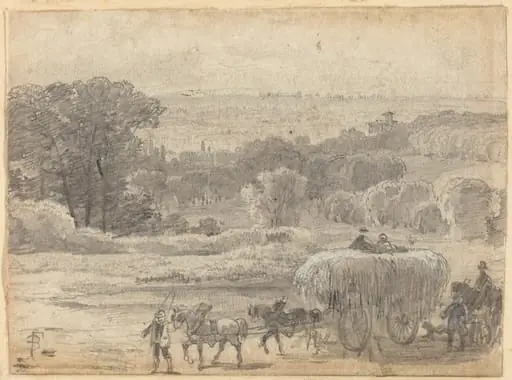 An Evening Landscape with a Hay Wagon
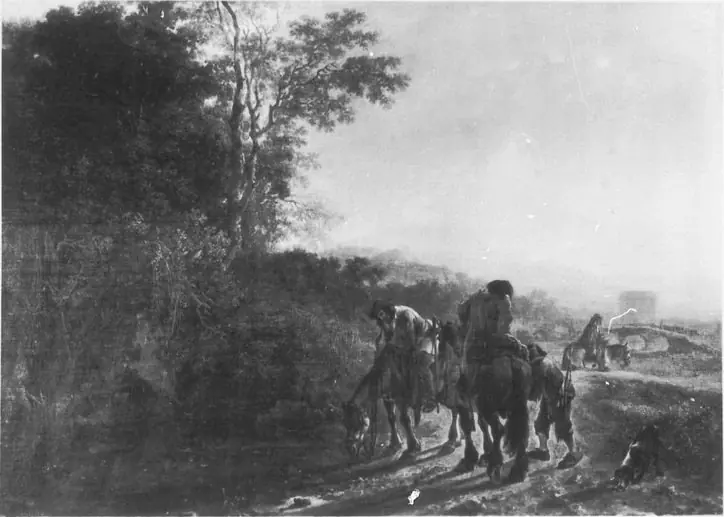 An Italian Landscape with Arched Stone Bridge
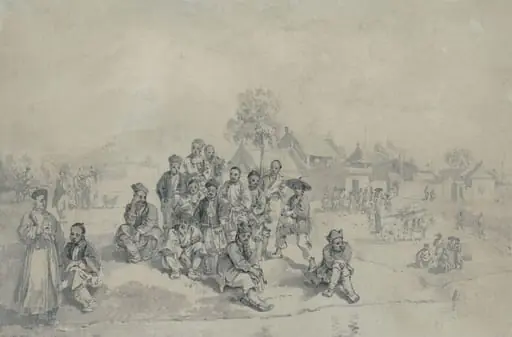 A Scene in China
 L'Ile aux Moines with Figure and Cart