Artwork
Nessus and Dejanira in Four Poses, and the Dying Nessus
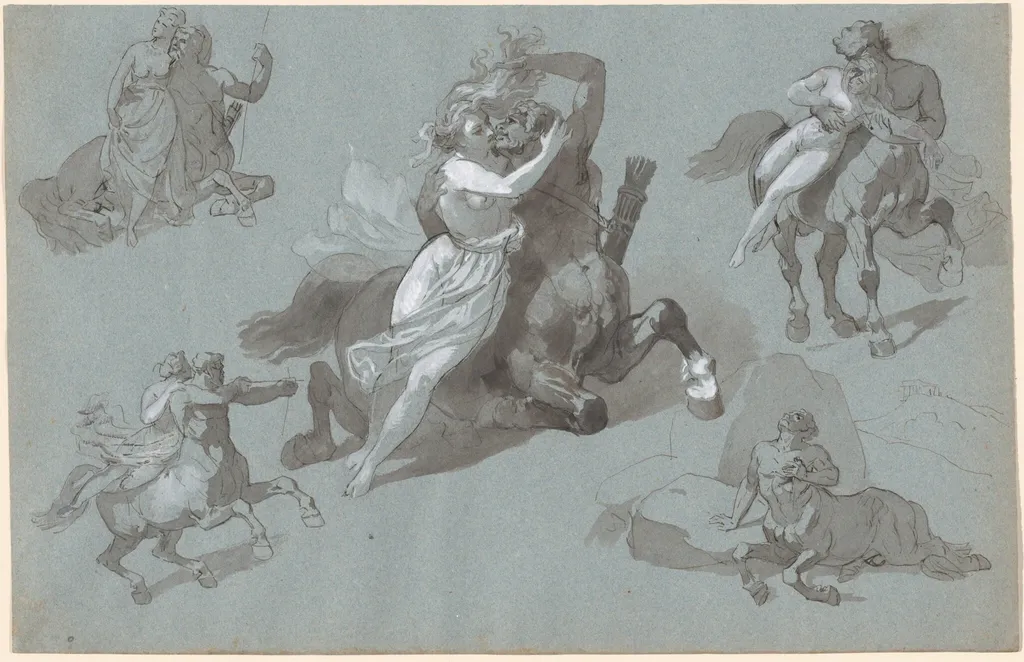
Nessus and Dejanira in Four Poses, and the Dying Nessus is an ink drawing by the Romanticist artist Hippolyte Lalaisse. It dates from 1834 and is held in the collection of the National Gallery of Art.
About this work
Overview
Nessus and Dejanira in Four Poses, and the Dying Nessus is a drawing by Hippolyte Lalaisse, dated circa 1834. Composed on a single sheet of blue wove paper, it presents four successive sketches of a dynamic scene involving a man, a woman, and a centaur in various wrestling poses.
Subject & Meaning
The drawing depicts a mythological narrative, specifically the encounter between Nessus the centaur, Dejanira, and presumably Hercules (implied as the man). The focus, however, is less on the myth's narrative and more on the kinetic study of the figures' movements and interactions.
Technique & Style
Executed in pen and brown ink with brown wash, heightened with white, the work showcases quick, expressive strokes and blurred edges achieved with a wet brush. The blue paper substrate enhances the visibility of white highlights, contributing to a sense of rapid motion capture.
History & Provenance
Created around 1834, this piece is characterized as a study rather than a finished work, indicating its role in Lalaisse's exploratory process of capturing bodily movement in space.
Context
The drawing reflects 19th-century artistic interests in both classical mythology and the technical challenge of depicting dynamic movement. It precedes but aligns with later developments in capturing motion, a theme that would evolve in various art forms.
Legacy
While not a celebrated standalone piece in broader art historical narratives, it demonstrates Lalaisse's engagement with movement studies, a pursuit relevant to the development of artistic techniques for conveying dynamism, potentially influencing subsequent generations in subtle, exploratory ways.
Artist & collection


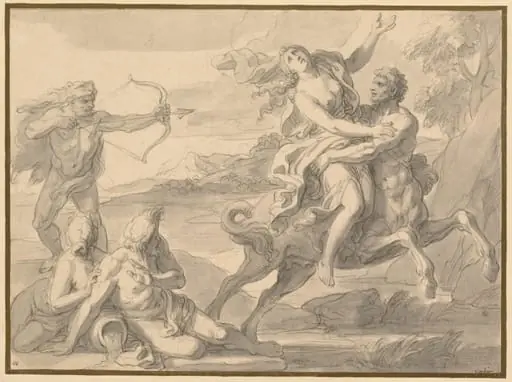 The Rape of Deianira
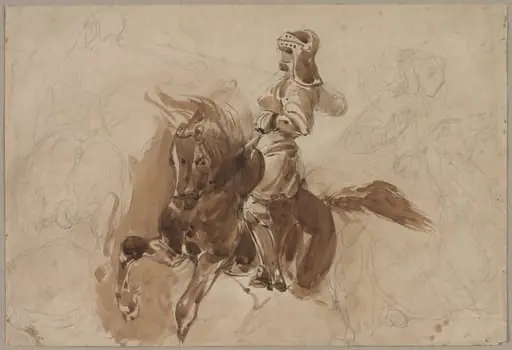 Armored Figure on Horseback (recto)
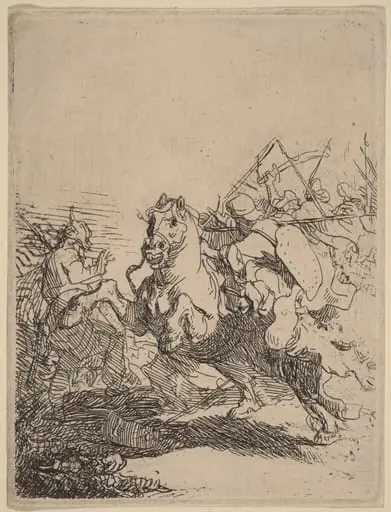 A Cavalry Fight
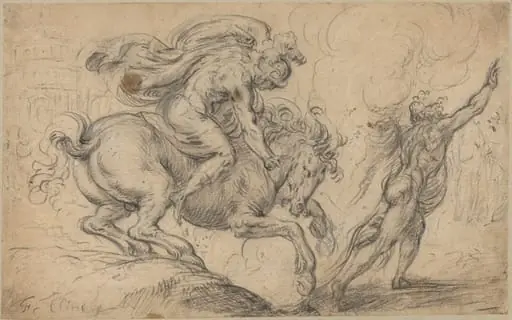 The Sacrifice of Marcus Curtius
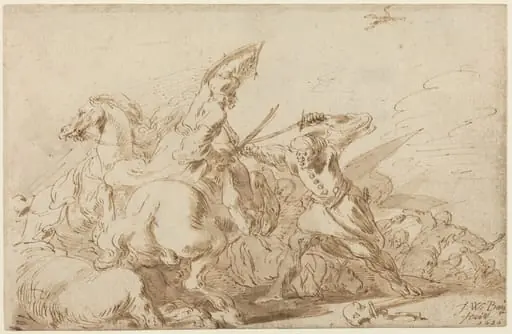 A Battle between Oriental Cavalry and Soldiers
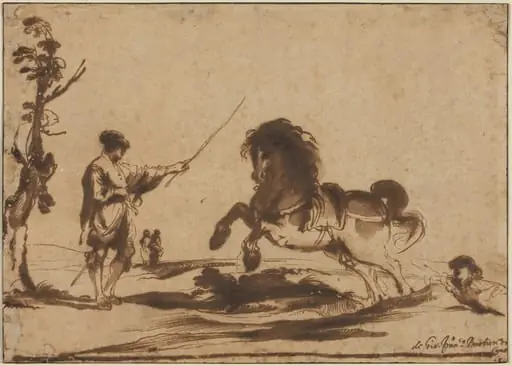 Landscape with the Taming of a Horse
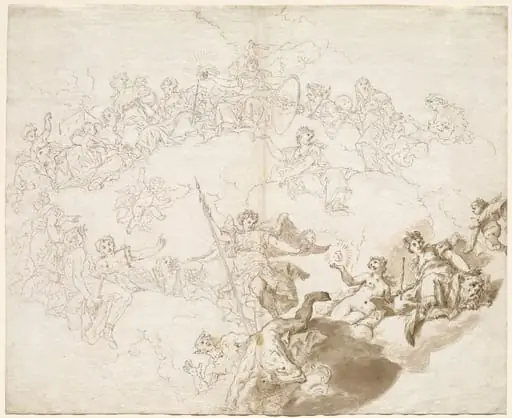 The Triumph of Virtue and Divine Wisdom
![Figures on Horseback [verso], by Unknown](https://artifactworldgallery.com/img/unknown--figures-on-horseback-verso--014ce85ac0e4d9d4-w320.webp) Figures on Horseback [verso]
Figures on Horseback [verso]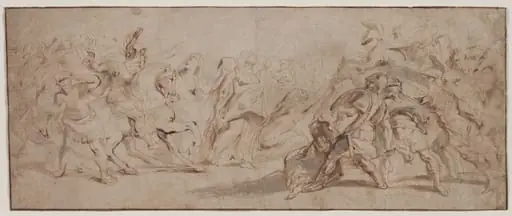 Reconciliation of the Romans and the Sabines (recto)
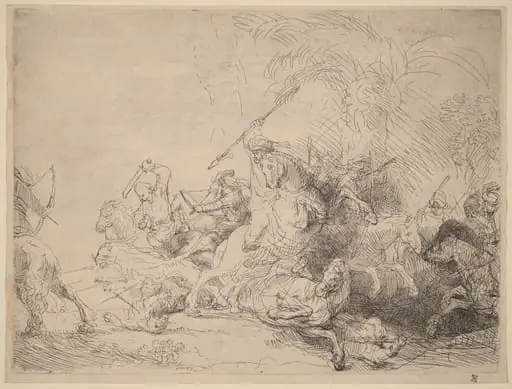 The Large Lion Hunt
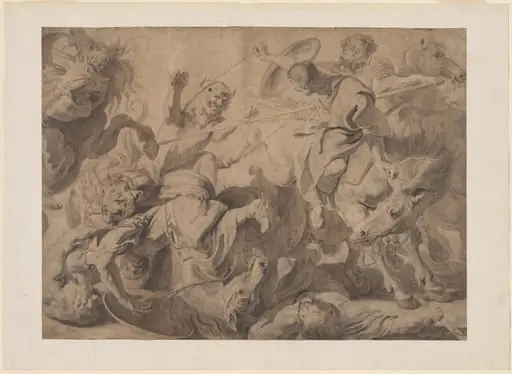 Lion Hunt
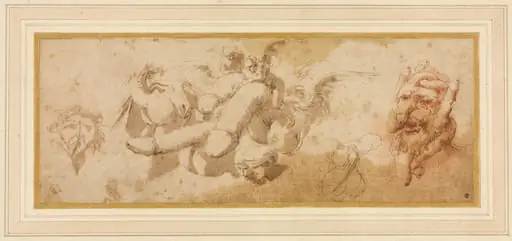 Sheet of Satirical Studies (Amorini Riding Phalli)