Artwork
Les Bords de la Seine près Argenteuil (The Banks of the Seine by Argenteuil)
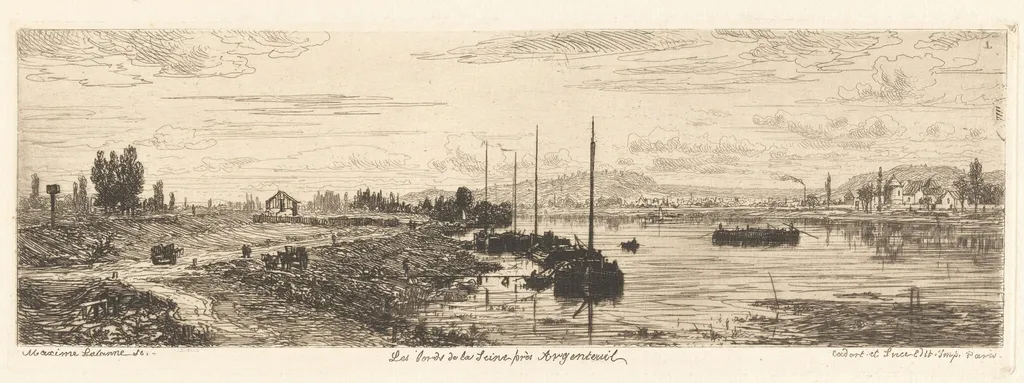
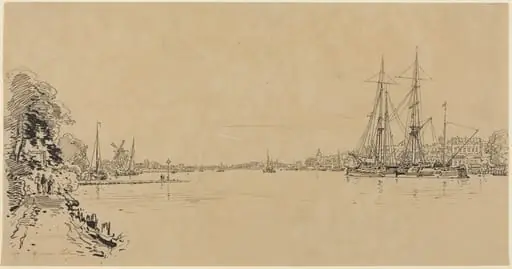
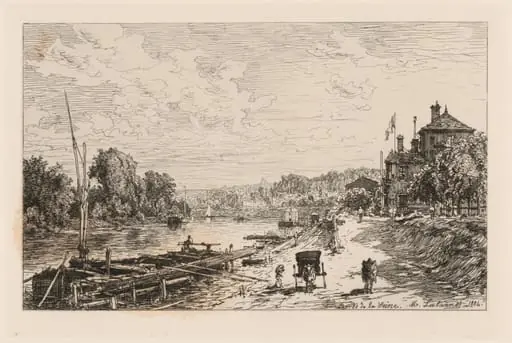
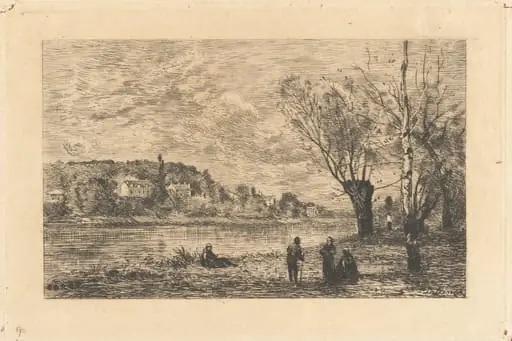
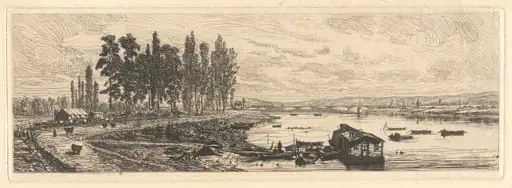
Les Bords de la Seine près Argenteuil (The Banks of the Seine by Argenteuil) is an ink print by the Impressionist artist Maxime Lalanne. It dates from 1869 and is held in the collection of the National Gallery of Art.
About this work
Overview
Created in 1869, *Les Bords de la Seine près Argenteuil* is an etching by French artist François Antoine Maxime Lalanne, rendered on laid paper.
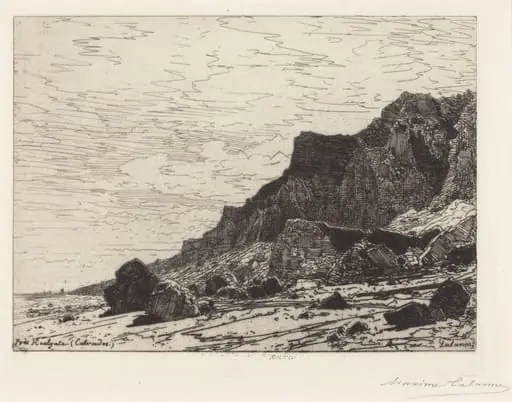
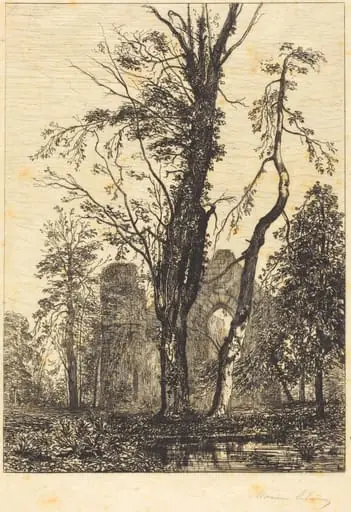
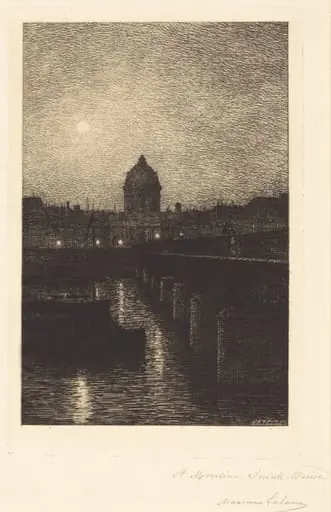
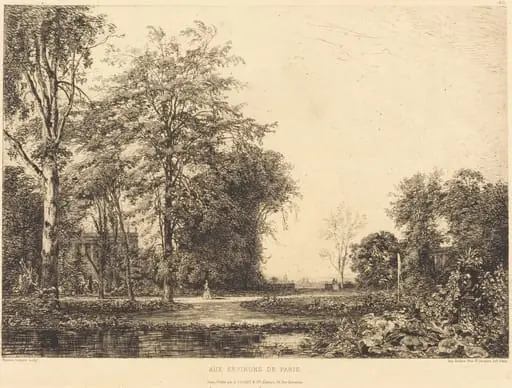
Created in 1869, *Les Bords de la Seine près Argenteuil* is an etching by French artist François Antoine Maxime Lalanne, rendered on laid paper. The work captures a tranquil stretch of the Seine River near the suburban town of Argenteuil, northwest of Paris. As a printmaker deeply engaged with intaglio methods, Lalanne used fine incised lines to translate the quiet atmosphere of the riverside into a delicate monochrome image, characteristic of his observational approach to landscape.
Subject & Meaning
The scene portrays a calm riverside with moored vessels, low shoreline structures, and scattered trees, all under a sky of soft, drifting clouds. There is no human activity depicted, emphasizing stillness and the subtle interplay of water, land, and atmosphere. The composition invites contemplation rather than narrative, reflecting Lalanne’s interest in the quiet rhythms of everyday French landscapes beyond the urban core of Paris.
Technique & Style
Lalanne employed traditional etching techniques, using acid to bite fine lines into a metal plate, which was then inked and pressed onto paper. His lines are precise yet fluid, suggesting texture and light without heavy shading. The use of laid paper, with its subtle watermark texture, enhances the tonal delicacy of the print. The effect resembles a spontaneous sketch, capturing movement in the water and air through controlled, minimal strokes.
History & Provenance
The print was produced during a period when Lalanne was actively engaged in documenting French rural and suburban scenes through printmaking. It entered the collection of the National Gallery of Art in Washington, D.C., where it remains part of a broader holding of 19th-century European prints. Its preservation reflects the institution’s interest in lesser-known but technically refined printmakers of the era.
Context
In the late 1860s, Argenteuil was a popular subject for artists drawn to its proximity to Paris and its evolving landscape of industry and leisure. While painters like Monet captured the area in oil, Lalanne’s etching offers a quieter, more intimate perspective. His work exists alongside the broader 19th-century revival of printmaking as a medium for personal, observational art rather than mass reproduction.
Legacy
Lalanne’s etchings, including this one, are valued for their technical precision and understated lyricism. Though not widely known outside specialist circles, his approach influenced later generations of printmakers who sought to elevate landscape studies through intimate, hand-crafted imagery. This work stands as a quiet testament to the enduring appeal of the Seine’s banks as a subject for quiet observation.
Artist & collection
Artist
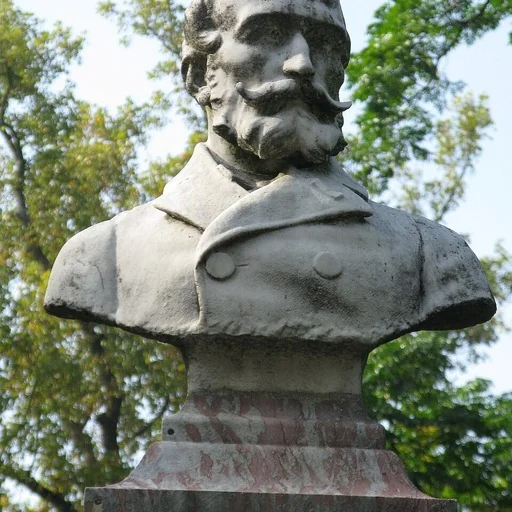
François Antoine Maxime Lalanne (November 27, 1827 – July 29, 1886) was a French artist known for his etchings and charcoal drawings (fusain).