Artwork
Weymouth Bay
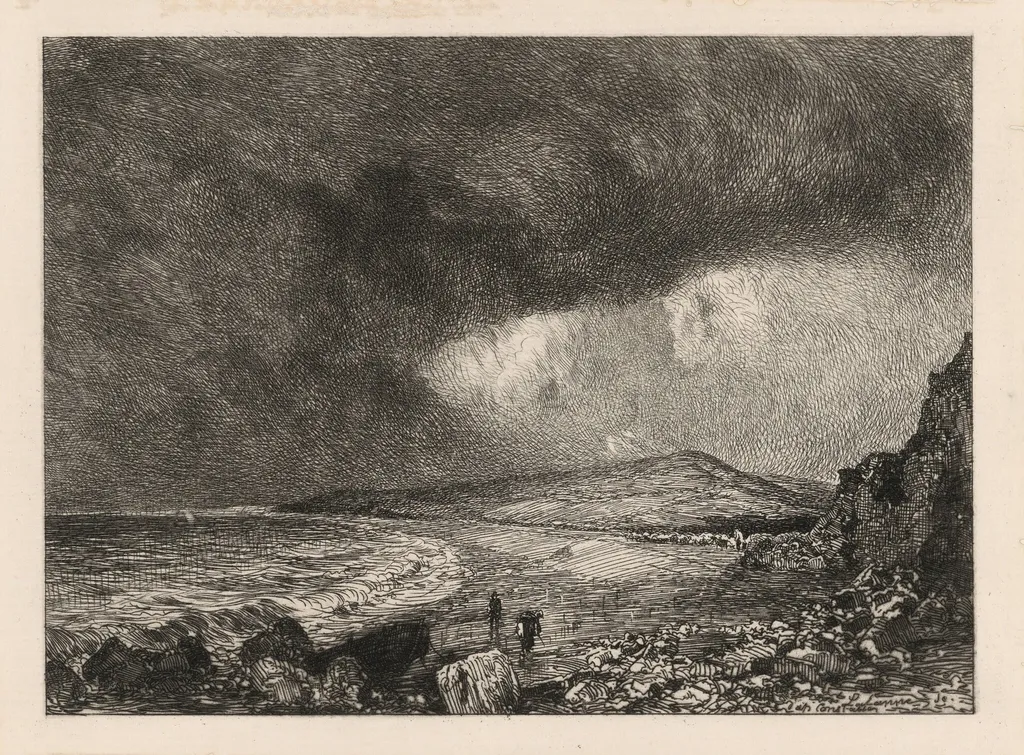
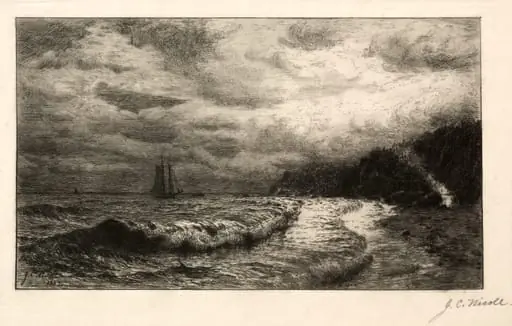
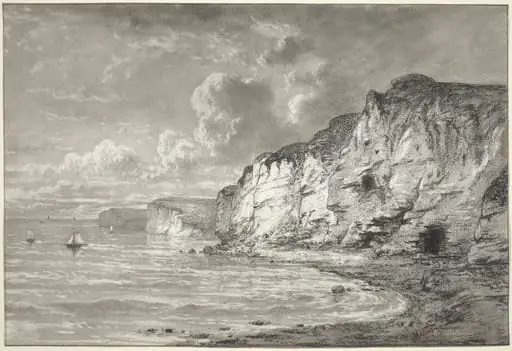
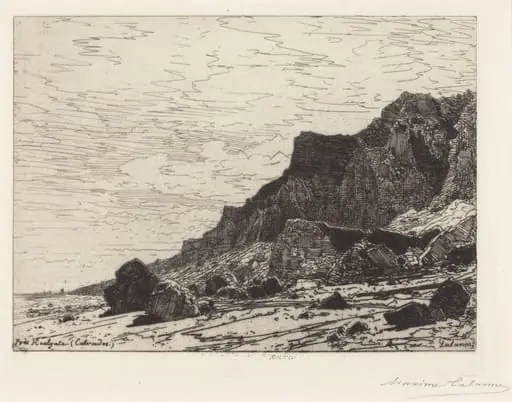
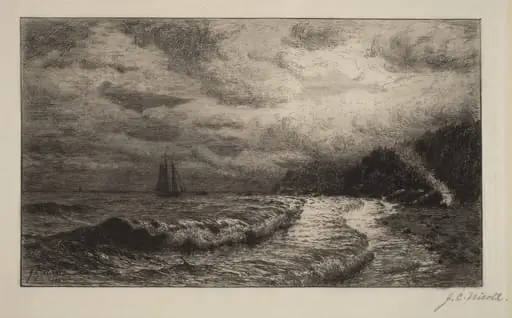
Weymouth Bay is an ink print by the Impressionist artist Maxime Lalanne. It dates from 1873 and is held in the collection of the National Gallery of Art.
About this work
Overview
Created in 1873 by French artist Maxime Lalanne, *Weymouth Bay* is an etching on laid paper depicting a coastal landscape in southern England.
Created in 1873 by French artist Maxime Lalanne, *Weymouth Bay* is an etching on laid paper depicting a coastal landscape in southern England. The work is part of the National Gallery of Art’s collection in Washington, D.C. Lalanne, known for his meticulous printmaking, captured the quiet rhythm of the English shore through fine linear detail and subtle tonal gradations, avoiding overt drama in favor of restrained observation.
Subject & Meaning
The scene portrays Weymouth Bay under a broad, open sky, with rolling hills receding toward the horizon. Small, indistinct figures dot the foreground, suggesting quiet human activity without dominating the composition. The absence of narrative or emotional intensity invites contemplation, emphasizing the harmony between land, sea, and atmosphere. The work reflects a 19th-century interest in everyday landscapes as subjects worthy of quiet reverence.
Technique & Style
Lalanne employed etching to achieve fine, controlled lines and nuanced shading, exploiting the absorbent quality of laid paper to enhance tonal depth. His use of cross-hatching and delicate stippling models form without heavy contrast, creating a soft, atmospheric effect. The composition favors horizontal balance and spatial recession, aligning with the tradition of topographical printmaking while avoiding the theatricality of Romantic landscape.
History & Provenance
The print entered the National Gallery of Art’s collection through its broader acquisition of 19th-century European prints. Lalanne’s works were widely circulated in France and Britain during his lifetime, appreciated by collectors and fellow artists for their technical precision. *Weymouth Bay* likely reached American audiences through exhibitions or print dealers in the late 19th century, eventually finding a permanent home in Washington.
Context
Lalanne worked during a period when etching experienced a revival among artists seeking alternatives to painting. His focus on landscape, often drawn from direct observation, aligned with broader European trends toward realism and plein air practice. Though not an Impressionist, his sensitivity to light and mood resonates with contemporaneous shifts in how nature was visually interpreted, particularly in British and French print circles.
Legacy
Lalanne’s *Weymouth Bay* exemplifies the quiet sophistication of late 19th-century etching, influencing later printmakers who valued subtlety over spectacle. While less widely known today than his painterly contemporaries, his work remains a reference point for the expressive potential of linear technique in landscape. The print endures as a testament to the enduring appeal of understated naturalism in graphic art.
Own this work as a print
Artist & collection
Artist
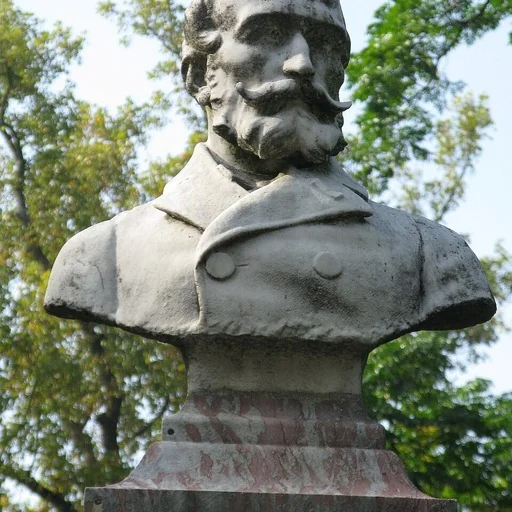
François Antoine Maxime Lalanne (November 27, 1827 – July 29, 1886) was a French artist known for his etchings and charcoal drawings (fusain).

![Landscape [Paesaggio], by Carlo Paolo Agazzi](https://artifactworldgallery.com/img/carlo-paolo-agazzi--landscape-paesaggio--e606f4ada87d2052-w320.webp)