Artwork
Dido on the Pyre
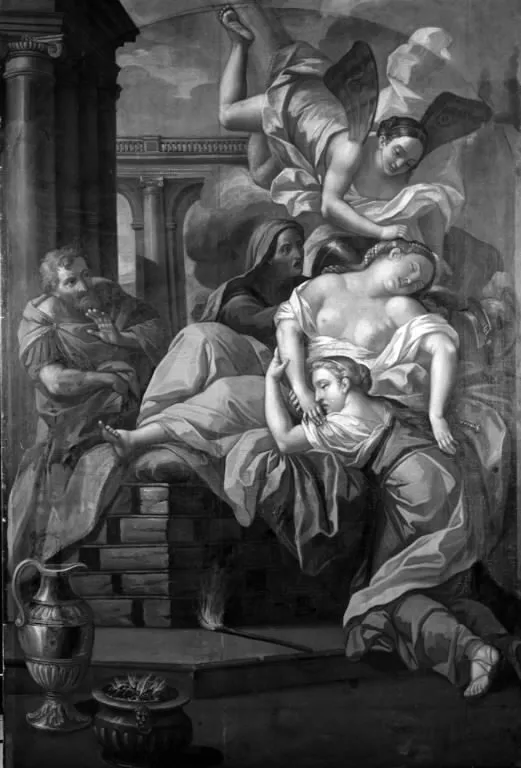
Dido on the Pyre is an oil painting by the Early Baroque Italian artist Lambert van Haven. It dates from 1667 and is held in the collection of the Statens Museum for Kunst.
About this work
Overview
This 1667 oil painting by Lambert van Haven portrays a scene from classical mythology, rendered on canvas. Preserved in the Statens Museum for Kunst, the composition centers on a reclining female figure amid a group of five, set against architectural elements and a storm-laden sky. The work employs pronounced contrasts of illumination to direct attention toward the central figure.
Subject & Meaning
The painting depicts Dido, the Carthaginian queen from Virgil’s *Aeneid*, at the moment of her self-immolation following Aeneas’ abandonment.
The painting depicts Dido, the Carthaginian queen from Virgil’s *Aeneid*, at the moment of her self-immolation following Aeneas’ abandonment. A kneeling attendant grips her hand, while two winged figures—likely personifications of divine or allegorical forces—hover above. A robed male figure observes from the left, reinforcing the scene’s tragic weight. The metal vessel on the ground may allude to ritual or sacrifice.
Technique & Style
Van Haven employs chiaroscuro to heighten drama, isolating the central figure through stark light against deep shadow. Brushwork remains controlled, with precise detailing in drapery and anatomical forms. The composition balances vertical columns with dynamic gestures, while the muted palette of the background intensifies focus on the illuminated figures. The style reflects Baroque conventions of emotional intensity and theatricality.
History & Provenance
Completed in 1667, the painting entered the collection of the Statens Museum for Kunst, though its earlier ownership remains undocumented. Its creation coincides with van Haven’s active period as a court painter in Denmark, where he produced works blending historical and mythological themes. The painting’s condition and conservation history have not been extensively recorded.
Context
The work emerges from 17th-century European engagement with classical antiquity, particularly Virgil’s *Aeneid*, a frequent source for Baroque artists. Van Haven’s interpretation aligns with contemporary tastes for narrative drama and moralizing themes. The inclusion of allegorical figures and architectural elements reflects the era’s fusion of history painting with decorative grandeur.
Legacy
While not widely reproduced, the painting exemplifies Baroque treatments of mythological tragedy, contributing to the period’s visual repertoire. Its presence in a major public collection ensures accessibility for study, though it lacks the renown of works by contemporaries like Rubens or Poussin. The composition’s emphasis on emotional climax and chiaroscuro remains a point of scholarly interest.
Artist & collection
Artist
A Danish painter working in the late 1600s, Lambert van Haven made grand ceiling designs and still lifes in oil.

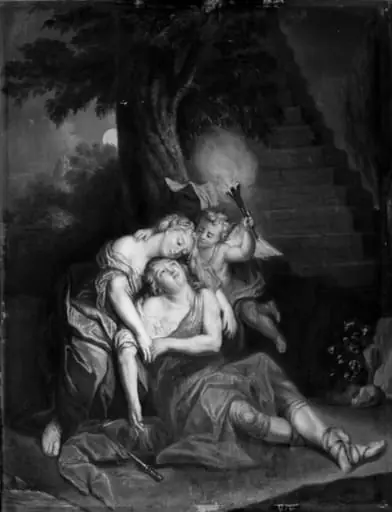 Pyramus, Thisbe og en amorin
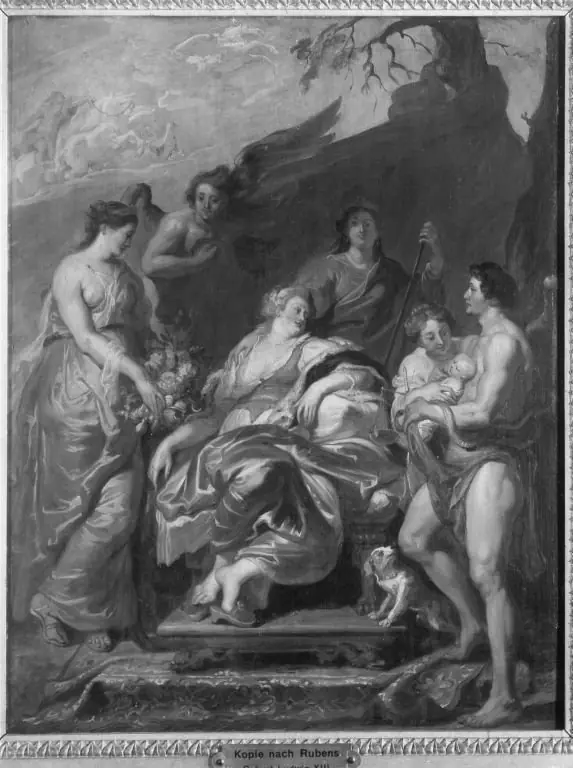 Birth of Louis XIII
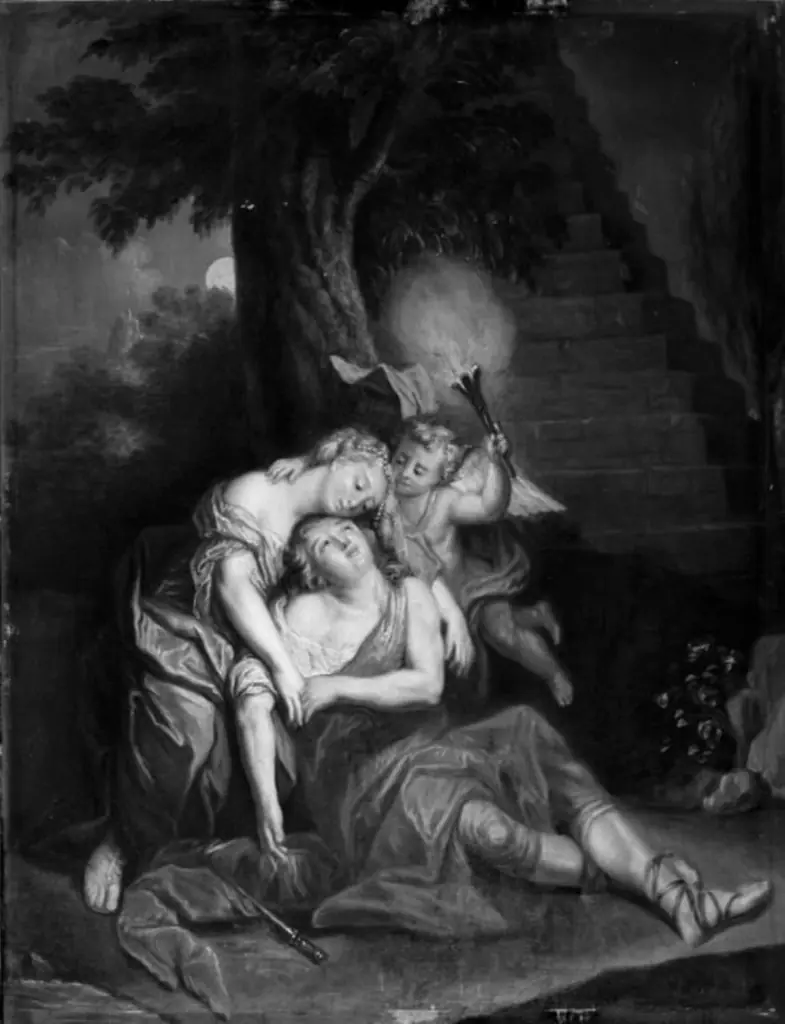 Pyramus, Thisbe og en amorin
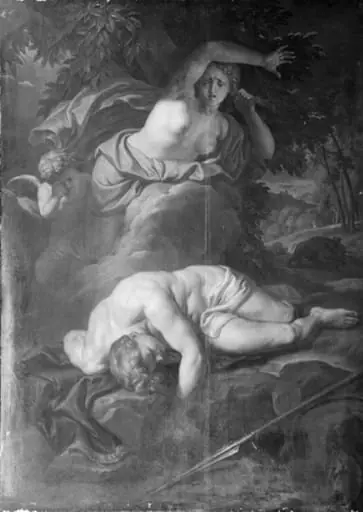 Venus Weeping over the Slain Adonis
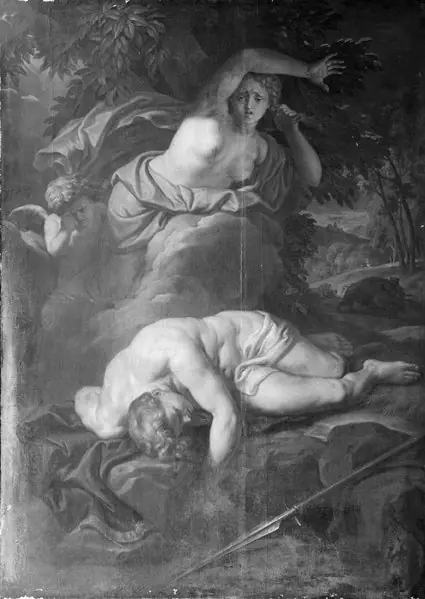 Venus Weeping over the Slain Adonis
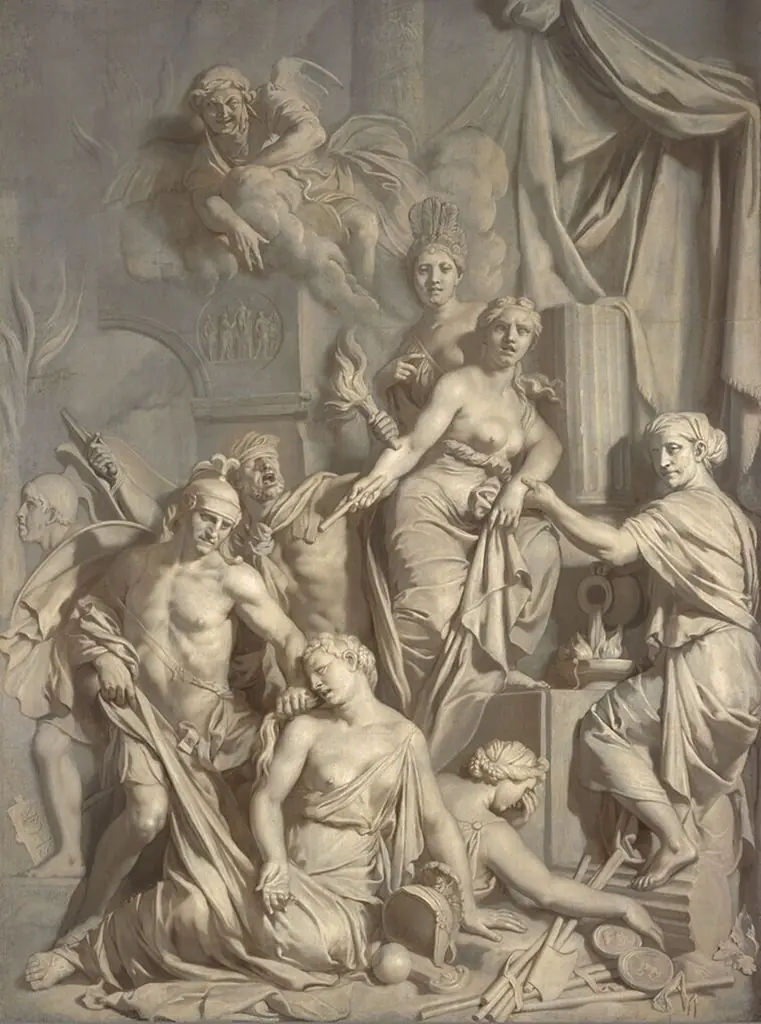 Rome from the Throne
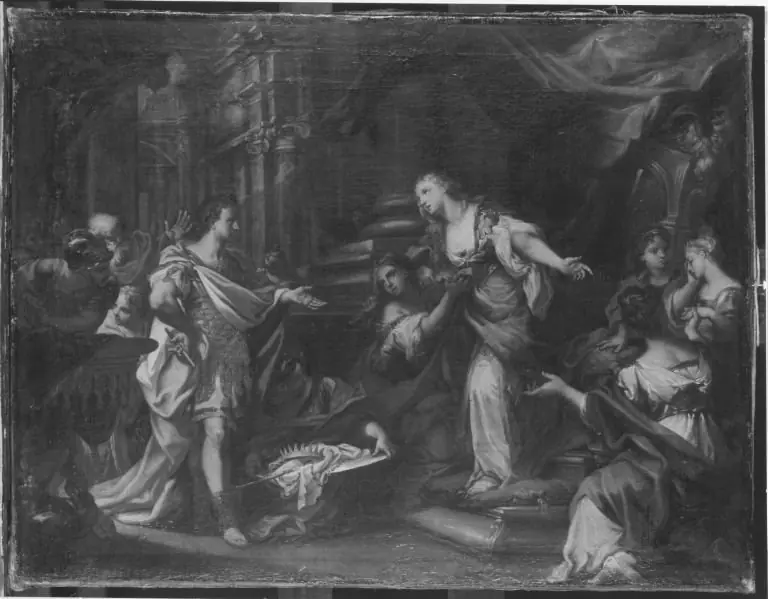 Cleopatra übergibt Augustus Krone uund Szepter
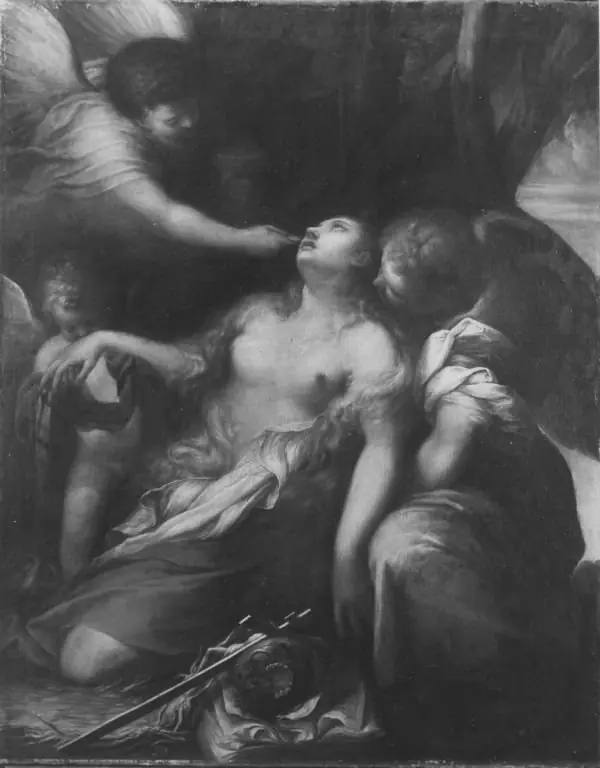 Kommunion der hl. Magdalena
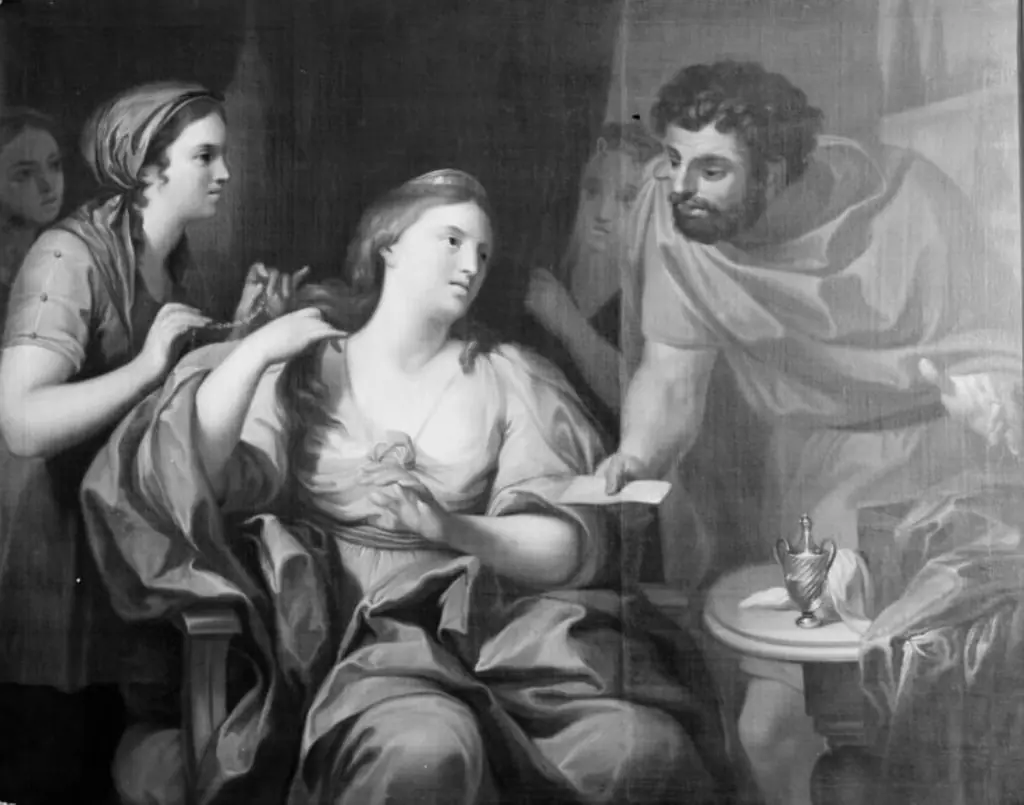 Dronning Semiramis som sværger ikke at ville rede sit hår før hun har underkuet et oprør