Artwork
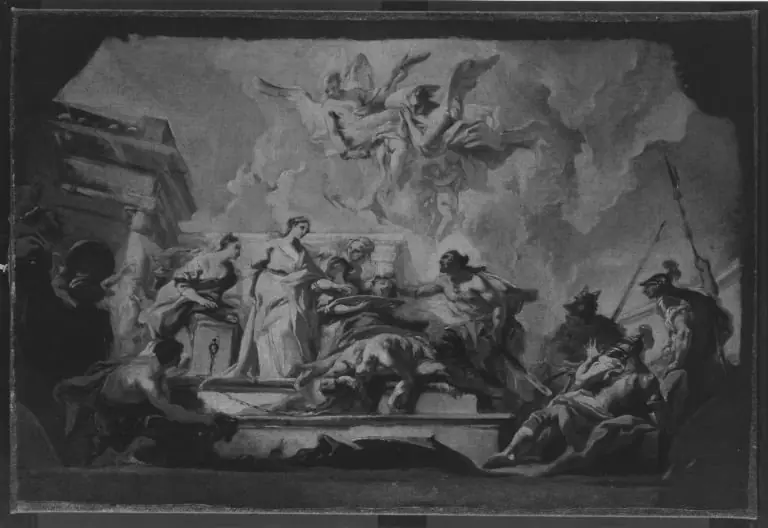
Cleopatra übergibt Augustus Krone uund Szepter
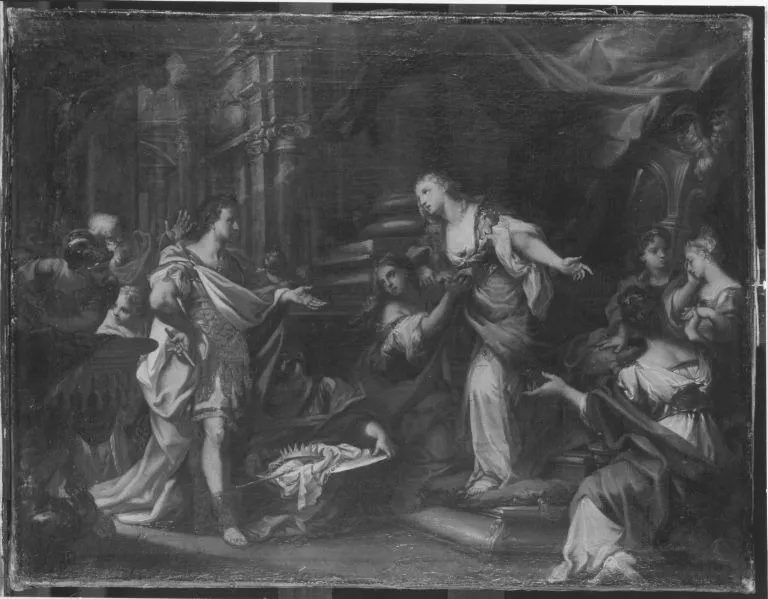
Cleopatra übergibt Augustus Krone uund Szepter is an unspecified painting by the Rococo painting artist Sebastiano Conca. It dates from 1722 and is held in the collection of the Bavarian State Painting Collections.
About this work
Overview
Painted in 1722 by Sebastiano Conca, this work depicts the moment Cleopatra surrenders her regalia to Augustus. Executed in oil on canvas, it is part of the Alte Pinakothek’s collection in Munich. The painting reflects early 18th-century interest in classical narratives, rendered with theatrical flair typical of the period’s academic style.
Subject & Meaning
The scene captures Cleopatra, defeated after the Battle of Actium, offering her crown and scepter to the Roman emperor Augustus. It symbolizes the end of Ptolemaic rule and the consolidation of Roman power in the eastern Mediterranean. The gesture is formal and solemn, emphasizing political submission rather than personal drama.
Technique & Style
Conca employs balanced composition and refined chiaroscuro to guide the viewer’s eye toward the central exchange of power. Figures are arranged with classical restraint, their drapery rendered in smooth, flowing lines. The palette is muted yet elegant, favoring earth tones and soft golds to convey gravitas over spectacle.
History & Provenance
Commissioned during Conca’s time in Rome, the painting entered the Bavarian royal collection in the 18th century. It was later transferred to the Alte Pinakothek, where it remains today. Its journey reflects the broader European fascination with antiquity and the role of art in legitimizing dynastic narratives.
Context
Created during the height of the Baroque era, the painting aligns with contemporary tastes for historical and mythological subjects that conveyed moral or political lessons. While not a literal record, it draws from Roman historiography and Renaissance iconography, filtering ancient events through an 18th-century lens of order and authority.
Legacy
Though less widely known than other depictions of Cleopatra, the work exemplifies how European artists interpreted classical history to reinforce ideals of sovereignty and submission. It contributes to a broader visual tradition that shaped perceptions of antiquity in Enlightenment-era Europe.
Artist & collection

 Enthauptung Johannes des Täufers
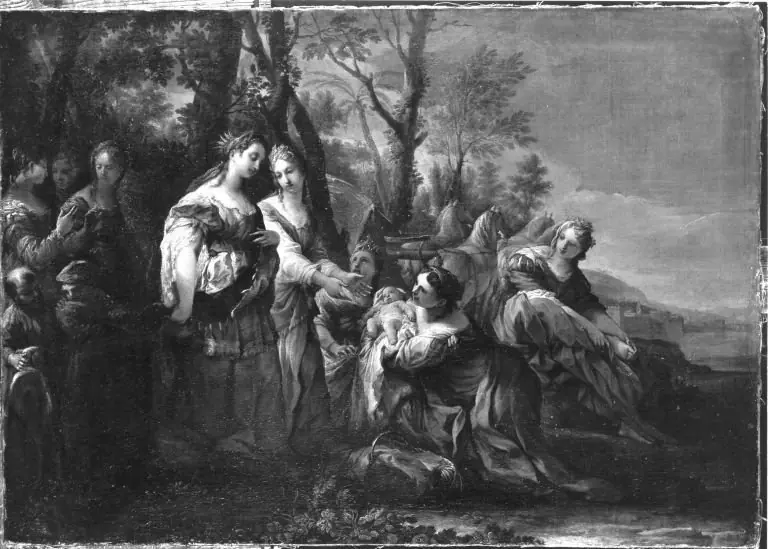 Die Auffindung Moses
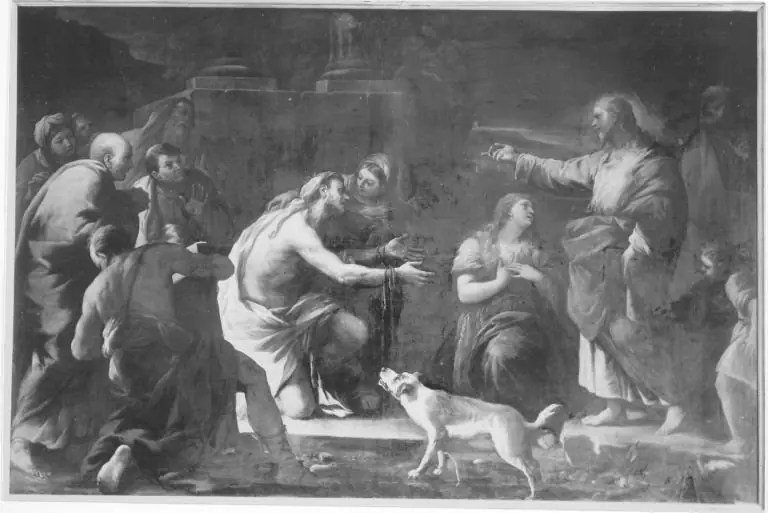 Raising Lazarus from the Dead
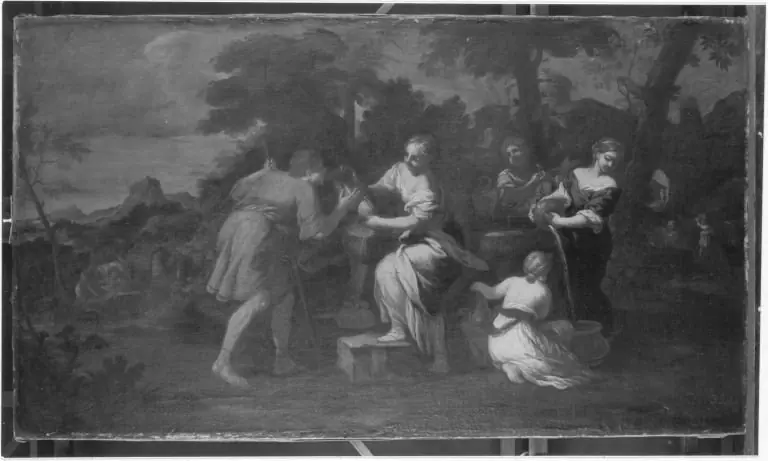 Rebekka und Laban am Brunnen
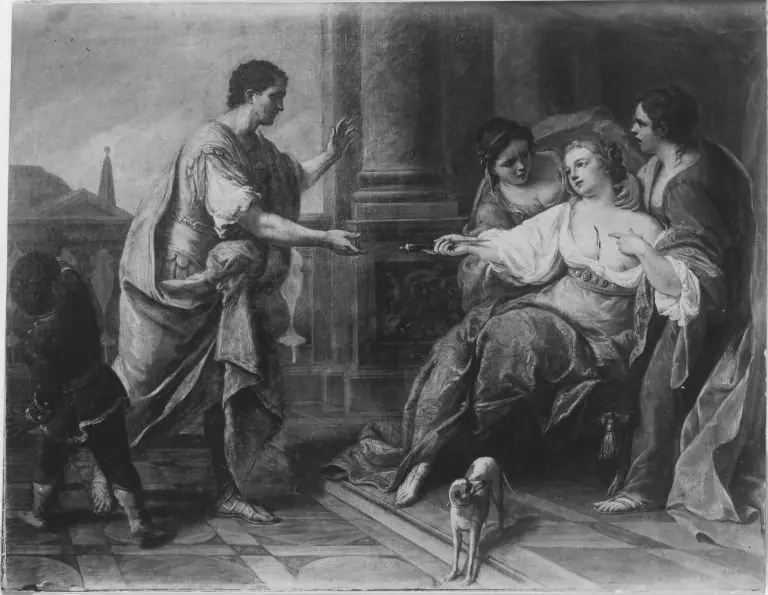 Lukretia und Collatinus
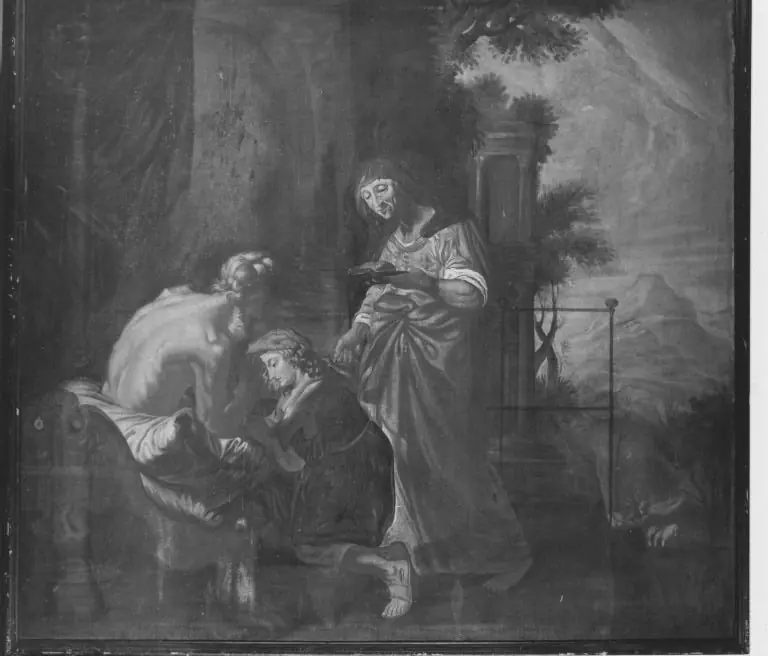 Isaak segnet Jakob (Kopie nach)
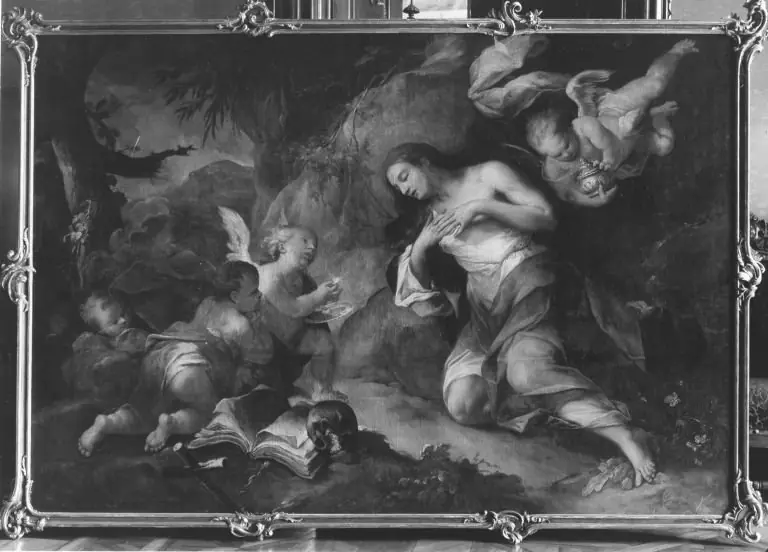 Die letzte Kommunion der hl. Magdalena (?)
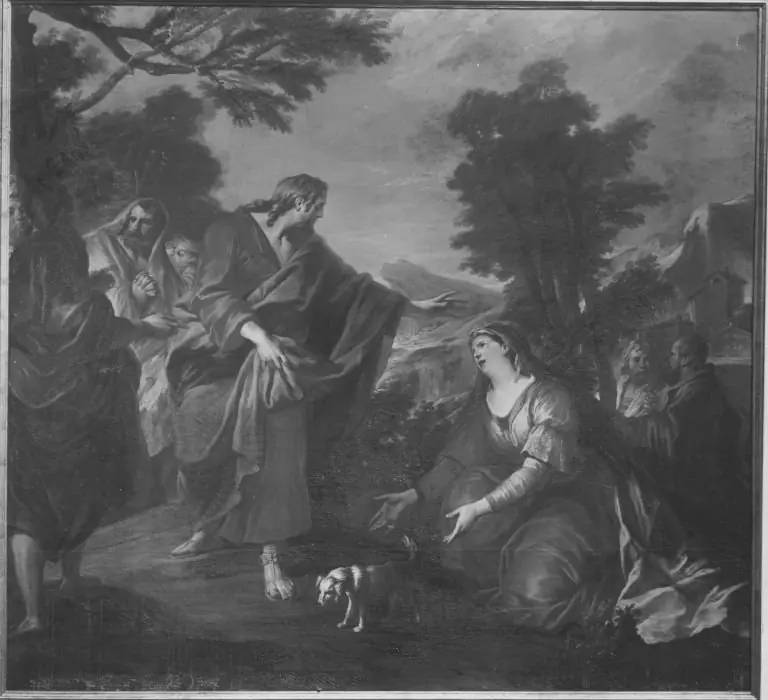 Christus und das kanaanitische Weib
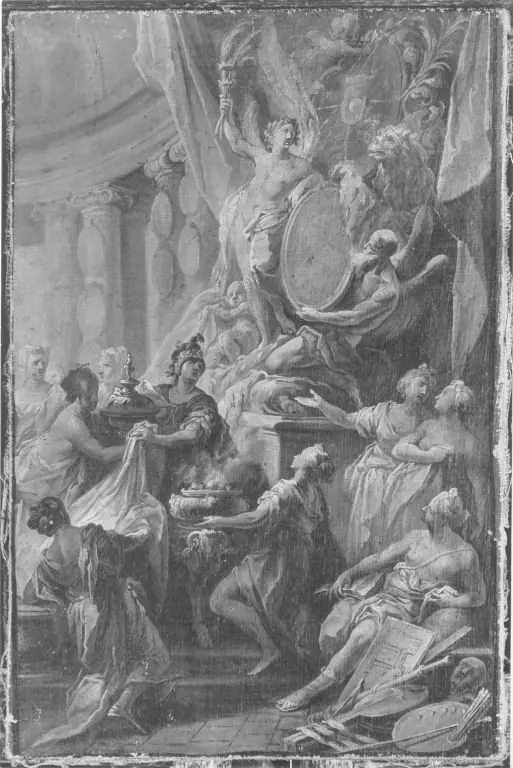 Huldigung an Kurfürst Maximilian III. Joseph von Bayern
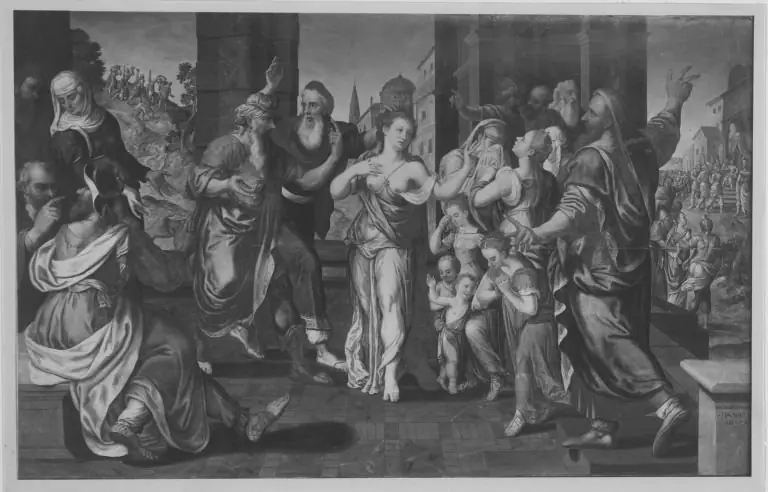 Die keusche Susanna
 Der Mund der Wahrheit
 Abigail bringt David Lebensmittel (Schule)