Artwork
Ecce Homo
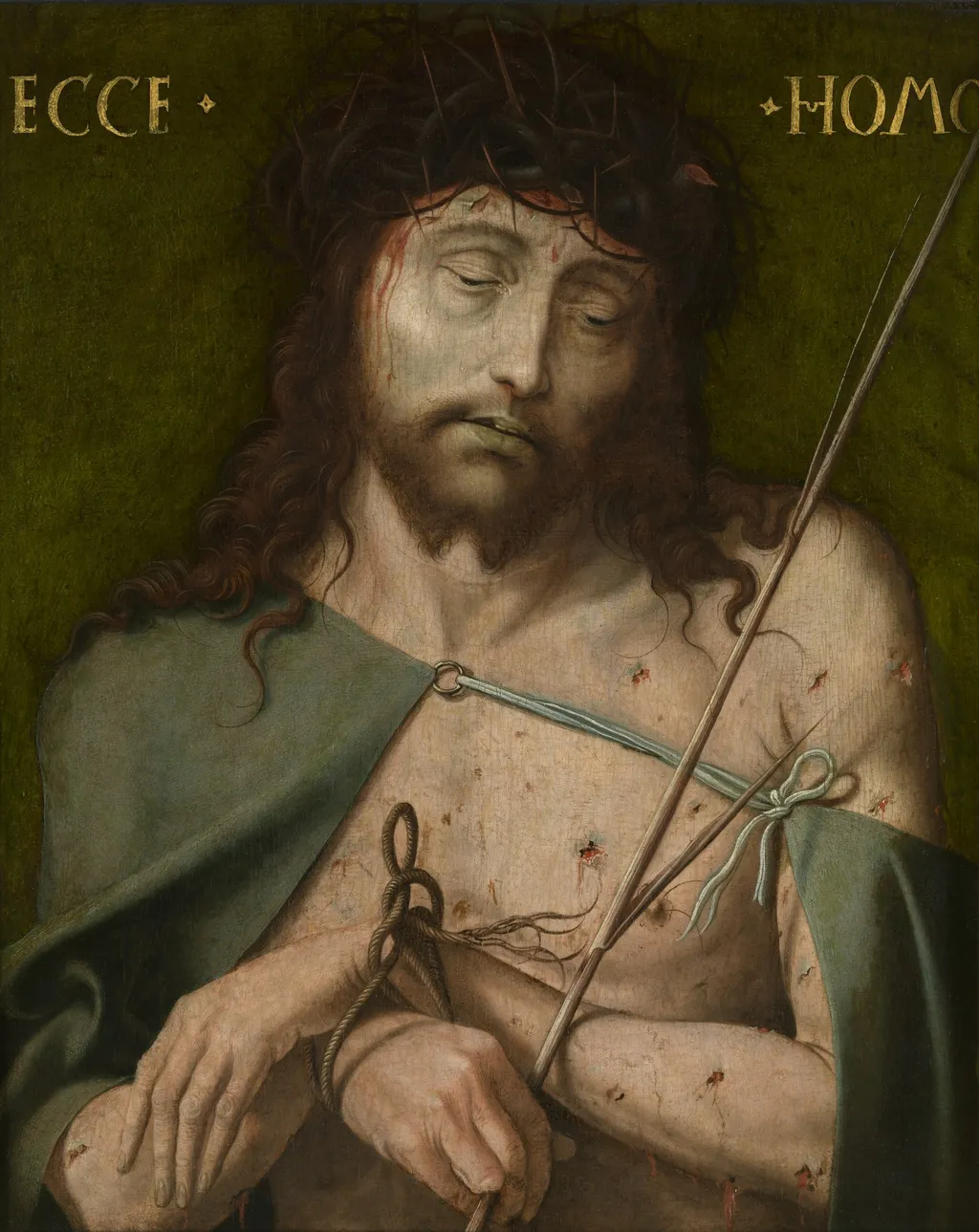
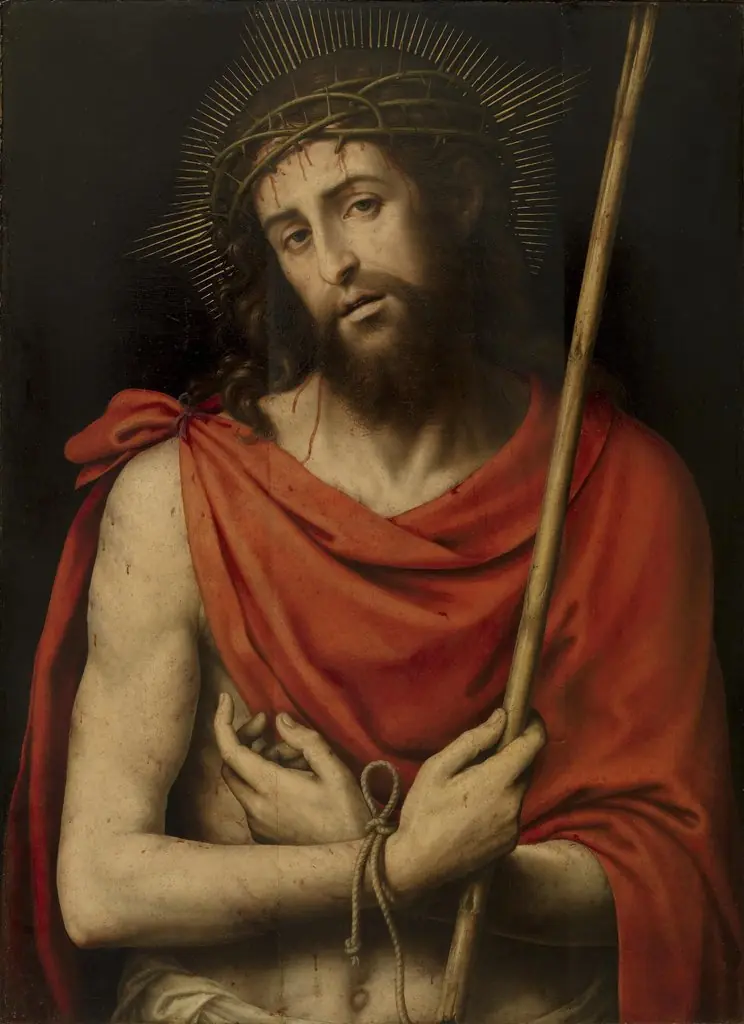
Ecce Homo is an oil painting by the Mannerist artist Unknown. It dates from 1525 and is held in the collection of the Royal Museum of Fine Arts Antwerp.
About this work
Overview
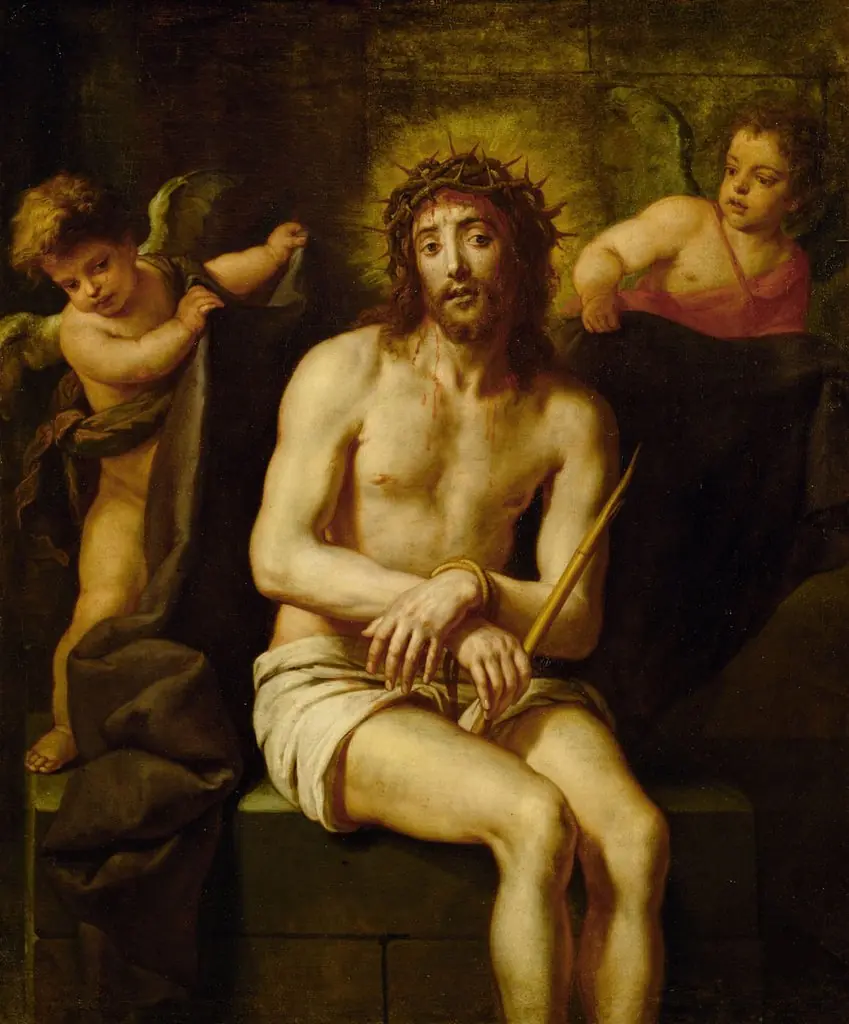
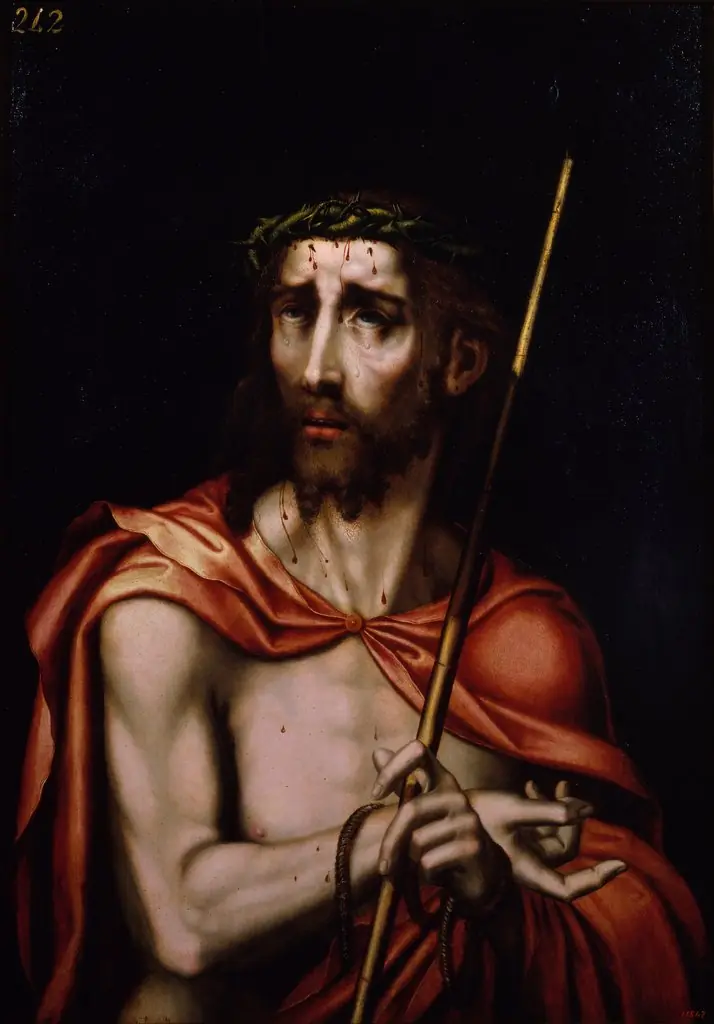
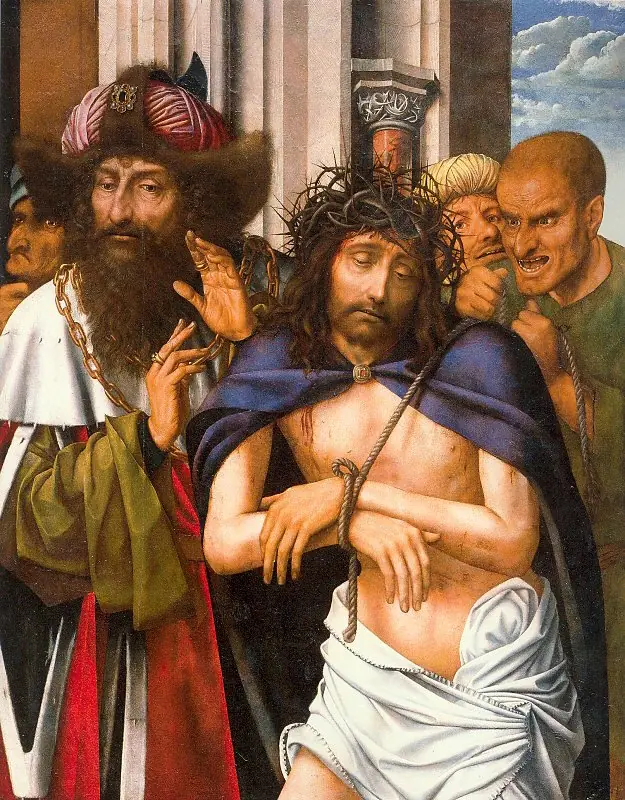
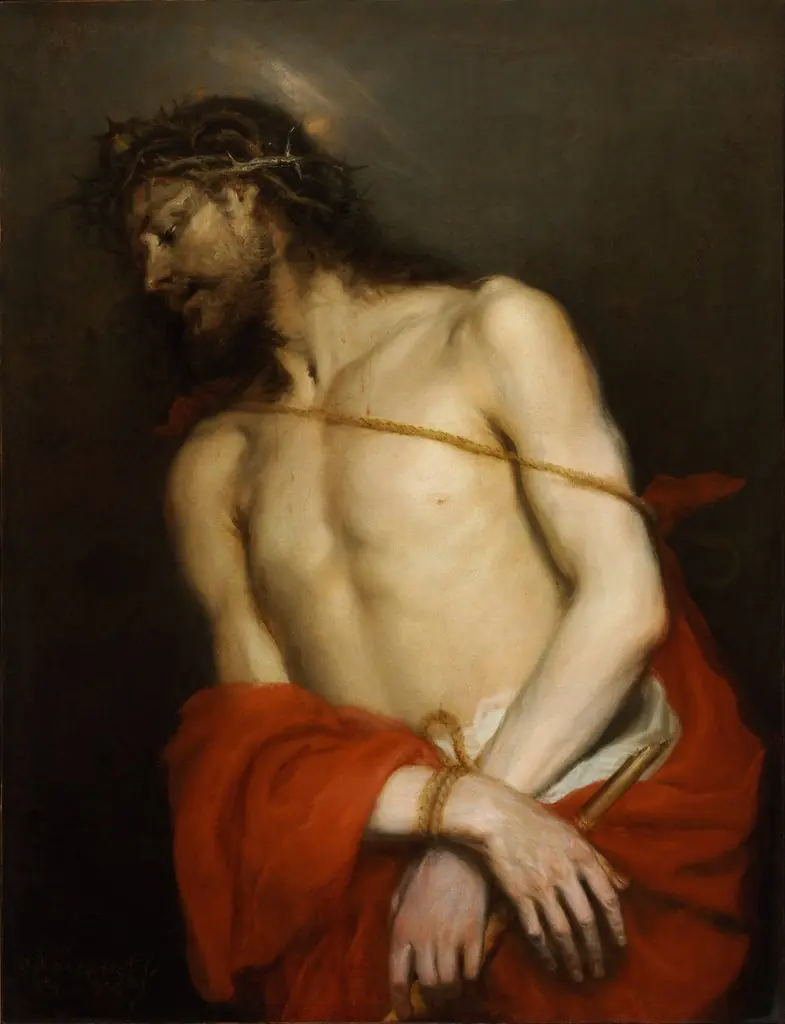
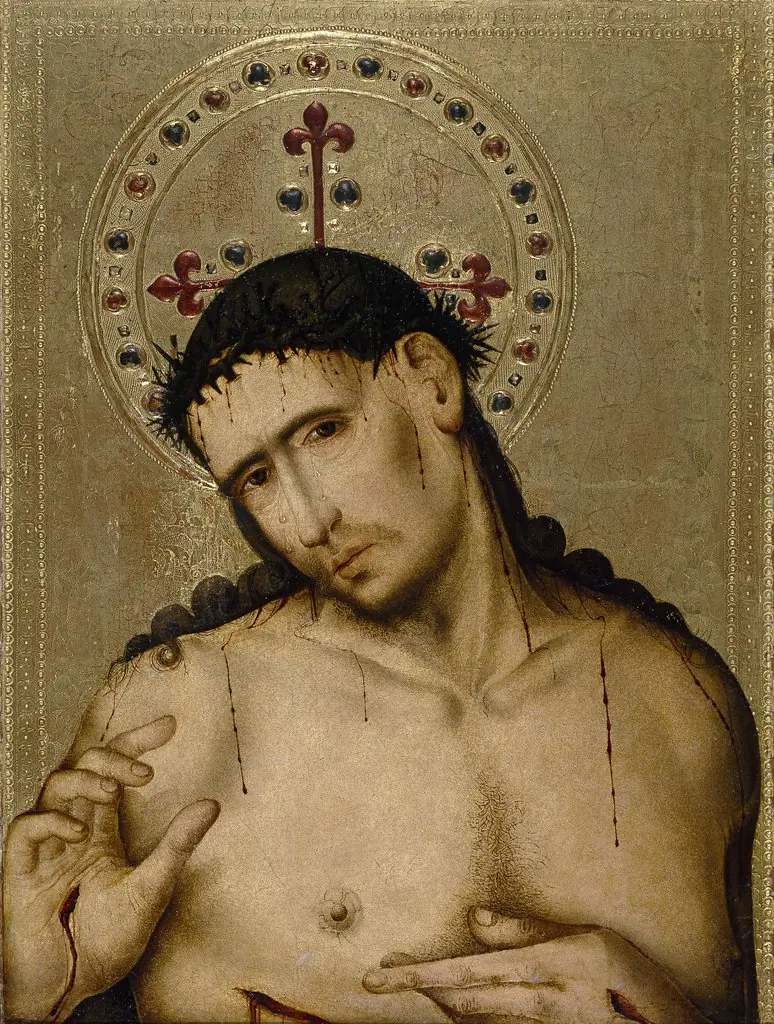
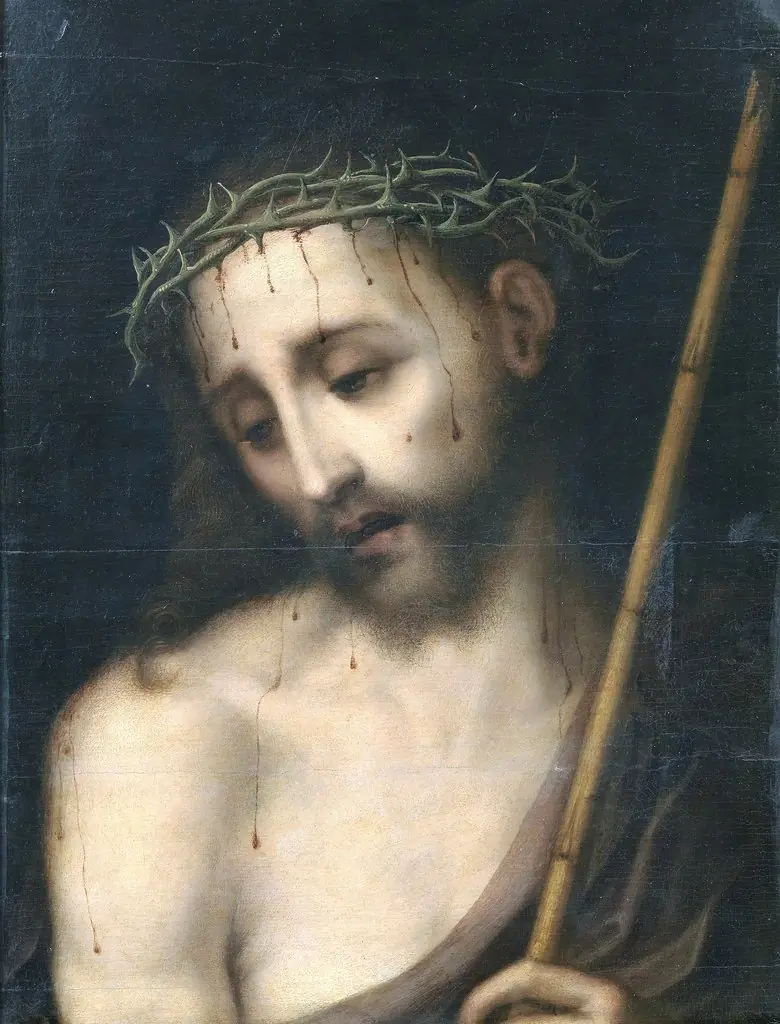
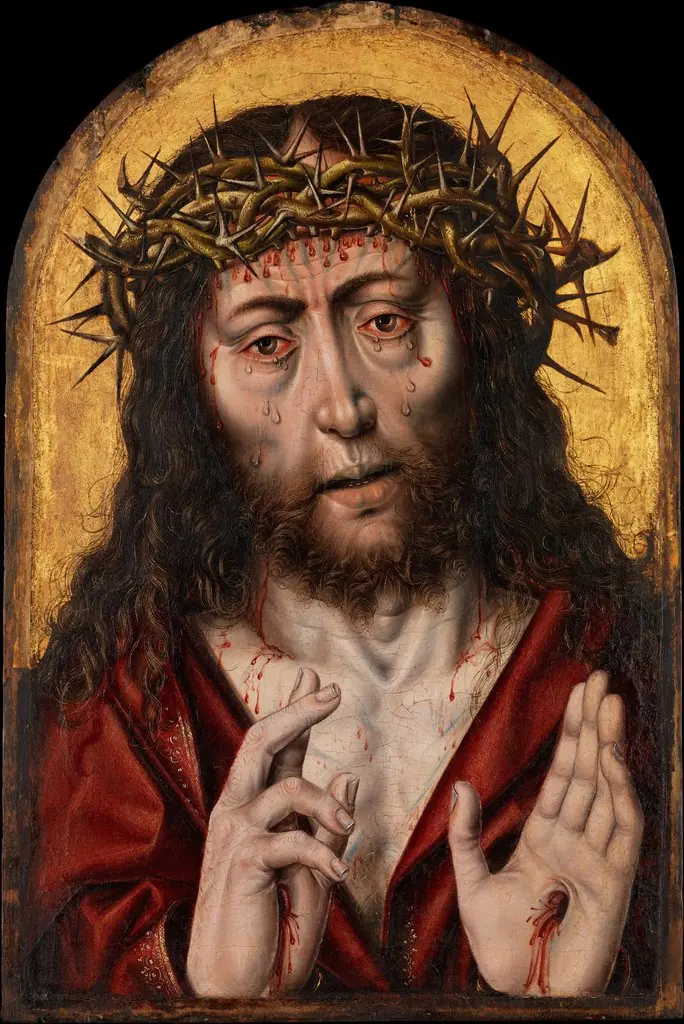
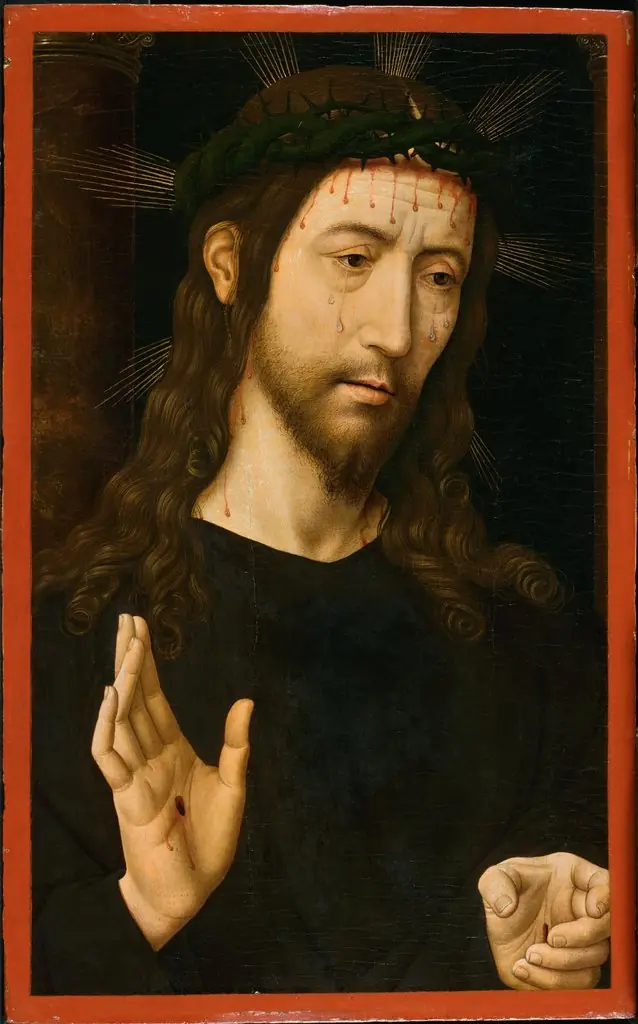
The oil painting titled Ecce Homo portrays a bearded figure with long dark hair, clad in a green robe. He is crowned with thorns, his eyes shut, and blood stains his face and torso. A reed, bound to his left hand with rope, is held in his right. Gold lettering at the top reads “ECCE HOMO,” set against a dark‑green background.
Subject & Meaning
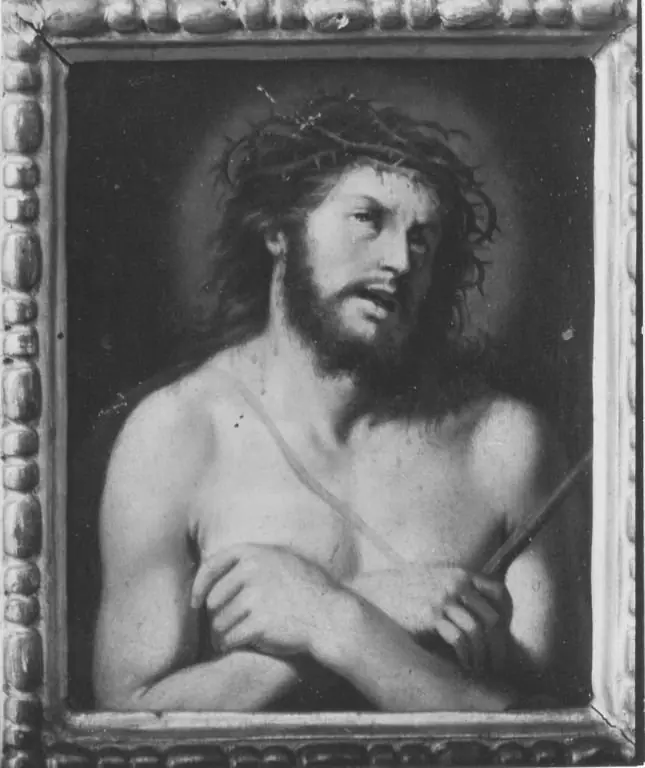
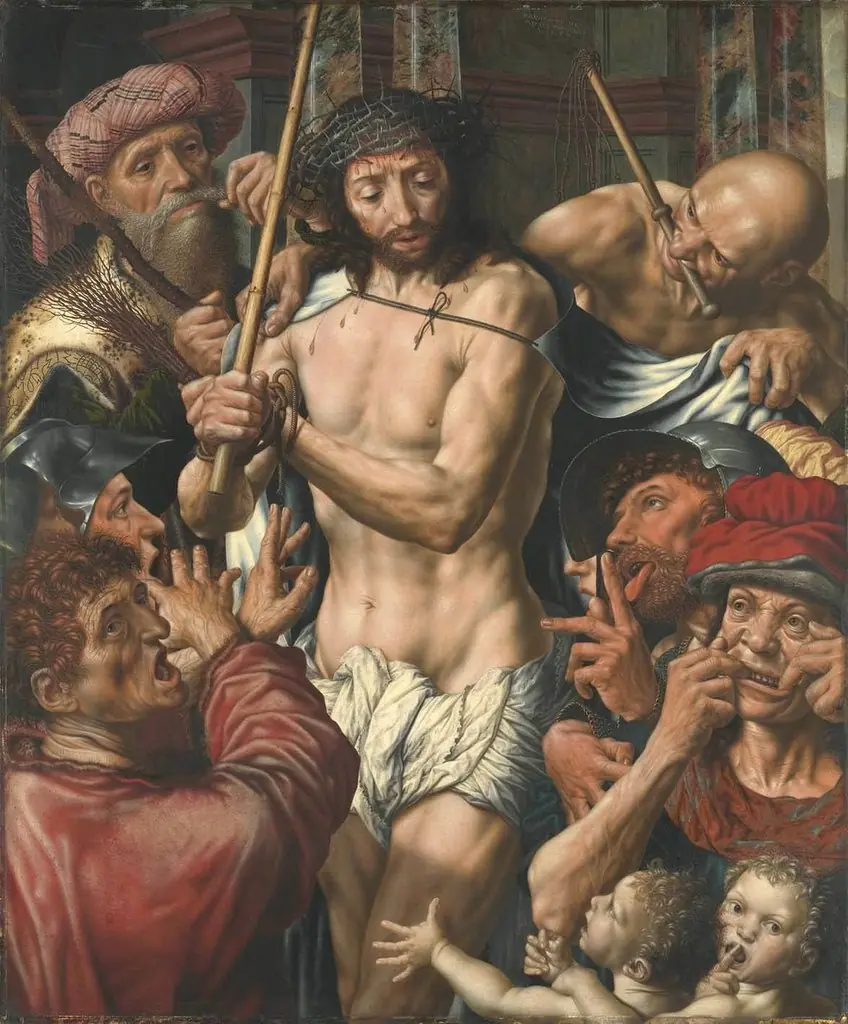
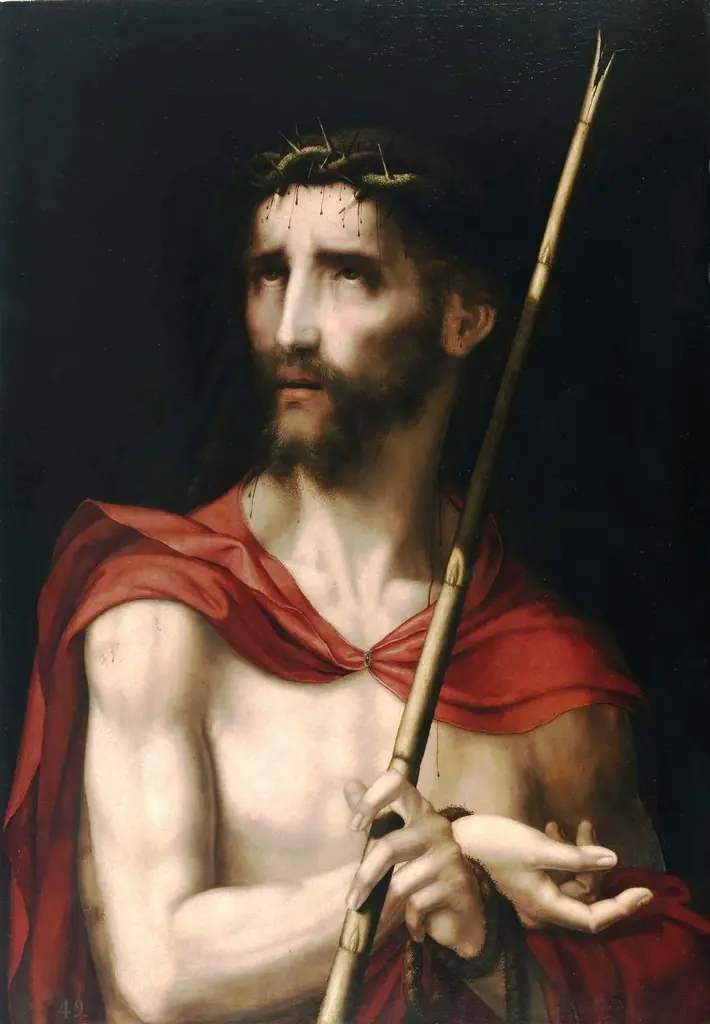
The work depicts the moment when Pontius Pilate presents a scourged Jesus to the crowd, a scene traditionally known as “Ecce Homo” (“Behold the man”). The thorns, wounds, and blood emphasize suffering, while the closed eyes suggest resignation or spiritual contemplation.
Technique & Style
The artist employs chiaroscuro, using strong contrasts of light and shadow to draw focus to the figure’s face and torso. The illumination isolates the central figure from the dark background, creating a dramatic, three‑dimensional effect typical of Baroque religious imagery.
History & Provenance
The painting’s provenance is not detailed in the supplied information, and no specific artist or date is provided. Its title and iconography align it with a long tradition of “Ecce Homo” representations in Western art.
Context
Within Christian visual culture, the Ecce Homo motif served as a devotional prompt, encouraging viewers to contemplate Christ’s passion. The use of gold lettering and a somber palette reflects the solemnity associated with Passion scenes in ecclesiastical settings.
Artist & collection

 Domestic Scene
 Giacomo and Cardinal Marco, investing Andrea, Abbot of San Zeno, with his Benefice
 The Nymph of Fontainebleau
 Portrait of a Woman
 Madonna and Child with Saints in the Enclosed Garden
 Venus and Minerva
 Family Group of Four on Sofa
 Wall painting from Room H of the Villa of P. Fannius Synistor at Boscoreale