Artwork
Study for "Alpine Mastiffs Reanimating a Distressed Traveler" (recto); Study for "Alpine Mastiffs Reanimating a Distressed Traveler" (verso)
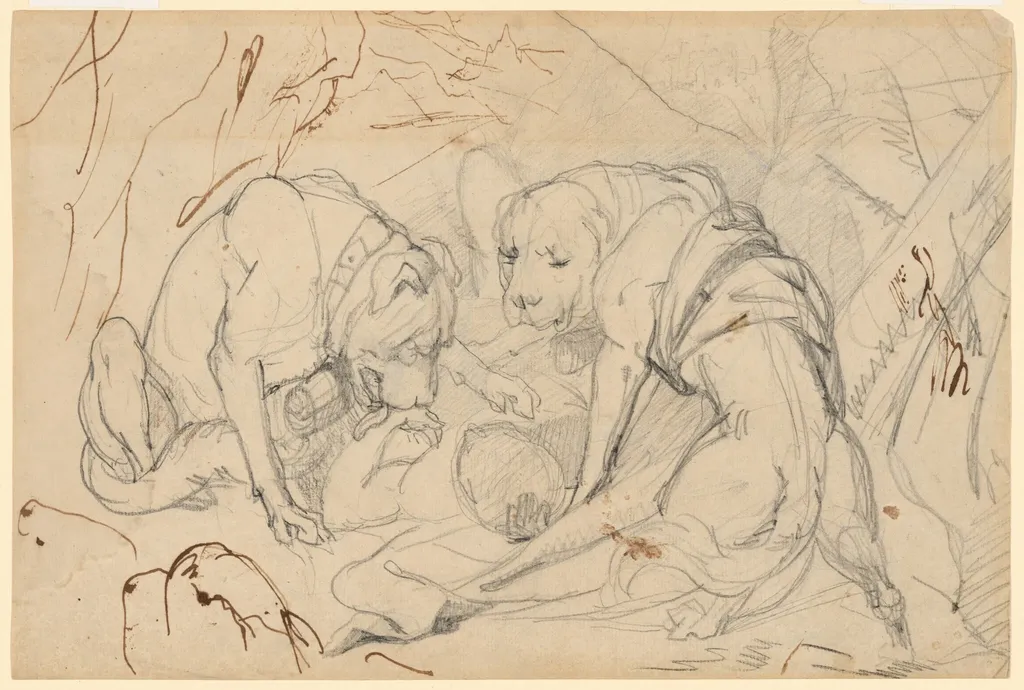
Study for "Alpine Mastiffs Reanimating a Distressed Traveler" (recto); Study for "Alpine Mastiffs Reanimating a Distressed Traveler" (verso) is a graphite drawing by the Romanticist artist Edwin, Sir Landseer. It dates from 1820 and is held in the collection of the National Gallery of Art. This double-sided drawing by Sir Edwin Landseer, dated 1820, consists of two related studies for a larger composition.
About this work
Overview
This double-sided drawing by Sir Edwin Landseer, dated 1820, consists of two related studies for a larger composition.
This double-sided drawing by Sir Edwin Landseer, dated 1820, consists of two related studies for a larger composition. The recto features graphite and pen with brown ink, depicting two Alpine mastiffs attending to a fallen traveler. The verso contains a simpler graphite sketch, likely a preliminary exploration of the same scene. Both sheets are executed on laid paper and are held in the National Gallery of Art, Washington, D.C.
Subject & Meaning
The scene portrays two large dogs interacting with a human figure in distress, lying prone on the ground. One dog rests its head on the traveler’s chest, the other looks upward, as if seeking help or signaling alarm. The composition suggests themes of loyalty and rescue, reflecting 19th-century ideals of animal devotion. The traveler’s contorted posture implies vulnerability, while the dogs’ attentive presence conveys instinctive care.
Technique & Style
Landseer employed bold, fluid lines in ink and graphite to capture motion and emotional intensity. The recto uses chiaroscuro to model form through stark contrasts, lending drama to the figures. The verso, in graphite alone, reveals lighter, more tentative strokes, indicating an earlier stage of planning. Both sheets display a spontaneous energy, with loose contours and minimal detail, characteristic of preparatory studies rather than finished works.
History & Provenance
Created in 1820, these drawings served as preparatory studies for Landseer’s later painting 'Alpine Mastiffs Reanimating a Distressed Traveler.' They remained in the artist’s possession until after his death, eventually entering the National Gallery of Art’s collection through established acquisition channels. Their survival as a pair offers rare insight into Landseer’s working process during his early career.
Context
In the early 1820s, Landseer was gaining recognition for his animal subjects, often imbuing them with human-like emotion. This period coincided with growing public interest in canine loyalty and the Romantic idealization of nature’s moral order. The Alpine mastiff, associated with rescue in the Swiss Alps, was a symbol of noble service, making the subject both topical and emotionally resonant for contemporary audiences.
Legacy
These studies illustrate Landseer’s method of refining emotional narratives through repeated sketching. Though the final painting is less widely known today, the drawings remain valuable for understanding his approach to composition and animal psychology. They exemplify how preparatory work in 19th-century British art functioned as a bridge between observation and finished expression.
Artist & collection


![Contending Group after Nature [A Lion Fighting a Tiger and a Leopard], by Edwin, Sir Landseer](https://artifactworldgallery.com/img/edwin-sir-landseer--contending-group-after-nature-a-lion-fighting-a-tiger-and-a--3801d18d30f50081-w320.webp)
 Figures at a stove, and a pig
 A dog, and two boatwomen by their beached craft
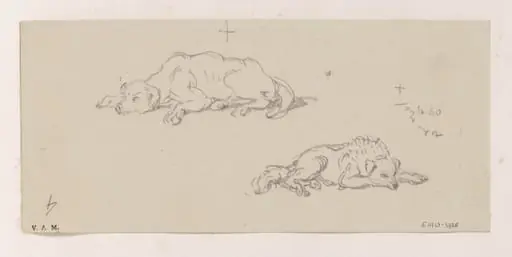 Two studies of a sleeping dog
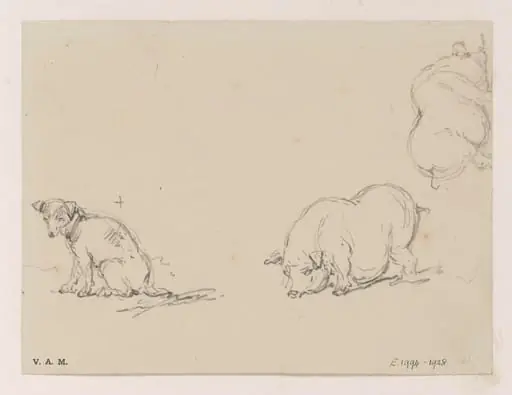 Pigs and a dog
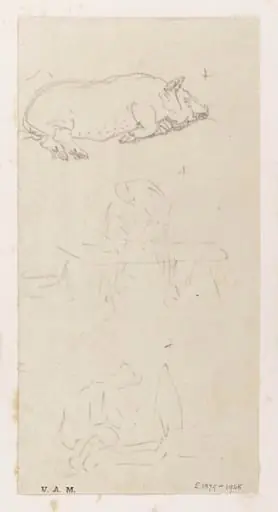 A pig lying on its side
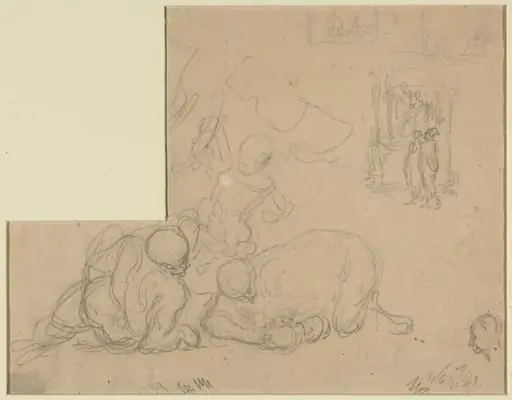 Sheet of Studies with Two Large Men on the Ground
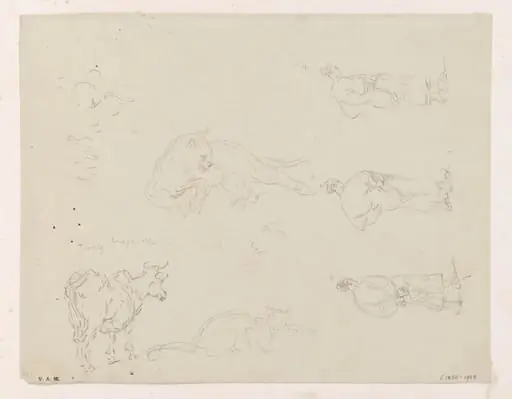 Drawings of figures and animals
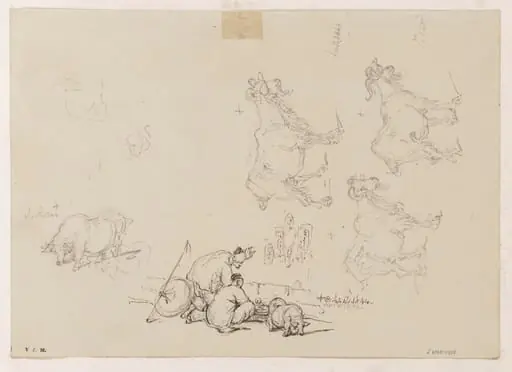 Two figures with a basket, goats and pigs
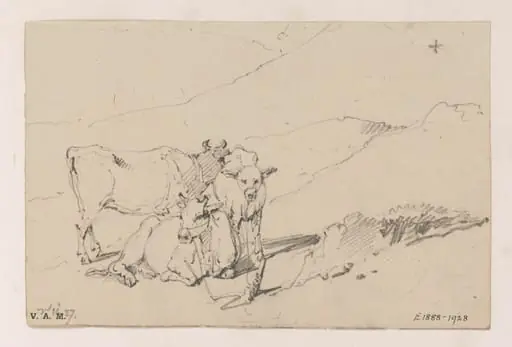 Three cows
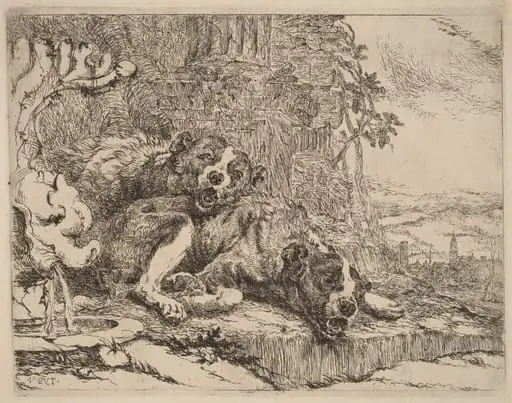 Two Mastiffs beside a Fountain
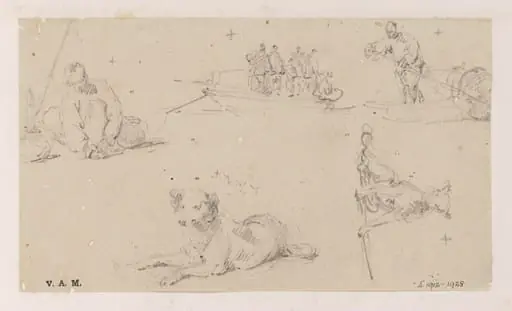 Five drawings of figures and dogs
![Sheet of Studies [recto and verso], by John Flaxman](https://artifactworldgallery.com/img/john-flaxman--sheet-of-studies-recto-and-verso--af59e52d5279d768-w320.webp) Sheet of Studies [recto and verso]
Sheet of Studies [recto and verso]