Artwork
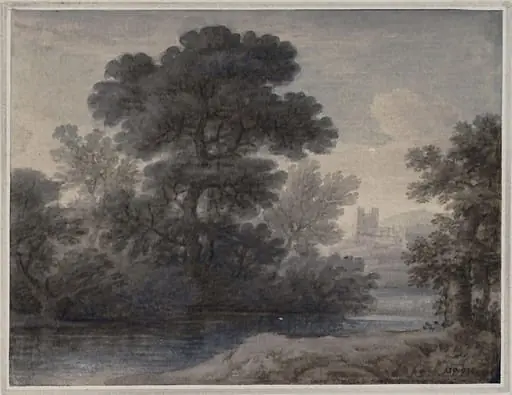
Moonlit Landscape with a River and Castle
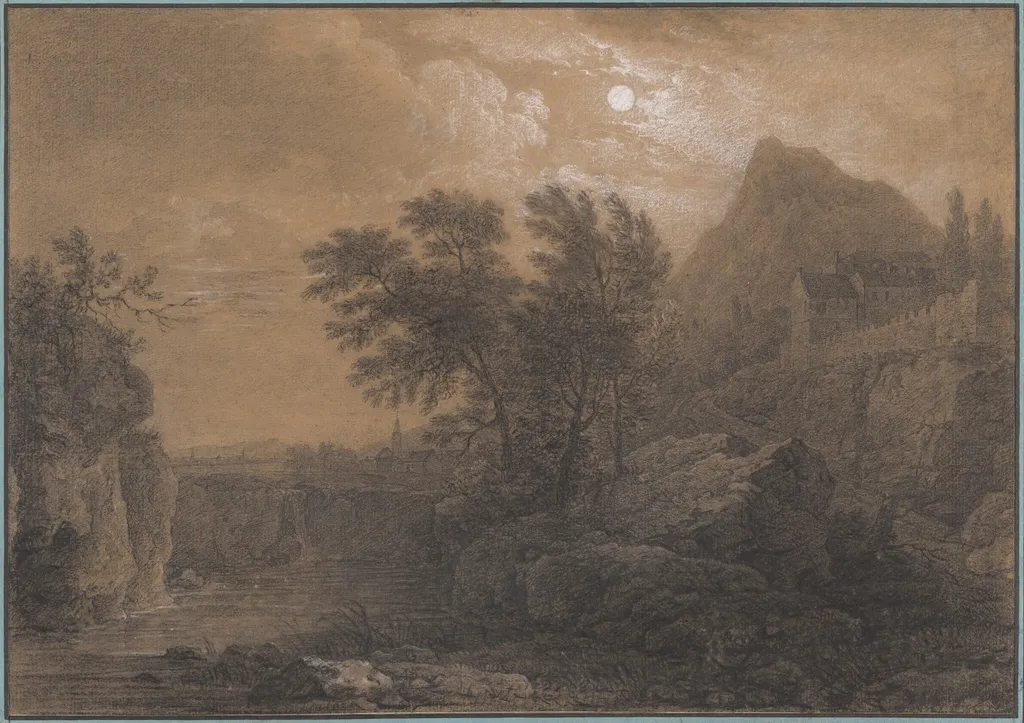
Moonlit Landscape with a River and Castle is a chalk drawing by the Romanticist artist Simon Mathurin Lantara. It dates from 1774 and is held in the collection of the National Gallery of Art.
About this work
Overview
Created around 1774, this drawing by Simon Mathurin Lantara depicts a nocturnal landscape in black and white chalk on brown paper. It is part of the collection at the National Gallery of Art in Washington, D.C. The work captures a tranquil night scene with minimal detail, relying on tonal contrasts to suggest form and atmosphere. Its quiet composition reflects an interest in mood over narrative.
Subject & Meaning
The scene features a winding river flanked by dense trees, a steep rocky outcrop on the right, and a distant castle perched on a hill.
The scene features a winding river flanked by dense trees, a steep rocky outcrop on the right, and a distant castle perched on a hill. The pale moon, positioned in the upper corner, casts a faint glow that barely illuminates the terrain. The castle’s indistinct silhouette evokes a sense of isolation and quiet mystery, suggesting human presence without explicit detail, inviting contemplation rather than storytelling.
Technique & Style
Lantara employed black and white chalk on toned paper to achieve subtle gradations of light and shadow. The interplay of tones creates depth without sharp outlines, using chiaroscuro to model forms through contrast rather than line. The soft blending of chalk allows the paper’s natural hue to function as mid-tone, enhancing the nocturnal atmosphere and lending the scene a hushed, atmospheric quality.
History & Provenance
The drawing entered the National Gallery of Art’s collection through the A.W. Mellon Educational and Charitable Trust in 1937. Its earlier history before the 20th century remains largely undocumented. As a work by Lantara, a lesser-known 18th-century French draftsman, it represents a quiet but distinctive example of pre-Romantic landscape drawing, valued for its sensitivity to light and mood.
Context
Lantara worked during a period when landscape drawing was gaining recognition as an independent art form, separate from historical or religious themes. His focus on nocturnal scenes aligns with emerging interests in nature’s emotional resonance. While not part of a major movement, his work reflects broader 18th-century European trends toward intimate, atmospheric observation of the natural world.
Legacy
Though Lantara’s oeuvre is limited and largely overlooked, this drawing endures as a refined example of 18th-century chalk technique. It contributes to the understanding of how artists explored mood and light before the Romantic era. Its preservation in a major institution ensures continued study of quiet, tonal approaches to landscape that prefigured later developments in atmospheric drawing.
Artist & collection


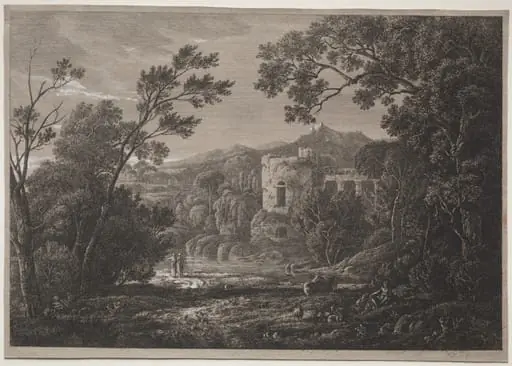 An Italian View
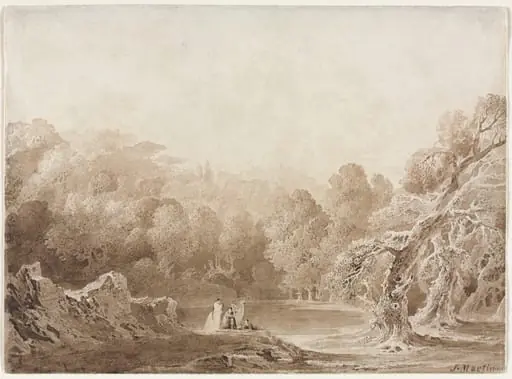 A Man Playing a Harp with other Figures beside a Lake
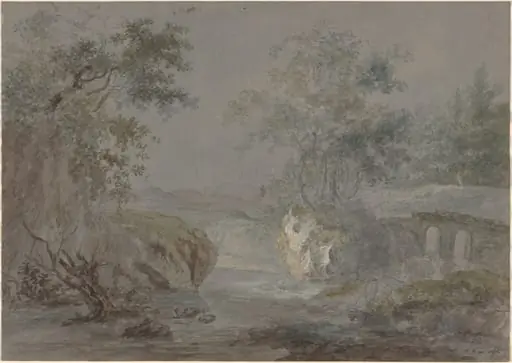 Wooded Cliffs along a Riverbank
 Meeresbucht mit Felsenküste
 Solitude
 Italienische Landschaft
 The Isar with Boulders on the Isarhohe
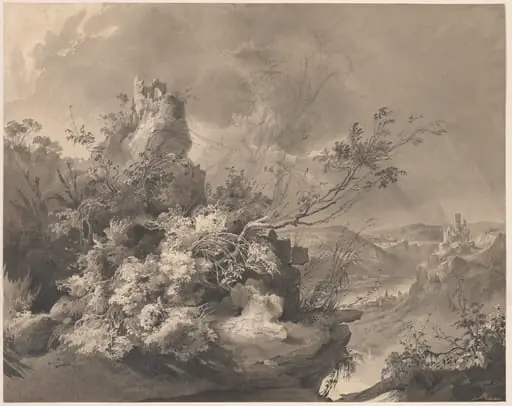 Ruined Towers Overlooking the Rhine
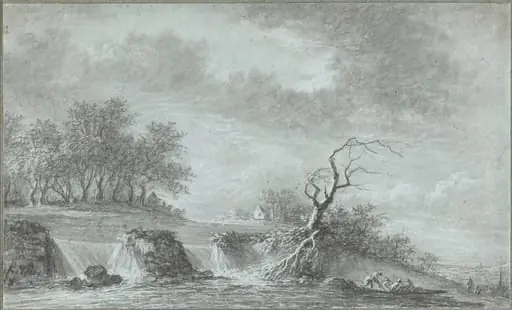 Riverscape with a Waterfall
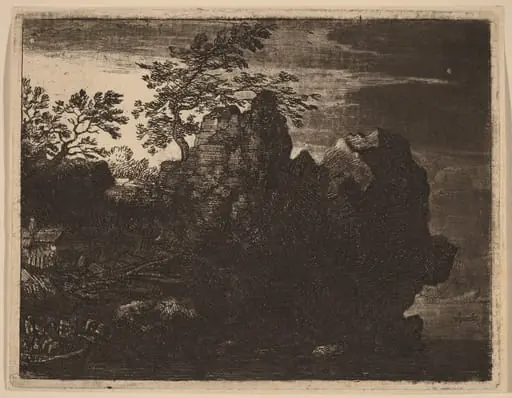 Large Rock at the River
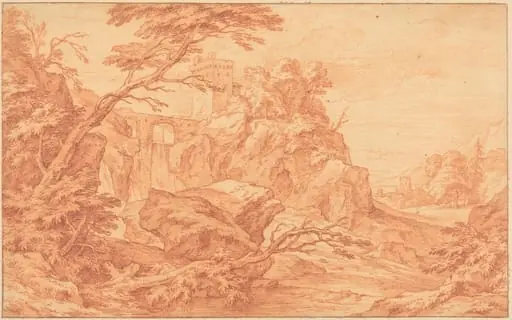 A Rocky Landscape with a Stone Tower and a Waterfall
 Landscape with river and castle