Artwork
A Rocky Landscape with a Stone Tower and a Waterfall
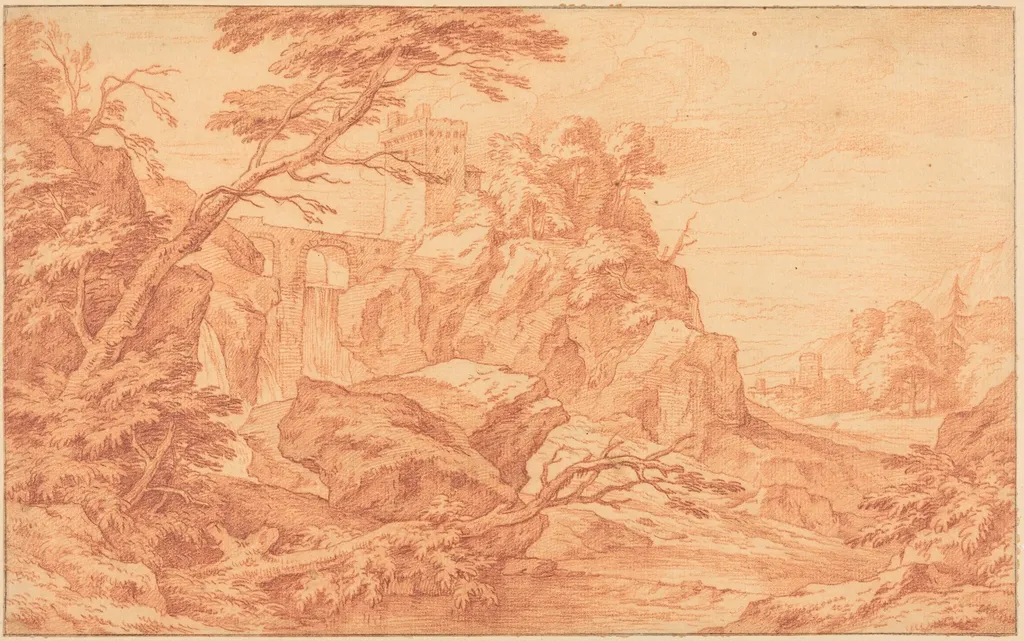
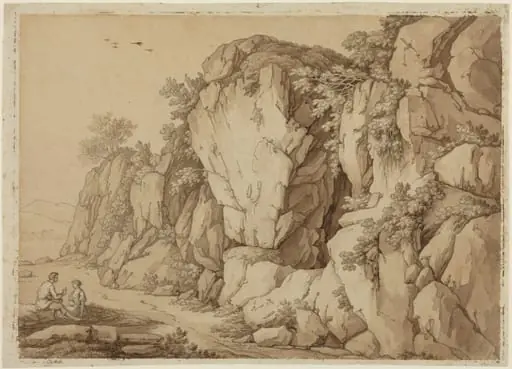
A Rocky Landscape with a Stone Tower and a Waterfall is a graphite drawing by the Baroque artist Adriaen Frans Boudewyns. It dates from 1678 and is held in the collection of the National Gallery of Art.
About this work
Overview
Executed in red chalk over faint graphite lines on laid paper, it reflects the practice of preparatory sketching common among landscape artists of the period.
Created in 1678 by Flemish artist Adriaen Frans Boudewijns, this drawing depicts a rugged natural setting with a stone tower and cascading waterfall. Executed in red chalk over faint graphite lines on laid paper, it reflects the practice of preparatory sketching common among landscape artists of the period. The medium lends a warm, muted tone, emphasizing texture over detail, suggesting it was intended as a study rather than a finished piece.
Subject & Meaning
The scene centers on a rocky outcrop supporting a modest stone tower, with a waterfall descending sharply through the center. A bare tree on the left anchors the composition, its form contrasting with the dynamic flow of water. No human figures are present, focusing attention on the interplay between natural forces and human-made structure. The subject evokes a contemplative mood, typical of landscapes that prioritize atmosphere over narrative.
Technique & Style
Boudewijns employed quick, fluid strokes in red chalk to suggest the roughness of stone, the spray of water, and the brittle texture of leafless branches. Traces of graphite beneath reveal preliminary planning, indicating a methodical approach to composition. The soft, earthy palette and loose handling reflect a working sketch, designed to capture the essence of a scene rather than render it with precision.
History & Provenance
The drawing is dated and signed by the artist, confirming its origin in the late 17th century. Boudewijns, active primarily in Brussels, produced numerous landscape studies during a period when Flemish artists increasingly drew inspiration from Italianate scenery. While its early ownership is undocumented, the work aligns with known examples from his oeuvre, preserved in institutional collections.
Context
This drawing emerged during the Baroque era, when landscape studies gained prominence as tools for artistic development. Artists like Boudewijns traveled or studied prints of Italian scenery to compose idealized natural settings. His work reflects a broader trend: combining observed detail with imaginative structure, often to prepare for larger oil paintings intended for private collectors.
Legacy
Boudewijns’s drawings, including this one, illustrate the transition from observational sketching to composed landscapes in Flemish art. Though less celebrated than his painted works, his studies reveal a disciplined approach to natural form and spatial arrangement. They remain valuable for understanding how landscape artists of the period translated direct observation into structured compositions.
Artist & collection
Artist
Adriaen Frans Boudewijns (Brussels, 3 October 1644 – Brussels, 3 December 1719) was a Flemish landscape painter, draughtsman and etcher.

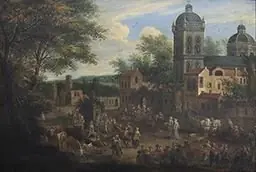
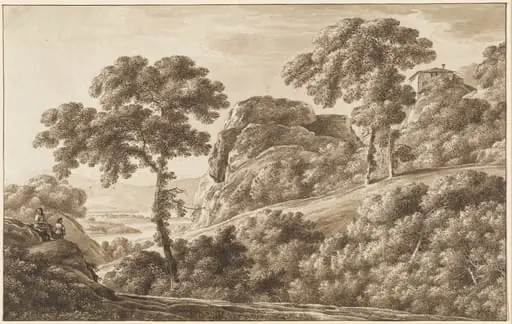 The Isar with Boulders on the Isarhohe
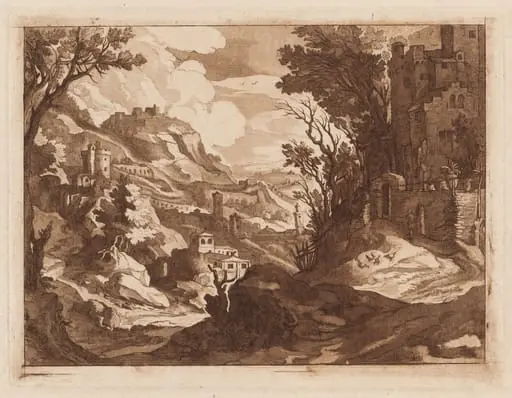 Alpine Landscape
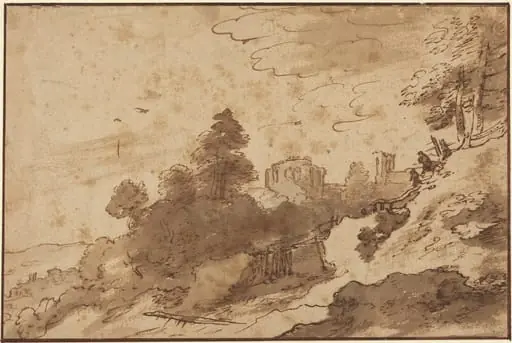 Landscape with Bridge and Ruins in Background
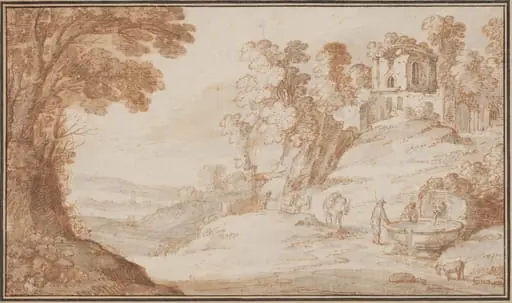 Classical Landscape with a Fountain
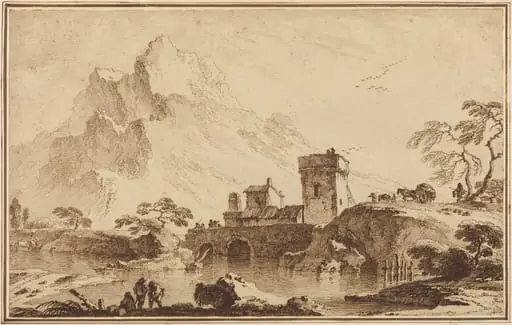 Fortified Bridge against Distant Mountains
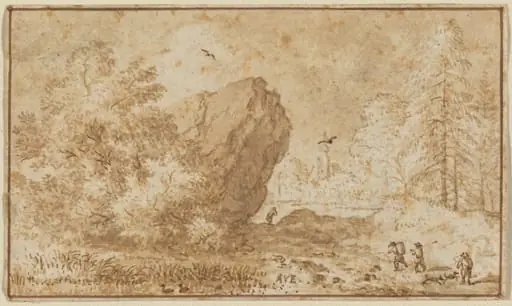 Landscape with Large Rock
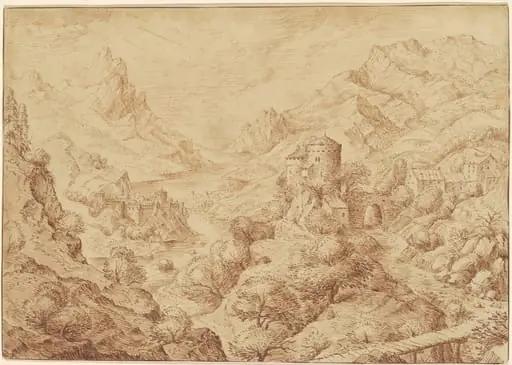 Panoramic River Landscape
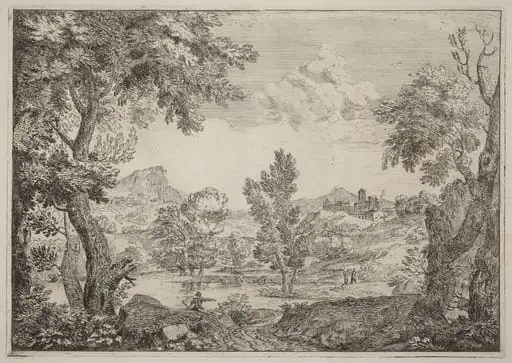 The Stream
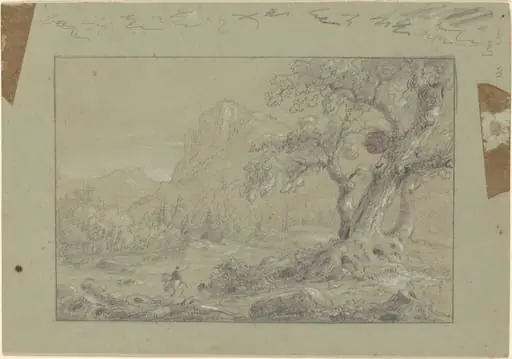 Study for "The Mountain Ford"
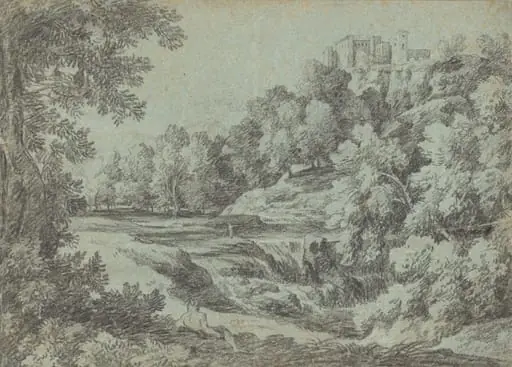 Italian Landscape with Fortifications and a Waterfall
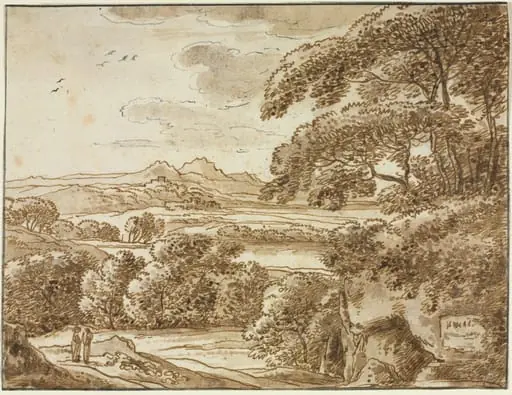 Landscape
 A Young Couple Seated near a Massive Rock Formation