Artwork
Portrait of Raphael
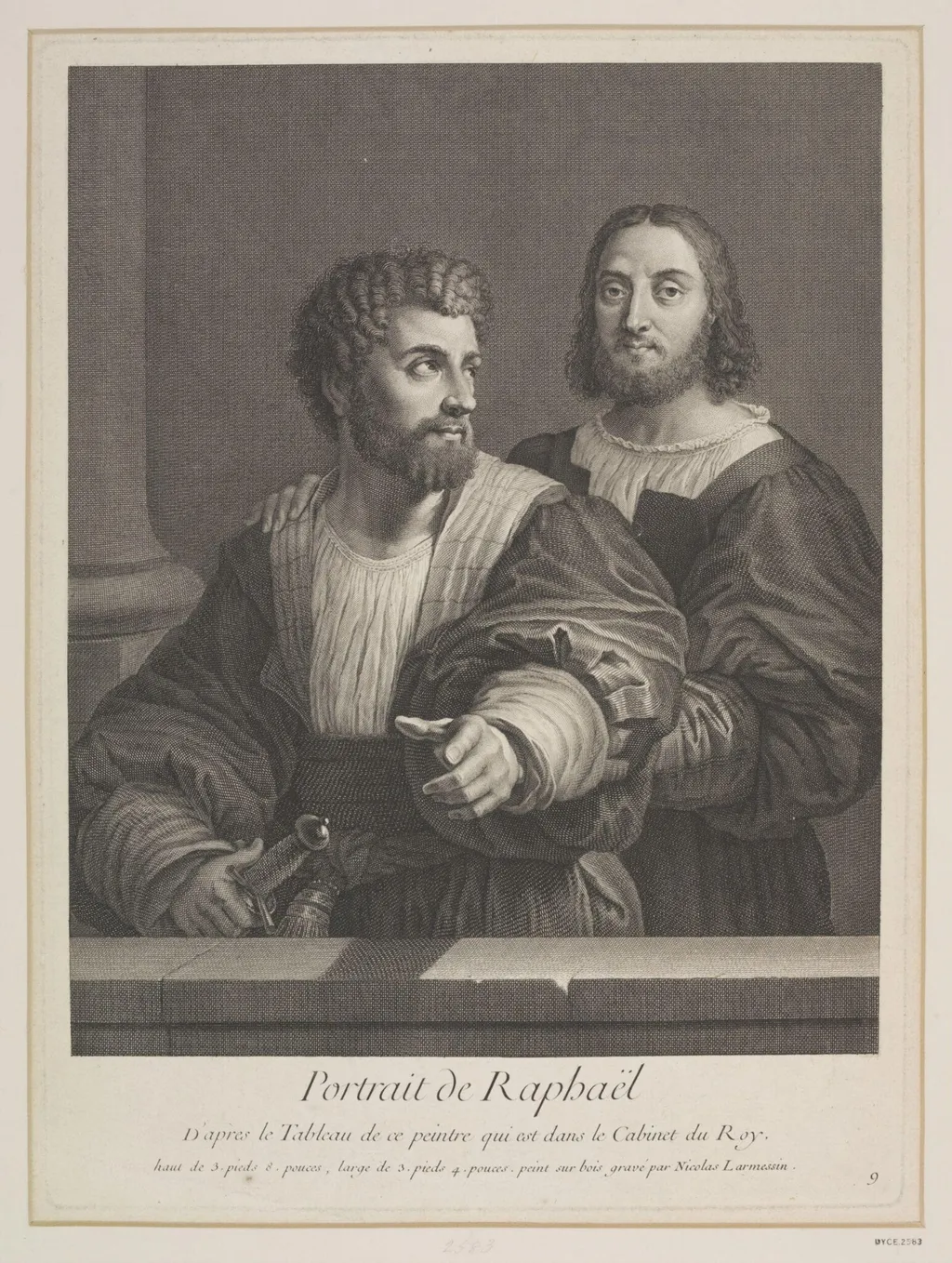
Portrait of Raphael is a print by Nicolas Larmessin. It dates from 1750 and is held in the collection of the Victoria and Albert Museum.
About this work
Overview
Though presented as a depiction of the Renaissance artist, the image is not a direct likeness but a later reproduction derived from an earlier painting.
A black-and-white engraving by Nicolas Larmessin IV portrays two bearded men seated side by side, labeled as a Portrait of Raphael. Though presented as a depiction of the Renaissance artist, the image is not a direct likeness but a later reproduction derived from an earlier painting. The print was created for inclusion in the Crozat Gallery collection, reflecting 17th-century interest in reproducing celebrated artistic figures.
Subject & Meaning
The figures are not a self-portrait of Raphael, as sometimes claimed, but likely represent two individuals associated with his circle—possibly Raphael and a companion. The man on the left holds a small round object, perhaps a medallion or a tool, while the other gazes directly ahead. The composition evokes intellectual companionship, aligning with Renaissance ideals of artistic mentorship and scholarly dialogue, though the exact identities remain speculative.
Technique & Style
Larmessin employed fine-line engraving to render texture and form in monochrome, emphasizing the contrast between the light fabric of the left figure’s robe and the darker tones of the adjacent garment. Facial features are rendered with restrained detail, focusing on expression rather than individualized realism. The composition is tightly framed, typical of portrait prints intended for album collections rather than public display.
History & Provenance
The print was produced in the late 17th century as part of the Crozat Gallery series, a project to document and disseminate images of renowned artists and artworks. It derives from an earlier painting now lost or unverified, possibly from Raphael’s workshop or a posthumous tribute. Larmessin’s signature is discreetly inscribed, consistent with the modest attribution practices of reproductive printmakers of the period.
Context
During the 17th century, reproductive prints played a key role in shaping public perception of Renaissance masters. Artists like Raphael were idealized through imagery that emphasized dignity and intellectual presence. Larmessin’s engraving reflects this trend, transforming historical memory into visual tradition, even when direct sources were uncertain or unavailable.
Legacy
The print survives as a historical artifact of how Raphael’s legacy was curated centuries after his death. Though not an authentic portrait, it contributed to the visual canon of the artist in early modern Europe. Copies of such prints circulated among collectors and academies, reinforcing established narratives about artistic lineage and the revered status of Renaissance figures.
Artist & collection
Artist
A Parisian printmaker active in the early to mid-1700s, Nicolas Larmessin specialized in finely detailed engravings of religious scenes and famous faces.

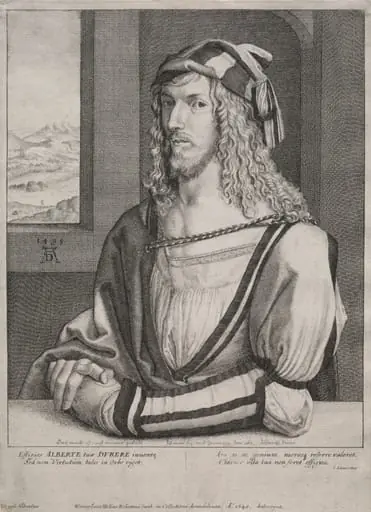 Portrait of Albrecht Dürer, at the age of 26
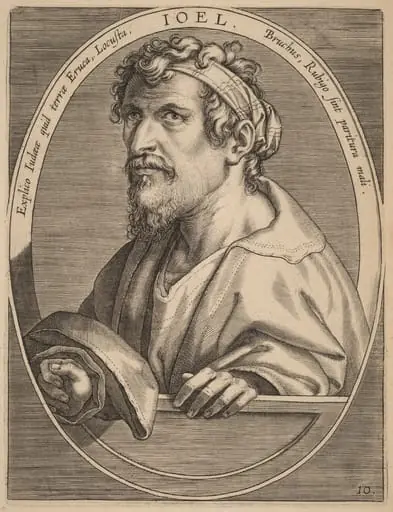 Joel
Joel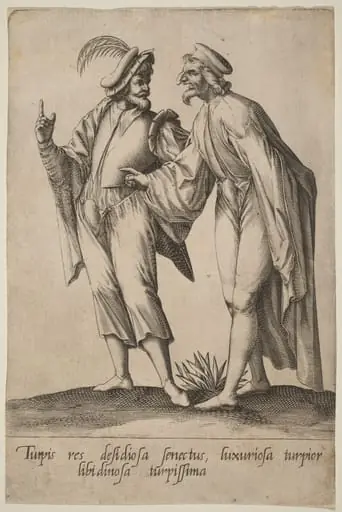 Turpis res desidiosa senectus...
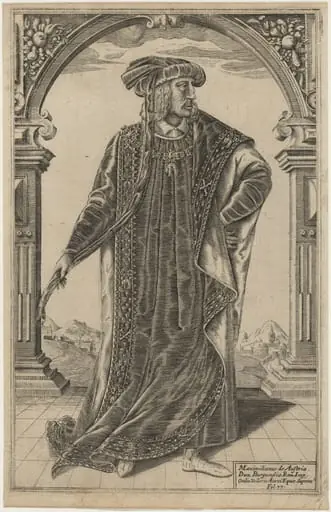 Maximilian I, Son of Emperor Frederick III
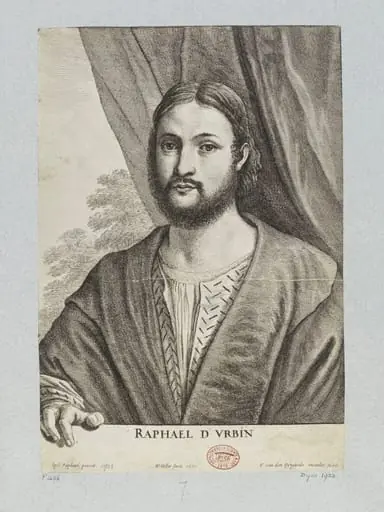 Portrait of Raffaello Sanzio di Urbino
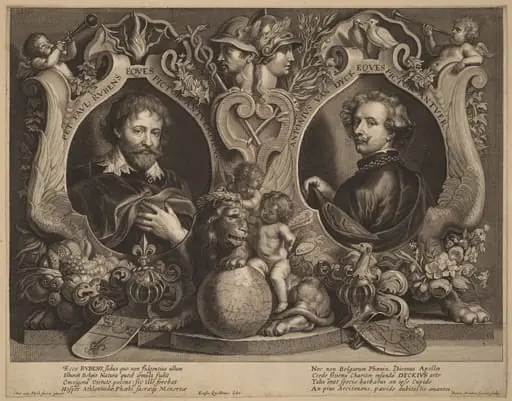 Rubens and van Dyck, a Double Portrait
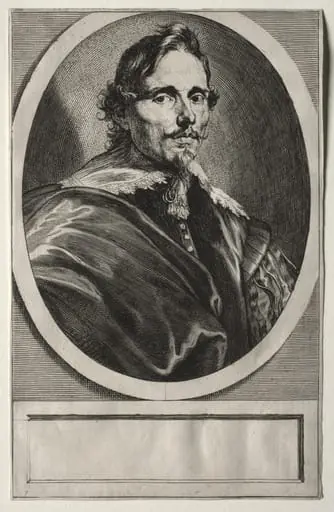 Philippe Le Roy
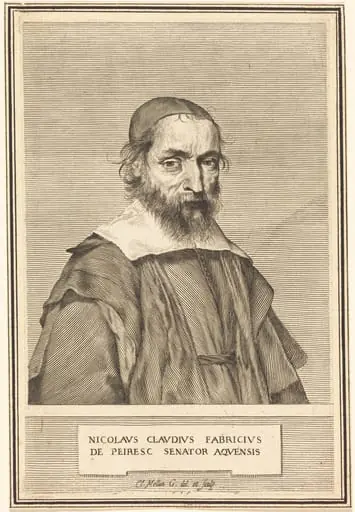 Nicolas-Claude Fabri de Peiresc
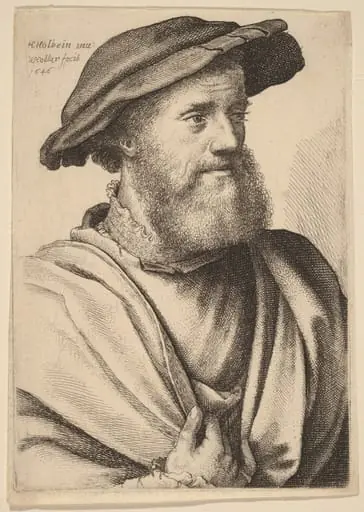 Man with Beard Looking Right (Hans Holbein?)
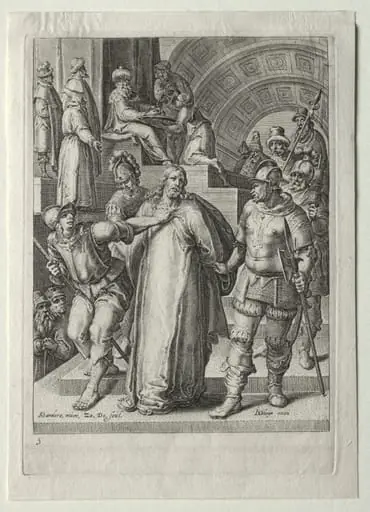 Passion Set: Christ before Pilate
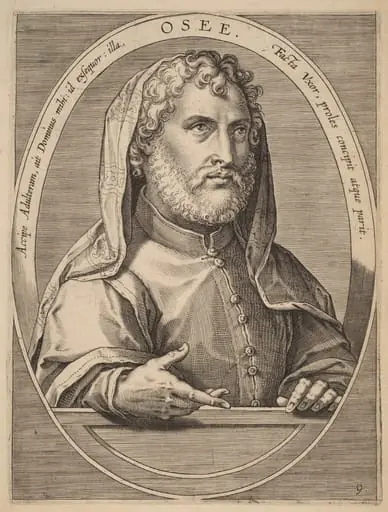 Hosiah
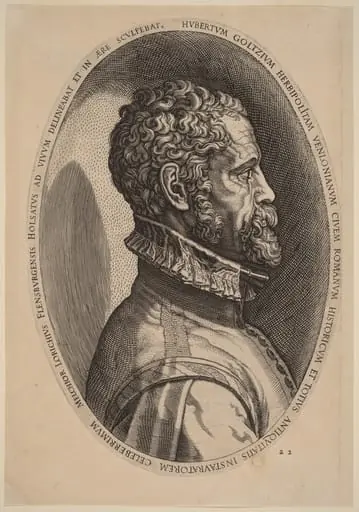 Hubert Goltzius