Artwork
Turpis res desidiosa senectus...
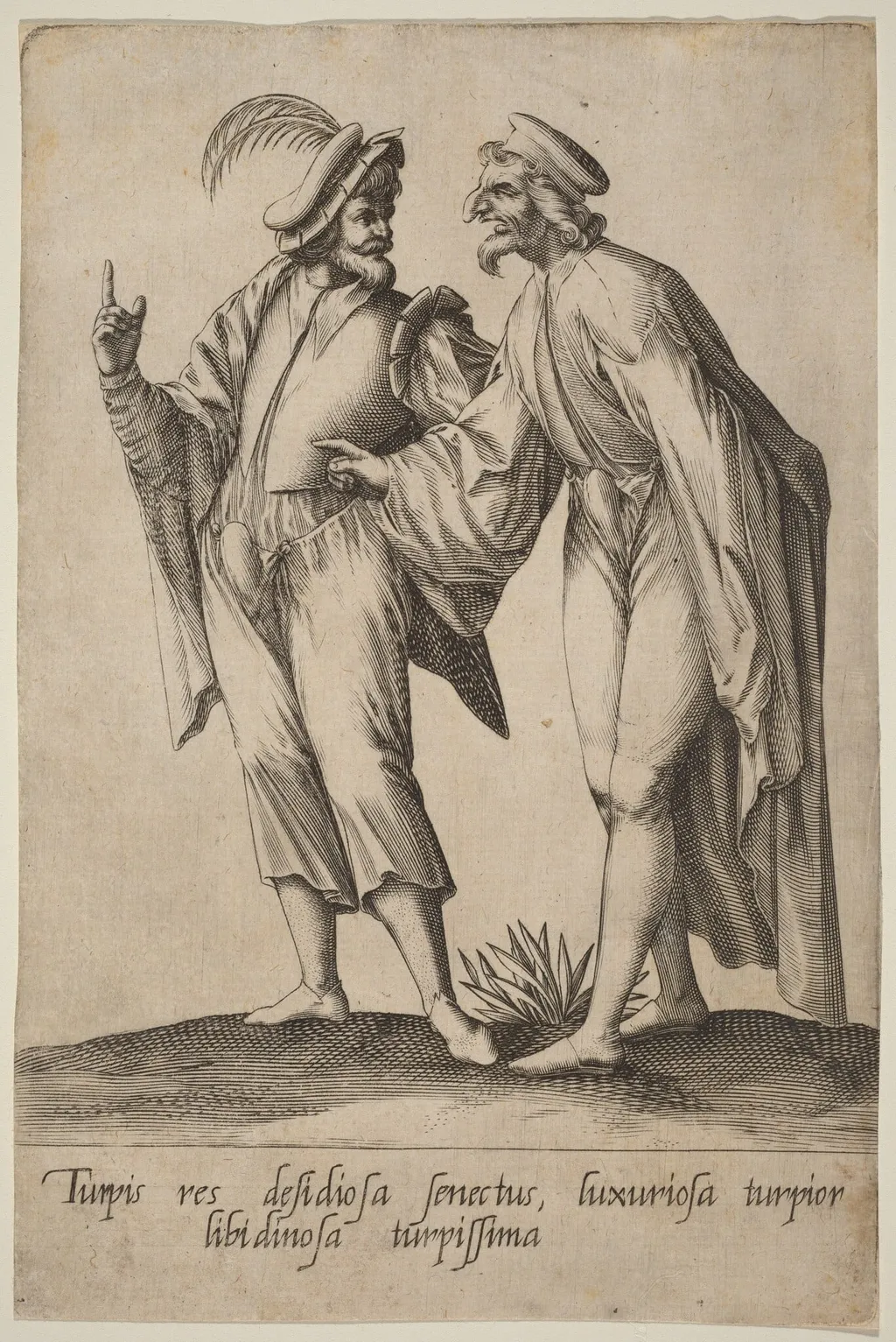
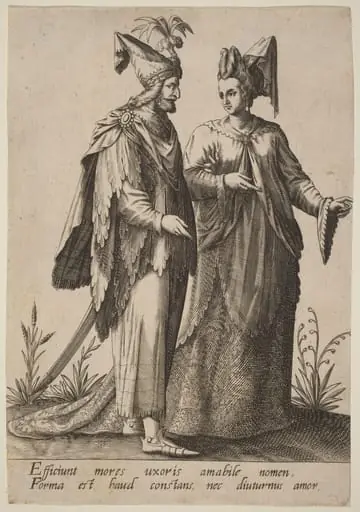
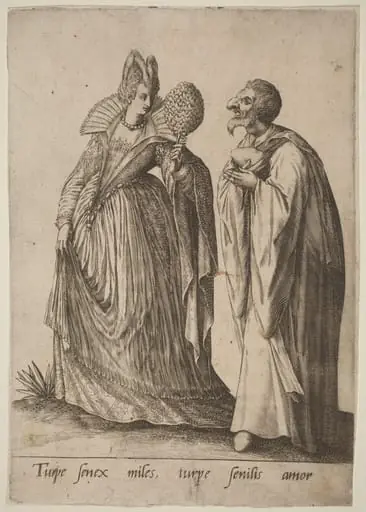
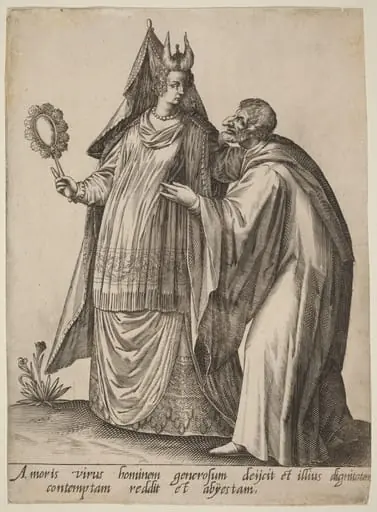
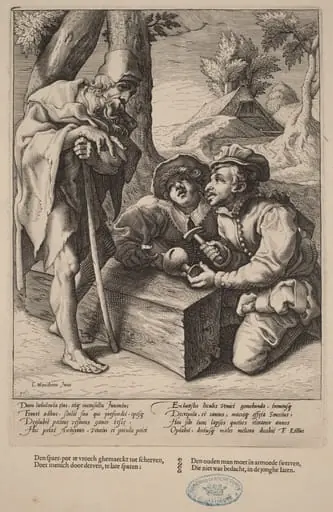
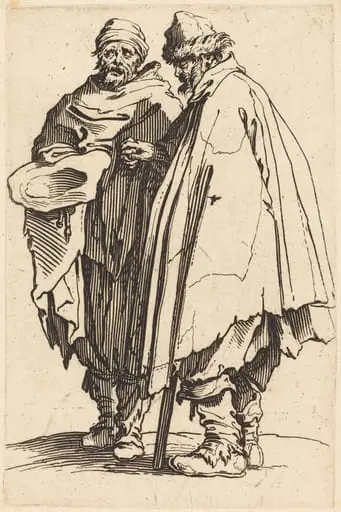
Turpis res desidiosa senectus... is an ink print by the Renaissance artist Robert Boissard. It dates from 1597 and is held in the collection of the National Gallery of Art.
About this work
Overview
The work is rendered in fine line work with meticulous cross-hatching, typical of late 16th-century Northern European printmaking.
Created in 1597 by Robert Boissard, this engraving is part of a series illustrating Latin moral aphorisms. The work is rendered in fine line work with meticulous cross-hatching, typical of late 16th-century Northern European printmaking. Its modest scale and scholarly tone reflect its function as an illustrated text rather than a standalone image, intended for educated viewers familiar with classical Latin phrases.
Subject & Meaning
The title, 'Turpis res desidiosa senectus,' translates to 'Idleness in old age is shameful.' The two figures represent contrasting attitudes toward aging: one gestures toward the sky, suggesting contemplation or divine reckoning, while the other, cloaked in a robe, appears passive. The scene evokes a moral dialogue on the duty of the elderly to remain active and thoughtful, a common theme in Renaissance humanist literature.
Technique & Style
Boissard employed fine, controlled engraving lines to model form and texture, using dense cross-hatching to define fabric folds and shadowed areas. The background is left lightly worked, allowing the paper’s natural tone to serve as a neutral field. The figures are rendered with anatomical precision and restrained gesture, aligning with the intellectual clarity valued in Renaissance prints meant for textual illustration.
History & Provenance
The engraving was produced as part of a broader project illustrating Latin maxims, likely commissioned for scholarly circulation. Boissard, a French antiquarian and engraver, collaborated with publishers in Lyon and Paris who specialized in humanist texts. Few impressions survive, and those held in institutional collections suggest limited original distribution among academic and clerical circles.
Context
This work emerged during a period when printed images were increasingly used to accompany classical and moral texts, especially in Protestant and humanist circles. The emphasis on aging and virtue reflects broader European concerns about civic duty and the moral responsibilities of life stages, echoing themes in Erasmus and other Renaissance thinkers who sought to revive classical ethics for contemporary audiences.
Legacy
Boissard’s engravings, though not widely known today, contributed to the tradition of illustrated moral literature that influenced later emblem books and pedagogical prints. His integration of textual and visual elements helped standardize the use of imagery to convey philosophical ideas, a practice that persisted in educational materials through the 17th century.
Artist & collection