Artwork
Hubert Goltzius
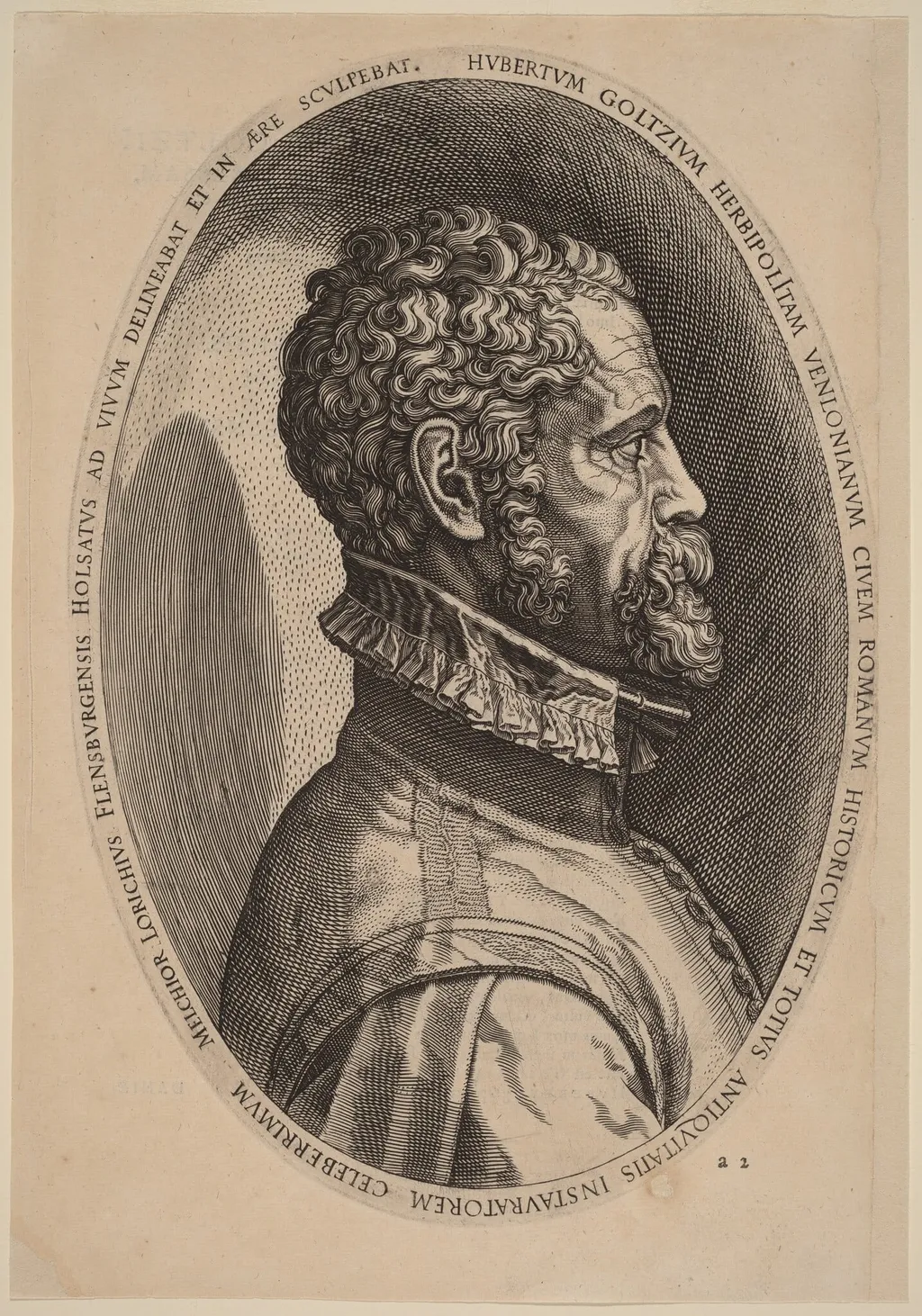
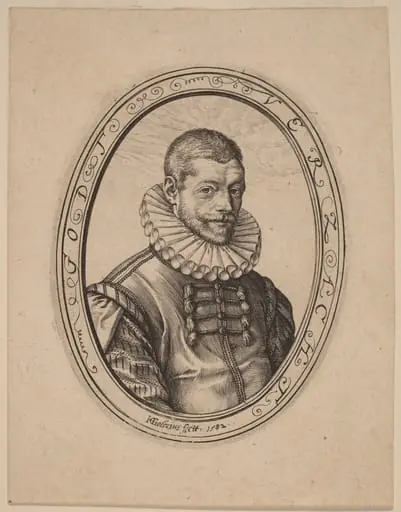
Hubert Goltzius is an ink print by the Renaissance artist Melchior Lorch. It dates from 1574 and is held in the collection of the National Gallery of Art.
About this work
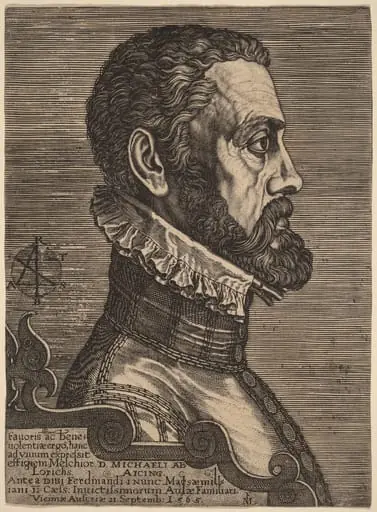
The background is plain, but the lines around his face and hair are detailed, almost like tiny dots and strokes.
This is a black-and-white portrait of a man with curly hair and a beard. He’s wearing a ruffled collar and looks like he’s holding something in his right hand. The background is plain, but the lines around his face and hair are detailed, almost like tiny dots and strokes.
The text around the circle names Hubert Goltzius, who this portrait is of. The artist’s name is Melchior Lorch, and it’s from 1574.
Next, look up engraving to see how artists like Lorch made these precise prints.
Overview
This 1574 copperplate engraving presents a monochrome likeness of Hubert Goltzius, rendered by the German printmaker Melchior Lorch. The portrait is confined to a circular frame, with the sitter’s face and upper torso occupying the central space against an unadorned background. The work exemplifies the precise, linear quality typical of mid‑sixteenth‑century Northern European prints.
Subject & Meaning
The figure depicted is the Dutch humanist and antiquarian Hubert Goltzius, identifiable by the inscription encircling the image. He is shown with curly hair, a full beard, and a ruffled collar, holding an object in his right hand that may allude to his scholarly pursuits. The composition emphasizes his intellectual stature rather than personal narrative.
Technique & Style
Lorch employed fine incised lines and stippling to model the hair, beard, and facial features, creating a subtle gradation of tone without the use of shading washes. The crisp, controlled strokes produce a textured surface that conveys both the materiality of the paper and the sitter’s likeness, reflecting the meticulous engraving practices of the period.
History & Provenance
Created in 1574, the print was likely issued as part of a series of portrait engravings celebrating notable scholars of the Low Countries. While the original plate’s whereabouts are unknown, surviving impressions have circulated among private collections and institutional holdings, attesting to the work’s continued relevance for studies of Renaissance portraiture.
Context
The portrait emerges from a flourishing print culture in which humanist figures were commemorated through reproducible media. Lorch’s engraving aligns with contemporary efforts to disseminate images of learned men, reinforcing the prestige of intellectual networks across the Holy Roman Empire and the Dutch provinces.
Artist & collection