Artwork
Michelangelo Ricciolini
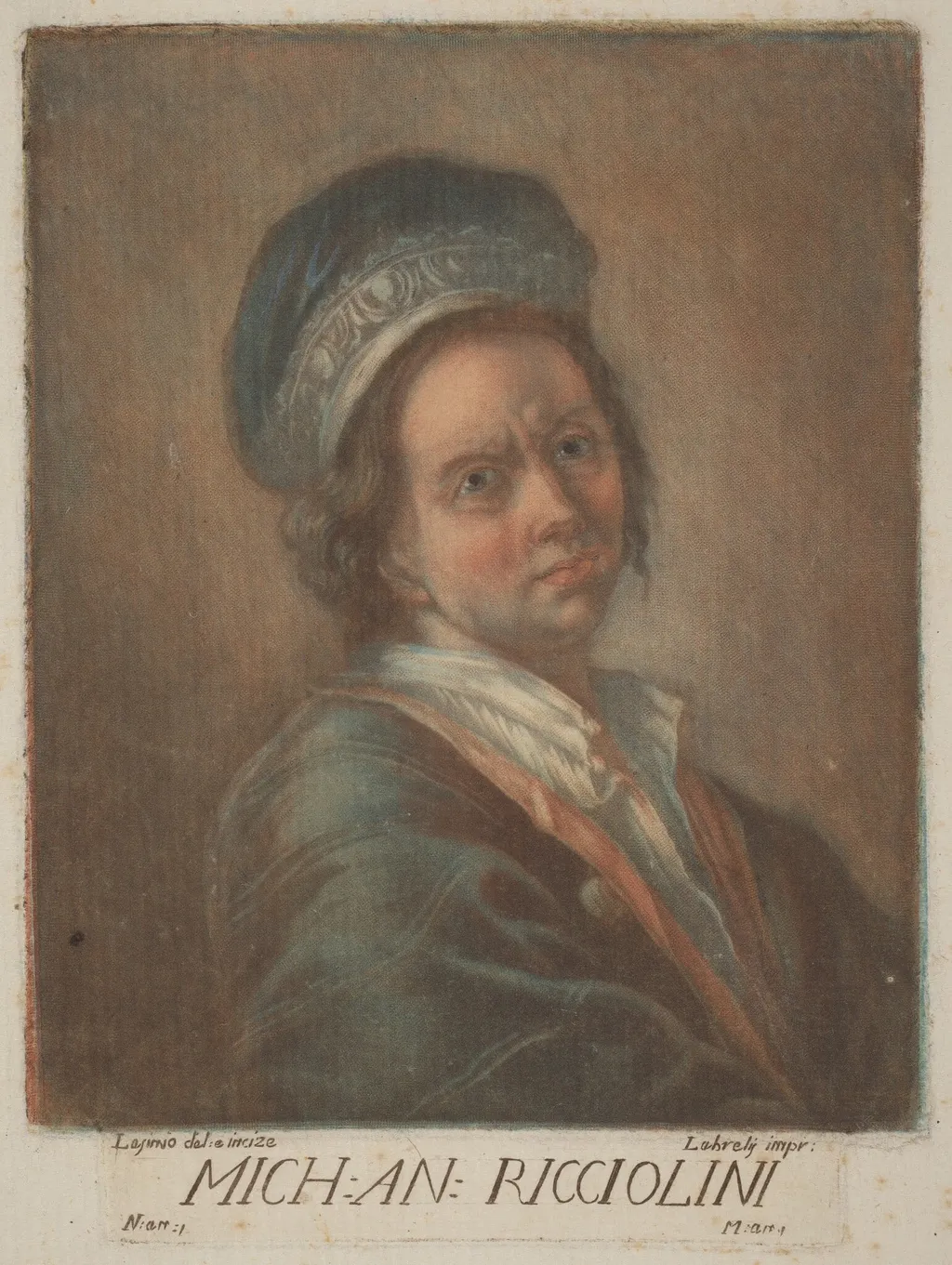
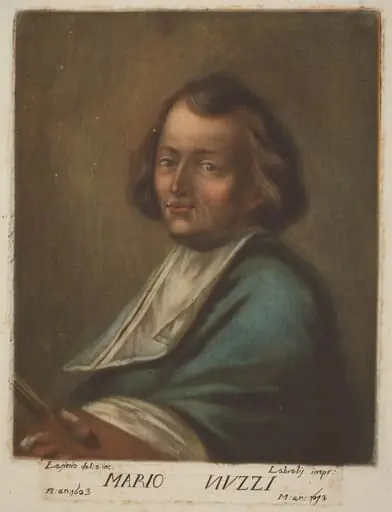
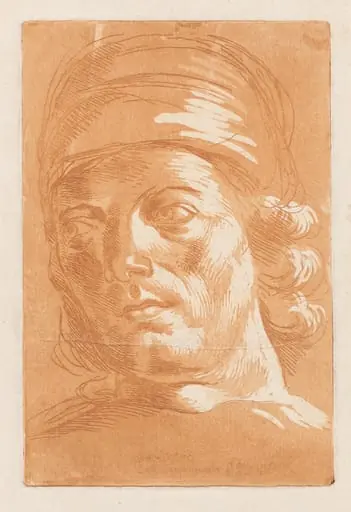
Michelangelo Ricciolini is an ink print by the Romanticist artist Carlo Lasinio. It dates from 1789 and is held in the collection of the National Gallery of Art.
About this work
Overview
The work belongs to the printmaking tradition of the late 18th century, where mezzotint was valued for its capacity to render subtle tonal gradations.
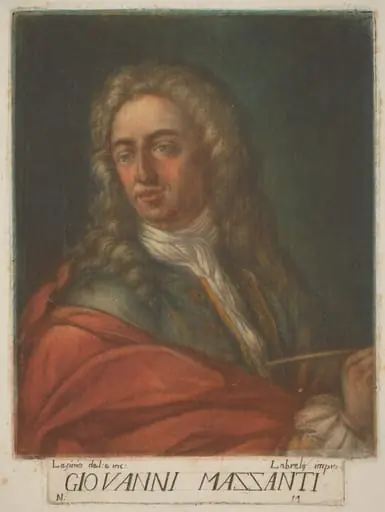
This print is a mezzotint created in 1789 by Carlo Lasinio, depicting Michelangelo Ricciolini, an Italian engraver and artist. The work belongs to the printmaking tradition of the late 18th century, where mezzotint was valued for its capacity to render subtle tonal gradations. Unlike a painting, this is a printed image, produced through incised copper plates and inked impressions, capturing the likeness of a fellow artist with quiet precision.
Subject & Meaning
The portrait presents Ricciolini in a moment of introspection, his gaze lowered and posture still, suggesting contemplation rather than performance. His attire—a dark jacket, white shirt, and elaborately band-edged hat—signals status and refinement without ostentation. The absence of context or symbolic objects focuses attention on the individual’s demeanor, framing him as a thinker immersed in his craft, a common ideal among artists of the period.
Technique & Style
Lasinio employed mezzotint, a technique that begins with a textured plate and refines areas to create smooth transitions from deep black to soft gray. This method allowed for rich chiaroscuro effects, enhancing the volume of Ricciolini’s face and the folds of his clothing. The muted brown background isolates the figure, reinforcing the psychological intensity of the portrait through tonal contrast rather than narrative detail.
History & Provenance
The print was made in 1789, during Lasinio’s active years as a reproductive engraver in Florence. It likely served to commemorate Ricciolini, who was known for his own engravings and scholarly contributions to art. While the original plate’s whereabouts are uncertain, surviving impressions are held in institutional collections, primarily in Italy, reflecting its role in documenting artistic networks of the time.
Context
In late 18th-century Italy, mezzotint was increasingly used to reproduce portraits of cultural figures, bridging fine art and print culture. Lasinio, trained in engraving, contributed to this trend by translating painted or drawn likenesses into print. Ricciolini, as a respected engraver, was a fitting subject—his image preserved not as a nobleman, but as a practitioner of the graphic arts, aligning with Enlightenment values of intellectual labor.
Legacy
The portrait endures as a record of artistic exchange between two engravers, illustrating how printmakers documented their peers. Though not widely exhibited today, it remains a reference in studies of Italian printmaking and the social networks of artists in the pre-Romantic era. Its quiet dignity reflects a period when artistic identity was often conveyed through restrained, thoughtful representation rather than grandeur.
Artist & collection


![Head of a Gentleman [recto], by Joseph Ducreux](https://artifactworldgallery.com/img/joseph-ducreux--head-of-a-gentleman-recto--30a49475a608e388-w320.webp)