Artwork
Giovanni Mazzanti
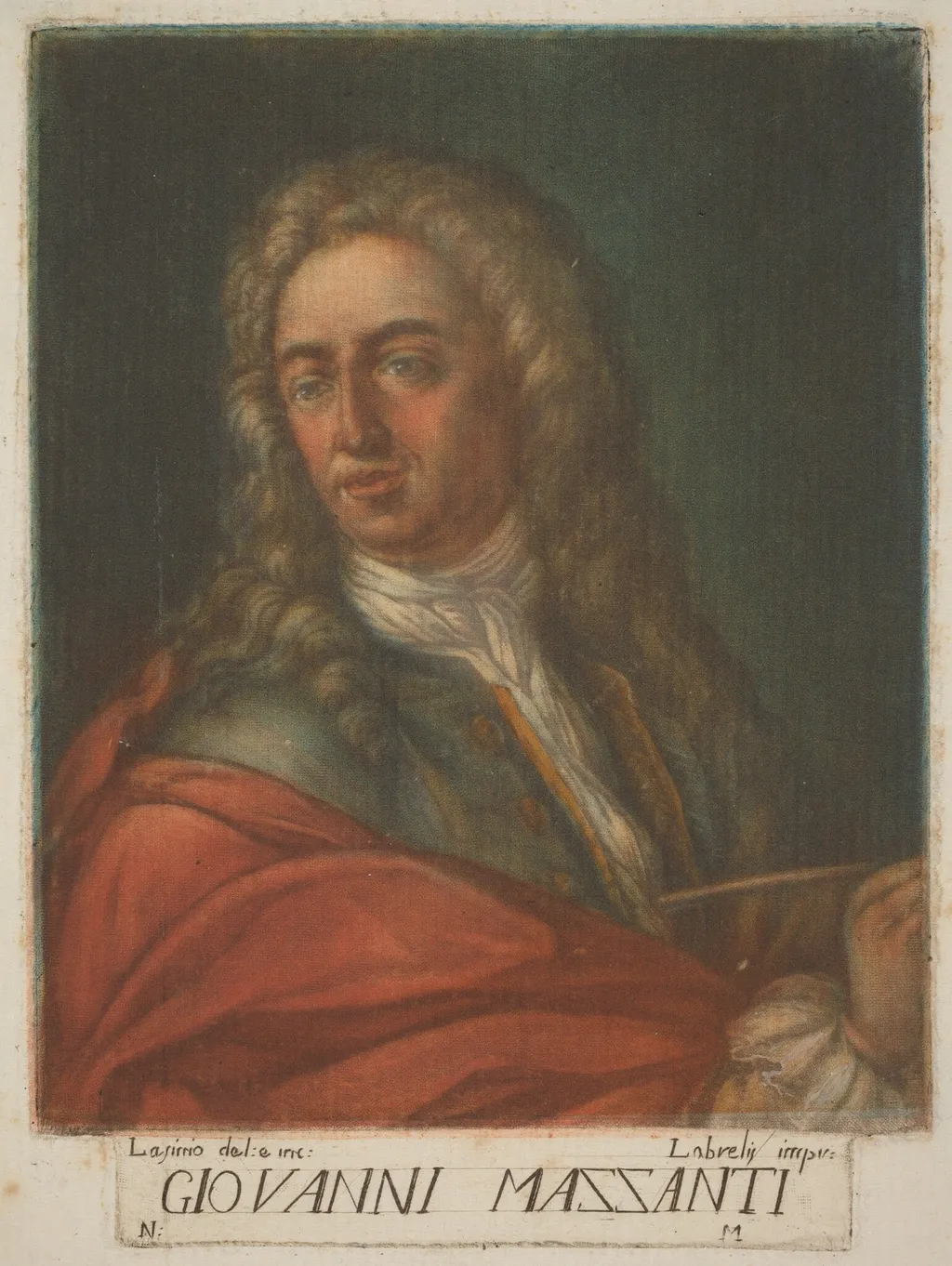
Giovanni Mazzanti is an ink print by the Romanticist artist Carlo Lasinio. It dates from 1789 and is held in the collection of the National Gallery of Art.
About this work
Overview
Unlike a painting, the work is a printed impression made through the labor-intensive mezzotint process, which allows for rich tonal gradations.
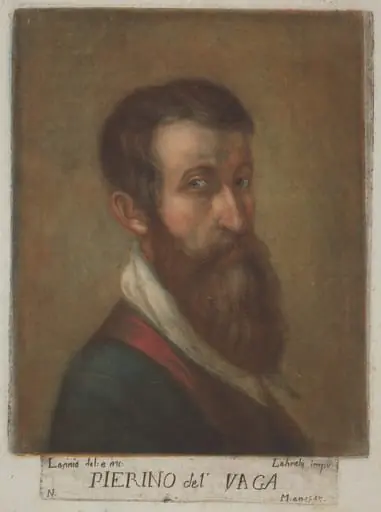
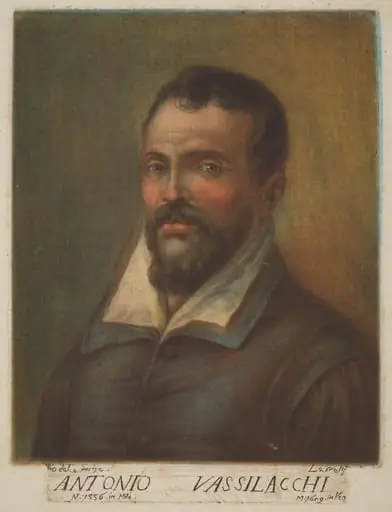
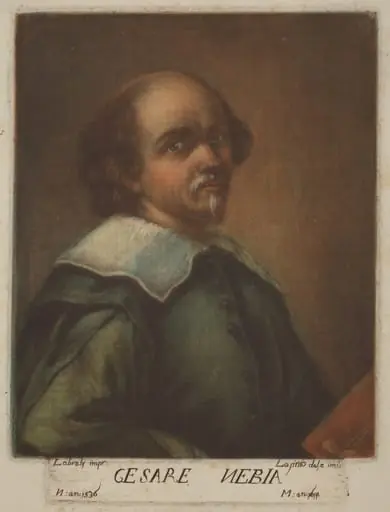
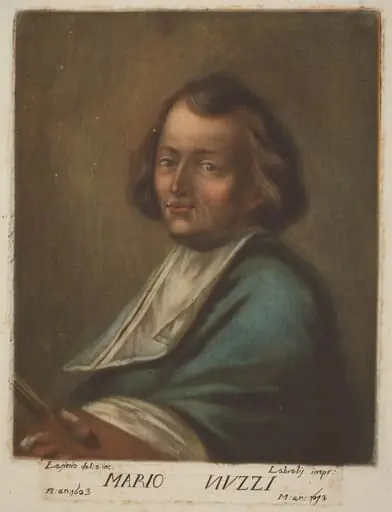
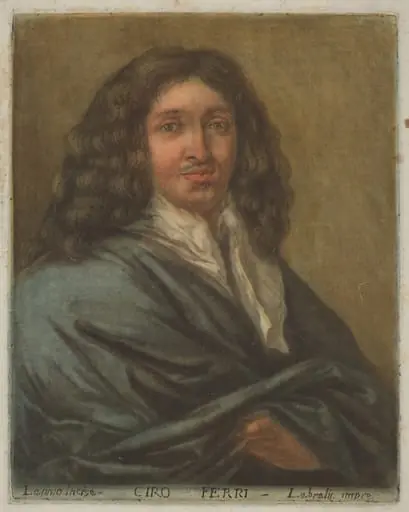
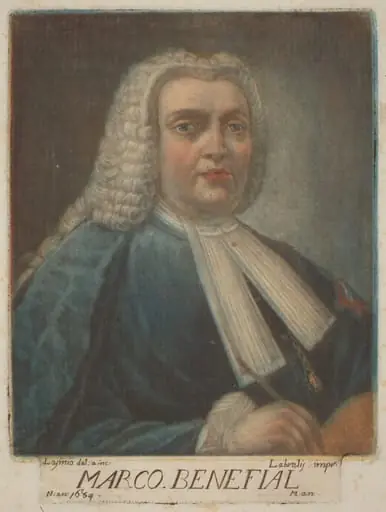
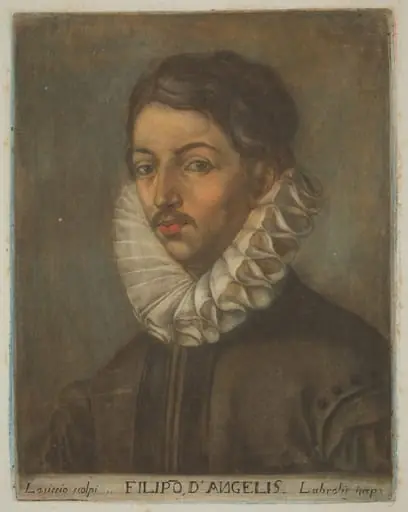
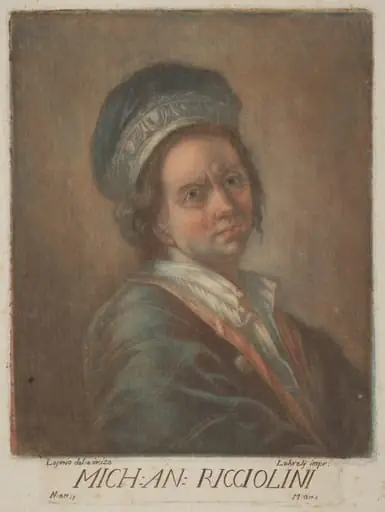
This print is a color mezzotint by Carlo Lasinio, dated 1789, depicting Giovanni Mazzanti. Unlike a painting, the work is a printed impression made through the labor-intensive mezzotint process, which allows for rich tonal gradations. The portrait captures Mazzanti in formal attire against a deep, unmodulated background, emphasizing his presence through contrast and texture rather than environmental detail.
Subject & Meaning
Giovanni Mazzanti, likely a scholar or cultural figure of his time, is portrayed with solemn composure and direct gaze, suggesting intellectual gravity. His attire—a dark jacket with gold buttons, white cravat, and red draped robe—signals status and refinement without overt symbolism. The absence of props or context focuses attention on his demeanor, inviting contemplation of character rather than narrative.
Technique & Style
Lasinio employed mezzotint, a technique involving roughening a metal plate to hold ink, then smoothing areas to create light. Color was added by hand, layering washes over the printed tone. The use of chiaroscuro enhances the three-dimensionality of the face and fabric, while the dark background isolates the figure, a hallmark of 18th-century portraiture aiming for psychological presence over setting.
History & Provenance
Created in 1789, the print emerged during a period of heightened interest in portraiture as a means of preserving individual identity among Italy’s intellectual elite. Lasinio, known for his reproductive prints, likely produced this as part of a series documenting notable figures. Its survival in collections suggests early recognition of its technical and representational merit.
Context
In late 18th-century Italy, mezzotint was valued for its ability to replicate the tonal richness of oil paintings, making it ideal for disseminating portraits of prominent individuals. While Romanticism would later emphasize emotion and individuality, this work reflects the preceding Neoclassical preference for restraint, clarity, and dignified representation, even as it hints at deeper psychological nuance.
Legacy
This print stands as an example of how reproductive printmaking preserved the likenesses of cultural figures before photography. Lasinio’s skill in translating texture and tone into ink helped elevate mezzotint beyond mere reproduction, influencing later generations of printmakers who sought to balance technical precision with expressive depth.
Artist & collection