Artwork
The Kiss of Peace and Justice
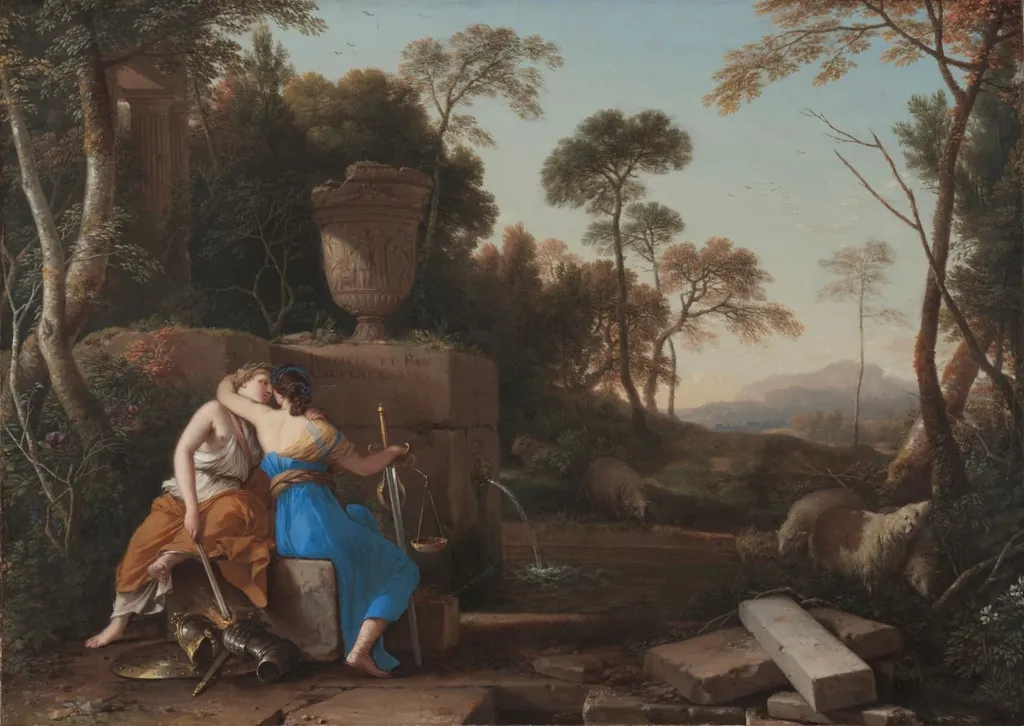
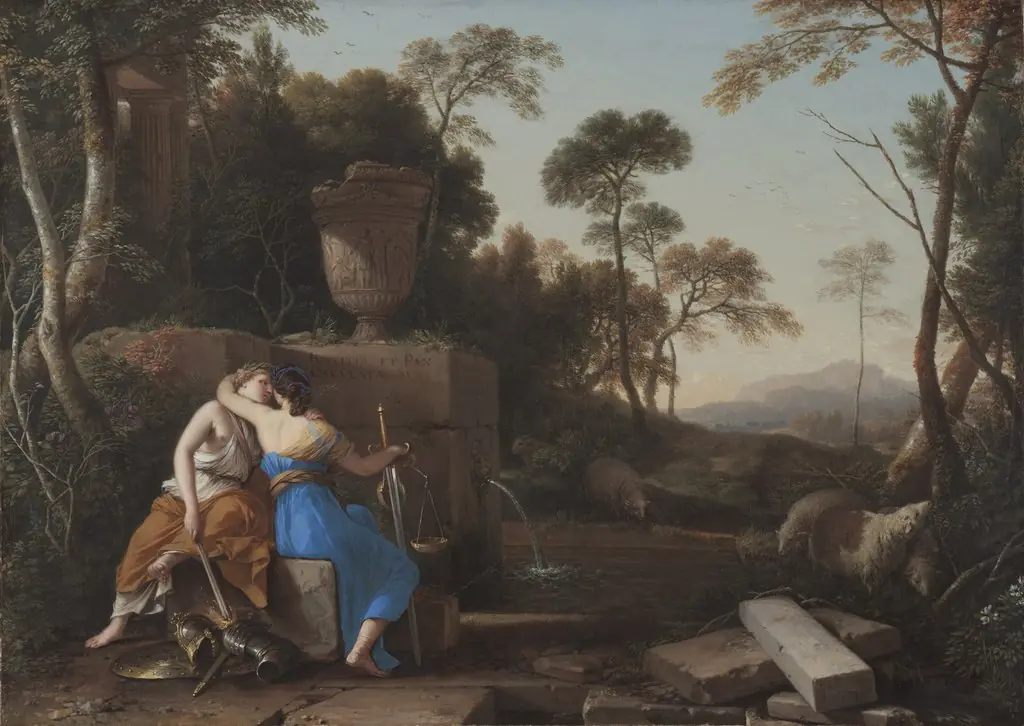
The Kiss of Peace and Justice is an unspecified painting by the Baroque artist Laurent de La Hyre. It dates from 1654 and is held in the collection of the Cleveland Museum of Art. This painting depicts two allegorical female figures—Peace and Justice—in a tranquil rural setting.
About this work
Two women stand in a quiet field, one burning weapons, the other holding scales and a sword.
Two women stand in a quiet field, one burning weapons, the other holding scales and a sword. Behind them, an old urn bears a Latin line about justice and peace kissing.
This painting marked the end of France’s civil war, when the king reclaimed power. The calm scene feels like a promise—no battle, just two ideas finally agreeing. The Latin quote comes from the Bible, but the moment feels personal, not holy.
To see how other artists painted peace after war, look up *France, 17th century*.
Overview
This painting depicts two allegorical female figures—Peace and Justice—in a tranquil rural setting. Peace is shown destroying weapons, while Justice holds a sword and scales. An ancient urn behind them bears a Latin inscription quoting Psalm 85:10, declaring their union. The scene conveys reconciliation through quiet action rather than grandeur, reflecting a moment of political stabilization in France.
Subject & Meaning
The figures represent abstract virtues made human: Peace actively dismantles instruments of conflict, while Justice maintains order through balanced authority. Their embrace symbolizes the restoration of harmony between moral governance and societal calm. The biblical reference underscores a divine sanction for this union, yet the tone remains earthly and intimate, emphasizing human reconciliation over religious spectacle.
Technique & Style
The composition favors stillness and naturalism, with soft lighting and a restrained palette that enhances the serenity of the scene. Figures are rendered with classical poise, their gestures deliberate and untheatrical. The landscape is minimal, avoiding distraction, and the urn’s inscription is integrated as a quiet focal point. Brushwork is precise but unobtrusive, supporting the painting’s theme of quiet resolution.
History & Provenance
Created around 1650, the painting coincides with the conclusion of the Fronde, a series of uprisings against royal authority. Its imagery aligns with the monarchy’s effort to legitimize restored control through symbolic unity. Likely commissioned for a royal or judicial context, it served as visual propaganda affirming the return of order. Its survival suggests it was valued for its political clarity rather than artistic novelty.
Context
In mid-17th-century France, visual culture increasingly turned to allegory to legitimize political authority after decades of unrest. This work fits within a broader trend of using classical and biblical imagery to frame state power as morally grounded. Unlike earlier war-themed art, it avoids triumphalism, instead promoting stability through harmony—a reflection of the monarchy’s need for public reassurance rather than conquest.
Legacy
The painting contributed to a visual language of peace as a deliberate, earned condition rather than a passive absence of conflict. Its emphasis on justice and peace as interdependent forces influenced later state-sponsored allegories in Europe. Though not widely reproduced, its quiet dignity set a precedent for civic imagery that prioritized moral balance over spectacle in post-conflict societies.
Artist & collection
Artist
Laurent de La Hyre (French pronunciation: ; 27 February 1606 – 28 December 1656) was a French Baroque painter, born in Paris. He was a leading exponent of the neoclassical style of Parisian Atticism.