Artwork
The Gate in the Rocks
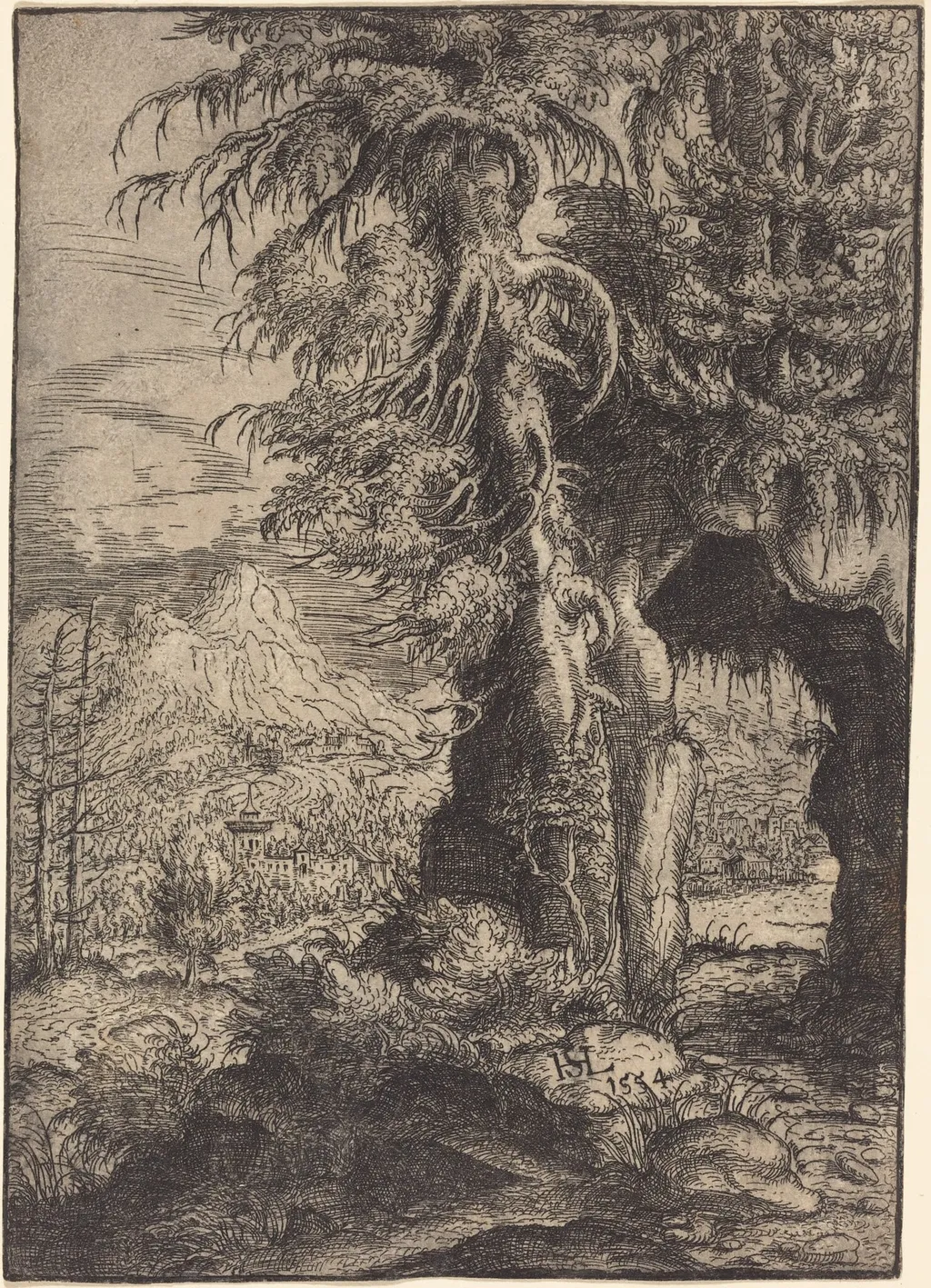
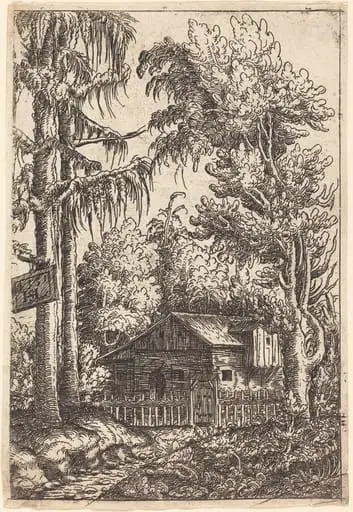
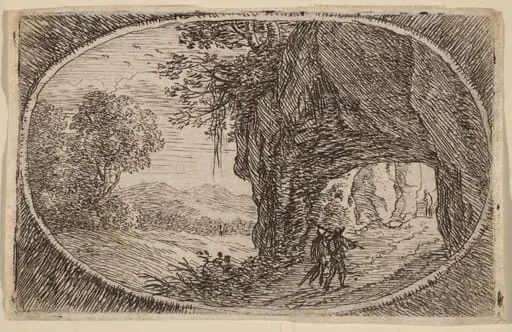
The Gate in the Rocks is an ink print by the Renaissance artist Hanns Lautensack. It dates from 1554 and is held in the collection of the National Gallery of Art.
About this work
Overview
Created in 1554, *The Gate in the Rocks* is an etching by German printmaker Hanns Lautensack. The work depicts a dense, shadowy forest in which a narrow path leads to a modest gate set amid tangled trunks and rocky ground, conveying a quiet, mysterious atmosphere.
Subject & Meaning
The composition centers on a solitary gate framed by overgrown trees, suggesting a passage between the natural world and an unseen interior. The oppressive foliage and stark contrasts emphasize themes of concealment and the threshold between safety and the unknown.
Technique & Style
Lautensack employed the etching process, incising lines into a metal plate to produce deep, velvety blacks and intricate textures. This method, still relatively new in the mid‑sixteenth century, allowed him to render the complex interplay of light, shadow, and foliage with fine detail.
History & Provenance
Born in Bamberg in 1524, Hanns Lautensack was the son of painter Paul Lautensack. He worked primarily in Nuremberg before relocating to Vienna around 1556, likely at the invitation of Emperor Ferdinand I. His prints are commonly signed with a personal monogram.
Context
The etching reflects the broader German printmaking tradition of the 1500s, which emphasized meticulous line work and atmospheric depth. Lautensack’s output aligns with contemporaneous interests in landscape and the exploration of natural settings as sites of symbolic meaning.
Artist & collection
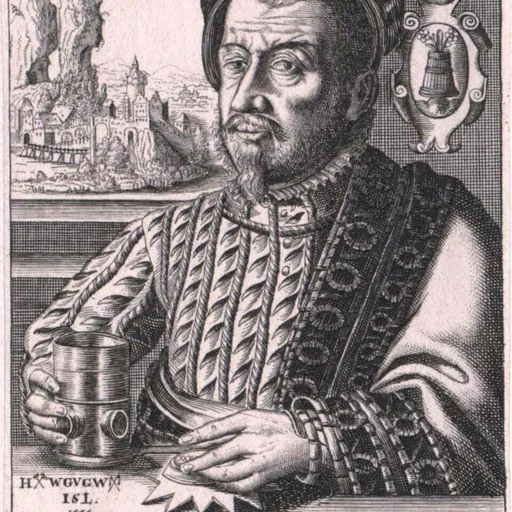
Artist
Hanns Lautensack (sometimes erroneously referred to as Hans Sebald Lautensack) (1524 – c.

![View of Nuremberg from the West [center section], by Hanns Lautensack](https://artifactworldgallery.com/img/hanns-lautensack--view-of-nuremberg-from-the-west-center-section--12422dca269411c0-w320.webp)
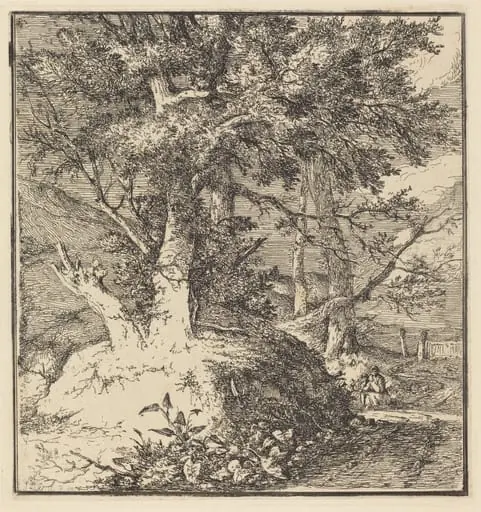 Tree on a Mound
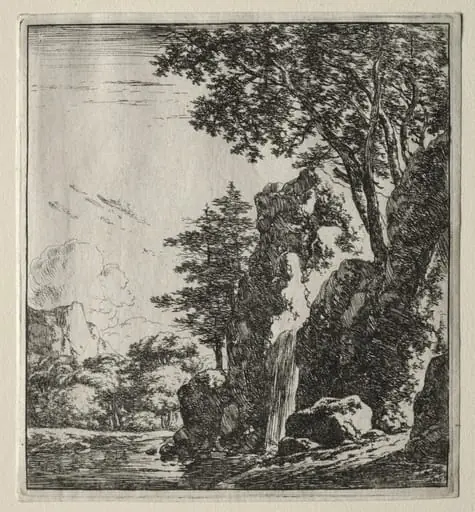 La chute d'eau
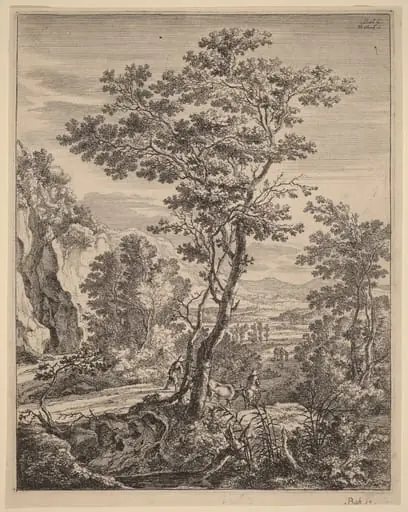 The Large Tree
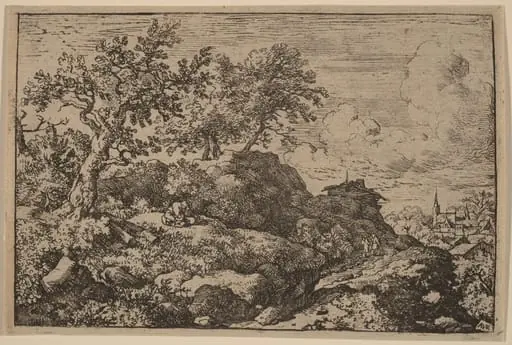 Two Peasants Seated on a Hill
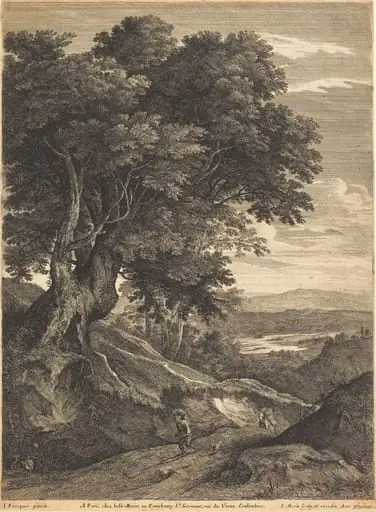 Hilly Landscape with Travelers on Foot
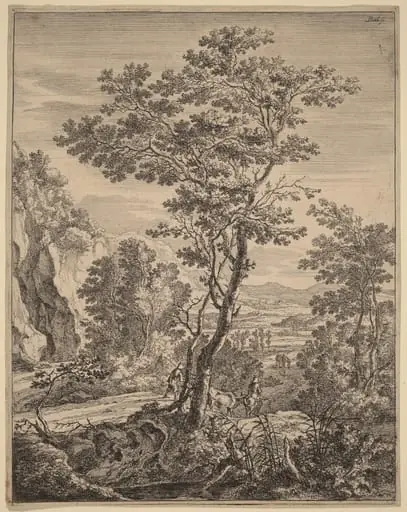 The Large Tree
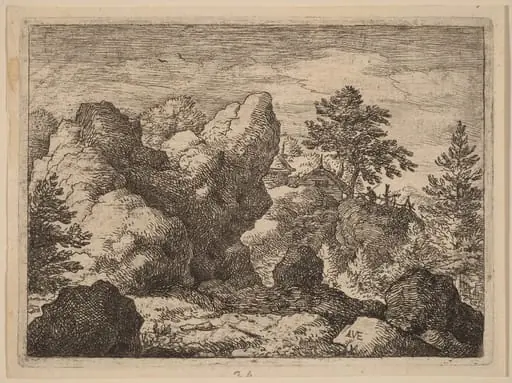 The Pointed Rock
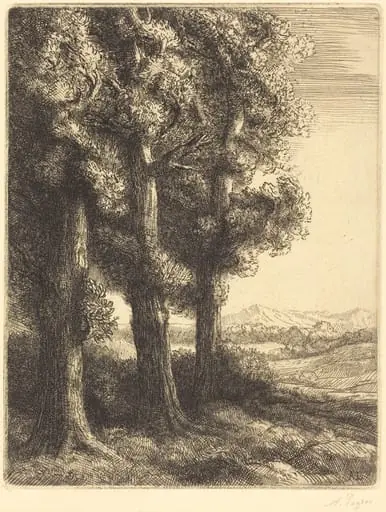 Corner of a Wood (Coin d'un bois)
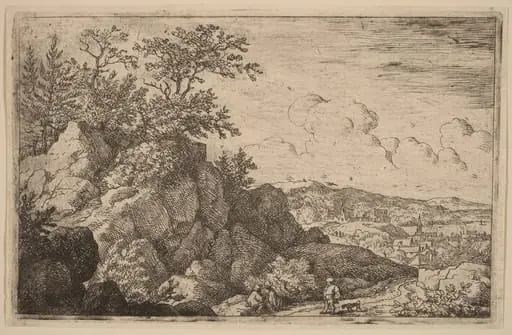 Peasant with His Dog
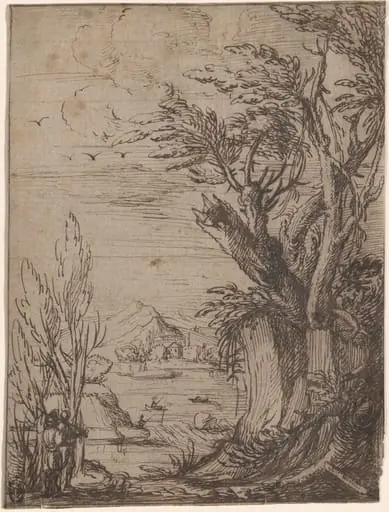 Landscape with Gnarled Trees and Fisherman
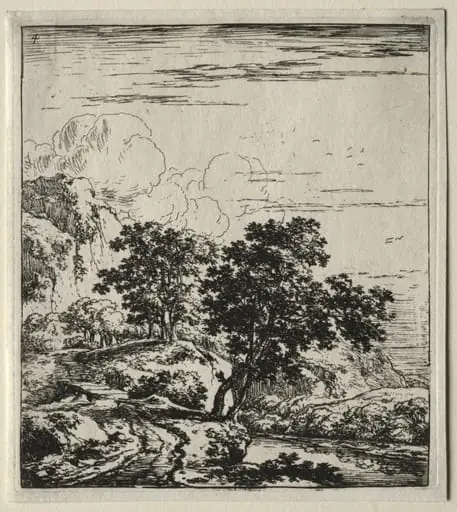 Le sentier au bord de la rivière et le petit pont du bois
 The Path through the Rock