Artwork
Pancraz von Freyberg Hohenschau
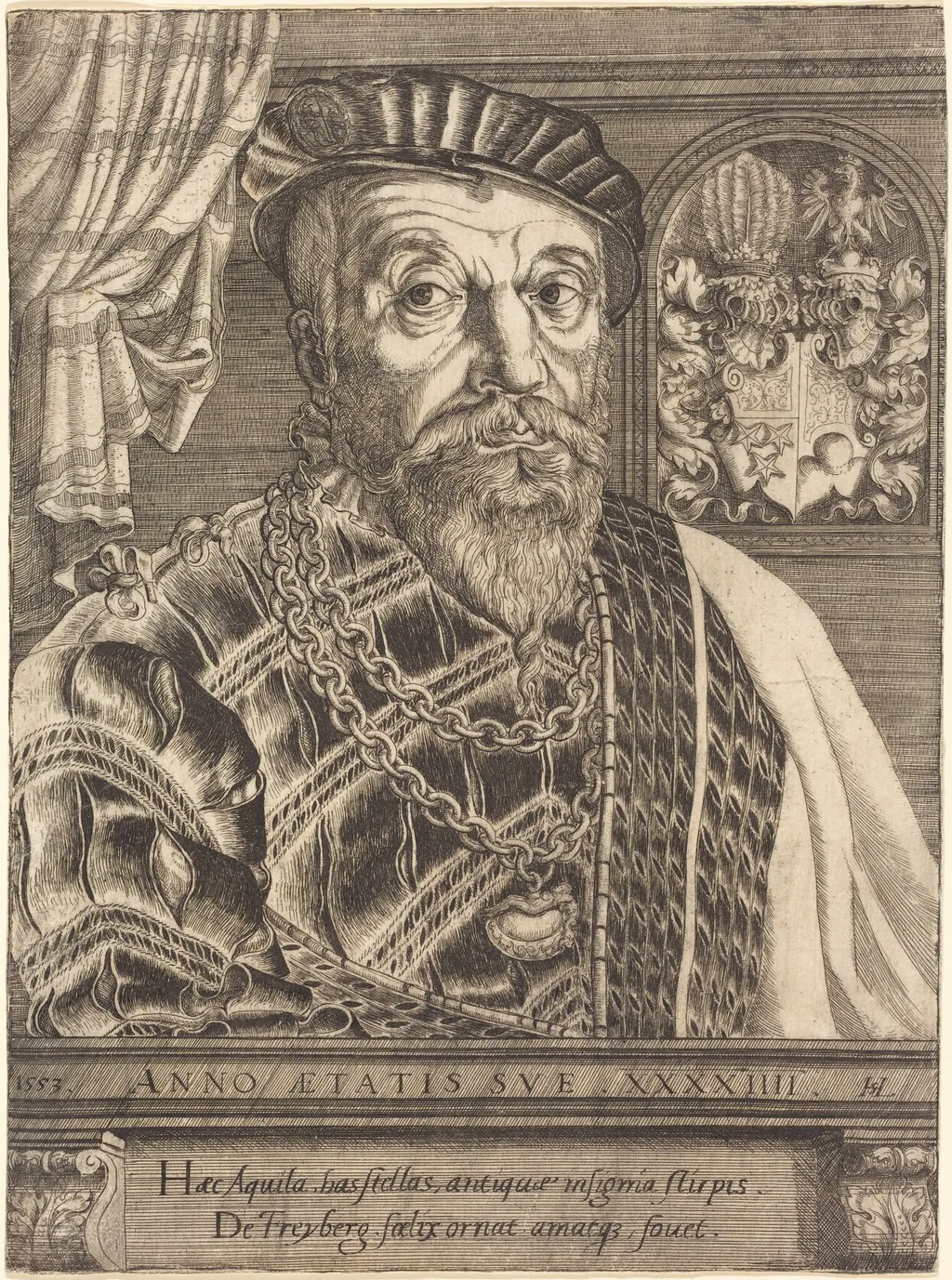
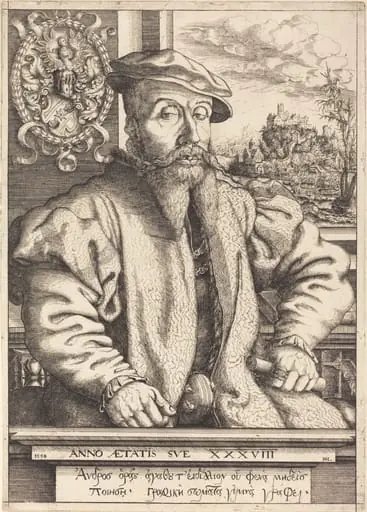
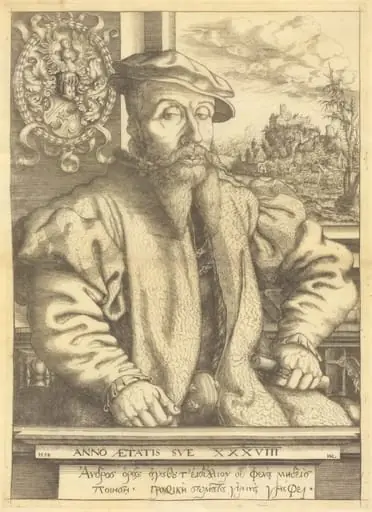
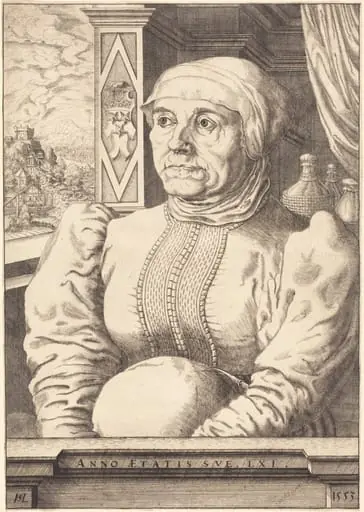
Pancraz von Freyberg Hohenschau is an ink print by the Renaissance artist Hanns Lautensack. It dates from 1553 and is held in the collection of the National Gallery of Art.
About this work
Overview
Created in 1553, this etching by Hanns Lautensack portrays Pancraz von Freyberg Hohenschau, a nobleman connected to the artist’s time in Austria.
Created in 1553, this etching by Hanns Lautensack portrays Pancraz von Freyberg Hohenschau, a nobleman connected to the artist’s time in Austria. Lautensack, trained in Nuremberg and later active in Vienna, specialized in detailed portraiture. The work belongs to a small body of prints made during his transition from southern Germany to the Habsburg court, reflecting his engagement with aristocratic patrons in the mid-sixteenth century.
Subject & Meaning
The portrait captures Pancraz von Freyberg Hohenschau in formal attire, likely representing his social standing. His expression is composed, and the rendering of his hands suggests quiet authority. The choice to depict him in contemporary noble dress, rather than idealized or allegorical form, signals a shift toward direct, individualized representation common among German printmakers of the period.
Technique & Style
Lautensack employed fine-line etching to achieve intricate detail in the man’s clothing and facial features. The texture of lace, fabric folds, and hair is rendered with controlled burin-like precision, typical of Nuremberg-trained etchers. His use of cross-hatching and delicate tonal gradations demonstrates mastery of the medium, emphasizing realism without theatricality.
History & Provenance
The print was made shortly before Lautensack’s documented move to Vienna around 1556, possibly under imperial patronage. Its subject, a member of the Austrian nobility, aligns with the artist’s increasing focus on courtly figures during this phase. The work survives in several institutional collections, though its early ownership remains undocumented beyond its association with Lautensack’s Austrian period.
Context
In mid-16th-century Germany and Austria, portraiture in print form became a tool for noble families to assert identity and status. Lautensack’s etchings reflect this trend, drawing from the tradition of Dürer and his circle while adapting to the tastes of Habsburg-aligned patrons. His work bridges the gap between northern Renaissance portraiture and the emerging emphasis on individual likeness in courtly culture.
Legacy
Lautensack’s etchings, including this portrait, contributed to the development of the portrait print as a distinct genre in Central Europe. Though less widely known than his contemporaries, his technical discipline and attention to personal detail influenced later generations of printmakers in Austria and southern Germany, particularly in the documentation of aristocratic sitters.
Artist & collection
Artist
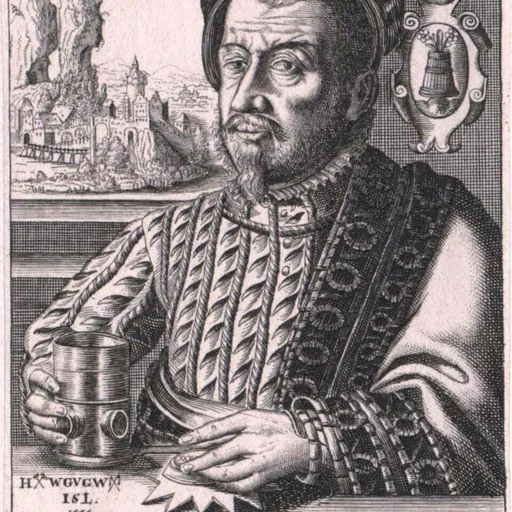
Hanns Lautensack (sometimes erroneously referred to as Hans Sebald Lautensack) (1524 – c.

![View of Nuremberg from the West [center section], by Hanns Lautensack](https://artifactworldgallery.com/img/hanns-lautensack--view-of-nuremberg-from-the-west-center-section--12422dca269411c0-w320.webp)