Artwork
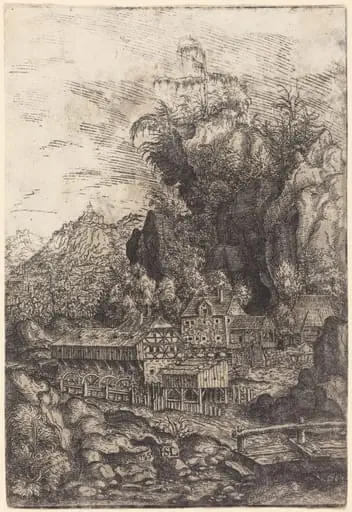
Landscape with View of a Farmer's Cottage
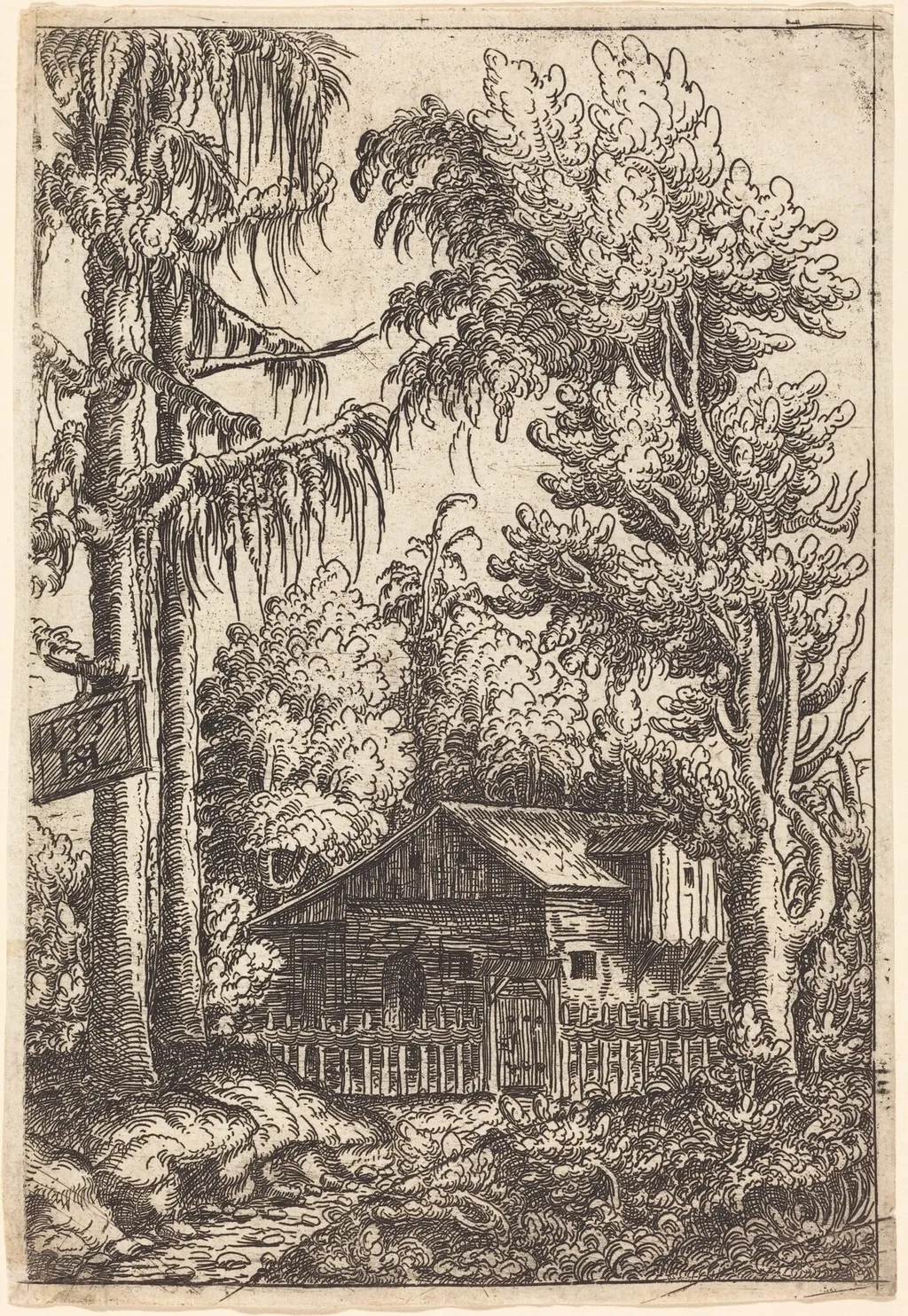
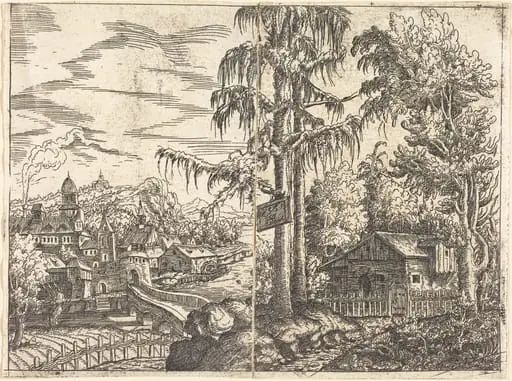
Landscape with View of a Farmer's Cottage is an ink print by the Renaissance artist Hanns Lautensack. It dates from 1551 and is held in the collection of the National Gallery of Art.
About this work
Overview
Hanns Lautensack, a German printmaker born in Bamberg in 1524, produced this etching in 1551 during his active years in Nuremberg.
Hanns Lautensack, a German printmaker born in Bamberg in 1524, produced this etching in 1551 during his active years in Nuremberg. As the son of painter Paul Lautensack, he inherited a artistic environment that valued detailed draftsmanship. His work emerged at a time when etching was becoming a respected medium for landscape depiction in Northern Europe, offering artists greater control over fine line work than earlier woodcut techniques.
Subject & Meaning
The scene centers on a modest, weathered cottage nestled between two gnarled trees, suggesting a quiet, unidealized rural life. A figure is visible at a window, hinting at domestic presence without narrative drama. The untamed vegetation and irregular terrain convey a sense of nature reclaiming human habitation. This quiet observation aligns with emerging 16th-century German interest in everyday environments, distinct from grand religious or mythological themes.
Technique & Style
Lautensack employed etching to achieve intricate linear detail, using acid to bite fine, deliberate lines into a metal plate. The texture of bark, foliage, and ground cover is rendered through dense, scratchy strokes that mimic natural irregularity. The composition avoids symmetry, favoring organic asymmetry and layered depth. His hand is evident in the precision of the branching trees and the subtle gradations of shadow, characteristic of his mature style.
History & Provenance
The print is dated 1551 and signed with Lautensack’s distinctive monogram, a practice he consistently used to authenticate his works. While specific early ownership records are sparse, the piece survives within the broader corpus of his printed output, which was circulated among collectors and artists in southern Germany. Its preservation reflects the growing appreciation for etched landscapes as independent artistic statements rather than mere reproductive tools.
Context
In mid-16th-century Germany, landscape imagery was shifting from symbolic backdrops to subjects in their own right. Lautensack’s work aligns with contemporaries like Albrecht Altdorfer and the Danube School, who explored nature with psychological nuance. Etching allowed for intimate, portable images that appealed to urban patrons seeking connection to rural life. His prints contributed to a quiet revolution in how the natural world was visually documented and valued.
Legacy
Lautensack’s etchings, including this one, helped establish landscape as a legitimate genre in German printmaking. His precise line work influenced later generations of Northern European draftsmen. Though less widely known than some peers, his focus on unadorned rural scenes preserved a visual record of everyday life during a period of religious and social upheaval, offering a subtle counterpoint to more dramatic artistic narratives of the era.
Artist & collection
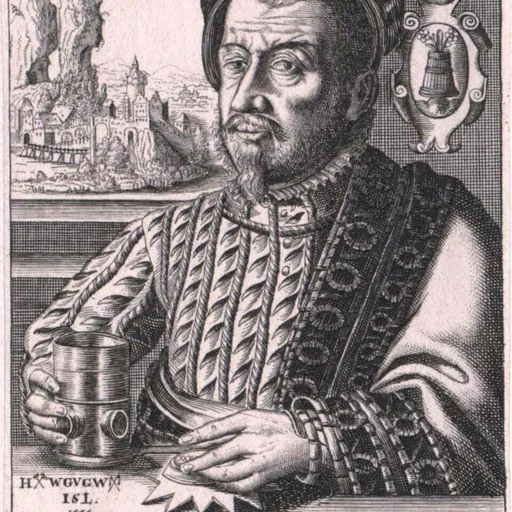
Artist
Hanns Lautensack (sometimes erroneously referred to as Hans Sebald Lautensack) (1524 – c.

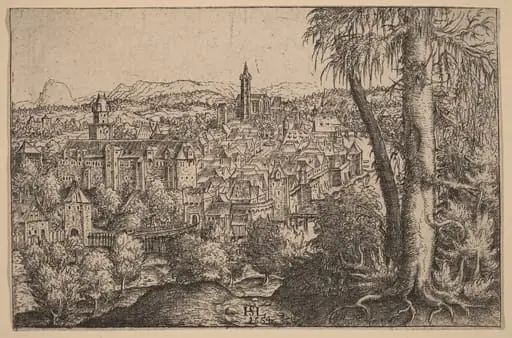
![View of Nuremberg from the West [center section], by Hanns Lautensack](https://artifactworldgallery.com/img/hanns-lautensack--view-of-nuremberg-from-the-west-center-section--12422dca269411c0-w320.webp)
 Giant Elm, Easthampton
 Six Large Upright Landscapes: A Mother and Three Children at Rest
 Village Street
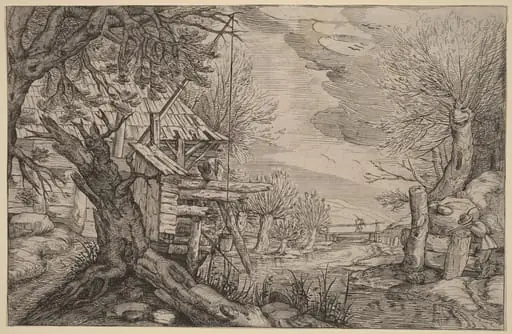 Landscape with Log House near a River
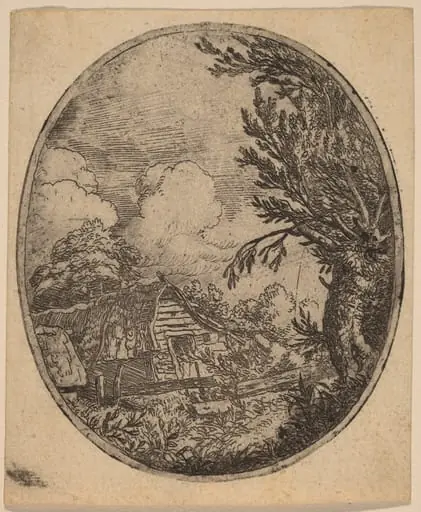 Hamlet between the Trees
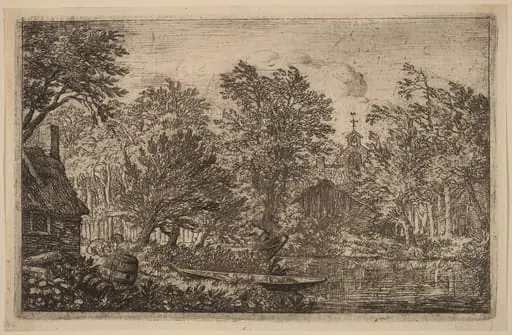 Skiff at a River Bank
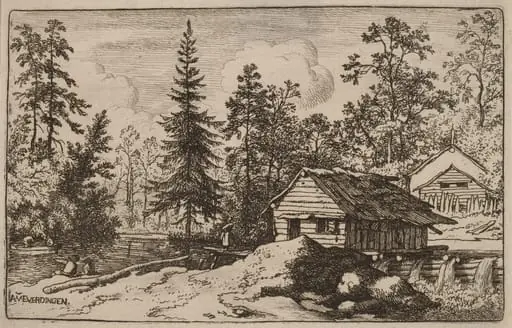 Woman in a Riverscape Looking towards a Boat
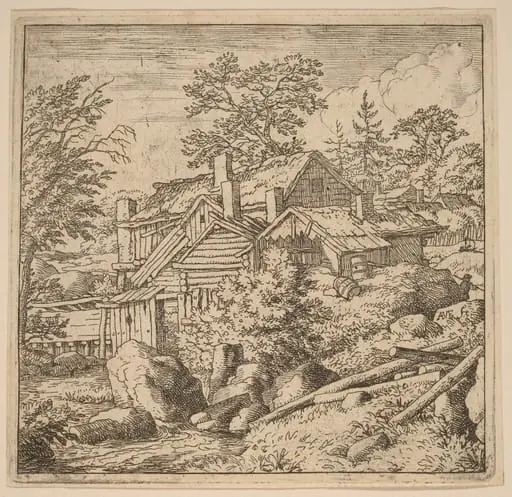 Hamlet on a Mountain Side
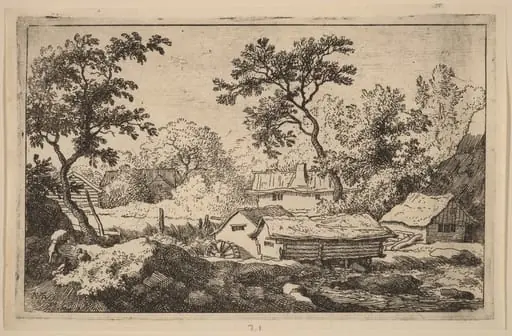 Mill below a Waterfall
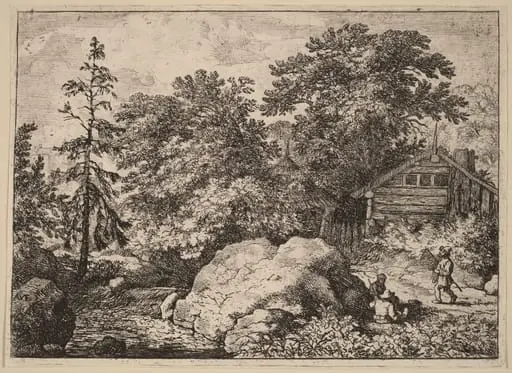 The Knoll
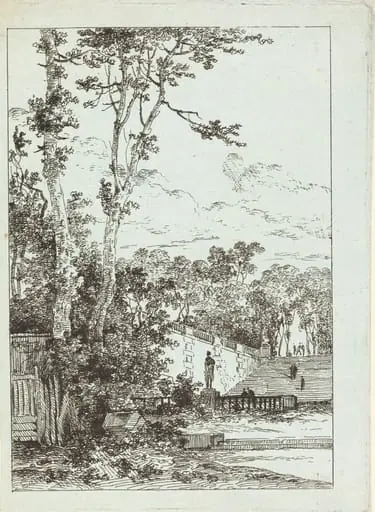 Abandoned Park
 Landscape with View of a Farmer's Cottage and a Town near a River