Artwork
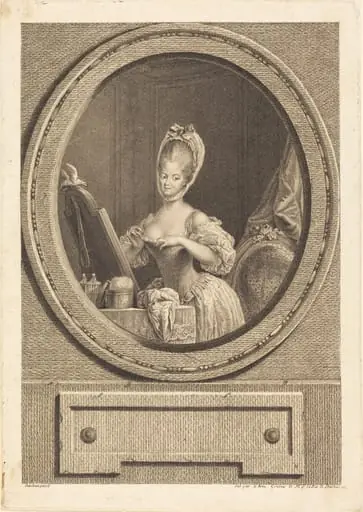
Le danger des bosquets
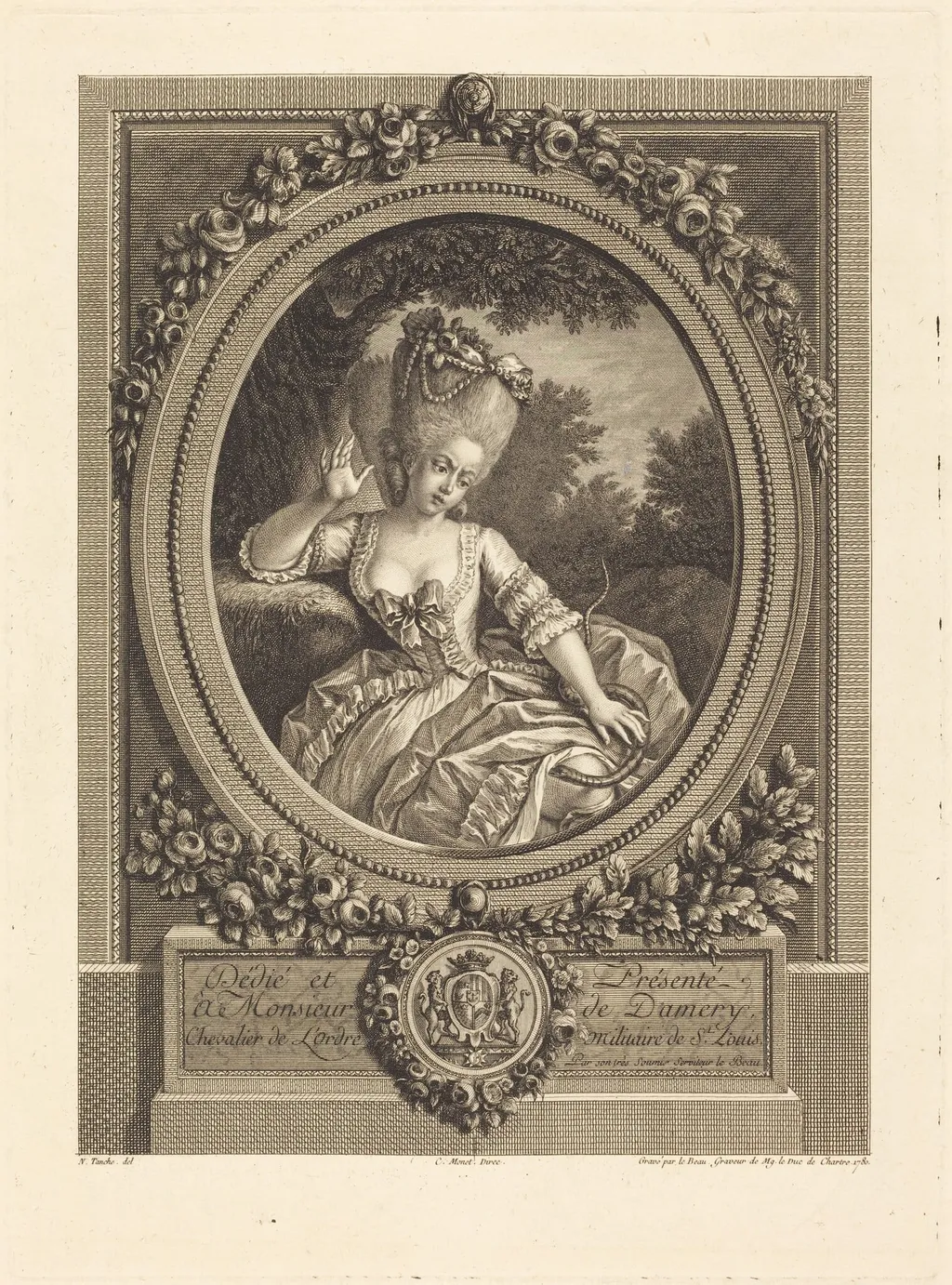
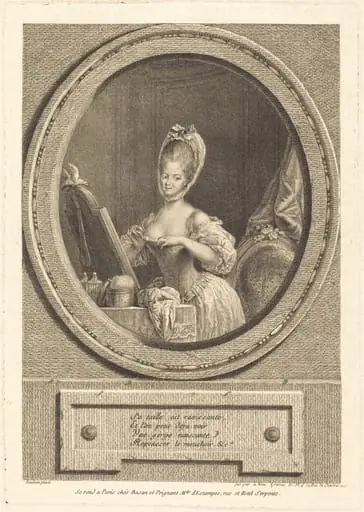
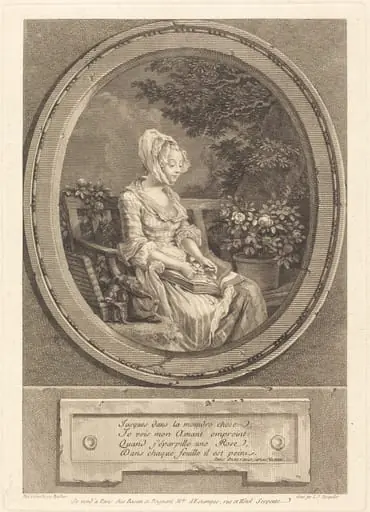
Le danger des bosquets is an ink print by the Baroque artist Pierre Adrien Le Beau. It dates from 1774 and is held in the collection of the National Gallery of Art.
About this work
Overview
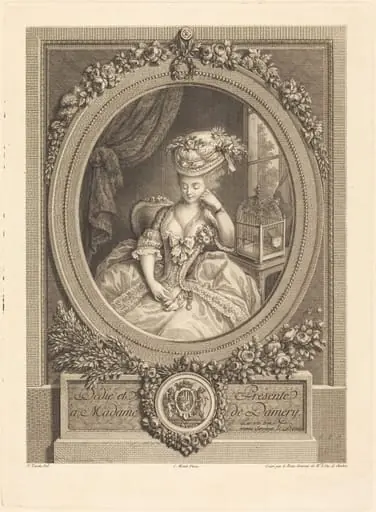
Le danger des bosquets is an 1774 print by Pierre Adrien Le Beau, executed in etching and engraving. It depicts a woman seated within a wooded setting, framed by an elaborate decorative border resembling a gilded picture frame. The composition merges natural elements with artificial ornamentation, creating a layered visual space that blurs the boundary between the figure and her surroundings.
Subject & Meaning
Her placement within a forest, surrounded by ornate framing, suggests a metaphorical tension between cultivated elegance and wild nature.
The woman, dressed in aristocratic attire with a low neckline and floral adornments, appears poised yet isolated amid dense foliage. Her placement within a forest, surrounded by ornate framing, suggests a metaphorical tension between cultivated elegance and wild nature. The title, translating to 'The Danger of the Groves,' hints at hidden peril beneath surface refinement, possibly alluding to social or moral risks faced by women in elite circles.
Technique & Style
Le Beau employed fine line work typical of late 18th-century engraving, using precise etching to render textures in fabric, foliage, and the intricate border. The decorative frame, adorned with leaves and pearls, mirrors Rococo sensibilities, though the composition lacks the theatrical lighting associated with Baroque. The style leans toward refined decorative art rather than dramatic chiaroscuro, reflecting transitional tastes between Rococo and Neoclassicism.
History & Provenance
Created in 1774, the print was likely produced as part of a series or decorative portfolio for private collectors. Le Beau, known for his work in reproductive engraving and ornamental design, did not achieve widespread fame, and this piece remains a lesser-known example of his output. Its survival suggests it was held in aristocratic or artistic circles, though its early ownership history is undocumented.
Context
In the years leading to the French Revolution, imagery of aristocratic women in natural settings was common, often idealizing their grace while subtly critiquing their detachment from reality. Le Beau’s print aligns with this trend, using the forest as both setting and symbol. The ornate frame may reflect contemporary fascination with artifice, mirroring the performative nature of courtly life in pre-revolutionary France.
Legacy
Le danger des bosquets is not widely reproduced or studied today, but it offers insight into the visual language of late 18th-century French print culture. Its blend of naturalism and ornamentation captures a moment when artistic conventions were shifting away from Baroque grandeur toward more intimate, symbolic expressions. As a work of skilled craftsmanship, it remains a quiet testament to the era’s aesthetic tensions.
Artist & collection