Artwork
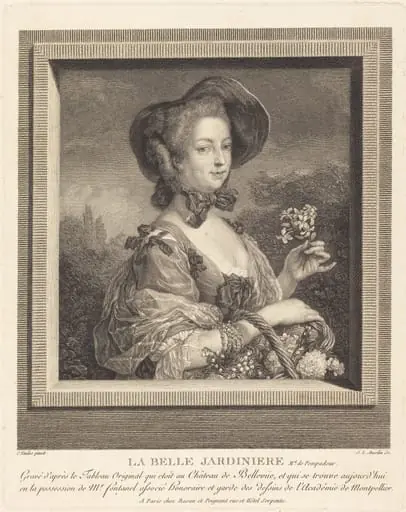
La Belle Jardinière - Madame de Pompadour
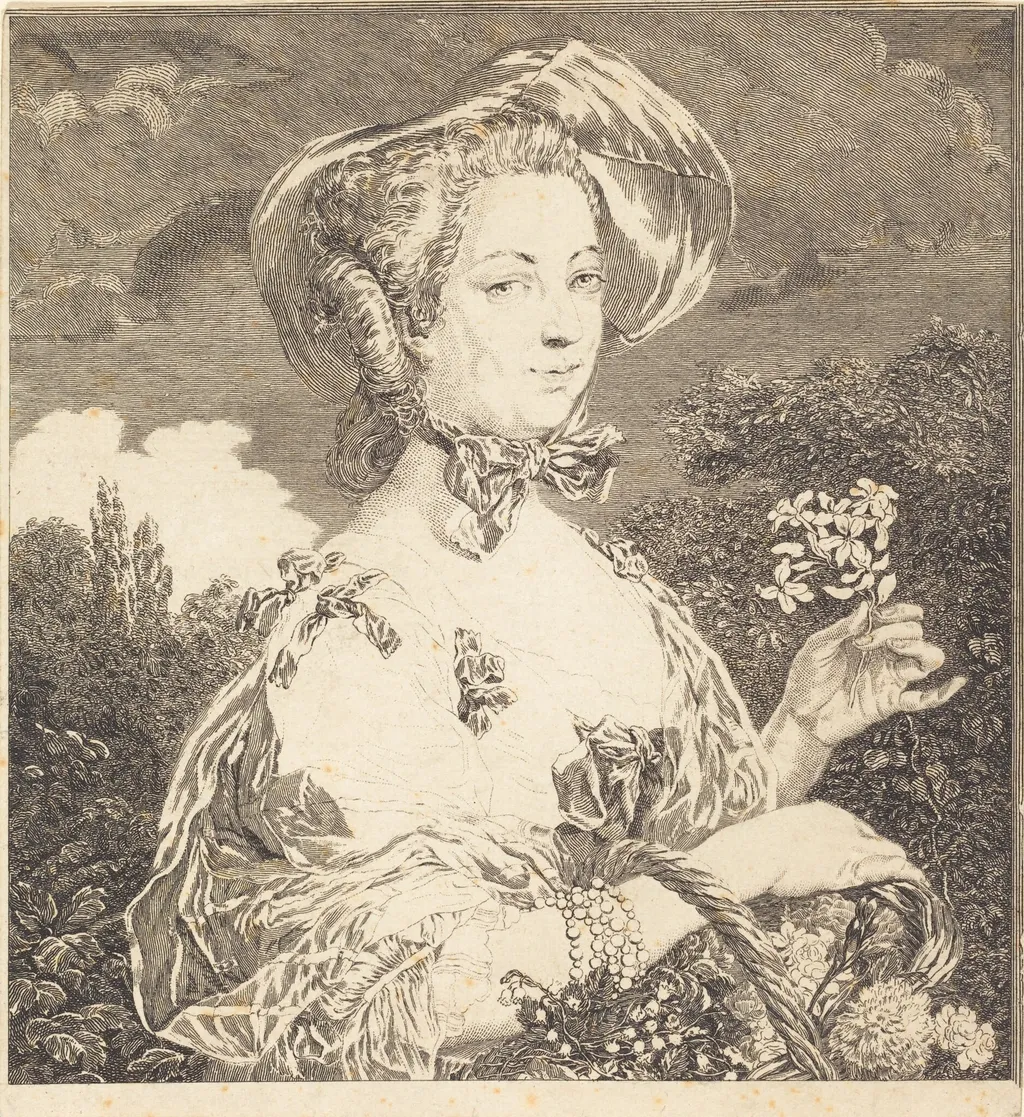
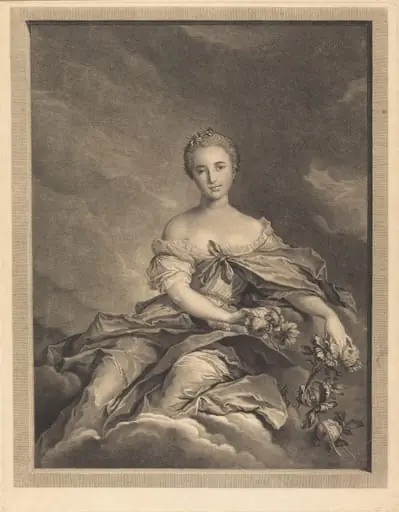
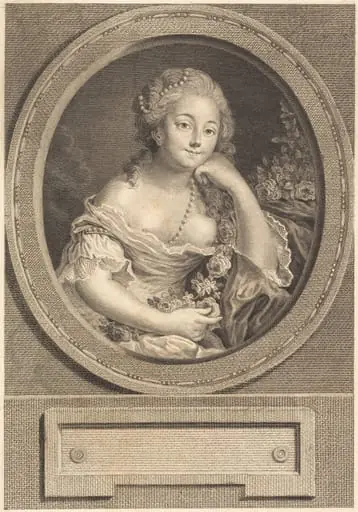
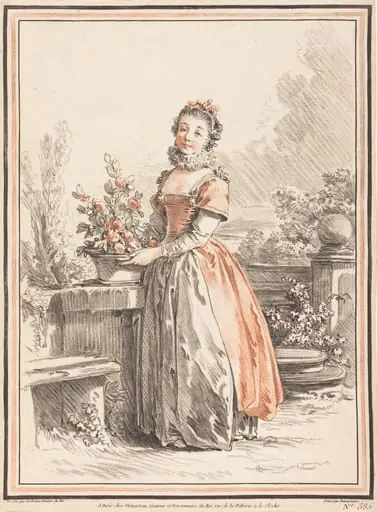
La Belle Jardinière - Madame de Pompadour is an ink print by the Romanticist artist Jean-Louis Anselin. It dates from 1785 and is held in the collection of the National Gallery of Art.
About this work
Overview
Created around 1785 by Jean-Louis Anselin, this etching depicts Madame de Pompadour, the influential mistress of Louis XV, in a garden setting.
Created around 1785 by Jean-Louis Anselin, this etching depicts Madame de Pompadour, the influential mistress of Louis XV, in a garden setting. Rendered in black and white on laid paper, the print captures her in a moment of quiet contemplation, surrounded by botanical elements. The work belongs to a tradition of portrait prints that blended personal identity with natural symbolism, common in late 18th-century France.
Subject & Meaning
Madame de Pompadour is shown holding a cluster of grapes and flowers, symbols associated with abundance, fertility, and the transient beauty of nature. Her poised posture and refined attire suggest both elegance and cultivated taste. The garden setting may allude to her role as a patron of the arts and her cultivated influence at court, framing her not merely as a figure of fashion but as a nurturer of cultural life.
Technique & Style
Anselin employed fine, controlled etching lines to render textures with precision—grapes, petals, and fabric folds are defined by delicate hatching and cross-contour strokes. The use of laid paper, with its subtle watermark texture, enhances the tactile quality of the image. The composition avoids dramatic contrasts, favoring a soft tonal range that mirrors the intimacy and restraint characteristic of Rococo portraiture in print form.
History & Provenance
The print was made shortly after Pompadour’s death in 1764, during a period when her legacy was being visually memorialized. Anselin, known for reproductive engravings, likely based his work on earlier portraits. While the exact provenance of surviving impressions is unclear, such prints circulated among aristocratic collectors and art enthusiasts, serving as accessible mementos of a once-dominant cultural figure.
Context
In the decades before the French Revolution, printed portraits of prominent court figures were widely distributed, reinforcing social hierarchies through visual culture. Etchings like this one allowed the elite to display refined taste and political allegiance. Pompadour’s enduring image in print reflects her lasting cultural footprint, even as the monarchy’s power began to wane.
Legacy
Anselin’s etching contributes to a broader archive of Pompadour’s visual representation, preserving her likeness beyond painted portraits. Though not widely exhibited today, it remains a quiet testament to the role of print media in shaping public memory. Its restrained aesthetic contrasts with later, more theatrical depictions, offering a glimpse into the nuanced ways aristocratic identity was conveyed in the late Ancien Régime.
Artist & collection