Artwork
Love-in-a-mist; Field cow-wheat
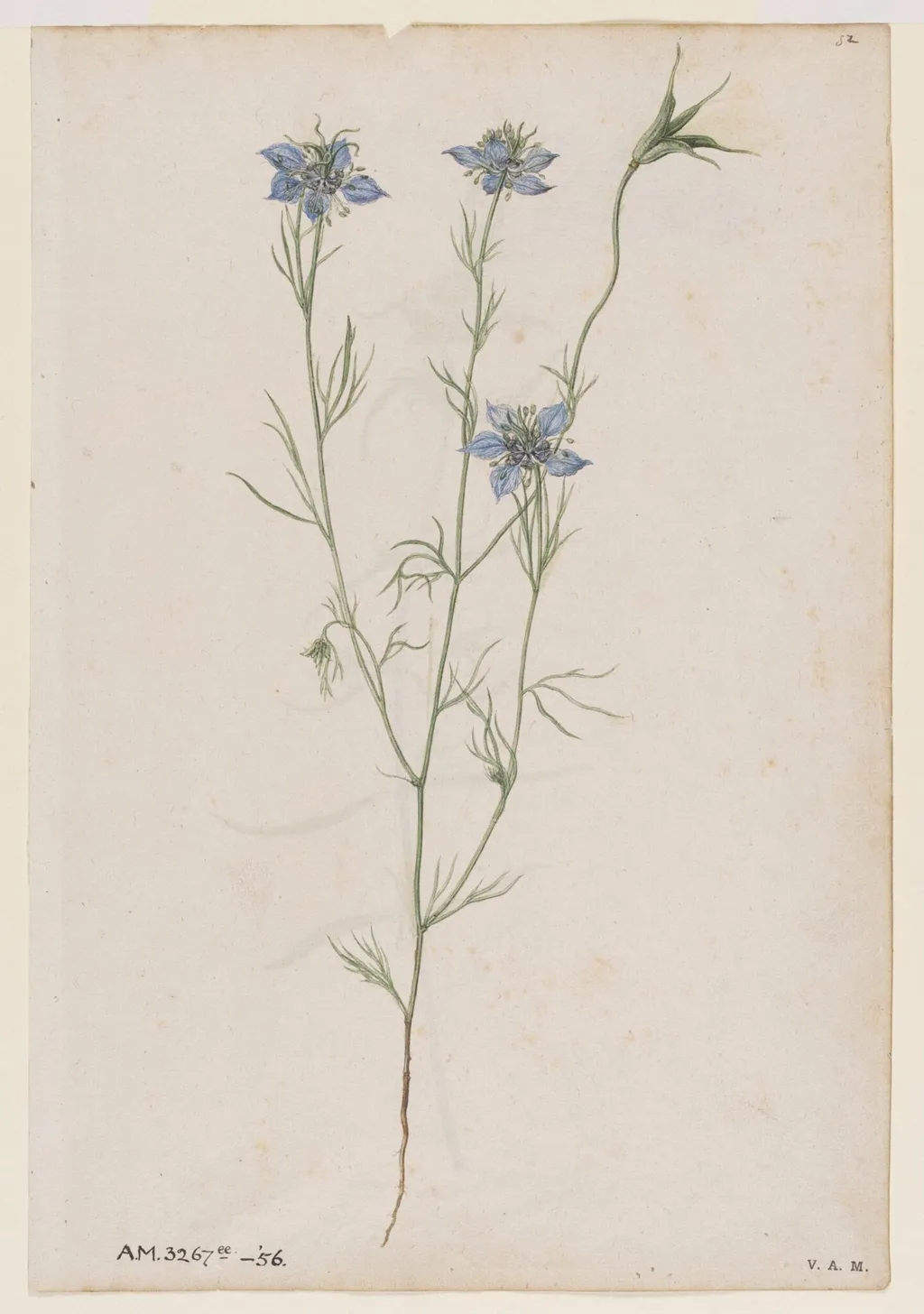
Love-in-a-mist; Field cow-wheat is a watercolor work on paper by the Early Baroque Italian artist Jacques Le Moyne de Morgues. It dates from 1568 and is held in the collection of the Victoria and Albert Museum. This watercolour sheet, dating to circa 1575, forms part of a bound collection of fifty‑nine botanical studies on paper.
About this work
The flowers are on opposite sides of the same sheet—one side shows “Love-in-a-mist,” the other shows “Field cow-wheat.
This watercolour shows two delicate wildflowers painted around 1575. It’s part of a set of 59 botanical studies kept in a single album.
The flowers are on opposite sides of the same sheet—one side shows “Love-in-a-mist,” the other shows “Field cow-wheat.” These tiny works were once overlooked but now rank among early botanical art’s best.
Look up the Victoria and Albert Museum to see more from this album.
Overview
This watercolour sheet, dating to circa 1575, forms part of a bound collection of fifty‑nine botanical studies on paper. Each leaf in the album contains a single plant illustration, and this particular sheet is double‑sided, presenting two distinct species on opposite faces.
Subject & Meaning
The recto depicts Nigella damascena, commonly known as love‑in‑a‑mist, while the verso illustrates field cow‑wheat (Agrostis capillaris). Both are rendered as isolated specimens, emphasizing their delicate forms and characteristic foliage for close observation.
Technique & Style
Executed in transparent watercolour, the images employ fine brushwork and a restrained palette to convey the subtle textures of petals and seed heads. The artist’s approach balances scientific accuracy with a graceful, almost lyrical composition, typical of early modern botanical illustration.
History & Provenance
The album is attributed to the Huguenot painter Jacques Lemoyne de Morgues (1533–1588), whose work was long regarded as merely decorative. Rediscovered in the early twentieth century, these watercolours have since secured Lemoyne’s reputation as a pioneering figure in the development of botanical art.
Context
Created during the Renaissance surge in natural history study, the sheets reflect a growing interest in cataloguing plant species for medicinal and horticultural purposes. Lemoyne’s illustrations align with contemporary scientific manuscripts while retaining an artistic sensibility.
Legacy
Although once overlooked, the album’s specimens are now cited as exemplary early examples of botanical illustration, illustrating the transition from ornamental drawing to systematic plant documentation.
Artist & collection
Artist
Jacques Le Moyne de Morgues (French pronunciation: ; c. 1533–1588) was a French artist and member of Jean Ribault's expedition to the New World. His depictions of Native American life and culture, colonial life, and…

![The Botanical Magazine or Flower Garden Displayed: Plate 944, Dillwynia Glaberrima. Smooth-Leaved Dillwynnia. [Dillwynia ericifolia gaberrima], by Francis Sansom](https://artifactworldgallery.com/img/francis-sansom--the-botanical-magazine-or-flower-garden-displayed-plate-944--842a60310bc6a2eb-w320.webp) The Botanical Magazine or Flower Garden Displayed: Plate 944, Dillwynia Glaberrima. Smooth-Leaved Dillwynnia. [Dillwynia ericifolia gaberrima]
The Botanical Magazine or Flower Garden Displayed: Plate 944, Dillwynia Glaberrima. Smooth-Leaved Dillwynnia. [Dillwynia ericifolia gaberrima]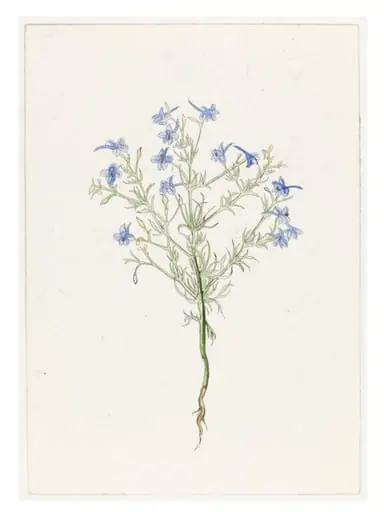 The History of Plants, according to women, children and students
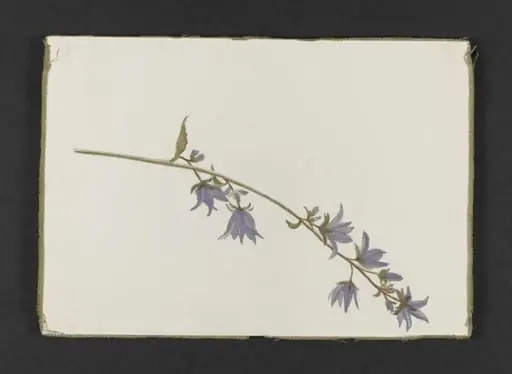 Spray of purple campanula
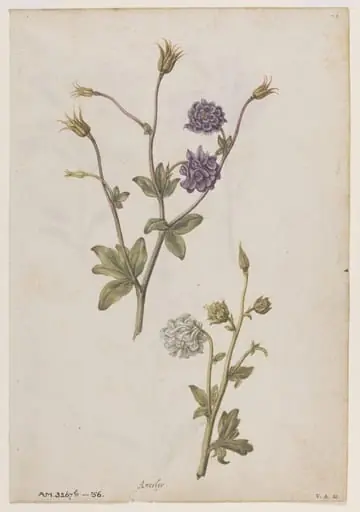 Columbine; Gilliflower
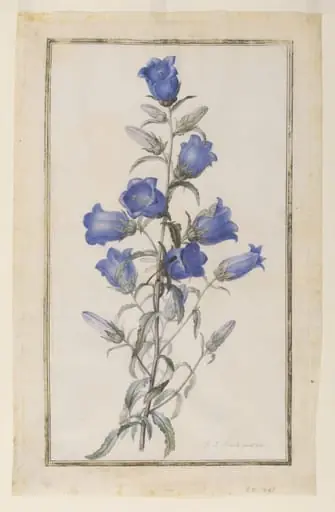 Canterbury Bells (Campanula medium)
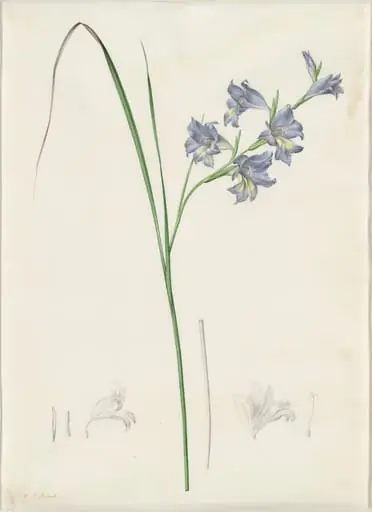 Gladiolus ringens
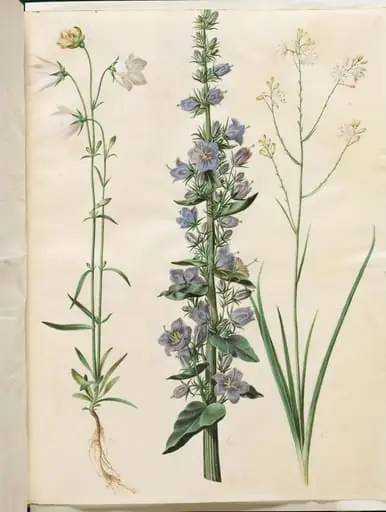 Campanula persicifolia (smalbladet klokke); Campanula pyramidalis (pyramide-klokke); Anthericum ramosum (grenet edderkopurt)
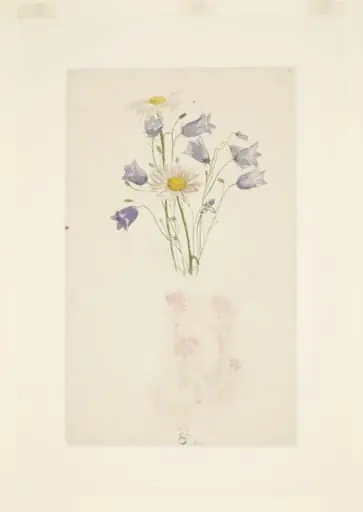 Study of harebells and marguerites