Artwork
The History of Plants, according to women, children and students
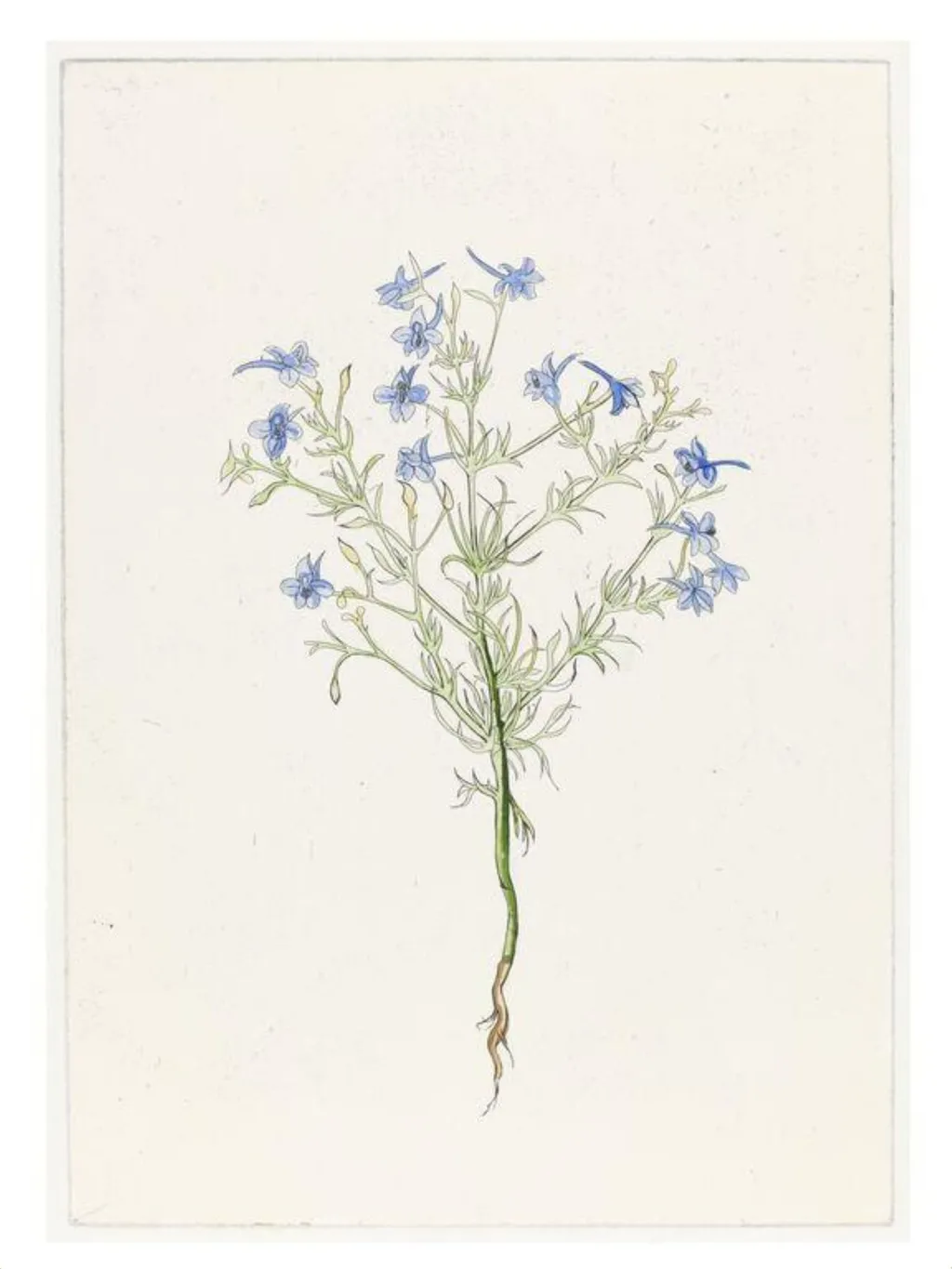
The History of Plants, according to women, children and students is a print by Christine Borland. It dates from 2002 and is held in the collection of the Victoria and Albert Museum.
About this work
The hand-coloring was done by unnamed workers—women and kids—who had to match careful instructions.
Christine Borland took prints from a 1542 plant book and turned them into etchings. The original woodcuts were later colored by women and children whose names didn’t get recorded. It’s one of the earliest scientific plant books, so the images mattered a lot.
Borland chose ten plates and redrew them as etchings. The hand-coloring was done by unnamed workers—women and kids—who had to match careful instructions.
Look up Leonhart Fuchs next.
Overview
Christine Borland's 'The History of Plants, according to women, children and students' is a print suite derived from Leonhart Fuchs' seminal 1542 woodcut herbal, 'De Historia Stirpium'. Borland reworked ten selected plates into etchings, highlighting the overlooked contributions of unnamed women and children who originally hand-colored the woodcuts.
Subject & Meaning
The work draws attention to the uncredited labor of women and children in the 16th-century hand-coloring process of Fuchs' herbal. By re-presenting these images, Borland reverses the historical lack of recognition for their skilled contributions, which were crucial for the accuracy and usefulness of the botanical illustrations.
Technique & Style
Borland transformed Fuchs' original woodcuts into etchings. The hand-coloring in the original work required meticulous skill to avoid obscuring the outlines or misrepresenting species, underscoring the importance of the uncredited workers' labor. Borland's etchings maintain the essence of the originals while shifting the medium.
History & Provenance
'De Historia Stirpium' (1542) was a groundbreaking, influential scientific botanical text. Borland's intervention occurred after a 9-month fellowship, leading to her creation of 'The History of Plants...' with a deliberate credit reversal: only the colorists were paid and credited, mirroring the original's uncredited hand-coloring labor.
Context
The practice of employing uncredited women and children for hand-coloring in print publications persisted into the 19th century. Borland's work contextualizes this historical oversight within the broader societal devaluation of certain labor types.
Artist & collection
Artist
Christine Borland makes sharp, idea-driven prints that dig into overlooked stories.

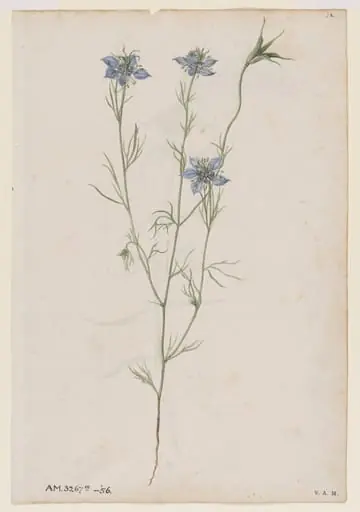 Love-in-a-mist; Field cow-wheat
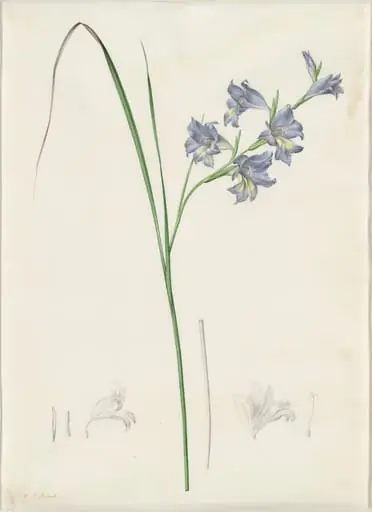 Gladiolus ringens
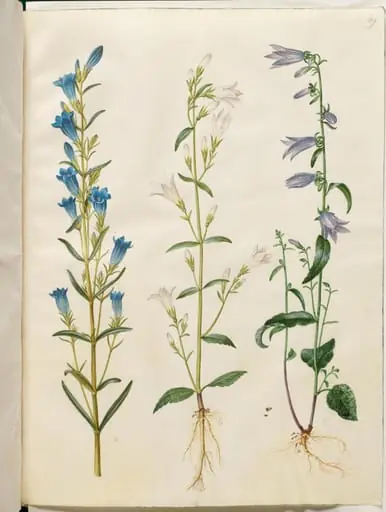 Gentiana pneumonanthe (klokke-ensian); Campanula patula (eng-klokke); Campanula rapunculoides (ensidig klokke)
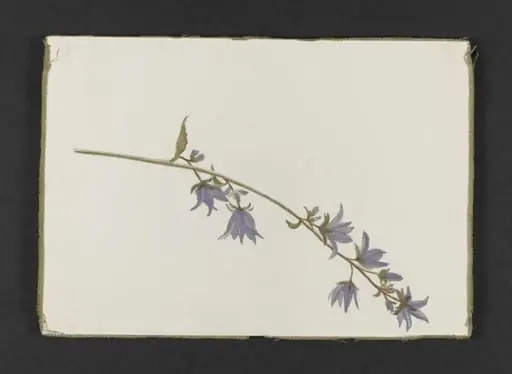 Spray of purple campanula
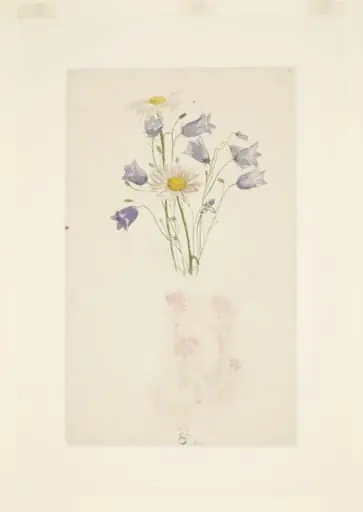 Study of harebells and marguerites
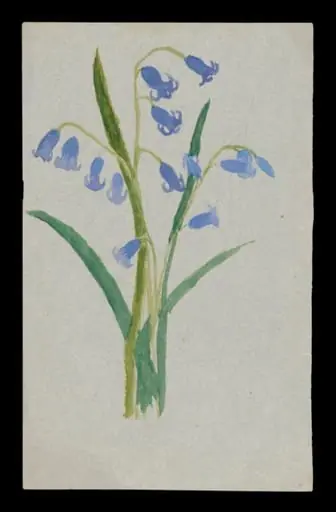 Untitled
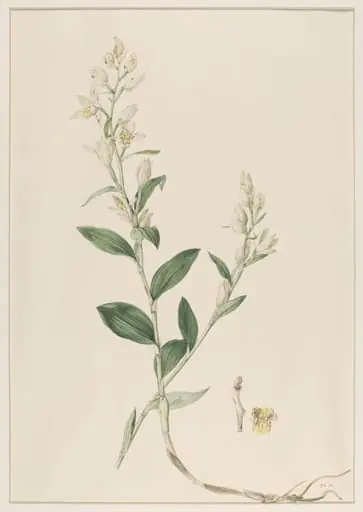 Epipactis Ensifolia
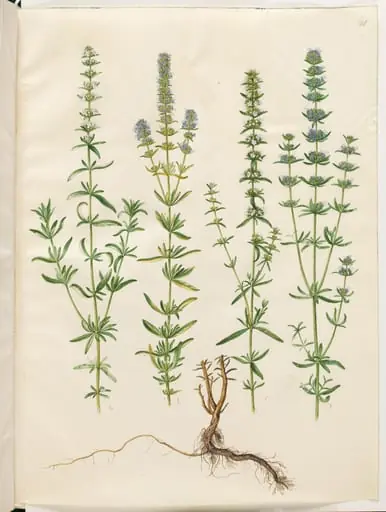 Hyssopus officinalis (ægte isop)
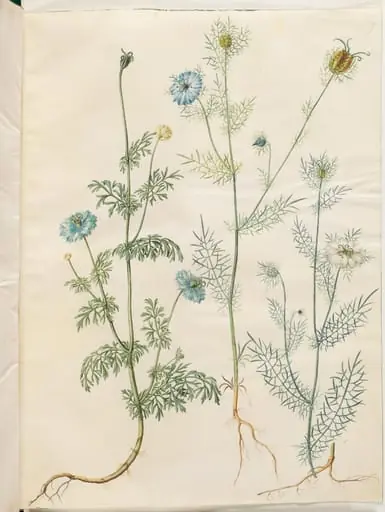 Nigella sativa (sortkommen); Nigella damascena (jomfru i det grønne)
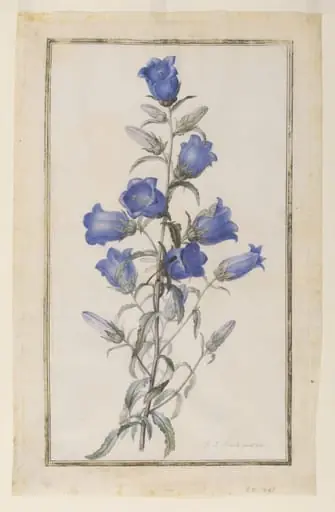 Canterbury Bells (Campanula medium)