Artwork
Millet; Water chestnut
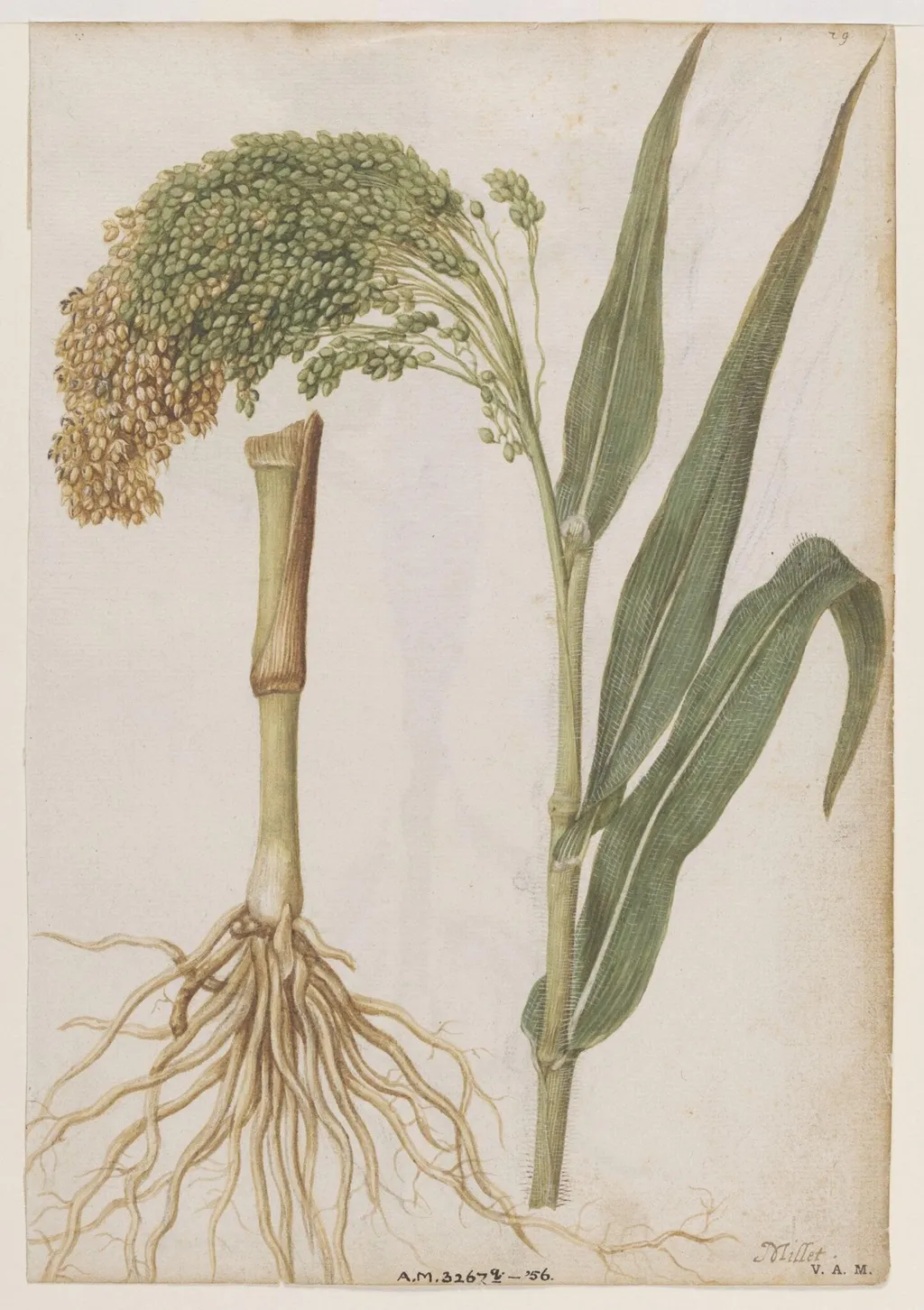
Millet; Water chestnut is a watercolor work on paper by the Barbizon school artist Jacques Le Moyne de Morgues. It dates from 1568 and is held in the collection of the Victoria and Albert Museum.
About this work
Overview
This watercolour, titled Millet; Water chestnut, is one of fifty-nine botanical studies by Jacques Le Moyne de Morgues held in the V&A collection.
This watercolour, titled Millet; Water chestnut, is one of fifty-nine botanical studies by Jacques Le Moyne de Morgues held in the V&A collection. Created during the late 16th century, the work reflects a systematic approach to documenting plant life, likely as part of a broader effort to record New World flora. Its precision and delicate execution suggest a functional purpose beyond mere observation.
Subject & Meaning
The subject is the water chestnut, a plant native to wetlands and known for its edible nuts. Le Moyne’s focus on this specific specimen aligns with Renaissance interests in natural history and the classification of newly encountered species. The inclusion of such plants may have served to identify useful or exotic materials for European artisans, linking botanical accuracy to practical craft applications.
Technique & Style
Executed in watercolour, the piece demonstrates careful observation and controlled brushwork. Le Moyne rendered the plant’s form with subtle gradations of tone and fine linework, capturing both structural detail and textural variation. The absence of background or decorative elements directs attention solely to the specimen, reinforcing its role as a scientific reference rather than an ornamental image.
History & Provenance
Le Moyne created these studies during and after his time in Florida as part of a French colonial expedition, later bringing them to England. They entered the V&A collection as part of a larger group of works attributed to him, preserved for their documentary value. Their survival is rare, given the fragility of watercolours and the turbulent circumstances of their creation.
Context
These drawings emerged during a period when European explorers were systematically cataloging the natural world. Le Moyne’s work reflects the intersection of exploration, science, and craft, where accurate depictions of plants served both scholarly curiosity and commercial design. His illustrations contributed to a growing visual archive of New World flora, influencing European decorative arts.
Legacy
Le Moyne’s botanical studies remain among the earliest visual records of American flora by a European artist. While not widely known in his lifetime, his works now provide critical insight into early colonial encounters with nature. They stand as quiet testaments to the intersection of art and science in the Renaissance, valued today for their historical precision rather than aesthetic flourish.
Artist & collection
Artist
Jacques Le Moyne de Morgues (French pronunciation: ; c. 1533–1588) was a French artist and member of Jean Ribault's expedition to the New World. His depictions of Native American life and culture, colonial life, and…

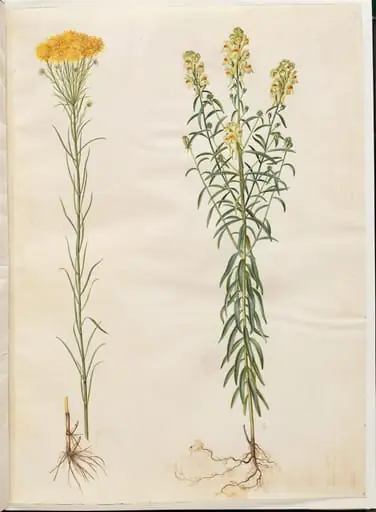 Aster linosyris (guldhår-asters); Linaria vulgaris (almindelig torskemund)
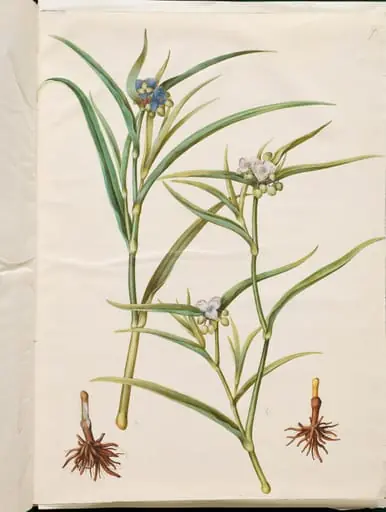 Tradescantia virginiana eller Tradescantia ohiensis (blomsterjøde eller ohio-blomsterjøde)
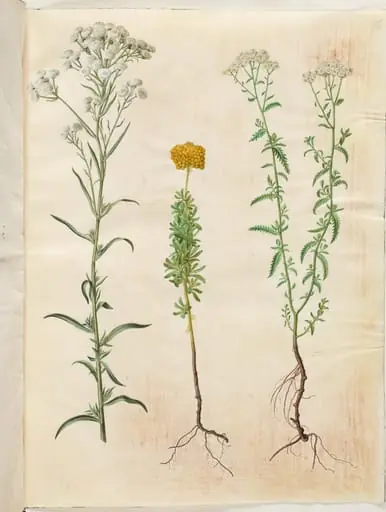 Achillea ptarmica (sølvknap-røllike); Achillea ageratum (balsam-røllike); Achillea millefolium (almindelig røllike)
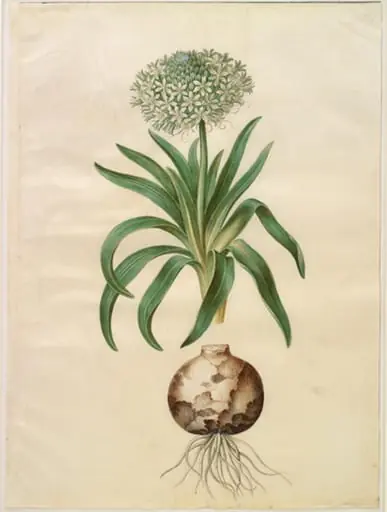 Scilla peruviana (kæmpe-skilla)
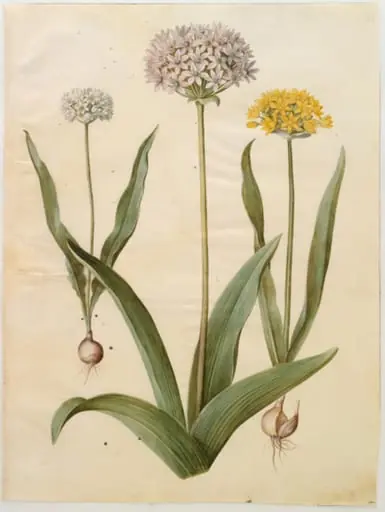 Allium moly (guld-løg); Allium nigrum (sort løg)
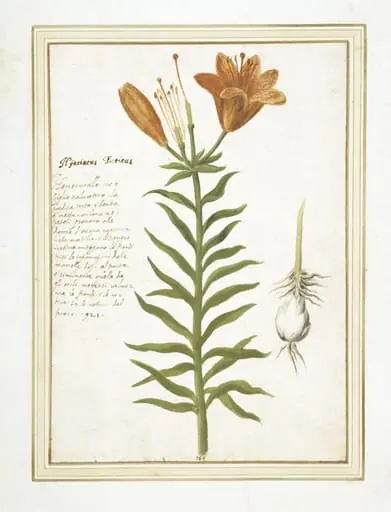 Day Lily
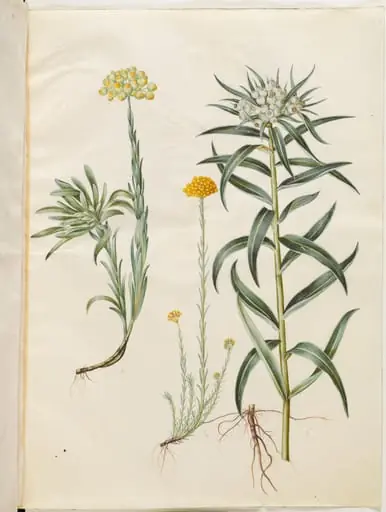 Helichrysum orientale (busk-evighedsblomst); Helichrysum Stoechas (stinkende evighedsblomst); Anaphalis margaritacea (almindelig perlekurv)
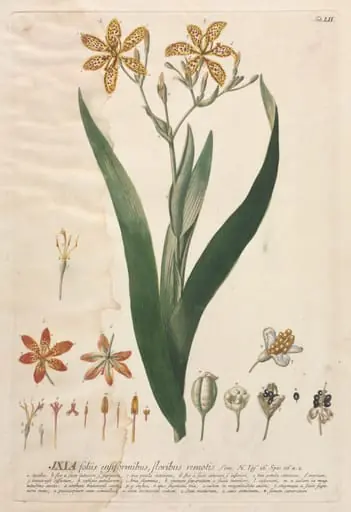 Plantae Selectae: No. 52 - Ixia