Artwork
Rue; Camomile
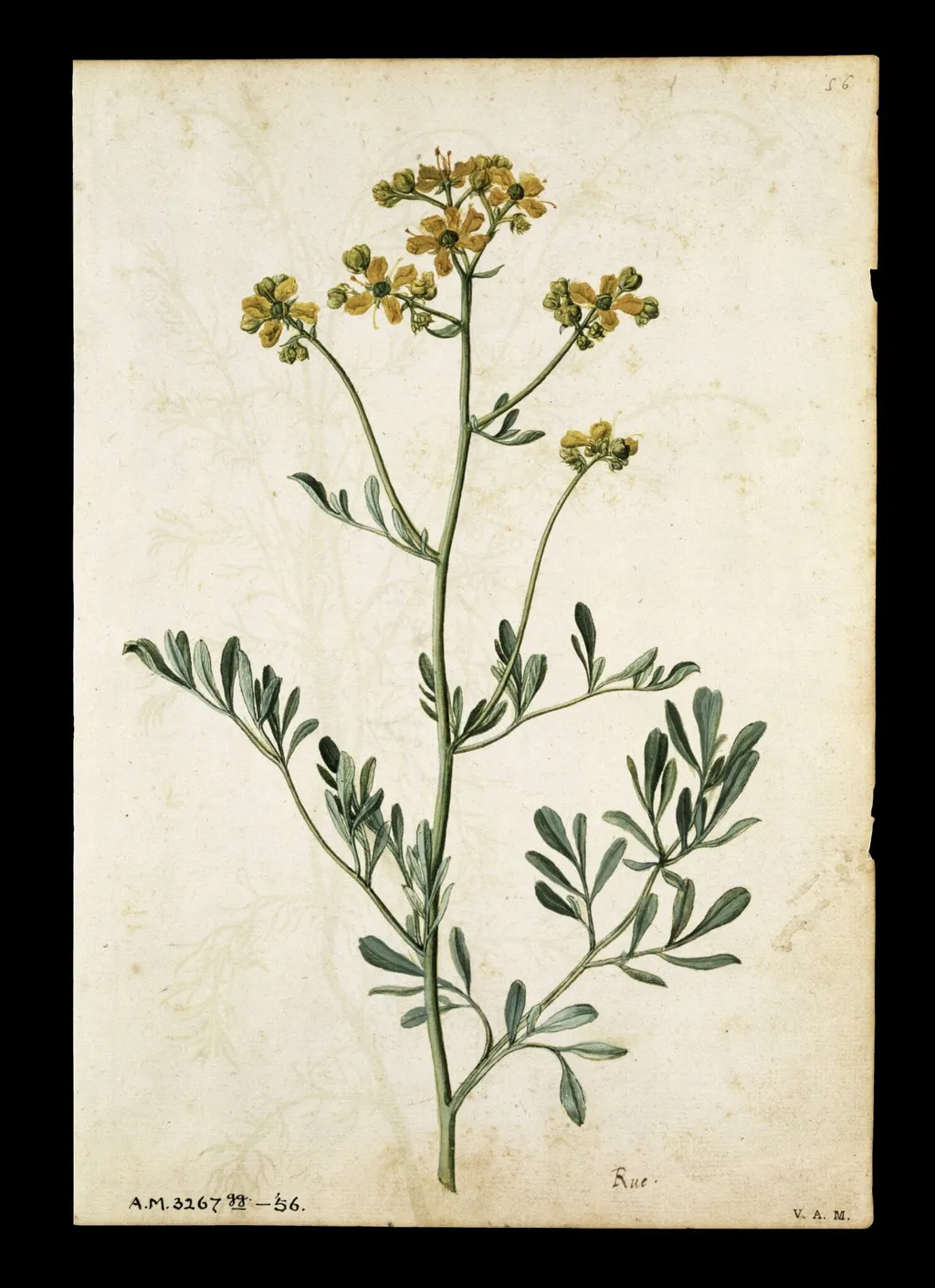
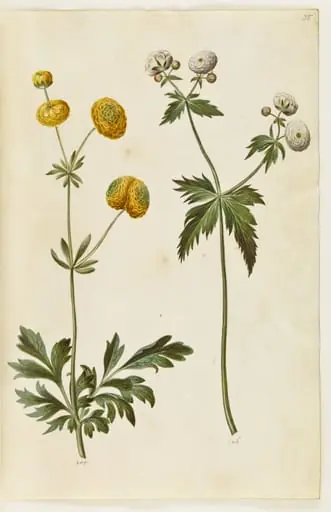
Rue; Camomile is a watercolor work on paper by the Early Baroque Italian artist Jacques Le Moyne de Morgues. It dates from 1568 and is held in the collection of the Victoria and Albert Museum.
About this work
This delicate watercolour shows two plants—rue and camomile—painted on one sheet. The French artist made it between 1560 and 1575 for a tiny album of 59 botanical drawings.
Some pages flip both ways. Though once called obscure, his sharp, precise plants now place him among early botanical painters.
Look up the Victoria and Albert Museum where this album is kept.
Overview
Rue; Camomile is a watercolour on paper featuring two botanical subjects on a single sheet, created by Jacques Lemoyne de Morgues between 1560 and 1575.
Subject & Meaning
The work depicts rue on one side and camomile on the other, showcasing the artist's attention to botanical detail. These plants were likely chosen for their significance in the Renaissance, possibly for their medicinal or symbolic properties.
Technique & Style
The watercolour demonstrates Lemoyne de Morgues's skill in capturing the subtleties of botanical forms with precision and delicacy, characteristic of his style as a botanical painter.
History & Provenance
The work is part of an album of 59 botanical watercolours attributed to Lemoyne de Morgues, now housed at the Victoria and Albert Museum. Some pages in the album, like Rue; Camomile, are double-sided.
Legacy
Lemoyne de Morgues's botanical watercolours, rediscovered in the 20th century, have reevaluated his place in art history, establishing him as a notable early botanical painter.
Artist & collection
Artist
Jacques Le Moyne de Morgues (French pronunciation: ; c. 1533–1588) was a French artist and member of Jean Ribault's expedition to the New World. His depictions of Native American life and culture, colonial life, and…

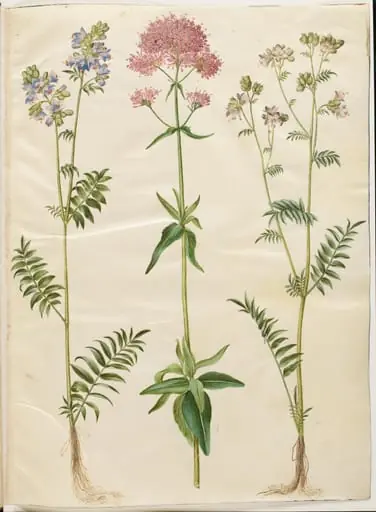 Polemonium caeruleum (almindelig jakobsstige); Centranthus ruber (rød sporebaldrian)
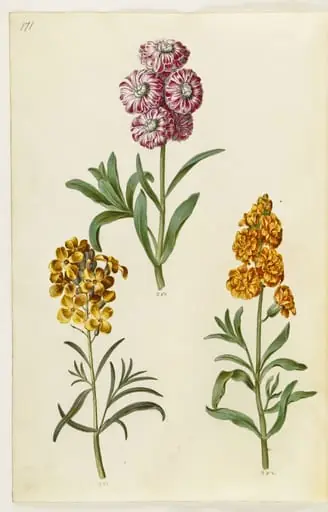 Matthiola incana (vinter-levkøj); Erysimum cheiri (gyldenlak)
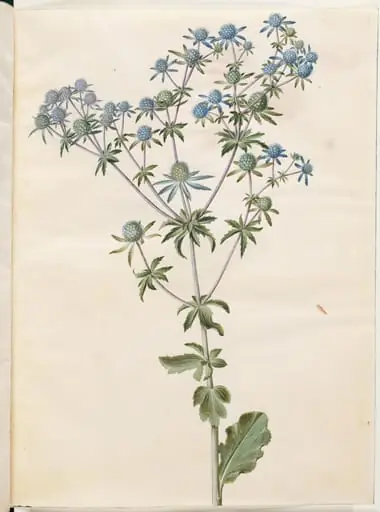 Eryngium planum (have-mandstro)
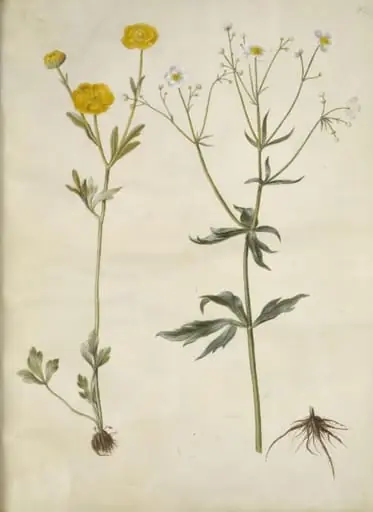 Ranunculus monspeliacus (silke-ranunkel); Ranunculus aconitifolius (stormhatbladet ranunkel)
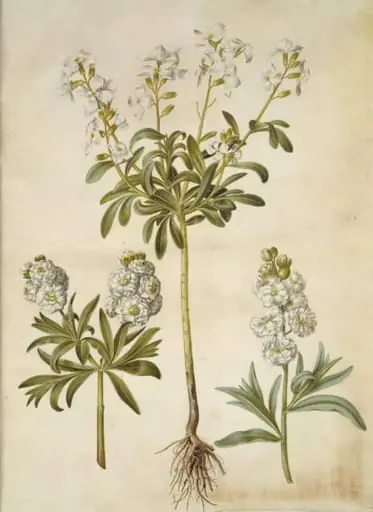 Matthiola incana (vinter-levkøj)
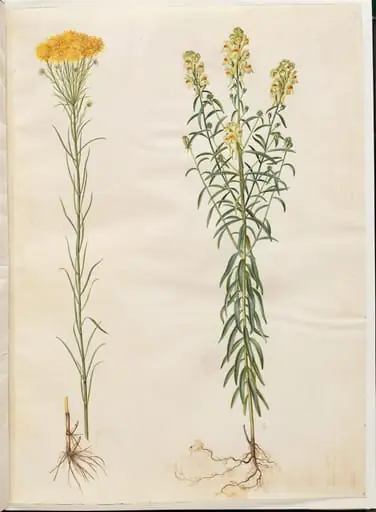 Aster linosyris (guldhår-asters); Linaria vulgaris (almindelig torskemund)
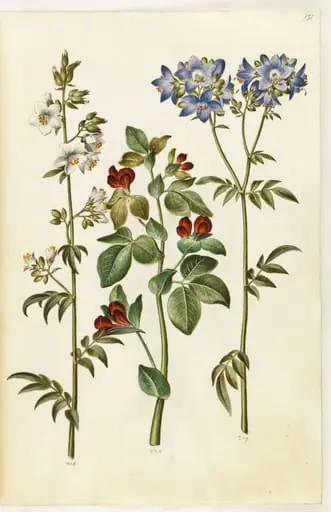 Polemonium caeruleum (almindelig jakobsstige); Lotus tetragonolobus (aspargesært)
 Ranunculus acris (guldknap-ranunkel); Ranunculus aconitifolius (sølvknap-ranunkel)