Artwork
Untitled
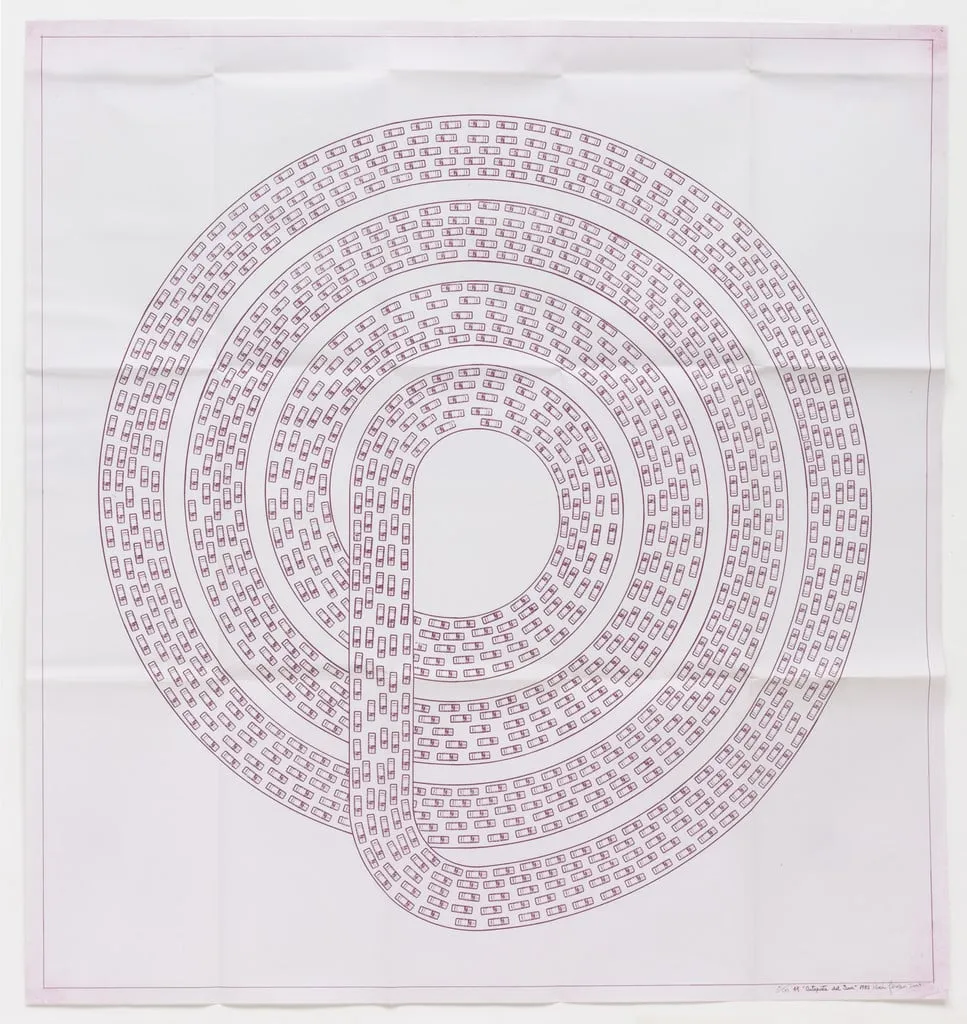
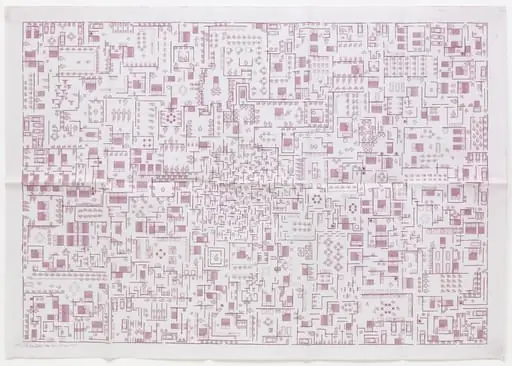
Untitled is a print by León Ferrari. It dates from 1982 and is held in the collection of the Museum of Modern Art.
About this work
The piece is a square with a large spiral design in the center, made up of many small rectangles arranged in a circular pattern.
This image shows a diazotype artwork titled "Untitled" by León Ferrari, created in 1982 and signed in 2007. The piece is a square with a large spiral design in the center, made up of many small rectangles arranged in a circular pattern.
The spiral is drawn in a deep reddish-brown color, which contrasts with the lighter background. The overall effect is one of intricate detail and careful craftsmanship. The use of a single color and simple shapes creates a sense of unity and cohesion in the piece.
To learn more about the artist's use of diazotype and its effects, explore the technique of chiaroscuro.
Overview
León Ferrari’s 1982 diazotype print, signed in 2007, is a geometric abstraction centered on a tightly wound spiral composed of small rectangular units. Executed in a single reddish-brown tone against a pale ground, the work exemplifies Ferrari’s interest in non-traditional print methods. The diazotype process, known for its rapid reproduction and monochromatic output, suited his conceptual aims, allowing precise, industrial-like execution without the hand-rendered flourish of conventional art.
Subject & Meaning
Though untitled, the spiral’s repetitive, mechanical structure evokes systems of control—religious, political, or institutional—frequent targets of Ferrari’s critique. The inward-turning form suggests entrapment or cyclical oppression, resonating with his experiences under Argentina’s military dictatorship. The absence of overt symbolism invites viewers to confront the quiet violence embedded in ordered, repetitive structures, aligning with his broader critique of authoritarian power.
Technique & Style
Ferrari employed diazotype, a chemical-based reprographic process often used for technical drawings, to produce this work. Its sharp lines and limited tonal range emphasize structure over texture, reinforcing the piece’s impersonal, almost bureaucratic aesthetic. The precision of the spiral’s construction reflects his interest in systems that appear rational yet function as instruments of domination. The single-color palette enhances visual unity, stripping away distraction to focus on form and repetition.
History & Provenance
Created in 1982 during Argentina’s transition from military rule, the work emerged from a period of intense political repression and artistic resistance. Ferrari, who had been exiled and censored, used printmaking to circumvent state surveillance and disseminate critical ideas. The piece entered The Museum of Modern Art’s collection as part of a broader recognition of Latin American conceptual practices, affirming its place in postwar art history despite its modest scale and medium.
Context
Ferrari’s use of diazotype aligned with a broader Latin American conceptual movement that prioritized idea over object, often rejecting traditional materials in favor of accessible, industrial techniques. His work responded to the silence imposed by authoritarian regimes, using repetition and abstraction to convey dissent without direct imagery. This approach echoed contemporaneous practices in Europe and North America but was deeply rooted in Argentina’s specific political trauma.
Legacy
The work contributes to Ferrari’s enduring influence on politically engaged art, demonstrating how minimal forms can carry heavy ideological weight. Its inclusion in MoMA’s collection helped legitimize diazotype and other non-traditional media within institutional discourse. Later artists have cited this piece as an example of how conceptual rigor and political urgency can coexist without rhetorical excess, shaping how dissent is visually articulated in contemporary art.
Artist & collection
Artist
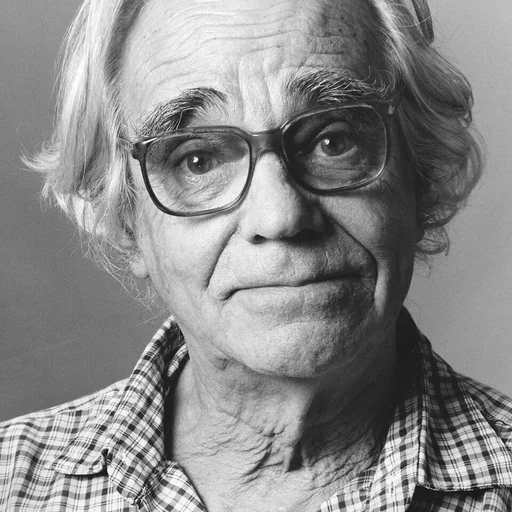
León Ferrari (September 3, 1920 – July 25, 2013) was an Argentine contemporary conceptual artist.