Artwork
Peasant Children Dancing
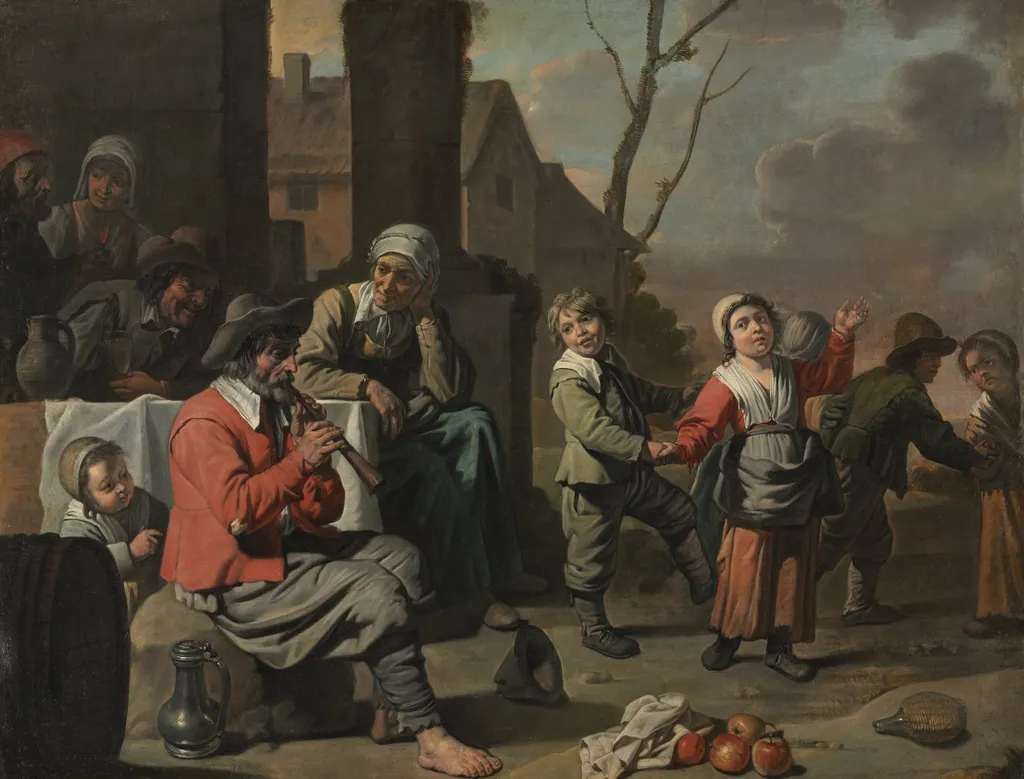
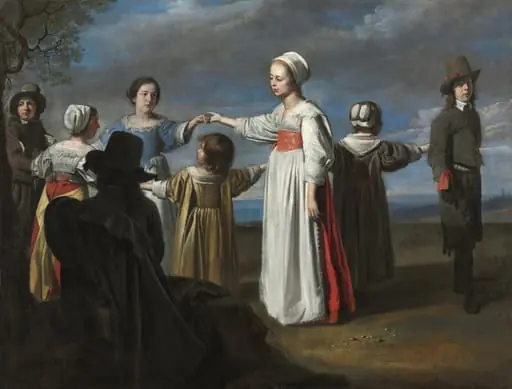
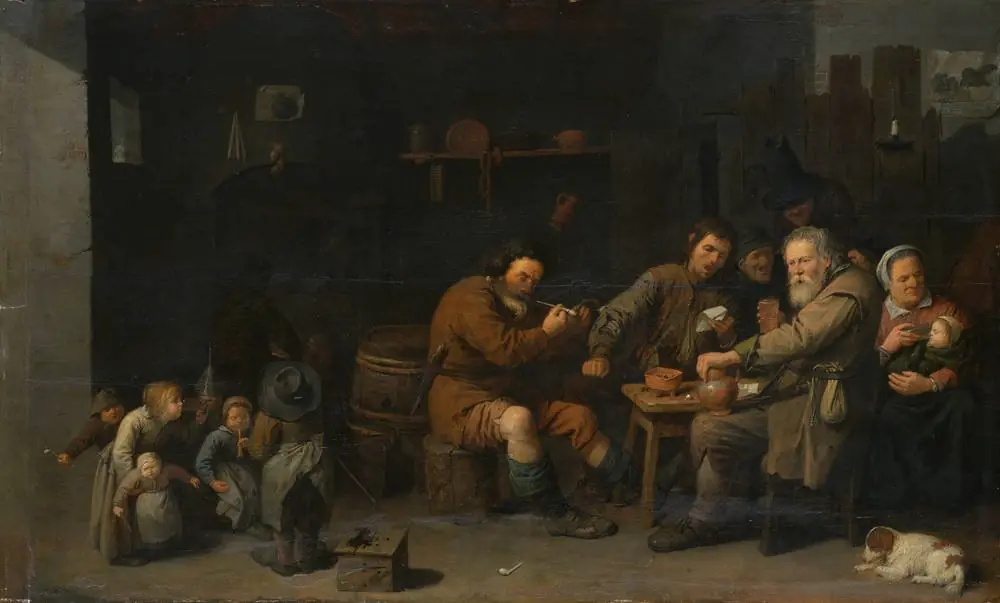
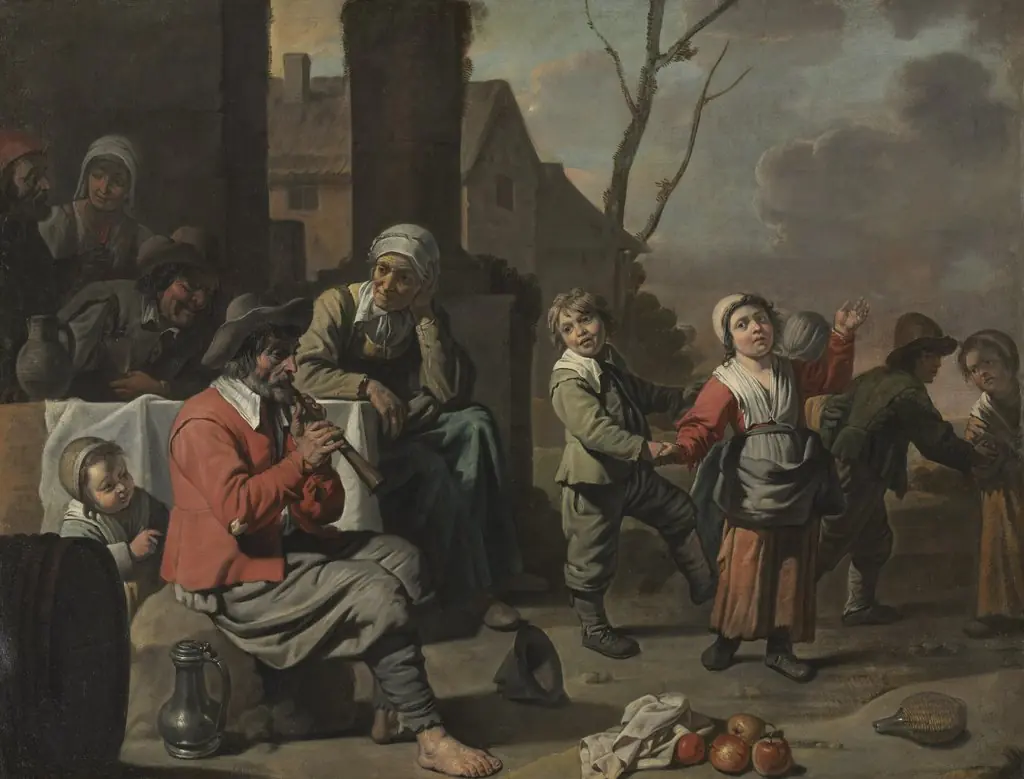
Peasant Children Dancing is an unspecified painting by the Baroque artist Mathieu Le Nain. It dates from 1654 and is held in the collection of the Cleveland Museum of Art.
About this work
Overview
Peasant Children Dancing is a 17th-century Flemish painting depicting a lively outdoor scene of rustic joy, attributed to the Master of the Béguins, an artist known for emulating the style of the French Le Nain brothers.
Subject & Meaning
The painting captures the carefree moment of peasant children dancing, conveying a sense of provincial gaiety through naturalistic details. While its meaning remains ambiguous, it touches on the then-debated theme of portraying the lower classes, popular in mid-17th century Paris, especially within the Catholic Church.
Technique & Style
Characterized by the Master of the Béguins' distinctive style, the work features wide-eyed, chubby-cheeked children wearing white 'béguins' caps, set against earthy tones and heavily folded, coarse clothing, emphasizing a rustic, comedic provinciality.
History & Provenance
Painted around the 1650s, the work capitalized on the success of the Le Nain brothers in Paris. Specific provenance details are not provided, reflecting the artist's role as a Flemish imitator within the Parisian art scene of the time.
Context
Created amidst a Parisian artistic and religious climate where depictions of everyday lower-class life were both popular and controversial, the painting blends Flemish genre humor with French realism, as seen in the detailed, worn clothing and still-life elements.
Legacy
While the painting's direct influence is not outlined, it represents a notable example of 17th-century Flemish-French artistic interchange, particularly in the genre of peasant life depiction, inviting comparison with the works of the Le Nain brothers.
Own this work as a print
Artist & collection