Artwork
The Two Lovers (Les Deux amants)
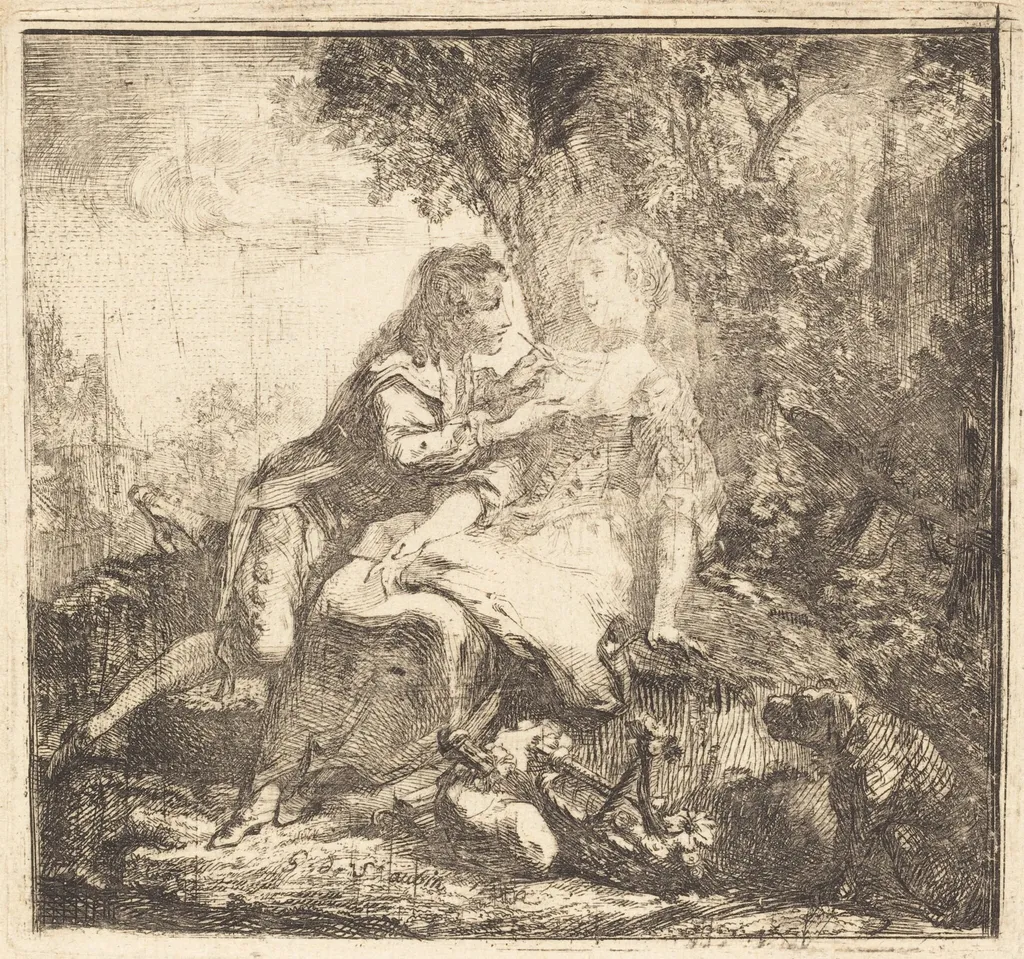
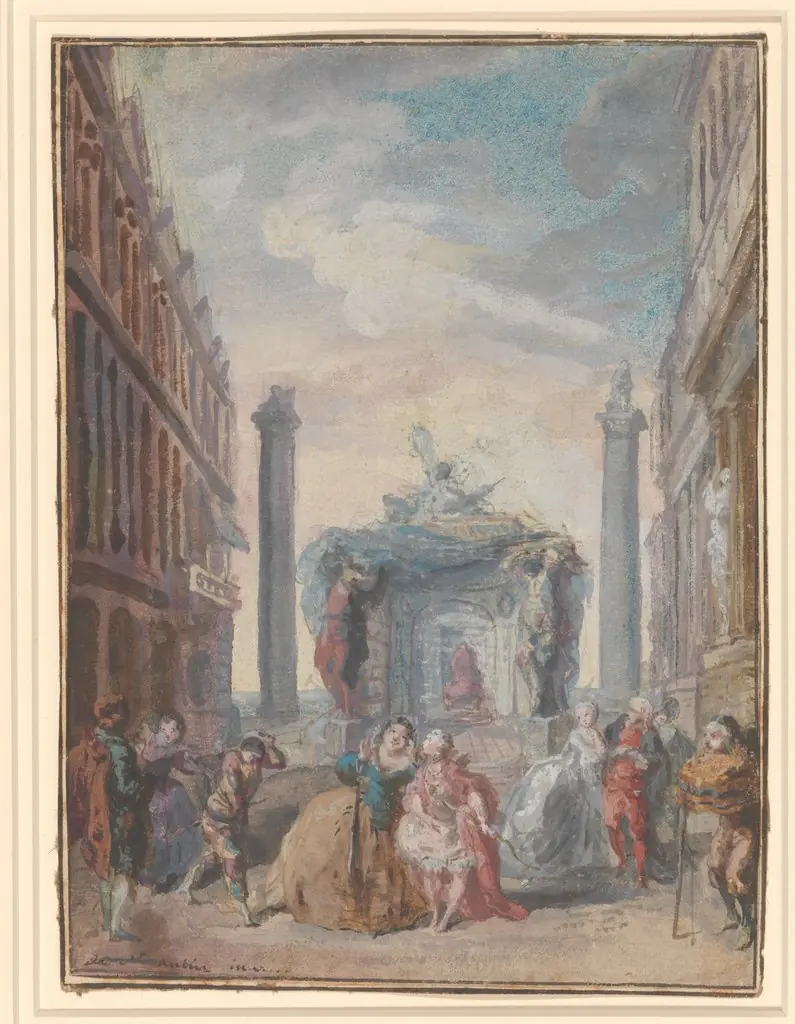
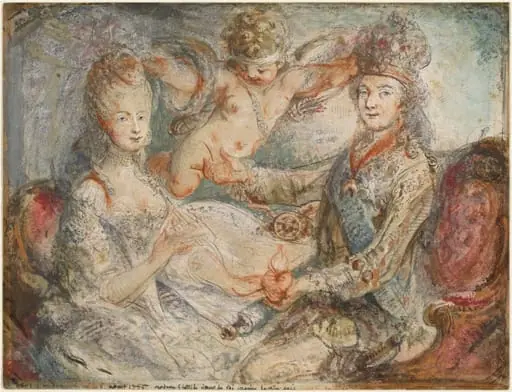
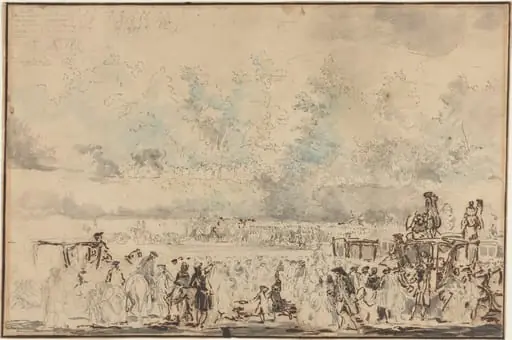
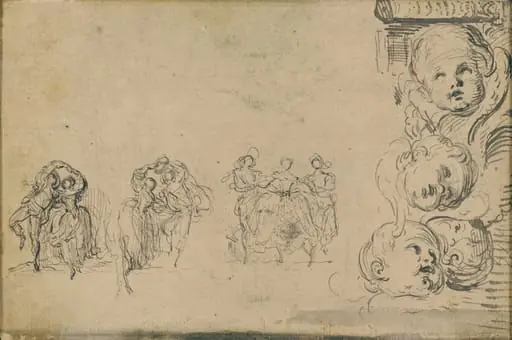
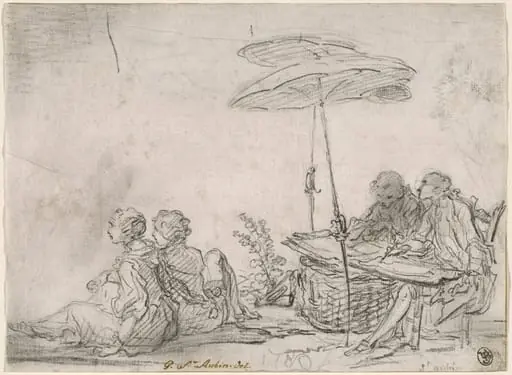
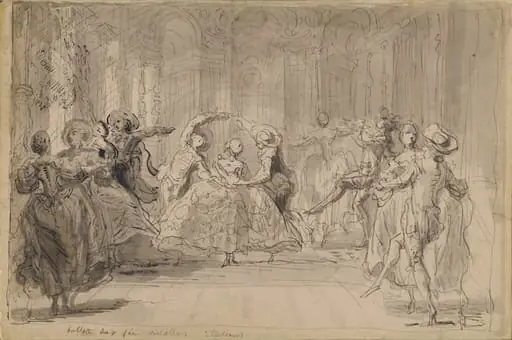
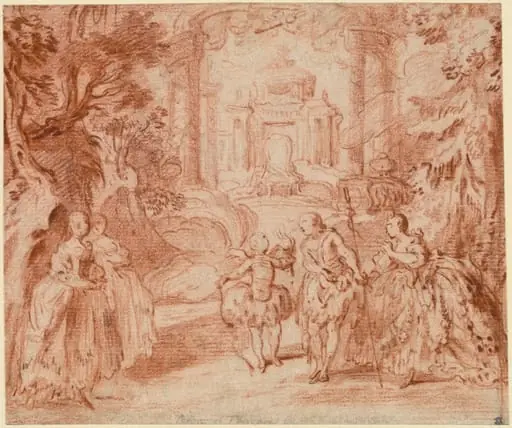
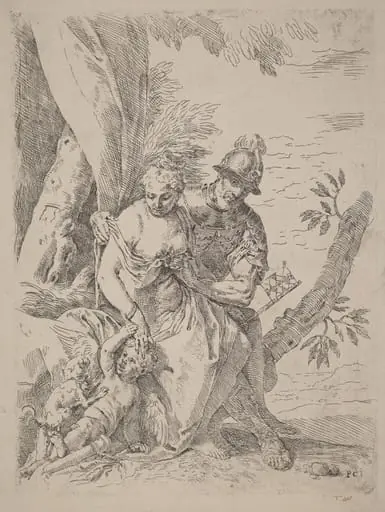
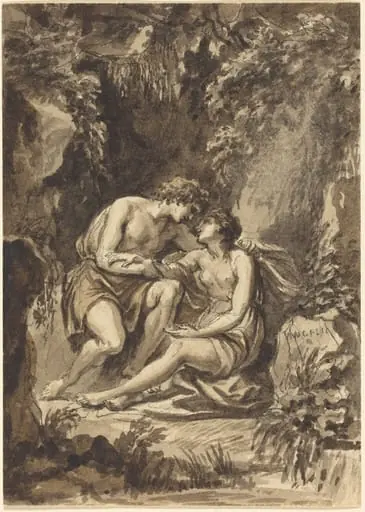
The Two Lovers (Les Deux amants) is an ink print by the Romanticist artist Gabriel de Saint-Aubin. It dates from 1750 and is held in the collection of the National Gallery of Art.
About this work
Overview
The print’s tactile quality arises from the artist’s layered scratching technique, which builds depth through controlled texture rather than solid shading.
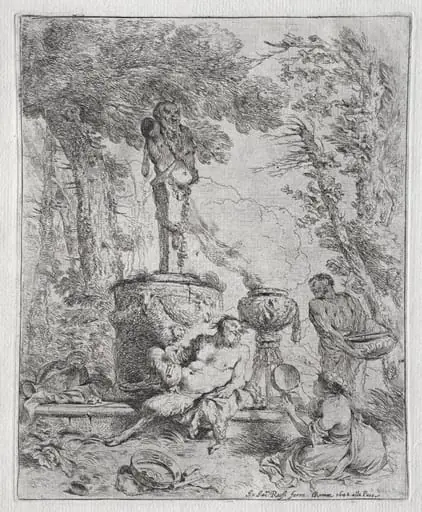
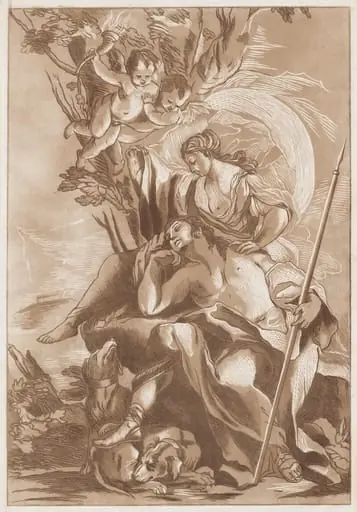
Created in 1750, The Two Lovers is an etching by Gabriel de Saint-Aubin on laid paper. It depicts an intimate, ambiguous embrace between two figures, rendered through fine, incised lines that suggest movement and emotion. The composition is dense with overlapping forms, where bodies and foliage merge into a single, restless field. The print’s tactile quality arises from the artist’s layered scratching technique, which builds depth through controlled texture rather than solid shading.
Subject & Meaning
The figures, entwined beneath a cascade of fabric and foliage, suggest a private, fleeting moment—perhaps a stolen kiss or a collapse into exhaustion. Their identities are obscured, emphasizing emotion over individuality. The lack of clear narrative context invites interpretation: is this passion, surrender, or melancholy? The ambiguity reflects 18th-century sensibilities, where intimacy was often implied rather than declared, especially in works meant for private contemplation.
Technique & Style
Saint-Aubin employed etching to achieve a delicate yet vigorous line quality, scratching directly into a metal plate to create fine, irregular strokes. By layering these lines, he built shadow and volume without relying on washes or hatching alone. The rough, almost chaotic texture of branches and fabric mimics natural disorder, while the contrast between dense darks and sparse highlights enhances the scene’s emotional tension. The paper’s laid texture further integrates with the ink’s grain, deepening the tactile impression.
History & Provenance
The work emerged from Saint-Aubin’s prolific output of drawings and prints documenting Parisian social life. Likely made for personal or small-circulation use, it was not commissioned for public display. Surviving impressions are rare, held in museum collections and private archives. Its survival reflects its appeal among collectors of intimate, observational prints rather than grand historical subjects, aligning with the artist’s broader reputation as a chronicler of everyday moments.
Context
In mid-18th-century France, etching was increasingly used for personal, lyrical subjects rather than official commissions. Saint-Aubin’s work responded to a growing interest in private emotion and informal scenes, influenced by Rococo aesthetics and the rise of print culture. The Two Lovers fits within a tradition of small-scale, emotionally charged prints that captured fleeting human interactions—distinct from the grand narratives favored by academic painting at the time.
Legacy
Though not widely exhibited in its time, the print has endured as an example of how etching could convey psychological nuance through line alone. Later artists and printmakers studied Saint-Aubin’s ability to suggest motion and intimacy with minimal means. Today, it is recognized for its quiet intensity and technical restraint, offering insight into how personal emotion was visually articulated in pre-Revolutionary France.
Artist & collection

Artist
Gabriel de Saint-Aubin was a French draftsman, printmaker, etcher and painter.