Artwork
Corrie, Isle of Arran
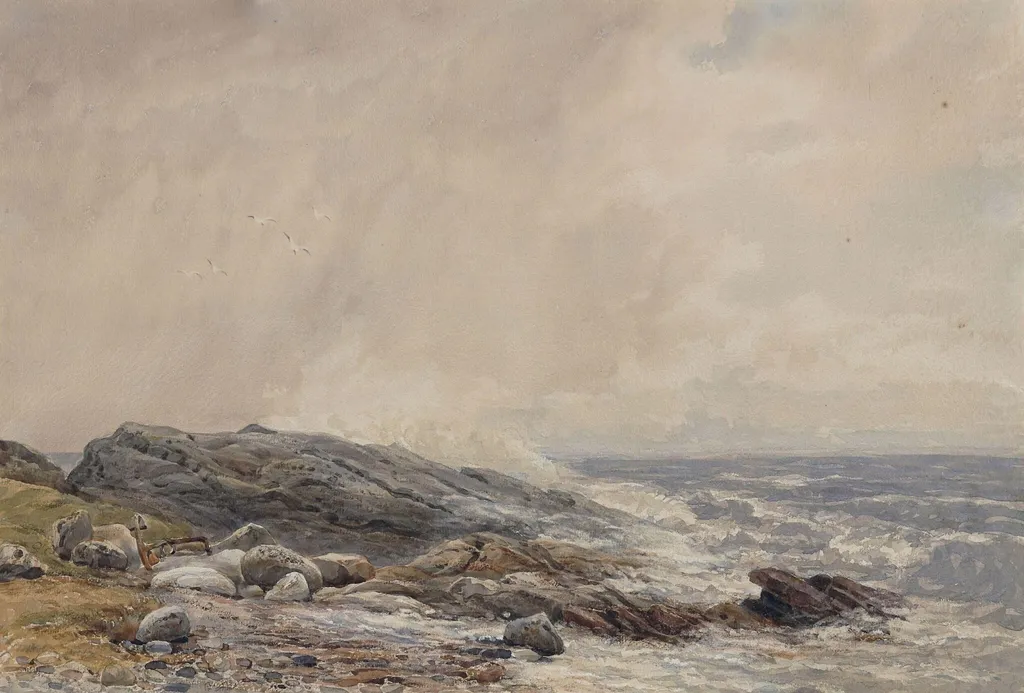
Corrie, Isle of Arran is a watercolor work on paper by Orrock. It dates from 1850 and is held in the collection of the Victoria and Albert Museum.
About this work
Overview
Corrie, Isle of Arran is a mid‑nineteenth‑century watercolour executed by the Scottish artist James Orrock around 1850. The work measures a modest size typical of plein‑air studies and is part of the permanent collection of the Victoria and Albert Museum in London.
Subject & Meaning
The composition depicts a rugged shoreline on the island of Arran, where craggy rock faces descend into restless, churning sea. Jagged cliffs dominate the background, their edges softened by sparse tufts of grass, while a pale, hazy sky merges with the distant horizon, suggesting a fleeting moment of atmospheric transition.
Technique & Style
Orrock employs delicate, blended brushstrokes to render the interplay of light on stone and water, creating a subtle gradation of tone. The rapid, almost sketch‑like application of pigment indicates an outdoor approach, capturing the immediacy of the scene rather than a highly finished studio rendering.
History & Provenance
Created circa 1850, the watercolour entered the Victoria and Albert Museum’s collection through acquisition in the early twentieth century, where it has remained on display as an example of British landscape watercolour practice.
Context
During the 1850s, British artists increasingly turned to the Scottish coastline for inspiration, valuing its dramatic geology and atmospheric conditions. Orrock’s work reflects this trend, aligning with contemporary interests in naturalistic observation and the romantic appeal of remote, untamed scenery.
Own this work as a print
Artist & collection
Artist
Orrock was the quiet watercolour artist who followed the light like a lighthouse keeper, chasing Scottish castles and coves whenever the weather cleared.

 Squally Weather on the Welsh Coast
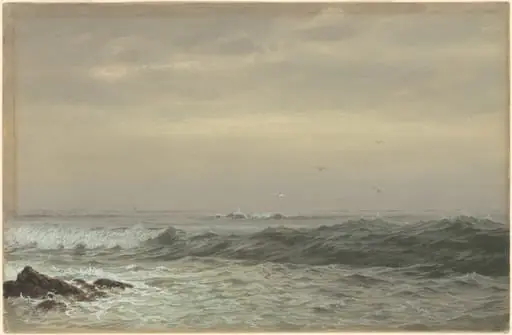 Rocks and Breaking Waves
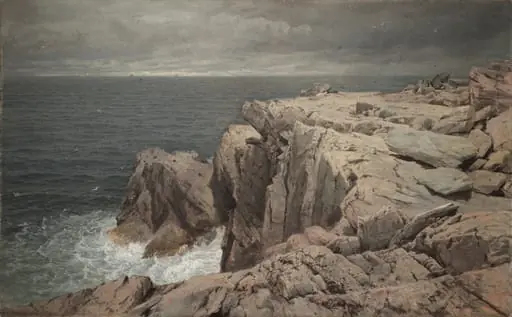 Cormorant Cliff, Jamestown, Rhode Island
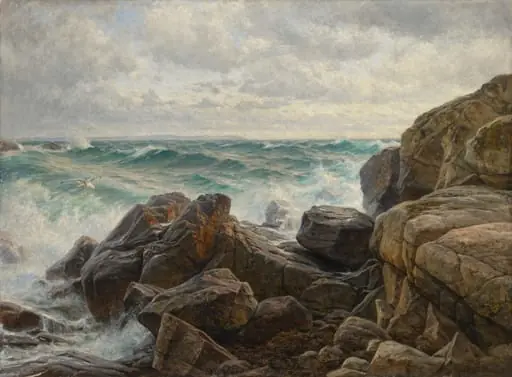 Kattegat myrskyssä
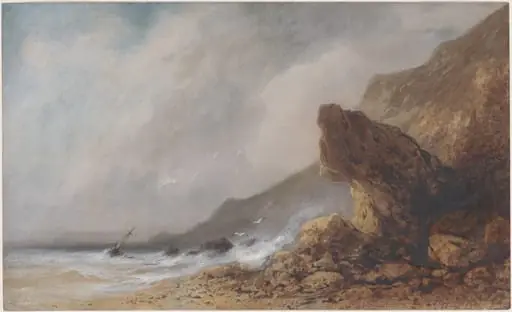 A Rocky Seacoast in a Storm
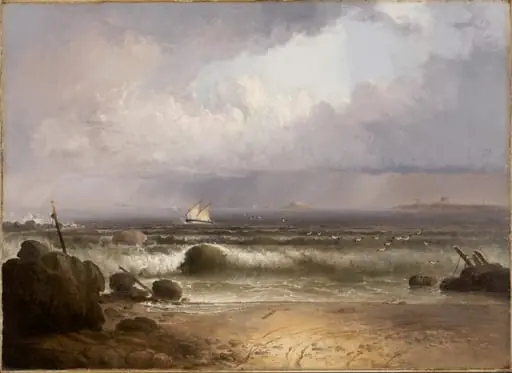 Coming Squall (Nahant Beach with a Summer Shower)
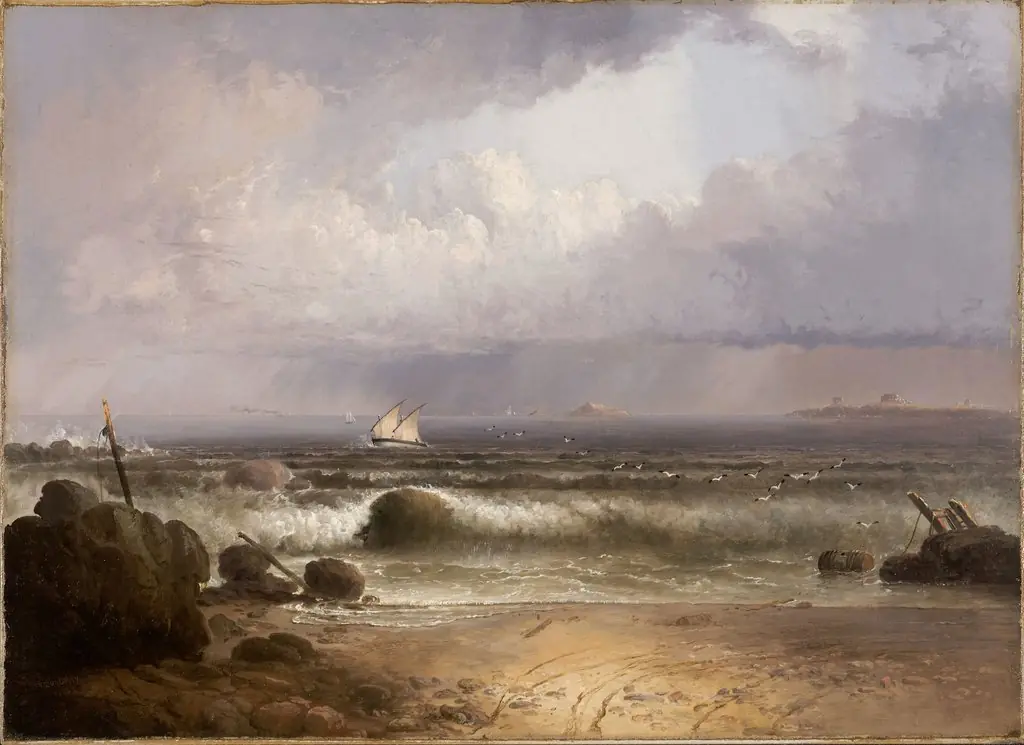 Coming Squall (Nahant Beach with a Summer Shower)
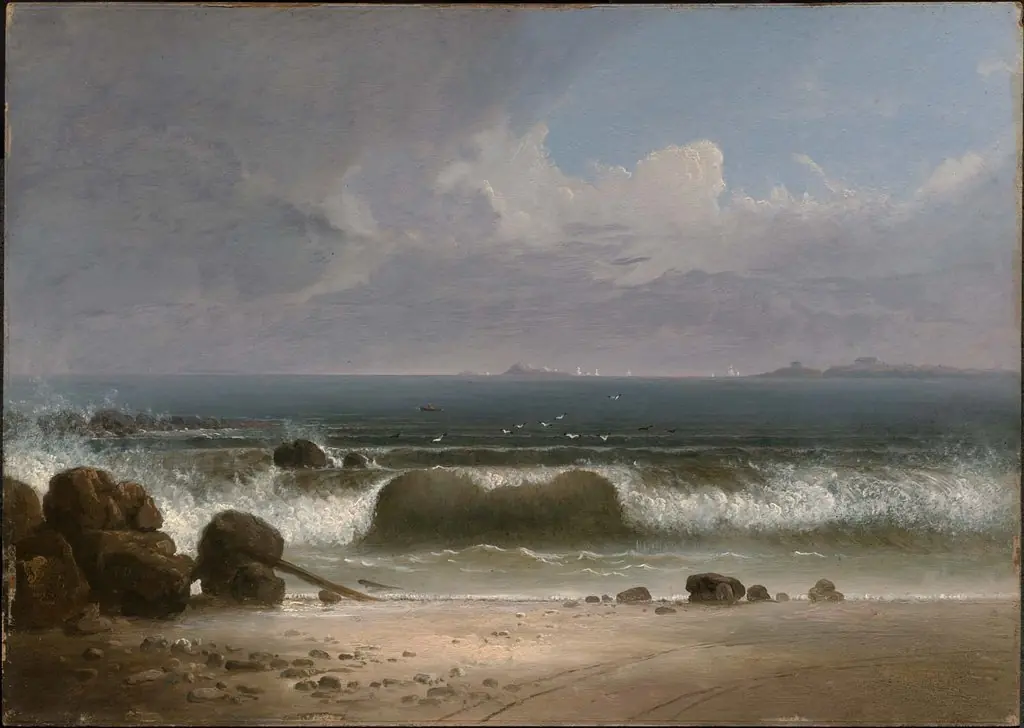 Beach Scene with Rocks I
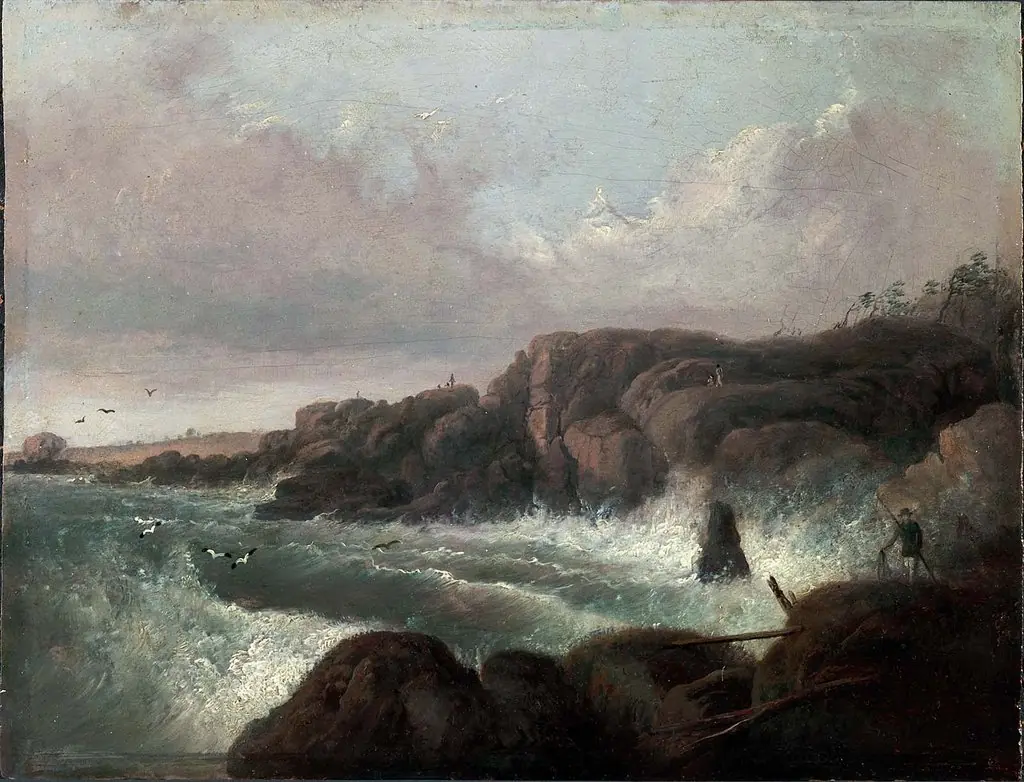 The Glades at Cohasset
 Pedra dos Ladrões (Santos)
 Lowestoft
 A Shipwreck on the Coast of Norway