Artwork
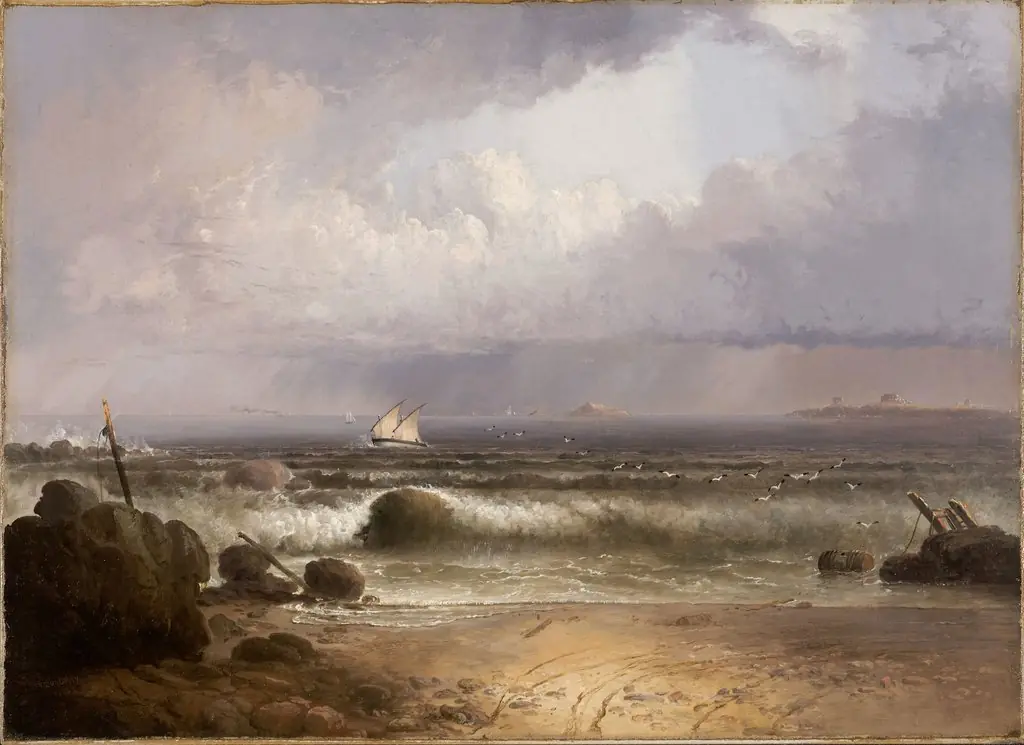
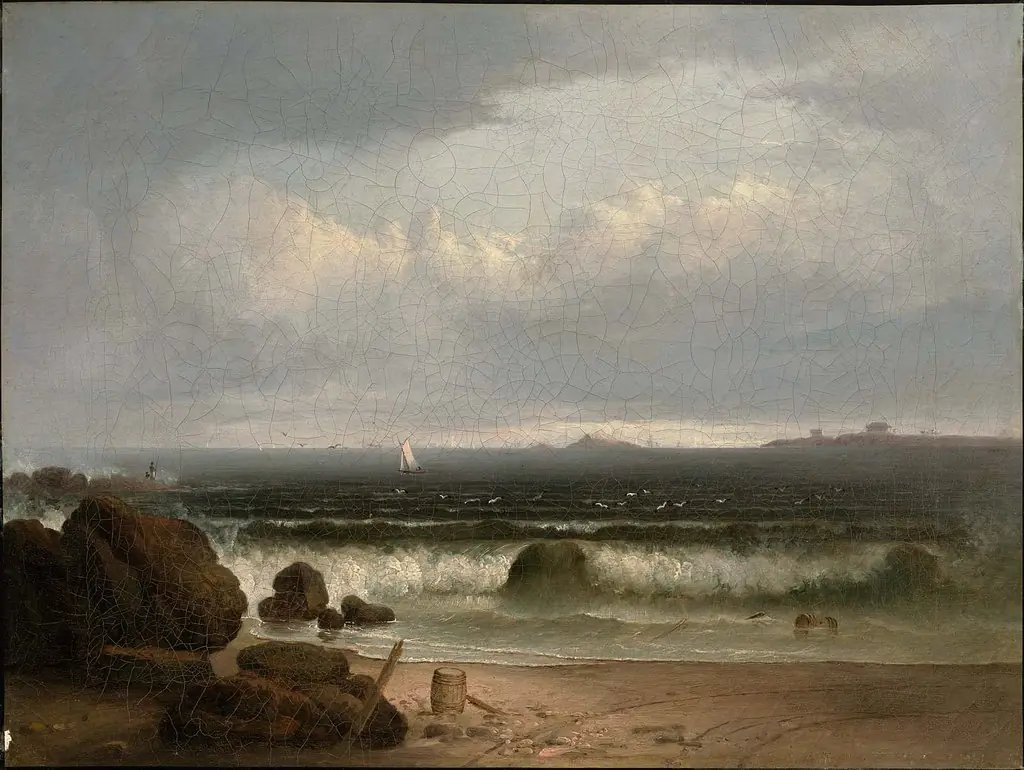
Coming Squall (Nahant Beach with a Summer Shower)
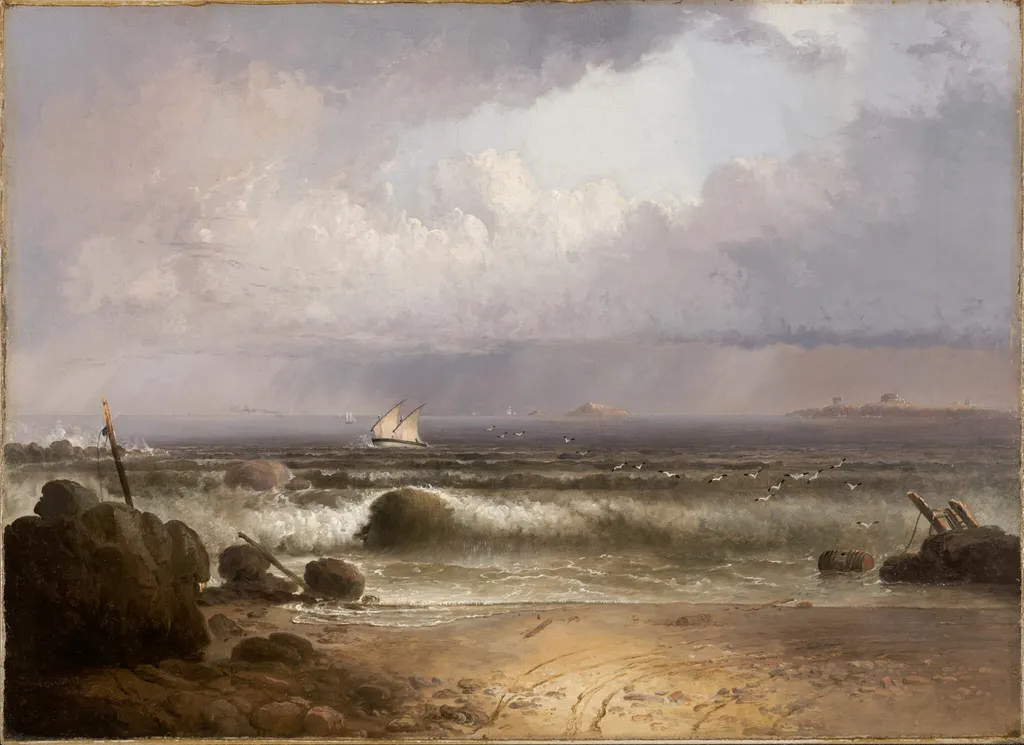
Coming Squall (Nahant Beach with a Summer Shower) is an oil painting by the American Impressionist artist Thomas Doughty. It dates from 1835 and is held in the collection of the Art Institute of Chicago.
About this work
If you like this, look up *chiaroscuro*—how artists use light and shadow to make scenes feel alive.
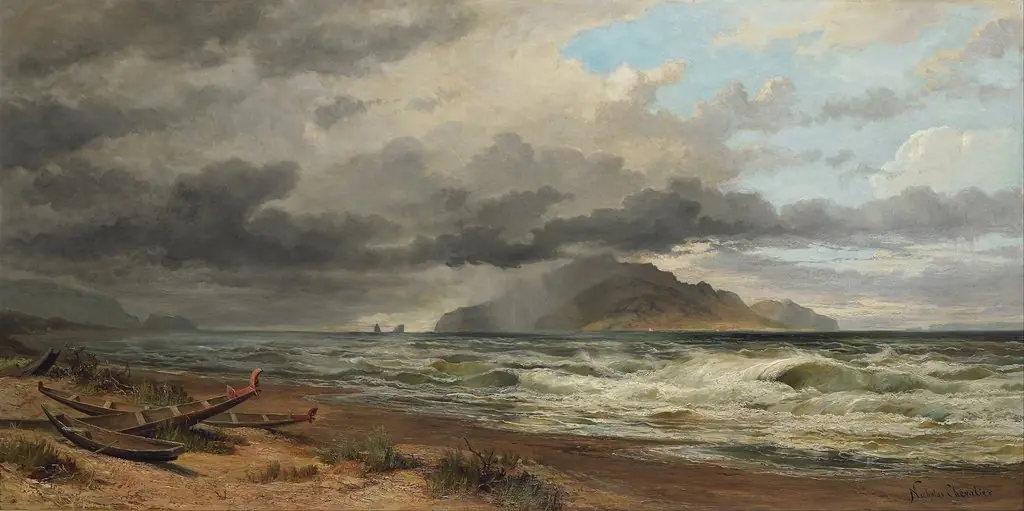
You see a dark storm rolling over a quiet beach at Nahant, Massachusetts. The sky is thick with clouds, and the ocean churns under the wind. A few tiny figures stand near the water, barely noticeable.
Doughty painted this in 1835, when most American artists just copied European styles. Instead, he focused on how light and weather change a place—no story, just nature doing its thing. It feels like you’re standing there, waiting for the rain.
If you like this, look up *chiaroscuro*—how artists use light and shadow to make scenes feel alive.
Overview
Thomas Doughty’s 1835 oil on canvas, titled Coming Squall (Nahant Beach with a Summer Shower), depicts a storm‑laden seascape at Nahant, Massachusetts. The composition shows a dark, rolling sky over a tranquil beach, with churning water and a few diminutive figures near the shore. The work is mounted on a cradled panel, emphasizing its modest size while preserving the atmospheric tension of the approaching rain.
Subject & Meaning
The painting presents a moment of natural transition, focusing on the interplay of light, cloud, and sea rather than any narrative episode. By isolating the elemental forces of wind and water, Doughty invites viewers to contemplate the transient qualities of the landscape itself, treating the environment as an autonomous subject worthy of contemplation.
Technique & Style
Doughty employs a muted palette and careful modulation of chiaroscuro to convey the thickening clouds and the reflective surface of the water. The handling of atmospheric perspective recalls 17th‑century Dutch landscape traditions, where subtle shifts in tone suggest depth and the fleeting effects of weather on the scene.
History & Provenance
Created at the height of Doughty’s career, the work emerged during a period when many American artists were still emulating European models. Its exhibition in the 1820s and 1830s contributed to Doughty’s reputation as one of the nation’s most sought‑after landscapists, and it later entered the collection of a regional museum specializing in early American art.
Context
As the first American painter to publicly identify as a landscape artist, Doughty helped shift the genre from topographical record to an exploration of nature’s intrinsic value. His emphasis on atmospheric effects influenced contemporaries such as Thomas Cole and laid groundwork for the later Hudson River School, which expanded the American landscape tradition.
Artist & collection