Artwork
Plants and Ivies by a Stream
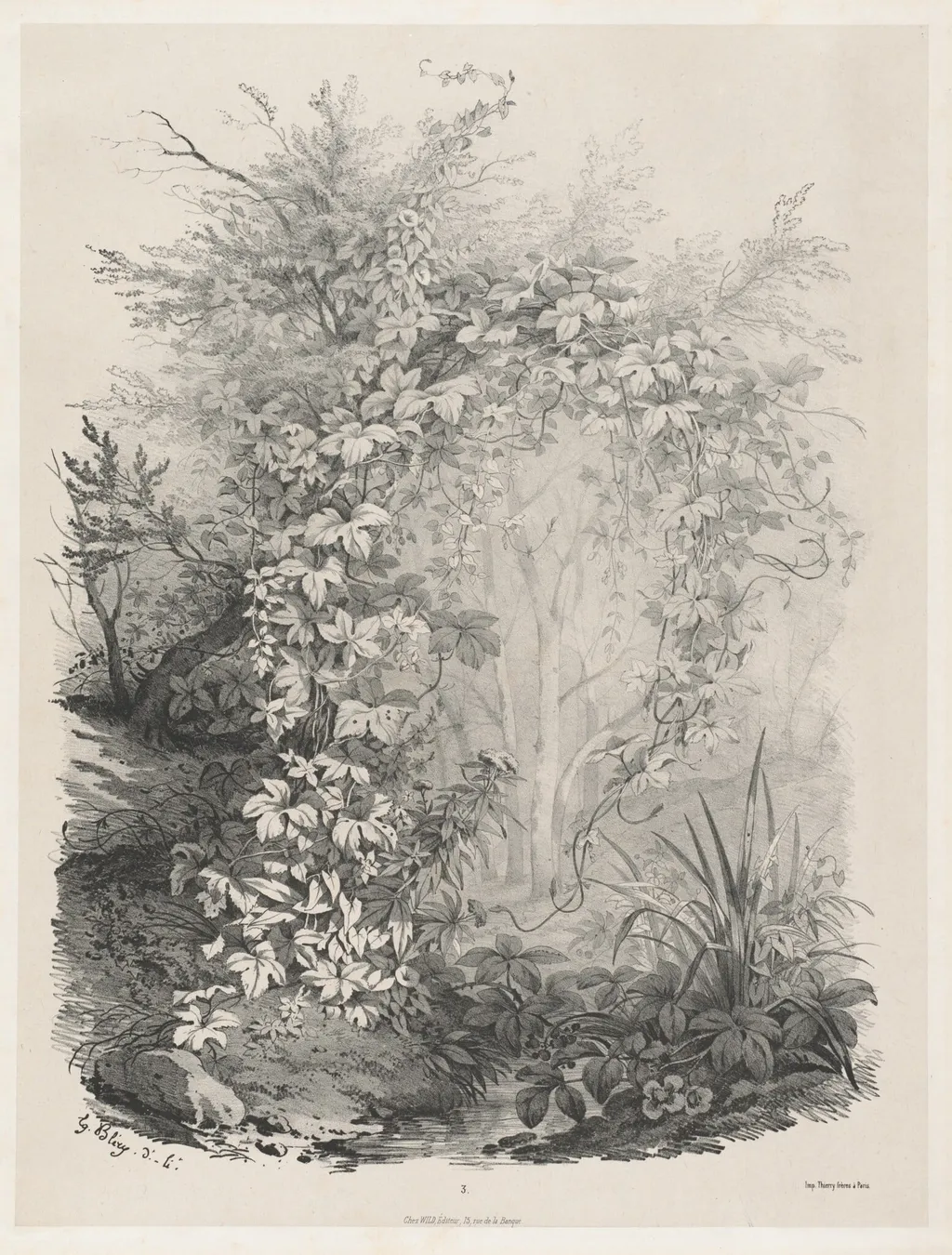
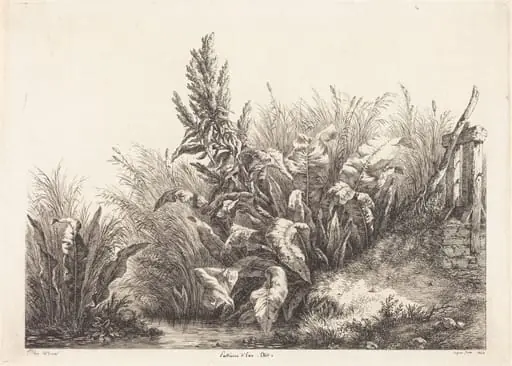
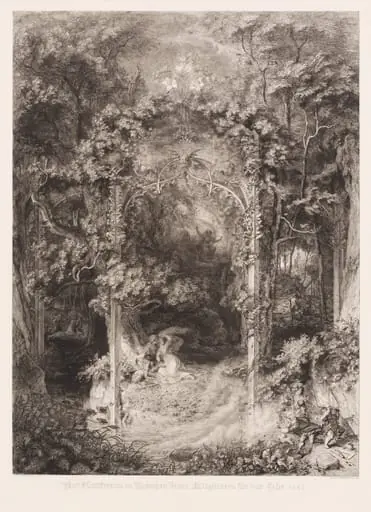
Plants and Ivies by a Stream is an ink print by the Romanticist artist Eugène Bléry. It dates from 1848 and is held in the collection of the National Gallery of Art.
About this work
It’s not a painting—it’s a lithograph, a print pulled from a smooth stone.
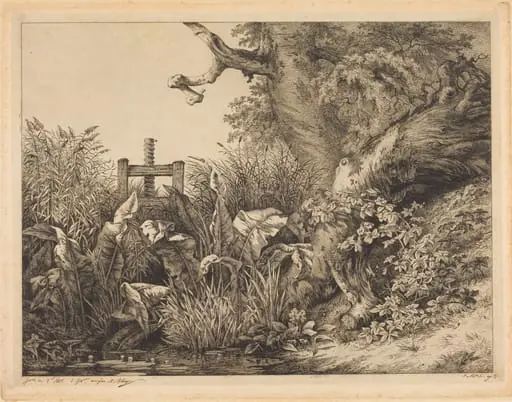
You see ivy curling along a stream under soft light.
Bléry layered ink to make shadows and highlights pop on paper.
It’s not a painting—it’s a lithograph, a print pulled from a smooth stone.
The artist made this in 1849, just before photography took off.
He captured tiny details like veins in leaves and ripples in water.
That kind of focus shows why lithography became popular then.
Look for prints like this next at the National Gallery of Art, Washington.
Overview
Eugène Bléry’s lithograph *Plants and Ivies by a Stream* dates from 1848. Executed on wove paper, the work presents a quiet riverside scene where ivy vines wind along the water’s edge, illuminated by a gentle, diffused light. The image exemplifies the mid‑nineteenth‑century interest in detailed natural studies rendered through printmaking.
Subject & Meaning
The composition focuses on the interplay of plant life and water, with curling ivy rendered in fine lines that trace the contours of the stream. The delicate rendering of leaf veins and the subtle ripples on the surface suggest a contemplative observation of nature’s quiet rhythms, inviting viewers to notice the minute textures of the environment.
Technique & Style
Bléry employed the lithographic process, drawing directly onto a smooth limestone slab with greasy ink. By building up layers of ink, he achieved a range of tones that give the foliage depth and the water a luminous quality. The contrast between shadowed areas and highlighted edges creates a three‑dimensional effect uncommon in earlier prints, highlighting the medium’s capacity for fine detail.
Context
Produced just before the widespread adoption of photography, the print reflects the period’s fascination with capturing precise visual information. Lithography’s ability to reproduce intricate botanical subjects made it a popular choice for artists and scientists alike in the late 1840s, and Bléry’s work illustrates why the technique gained prominence during this transitional era.
Artist & collection


 Trees by the River at Castle Bromwich
 View of Santron
 Wetland Plants
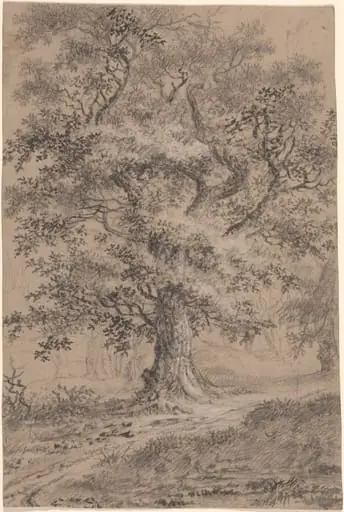 A Leafy Oak by a Woodland Path
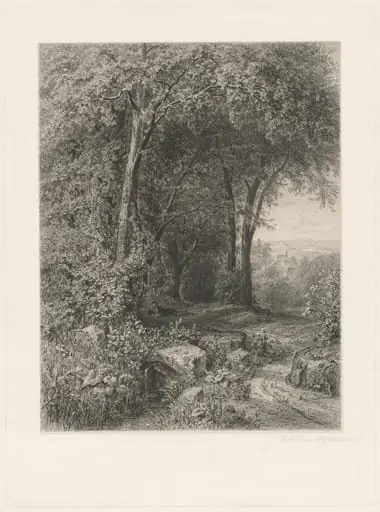 Summer
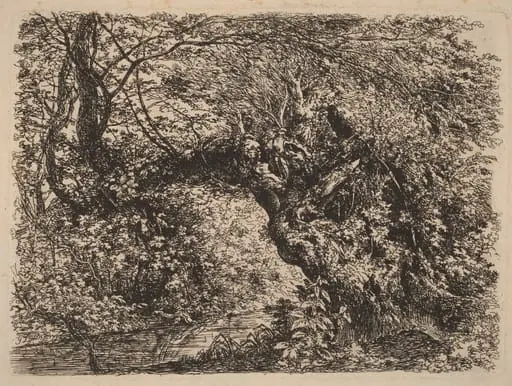 An Old Willow by a Stream
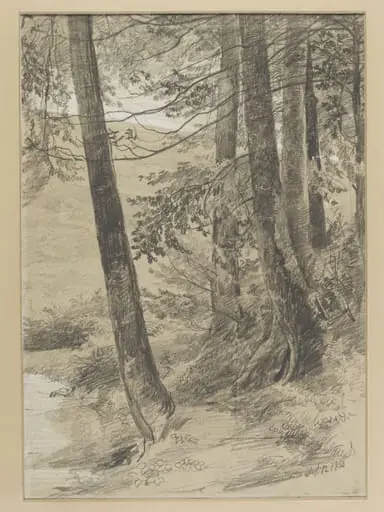 Study of tree stems at King George's Hill, Abinger
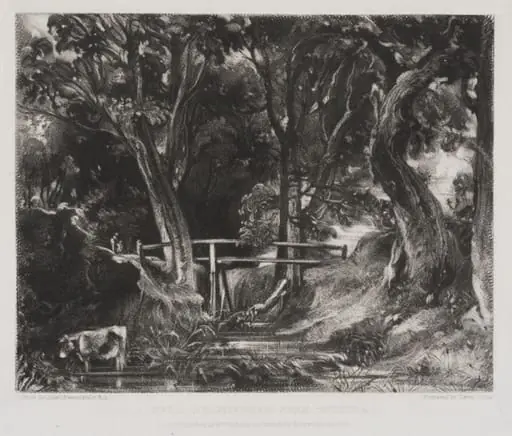 A DELL, HELMINGHAM PARK, SUFFOLK
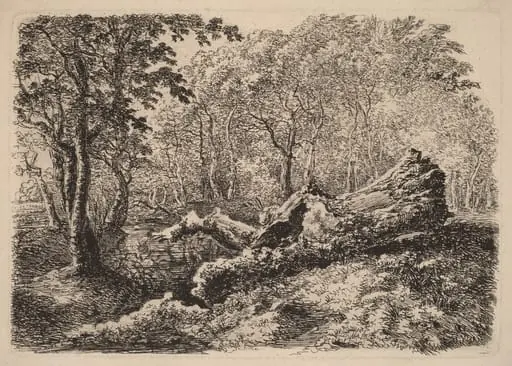 Mouldering Tree Trunk
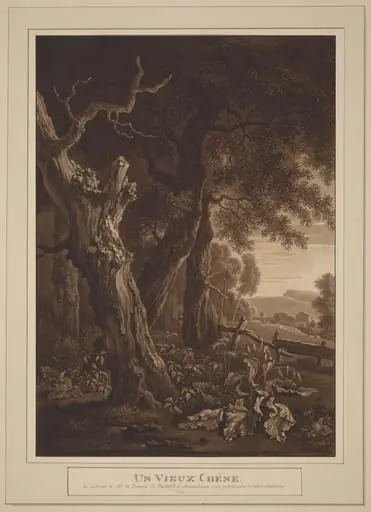 Ancient Oaks in a Landscape
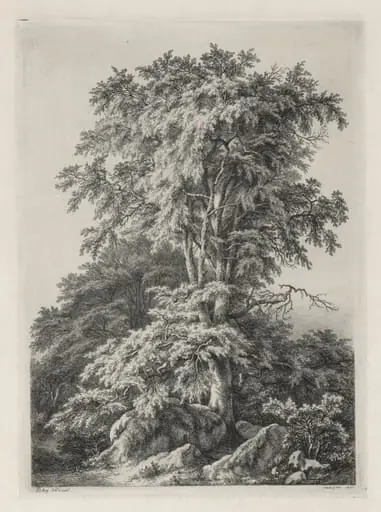 Studies Drawn and Engraved after Nature: The Beach, Fontainebleau (Études dessinées et Gravées D'après nature: Le hêtre, Fontainebleau)
 Das Waldfräulein (The Lady of the Forest)