Artwork
Bătălia de la Călugăreni
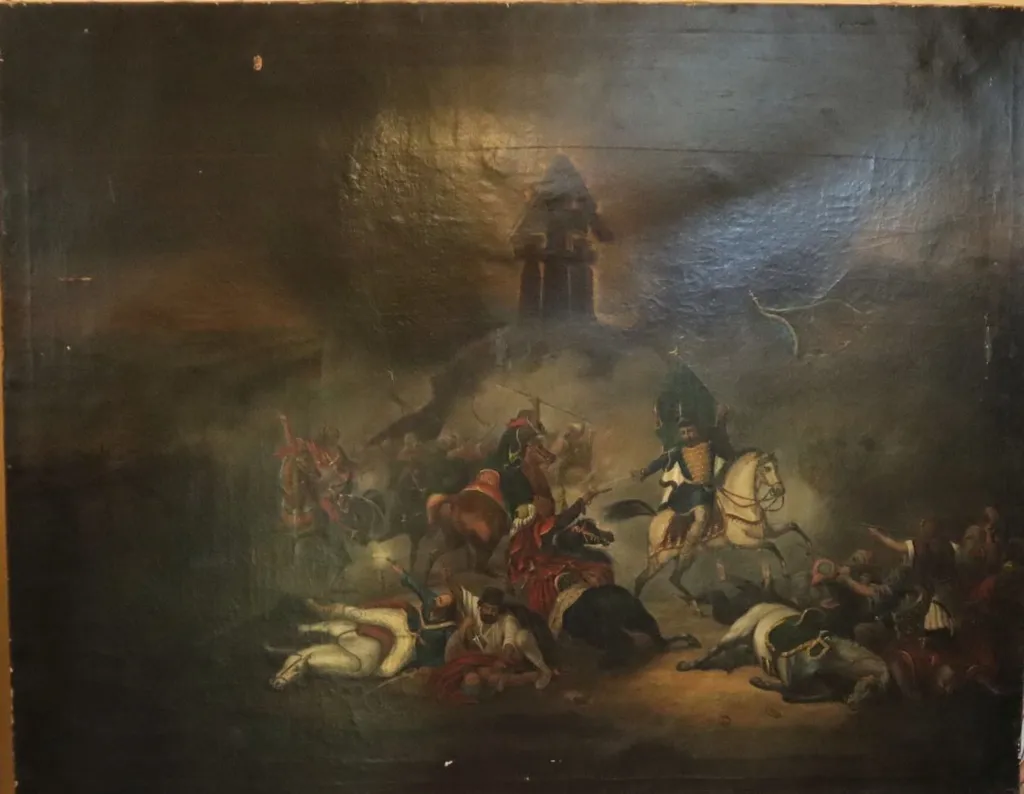
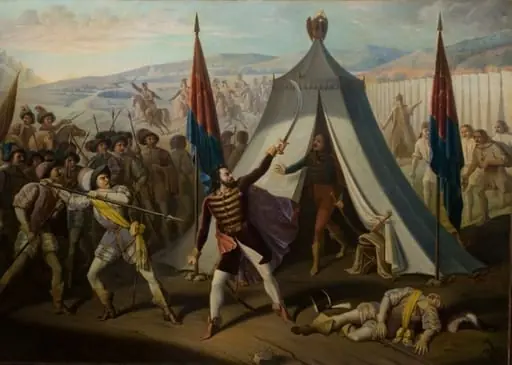
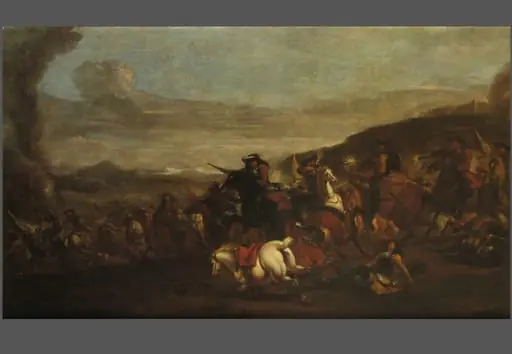
Bătălia de la Călugăreni is a print by the Academic Art artist Constantin Lecca. It is held in the collection of the King Ferdinand I National Military Museum. This painting depicts the Battle of Călugăreni, a 1595 conflict between Wallachian forces led by Michael the Brave and the Ottoman Empire.
About this work
Overview
The composition emphasizes movement and tension, using stark contrasts to isolate figures amid darkness, suggesting a moment suspended in the heat of battle.
This painting depicts the Battle of Călugăreni, a 1595 conflict between Wallachian forces led by Michael the Brave and the Ottoman Empire. Rendered in a nocturnal setting, the scene captures the chaos of close-quarters combat with minimal detail in the background. The composition emphasizes movement and tension, using stark contrasts to isolate figures amid darkness, suggesting a moment suspended in the heat of battle.
Subject & Meaning
The painting illustrates a pivotal moment in Wallachian resistance against Ottoman expansion. Soldiers on horseback, some tumbling from their mounts, represent the ferocity and disorder of medieval warfare. The distant, burning village implies civilian suffering and the broader stakes of the conflict. The scene avoids glorification, instead conveying the brutality and uncertainty of war through its unidealized figures and chaotic arrangement.
Technique & Style
The artist employs chiaroscuro to model forms and heighten emotional intensity, with deep shadows swallowing most of the canvas and selective highlights illuminating faces, weapons, and horse anatomy. Dark earth tones—browns, blacks, and muted reds—dominate, punctuated by faint glows from torches or moonlight. The brushwork is loose yet purposeful, suggesting motion rather than precise detail, reinforcing the sense of fleeting, violent action.
History & Provenance
The painting is a 19th-century historical reconstruction, likely created to commemorate national resistance during a period of rising Romanian identity. It draws from limited contemporary accounts of the 1595 battle, which ended inconclusively but was later mythologized as a symbol of defiance. The work’s origins are tied to Romanian Romantic nationalism, though its exact commission and early ownership remain undocumented.
Context
Created during the 1800s, when Romanian artists were reimagining medieval history to foster cultural unity, this image reflects broader European trends in historical painting. While the battle itself was a tactical stalemate, its symbolic weight grew in the 19th century as Romania sought to assert its autonomy. The painting aligns with contemporaneous works that idealized struggle against foreign domination, even when historical accuracy was secondary to emotional resonance.
Legacy
Though not widely exhibited outside Romania, the painting contributes to the visual language of national memory, influencing later depictions of medieval warfare in Romanian art. Its emphasis on chiaroscuro and emotional gravity aligns it with academic traditions of the 19th century, while its focus on a lesser-known battle underscores a shift toward localized historical narratives over grand imperial themes.
Artist & collection
Artist
Constantin Lecca made prints and paintings in 19th-century Romania, often capturing sitters in quiet detail.
Museum
King Ferdinand I National Military Museum
Continue through works from the same source collection.
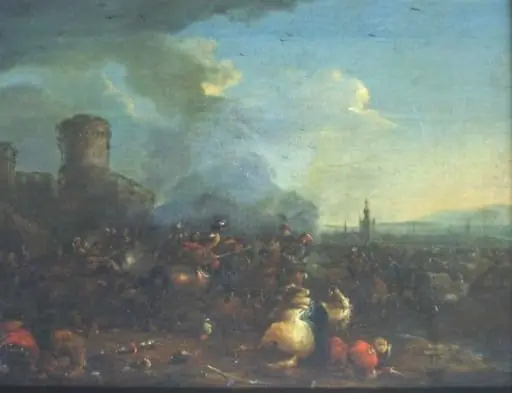 Luptă de cavalerie lângă un castel
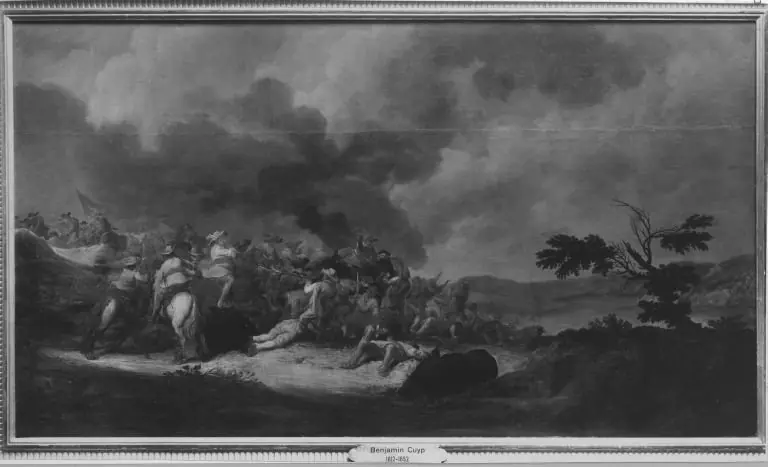 Feldschlacht
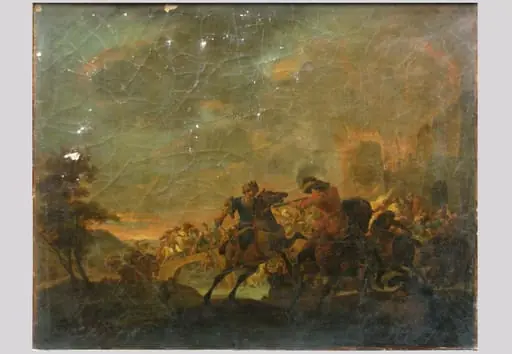 Luptă lângă o cetate (în Reg. Inv.: Atac dintr-o cetate) (pandant: Luptă de cavalerie lângă pietre antice, în Reg. Inv.: Luptă de cavalerie între pietre antice)
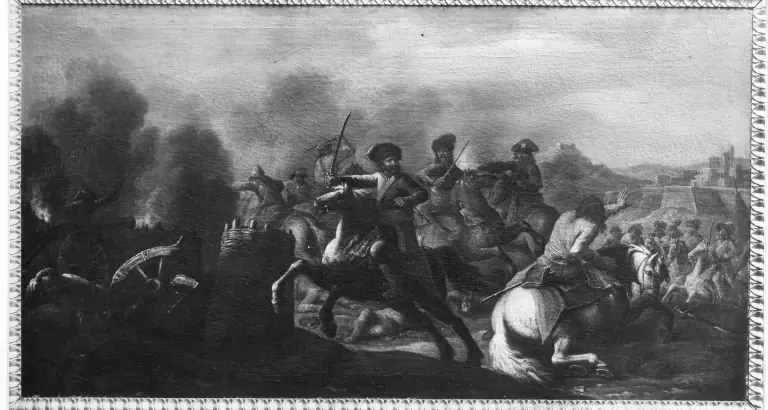 Reitergefecht
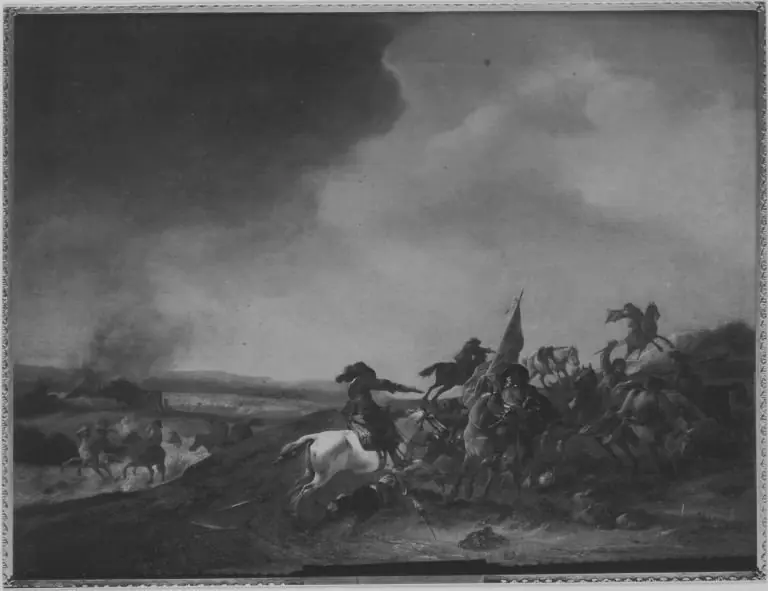 Reitergefecht
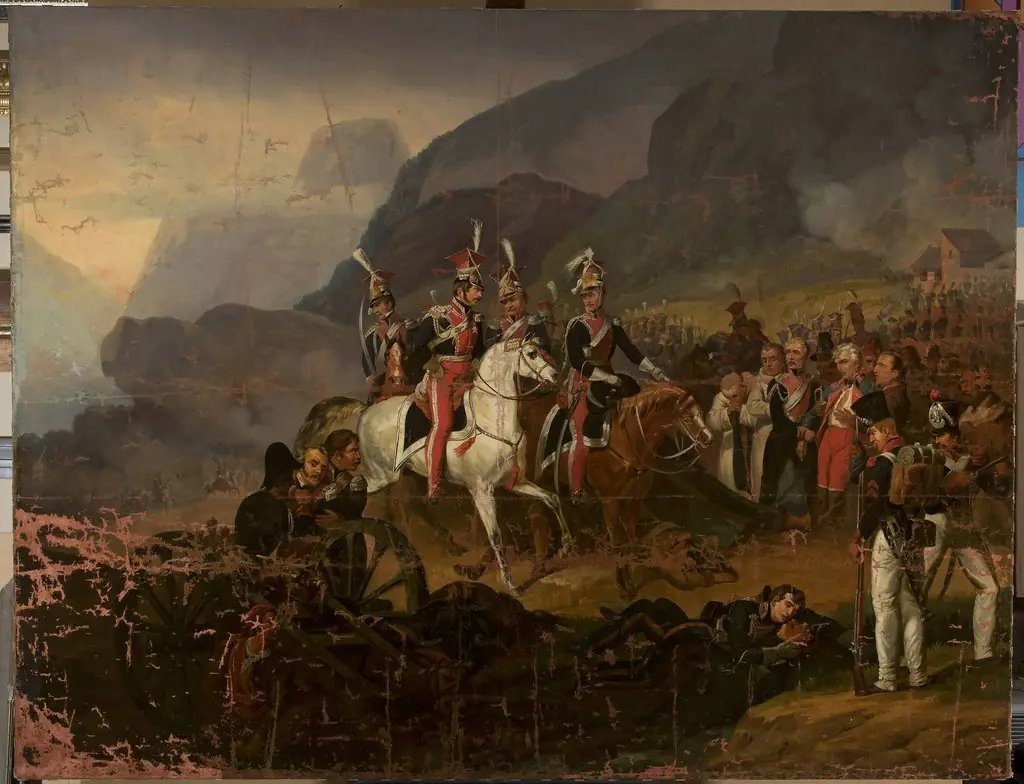 Battle scene: Wincenty Krasiński receives the report from Kozietulski after the battle of Somosierra (copy, after Horace Vernet)
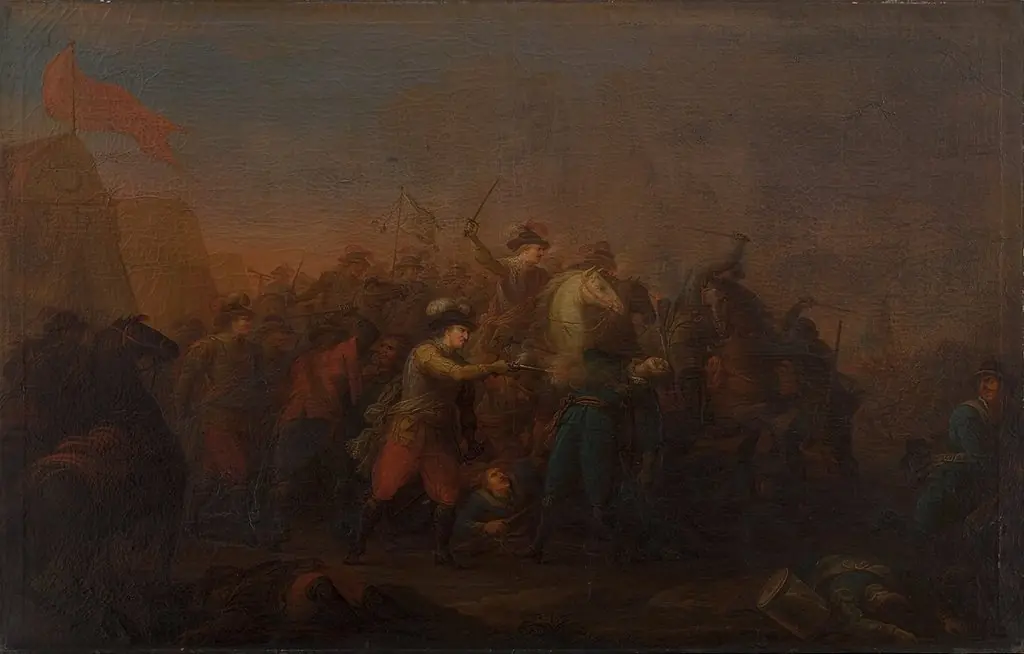 Batalje mellem danske og svenske under Kalmarkrigen 1611-1613
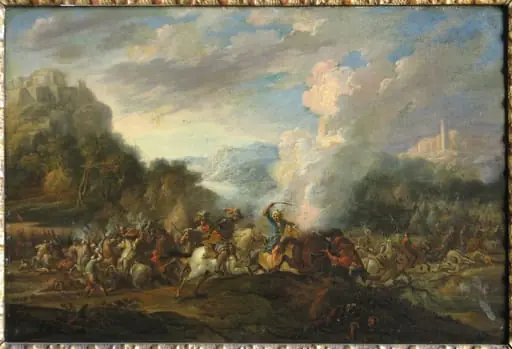 Luptă de cavalerie între turci și austrieci
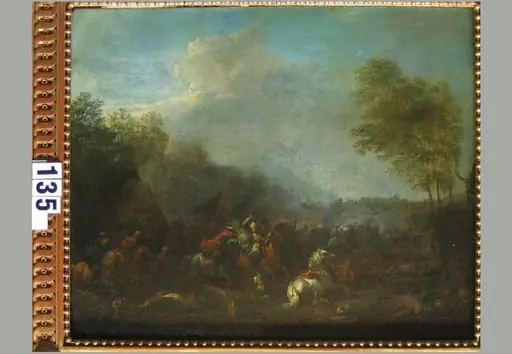 Încăierare într-un defileu. Pandant: În luptă
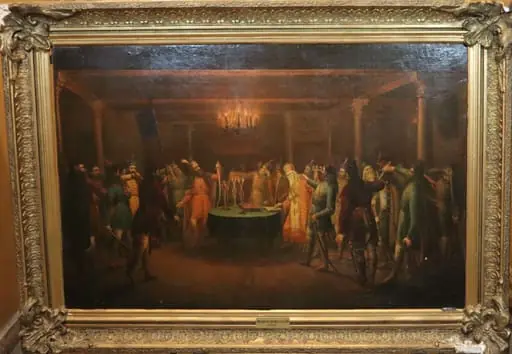 Jurământul lui Mihai Viteazul
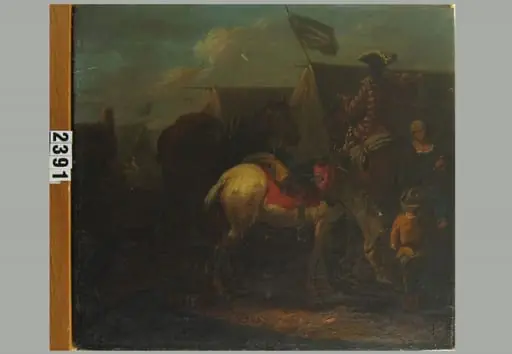 Corturi
 Luptă de cavalerie. Pandant: După luptă