Artwork
Abandoned Village (Le village abondonne)
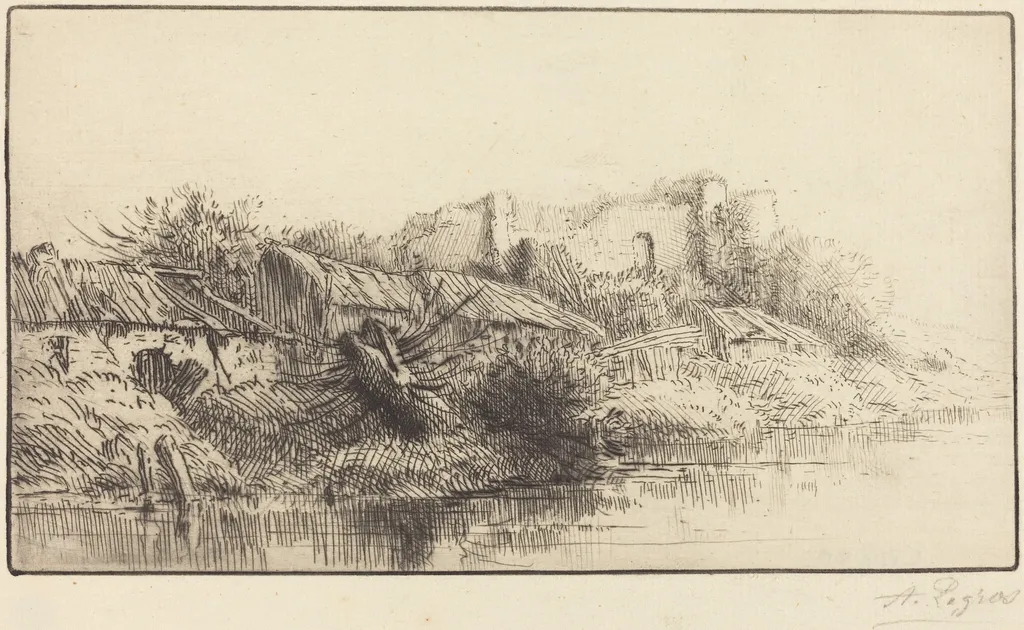
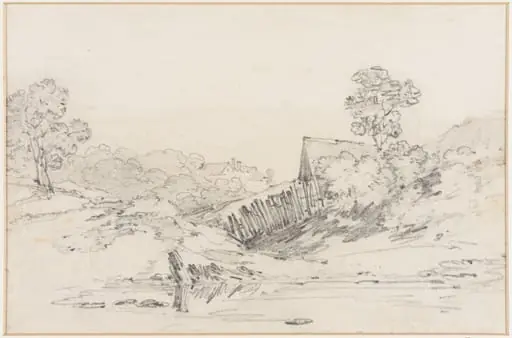
Abandoned Village (Le village abondonne) is an ink print by the Romanticist artist Alphonse Legros. It dates from 1874 and is held in the collection of the National Gallery of Art.
About this work
Overview
Abandoned Village (Le village abondonne), created by Alphonse Legros in 1874, is an etching and drypoint print depicting a rural settlement overtaken by nature.
Subject & Meaning
The print portrays a deserted village, with dark, obscured buildings and a foreground dominated by chaotic, scribbled lines evoking wind-blown branches or hasty abandonment. A central, neglected path underscores the scene’s desolation. The intense, scratchy marks convey nature’s relentless reclaiming of the space.
Technique & Style
Legros employed intaglio techniques—etching and drypoint—to achieve the piece’s expressive, high-contrast visual language. The loose, often frantic lines and dark tones characterize his recognized style in these mediums.
History & Provenance
Created in 1874 by French-born, British-naturalized artist Alphonse Legros, this work reflects his role in Britain’s etching revival through both practice and teaching.
Context
As a multi-disciplinary artist (painting, printmaking, sculpture), Legros’s work in *Abandoned Village* situates him within late 19th-century artistic movements that explored themes of decline and the interplay between nature and human absence.
Legacy
While *Abandoned Village* specifically may not have singularly defined Legros’s legacy, it contributes to his broader impact on reviving and teaching etching in Britain, influencing subsequent generations of printmakers.
Artist & collection

Artist
Alphonse Legros (French pronunciation: ; 8 May 1837 – 8 December 1911) was a French, later British, painter, etcher, sculptor, and medallist.

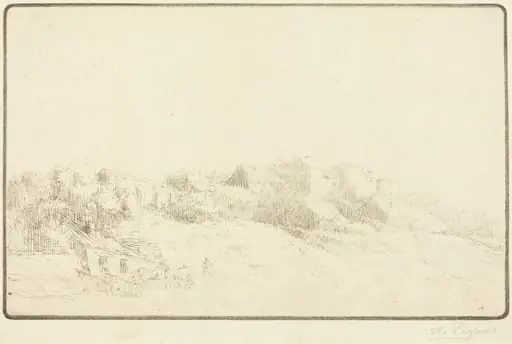 Saint Maurice in Bourgogne (Saint Maurice en Bourgogne)
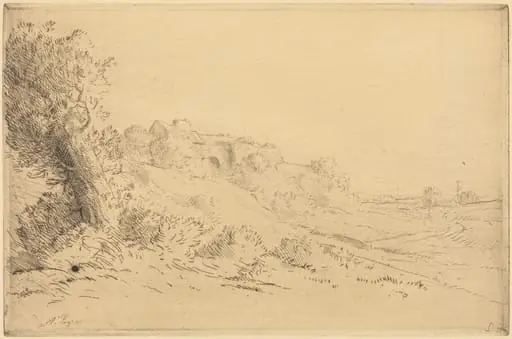 My Farm (Ma ferme)
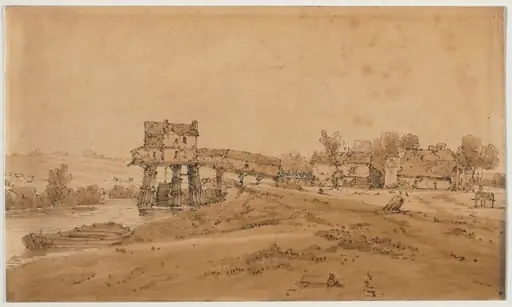 A Selection of Twenty of the Most Picturesque Views in Paris: The Watermill above the Bridge at Charenton
 Ruins of the Swedish Factory, Macao, 1831
 Banks of the Venelle (Bord de la Venelle)
 The Casa, Macao, in the gardens of which is Camoens' Cave (the residence of Lady Pereira), Macao
 Pigeon Tower (La tour aux pigeons)
 Cottage and landscape at Chirk, North Wales