Artwork
Banks of the Venelle (Bord de la Venelle)
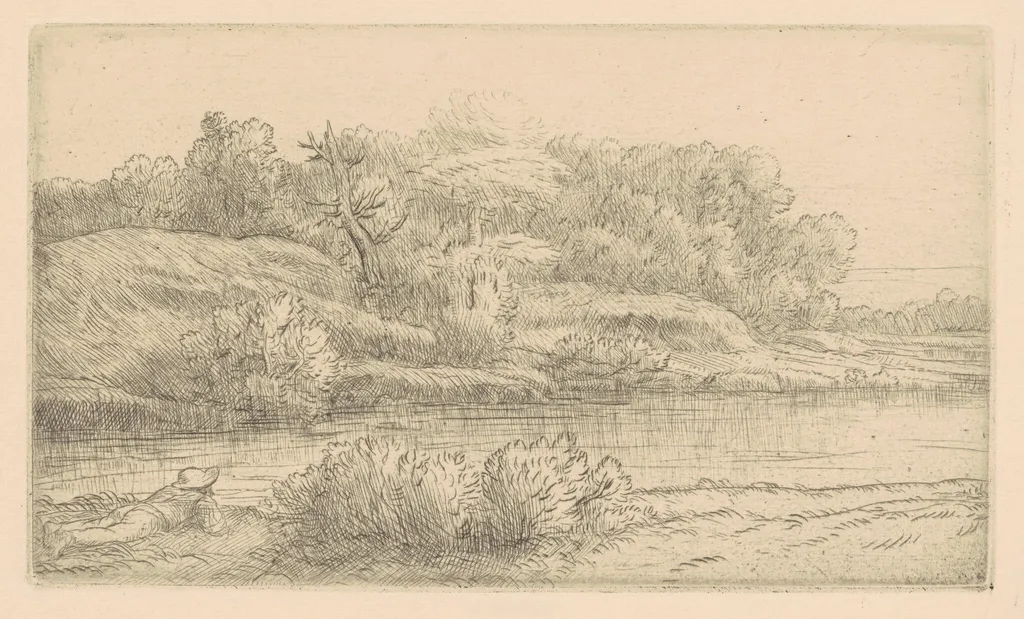
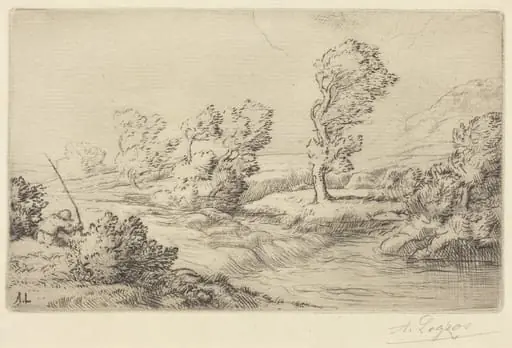
Banks of the Venelle (Bord de la Venelle) is an ink print by the Impressionist artist Alphonse Legros. It dates from 1888 and is held in the collection of the National Gallery of Art.
About this work
Overview
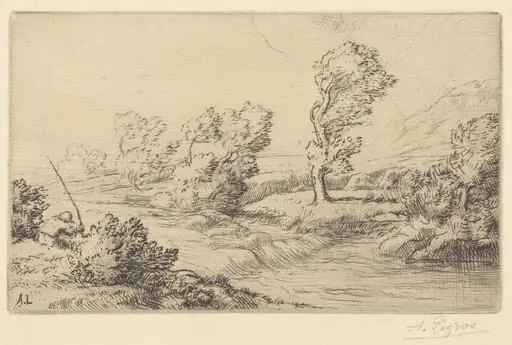
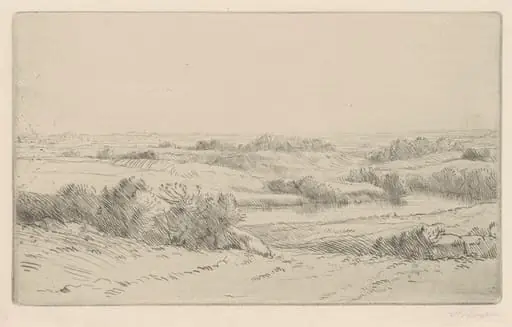
Alphonse Legros produced the etching *Banks of the Venelle* in 1888. Executed on a metal plate, the work presents a muted, monochrome view of a riverbank, rendered entirely through the artist’s incised lines. The print is part of the National Gallery of Art’s collection in Washington, D.C., and exemplifies Legros’s engagement with printmaking during his later career.
Subject & Meaning
The composition shows a tranquil stretch of riverbank populated by tangled shrubbery and slender trees. The water is depicted as restless, its surface marked by swirling strokes that suggest eddies around rocks and reeds. The overall tone, limited to shades of gray, conveys a quiet, almost photographic atmosphere, inviting contemplation of the natural scene’s subtle textures.
Technique & Style
Legros employed traditional etching methods, incising the design into a copper plate with a fine needle before acid bathing it to bite the lines. By varying the depth and density of the incisions, he achieved layered tonal values that model form and atmosphere. The resulting print relies on the interplay of line and wash to suggest depth without any color.
History & Provenance
After moving from France to London in 1863, Legros became a central figure in the British revival of etching, teaching and exhibiting the medium extensively. *Banks of the Venelle* was created three decades later, reflecting his mature approach. The print entered the National Gallery of Art’s holdings in the United States, where it remains on view.
Context
The late nineteenth century saw a renewed interest in printmaking across Europe, with artists exploring etching as a means of expressive line work.
The late nineteenth century saw a renewed interest in printmaking across Europe, with artists exploring etching as a means of expressive line work. Legros, trained in both French academic traditions and British artistic circles, contributed to this movement by integrating precise draftsmanship with atmospheric effects, situating the work within broader trends toward realism and tonal subtlety in prints.
Artist & collection

Artist
Alphonse Legros (French pronunciation: ; 8 May 1837 – 8 December 1911) was a French, later British, painter, etcher, sculptor, and medallist.

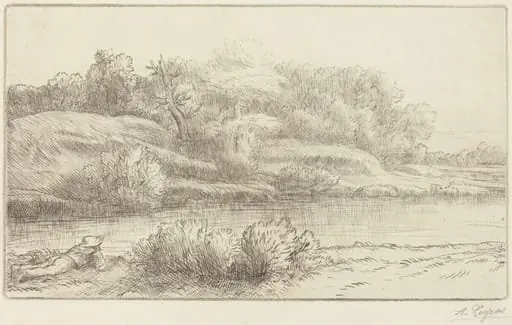 Banks of the Venelle (Bord de la Venelle)
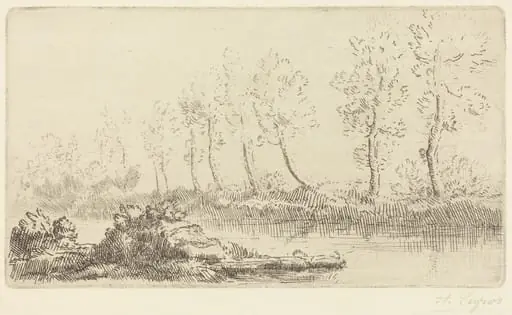 Banks of the Adour (Bord de l'Adour)
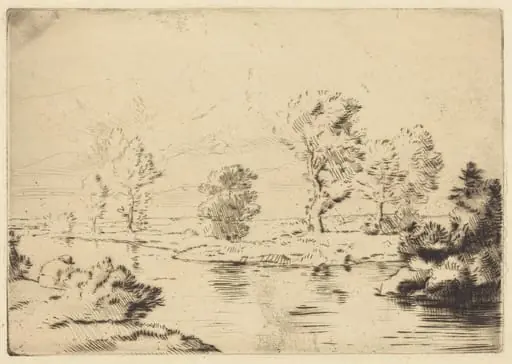 Banks of the Marne (Bord de la Marne)
 Banks of the Marne (Bord de la Marne)
 Banks of the Marne (Bord de la Marne)
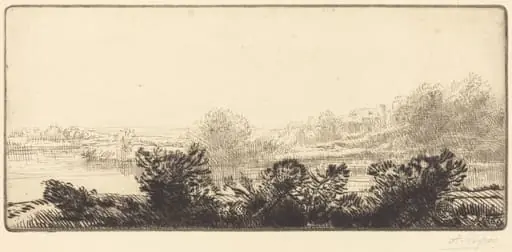 Banks of the Loire (Bord de la Loire)
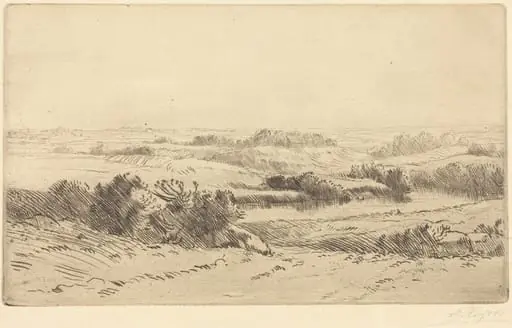 Banks of the Yanne (Les bords de la Yanne)
 Banks of the Yanne (Les Bord de la Yanne)
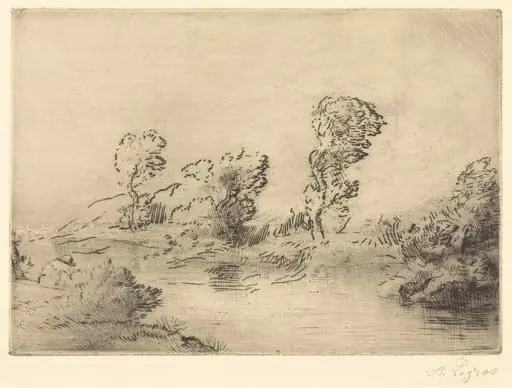 Banks of the Marne (Bord de la Marne)
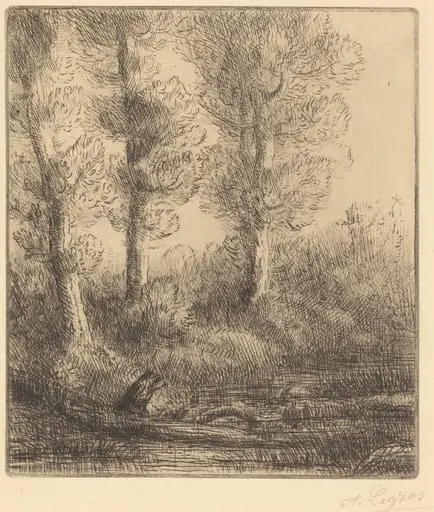 Banks of the Saint-Pre (Rive du Saint-Pre)