Artwork
A Selection of Twenty of the Most Picturesque Views in Paris: The Watermill above the Bridge at Charenton
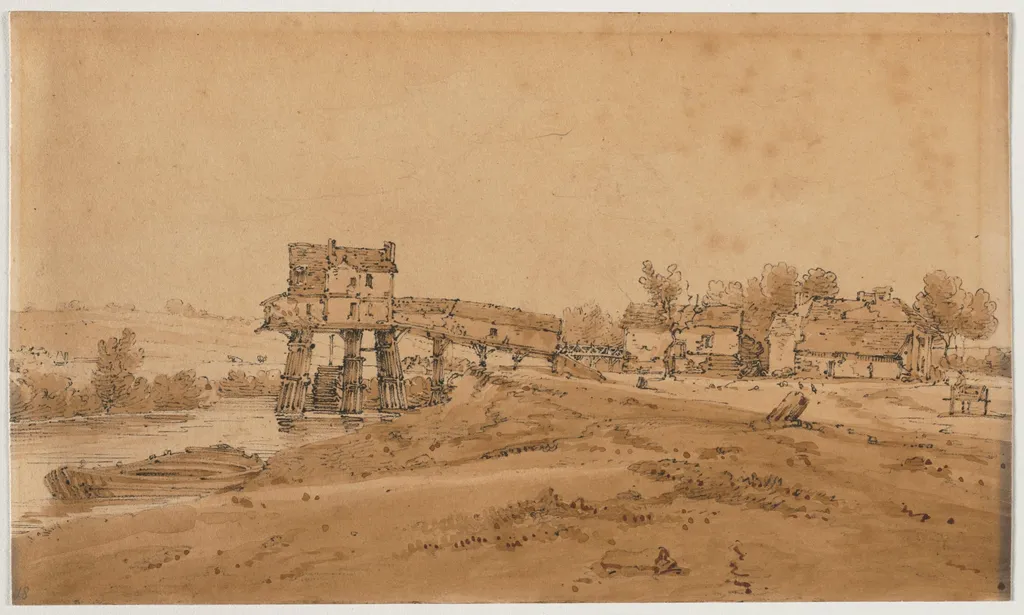
A Selection of Twenty of the Most Picturesque Views in Paris: The Watermill above the Bridge at Charenton is a print by the Romanticist artist Girtin. It dates from 1802 and is held in the collection of the Cleveland Museum of Art.
About this work
The artist focused on the textures of the stones and water, making everything look rough and real.
This sketch shows a quiet riverside scene with a crumbling stone bridge and a small watermill. The water is calm, and the buildings look old and weathered, with some trees scattered around. The colors are mostly earthy browns and soft grays, giving it a faded, sketchy feel.
The artist focused on the textures of the stones and water, making everything look rough and real. This was made in 1802 as part of a series of Paris views.
Next, look up Romanticism to see how this style shaped art at the time.
Overview
Thomas Girtin’s 1802 print, *A Selection of Twenty of the Most Picturesque Views in Paris: The Watermill above the Bridge at Charenton*, depicts a tranquil stretch of the Seine near Charenton. The composition centers on a modest watermill perched above a weathered stone bridge, framed by sparse trees and muted architecture. Earthy browns and soft grays dominate the palette, lending the scene a subdued, atmospheric quality.
Subject & Meaning
The work captures a quiet, everyday moment of Parisian river life, emphasizing the passage of time through the crumbling stonework and the gentle flow of water. By selecting a modest, functional structure rather than a grand monument, Girtin highlights the picturesque potential of ordinary urban scenery.
Technique & Style
Executed in a combination of etching and watercolor wash, the print showcases Girtin’s attention to surface texture. Fine line work renders the rough stone of the bridge and mill, while broad, muted washes suggest the calm river and sky. The restrained palette and emphasis on atmospheric effects anticipate later Romantic sensibilities.
History & Provenance
Created the same year Girtin died, the print forms part of a series of twenty Parisian views he produced for a market interested in foreign cityscapes. The Cleveland Museum of Art now holds this piece, where it remains a representative example of Girtin’s late output and his contribution to the elevation of watercolor as a serious medium.
Context
Girtin worked alongside contemporaries such as J. M. W. Turner, and both artists were instrumental in expanding the status of watercolor in early‑19th‑century Britain. Their focus on atmospheric effects and the “picturesque” aligned with broader Romantic interests in nature, emotion, and the sublime.
Artist & collection
Artist
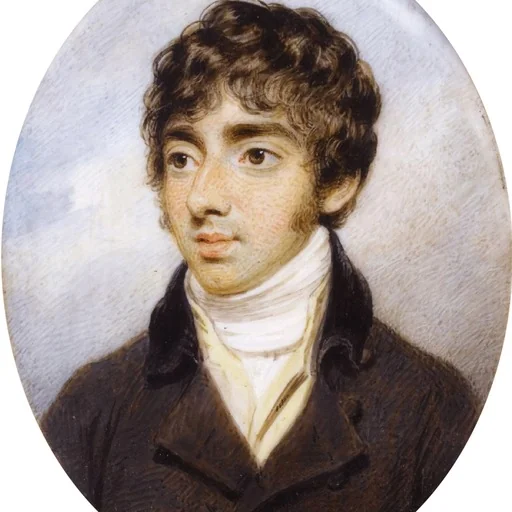
Thomas Girtin (18 February 1775 – 9 November 1802) was an English watercolourist and etcher. A friend and rival of J. M. W. Turner, Girtin played a key role in establishing watercolour as a reputable art form.

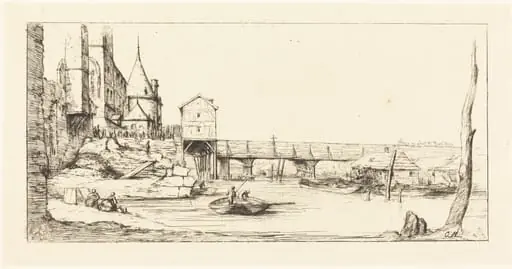 Passerelle du Pont-au-Change, Paris, après l'Incendie de 1621 (Footbridge Temporarily Replacing the Pont-au-Change, Paris, after the Fire of 1621)
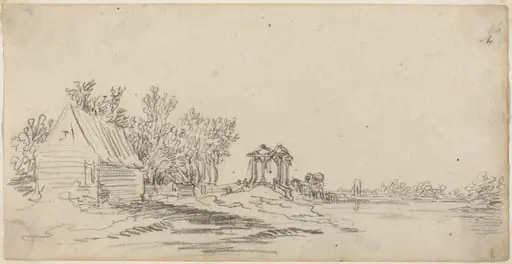 River Landscape with a Distant Bridge
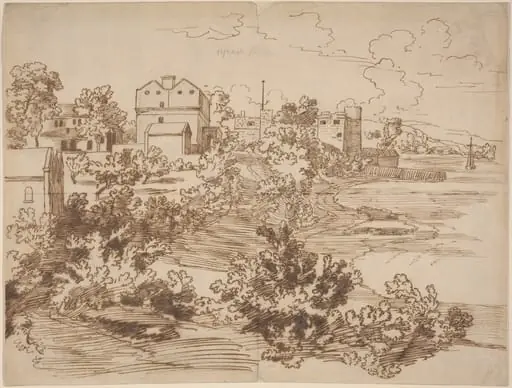 Upnor Castle
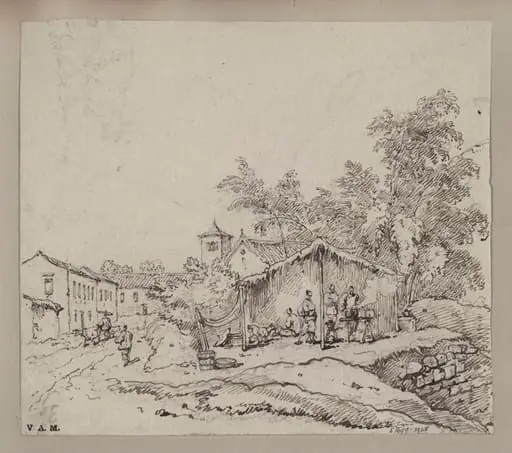 Blacksmiths beneath a thatched shelter, with the church of S. Antonio, Macau
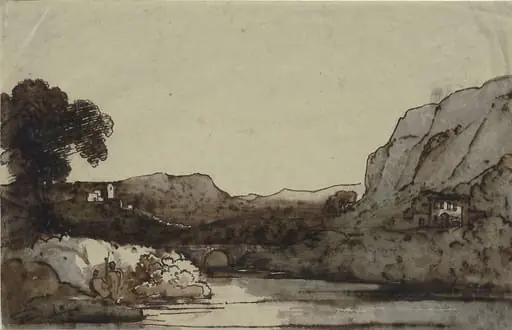 Landscape with Bridge and Mountains
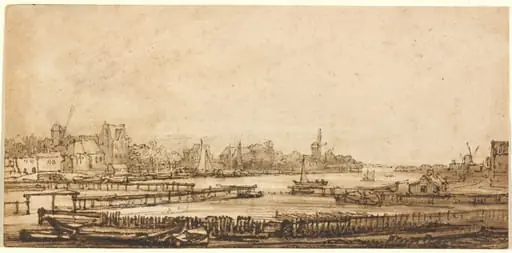 View over the Amstel from the Rampart
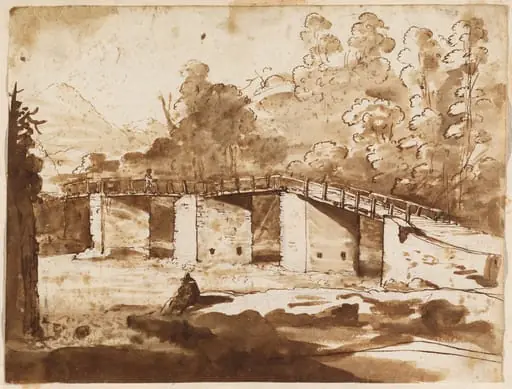 Landscape with a Bridge
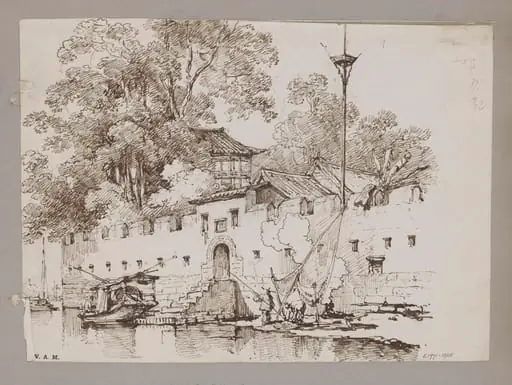 Part of the Dutch Folly, near Canton
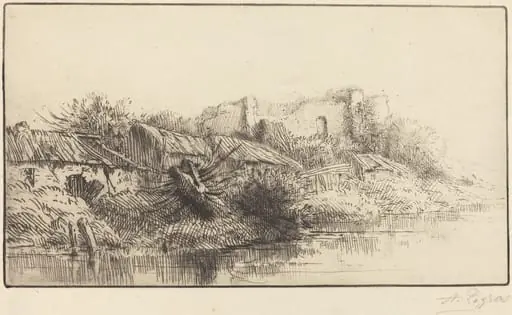 Abandoned Village (Le village abondonne)