Artwork
Allegory of the Peasant and Fortune (Le paysan et la fortune: Sujet allegorique
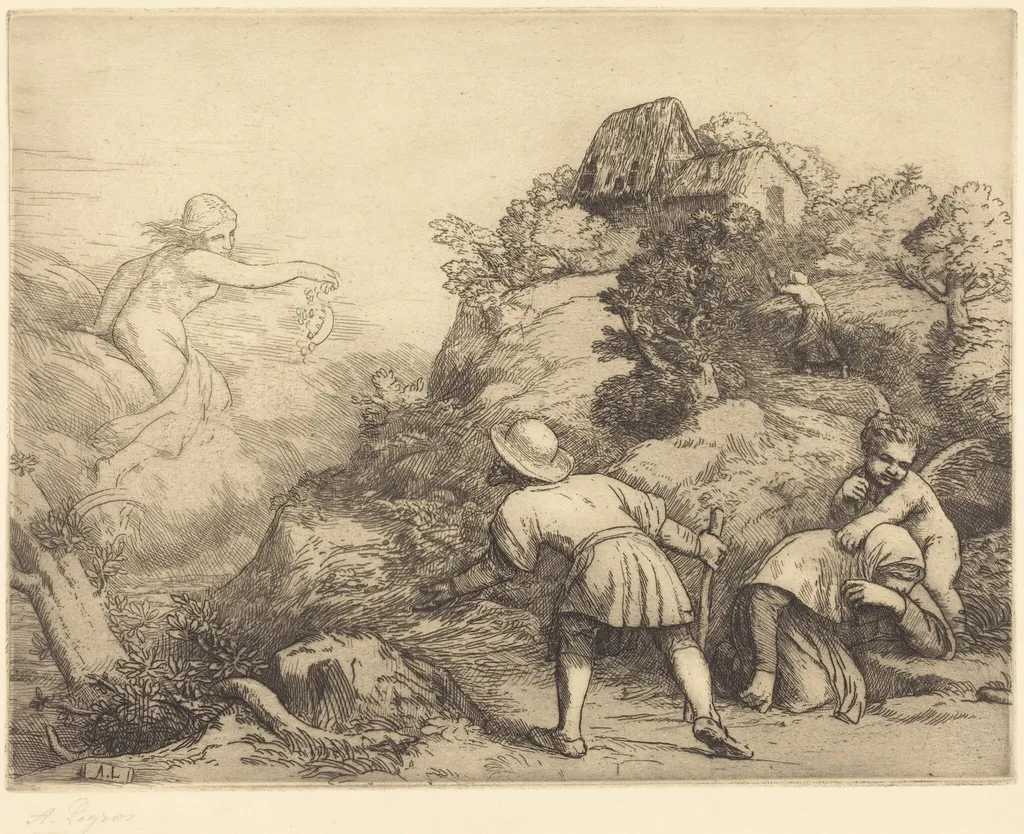
Allegory of the Peasant and Fortune (Le paysan et la fortune: Sujet allegorique is an ink print by the Romanticist artist Alphonse Legros. It dates from 1874 and is held in the collection of the National Gallery of Art.
About this work
Overview
Alphonse Legros produced the etching *Allegory of the Peasant and Fortune* in 1874. Executed after his relocation to London in 1863 and subsequent naturalisation as a British citizen, the work exemplifies his broader practice in painting, sculpture and medallic art. It stands as a representative piece of his contribution to the 19th‑century revival of British printmaking.
Subject & Meaning
The composition presents a peasant, identifiable by his wide‑brimmed hat, leaning over a figure lying asleep on the ground, while a rocky hill with a modest hut rises behind them. The interaction is intended as an allegory, juxtaposing the humble laborer with the abstract notion of Fortune, suggesting the unpredictable relationship between toil and luck.
Technique & Style
Legros employed swift, uneven lines characteristic of etching, allowing the texture of grass, foliage and clothing to emerge through dense, dark strokes. The handling of line conveys a sense of movement and rugged surface, aligning the work with Romantic sensibilities that emphasized natural vigor and human struggle.
History & Provenance
Created shortly after Legros began teaching at the South Kensington School of Art, the print reflects his role in re‑energising etching in Britain. While specific ownership records are limited, the work has been documented in collections that focus on 19th‑century British prints and on Legros’s oeuvre.
Artist & collection

Artist
Alphonse Legros (French pronunciation: ; 8 May 1837 – 8 December 1911) was a French, later British, painter, etcher, sculptor, and medallist.

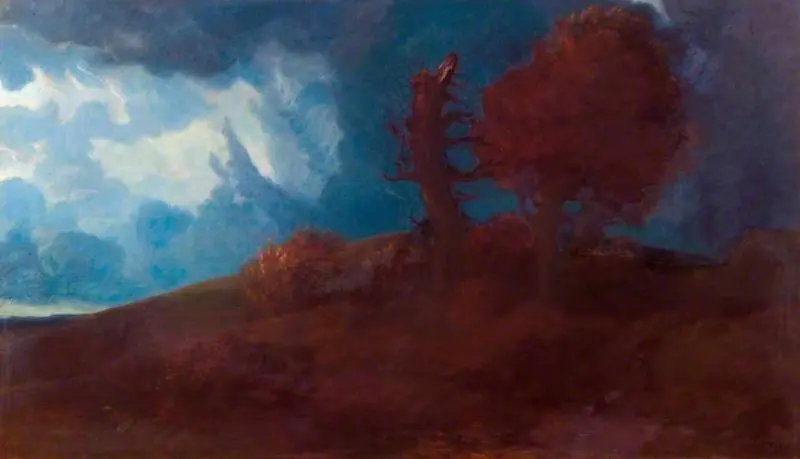
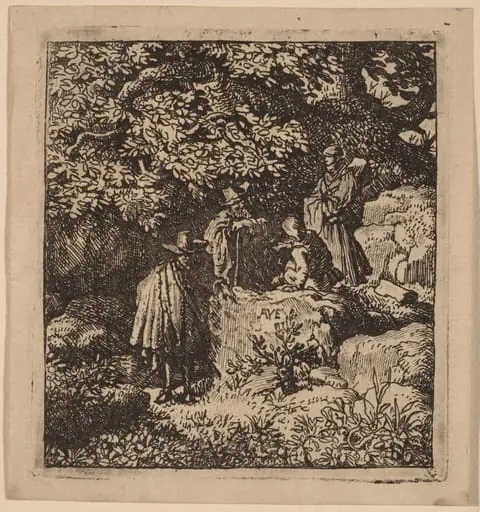 Four Figures under a Tree
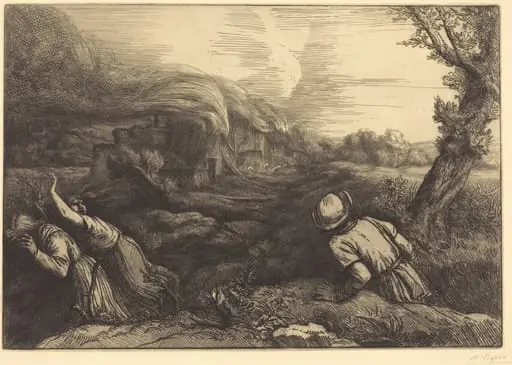 Fire in the Hamlet (L'incendie du hameau)
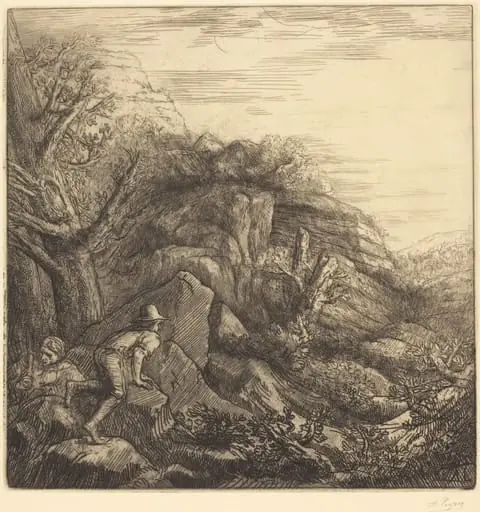 Sunrise (Un lever de soleil)
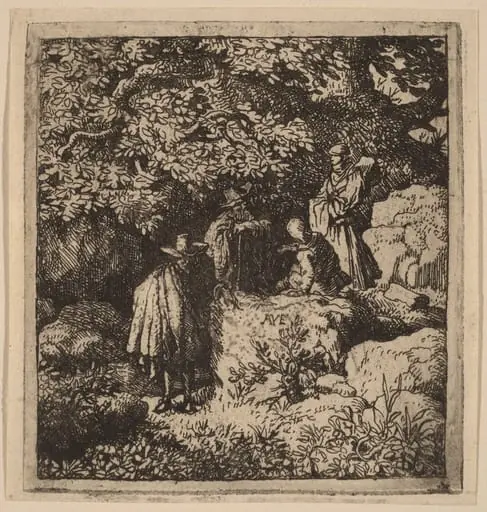 Four Figures under a Tree
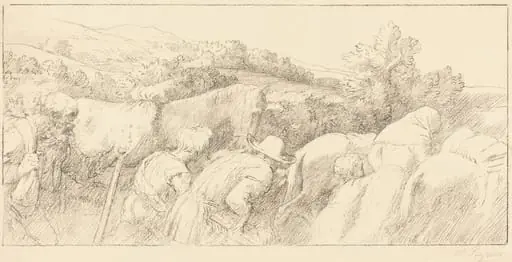 Return of the Peasants (Le retour des paysans)
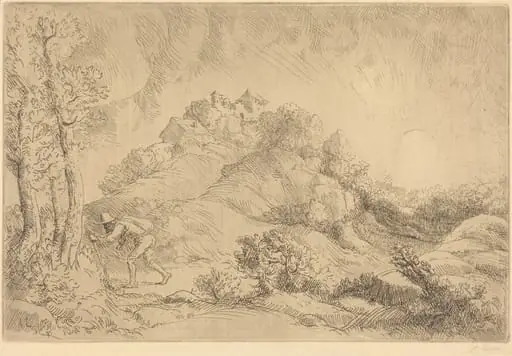 View of a Farm (La ferme de Beauchamp)
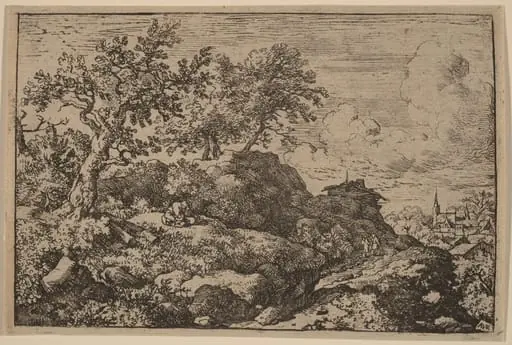 Two Peasants Seated on a Hill
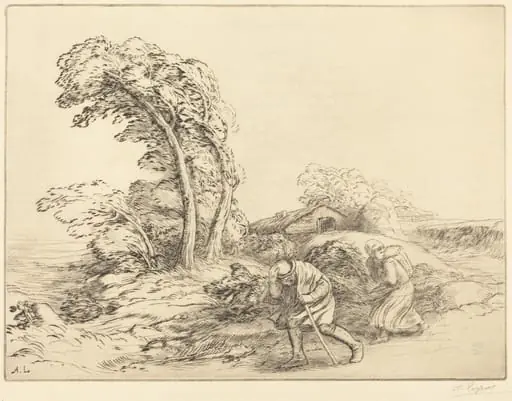 Gust of Wind (Un coup de vent)
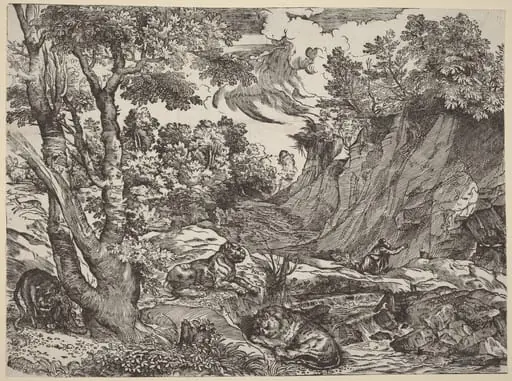 Saint Jerome in the Wilderness
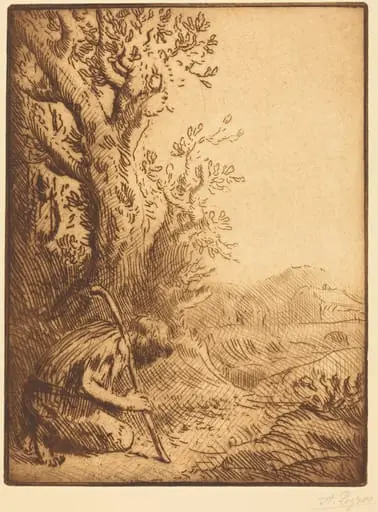 The Prodigal Son, 4th plate (L'enfant prodigue)