Artwork
Saint Jerome in the Wilderness
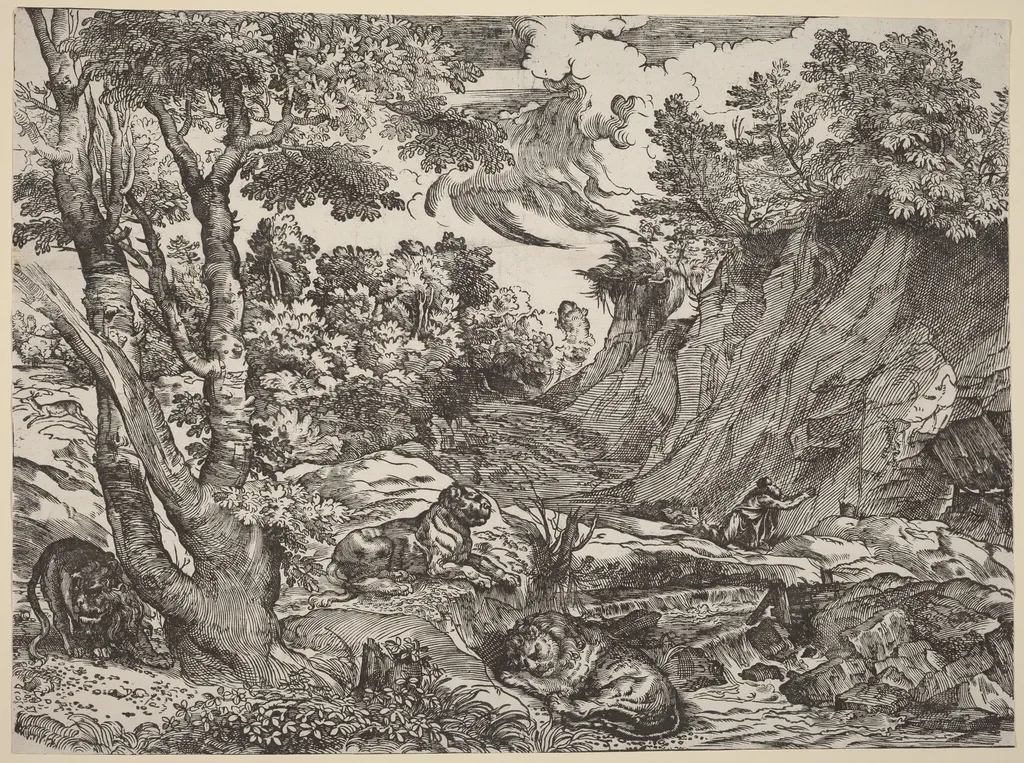
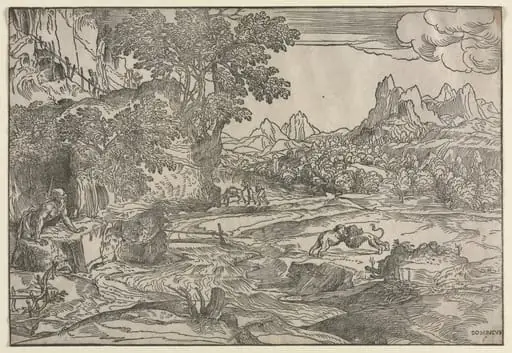
Saint Jerome in the Wilderness is an ink print by the Renaissance artist Nicolò Boldrini. It dates from 1532 and is held in the collection of the National Gallery of Art.
About this work
Overview
Saint Jerome in the Wilderness is a woodcut print produced around 1532 by Nicolò Boldrini, an Italian artist known for adapting Albrecht Dürer’s compositions into the woodcut medium. The work belongs to a series of religious prints circulating in early 16th-century Europe, reflecting the period’s devotional culture and the growing accessibility of printed imagery for private contemplation.
Subject & Meaning
The print portrays Saint Jerome, the scholar-saint, seated in a secluded natural setting, engaged in study.
The print portrays Saint Jerome, the scholar-saint, seated in a secluded natural setting, engaged in study. His simple robe and the book he holds signify his dedication to translating the Bible into Latin. The wilderness setting alludes to his years of ascetic retreat, while the calm demeanor and quiet surroundings emphasize introspection and spiritual discipline, common themes in Renaissance depictions of holy figures.
Technique & Style
Boldrini employed the woodcut technique, carving lines into a wooden block to create a relief image inked and pressed onto paper. The composition features fine, controlled lines that suggest texture in foliage and fabric, with careful gradations of tone to imply depth. The background landscape is rendered with minimal detail, using sparse horizontal marks to suggest distance, a convention borrowed from Northern European printmaking traditions.
History & Provenance
The print was made during a period when woodcuts were widely distributed across Europe, often serving as devotional aids. Boldrini’s version likely circulated among clerics and educated laypeople. While specific early ownership records are scarce, similar prints from this era appear in ecclesiastical collections and private libraries of the 16th century, indicating its use in personal or monastic settings.
Context
Created during the Reformation, this image reflects the continued importance of Saint Jerome in both Catholic and emerging Protestant circles, valued for his scholarly work on scripture. Though religious imagery faced scrutiny, Jerome’s role as a translator made him a symbol of textual fidelity. Boldrini’s print aligns with broader trends in Northern Italian printmaking that blended Italian composition with Germanic precision.
Legacy
Boldrini’s Saint Jerome in the Wilderness contributed to the dissemination of devotional imagery through print, helping standardize visual representations of saints for wider audiences. Though not as widely studied as Dürer’s versions, it remains a representative example of how Italian artists adapted Northern techniques to serve local spiritual needs, influencing later generations of printmakers in the Venetian region.
Own this work as a print
Artist & collection


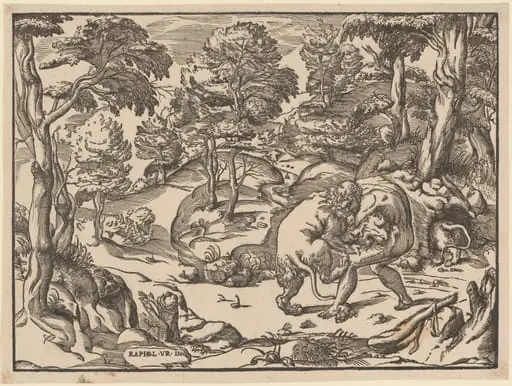
 Landscape with Saint Jerome and Two Lions
 Landscape with Travelers Attacked by a Gang of Robbers
 Landscape with the Temptation of Christ
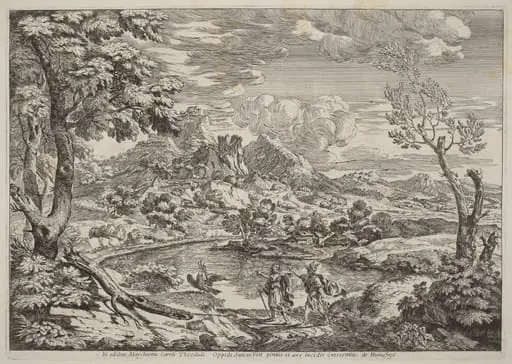 A Man Showing Mercury the Eagle of Jupiter
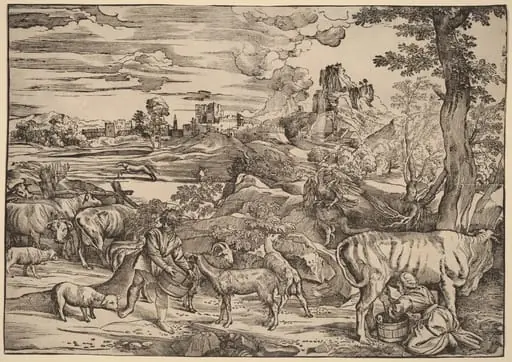
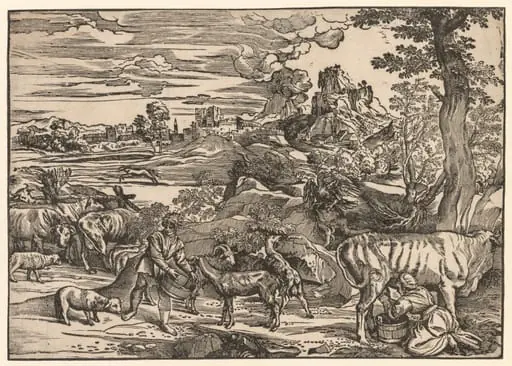 Landscape with a Milkmaid
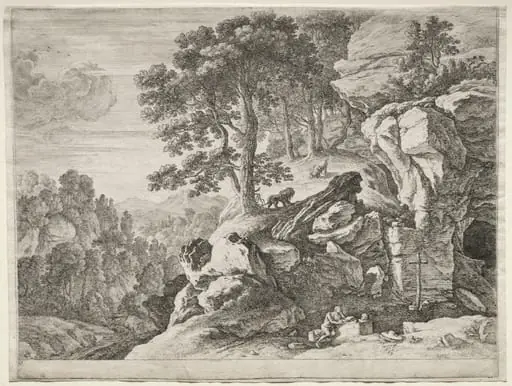 The Penitents: St. Jerome in the Desert
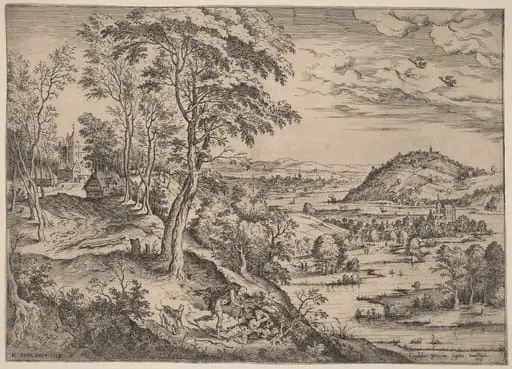 Cephalus and Procris
 Wilderness Landscape with Two Monks
 Two Peasants Seated on a Hill