Artwork
Fire in the Hamlet (L'incendie du hameau)
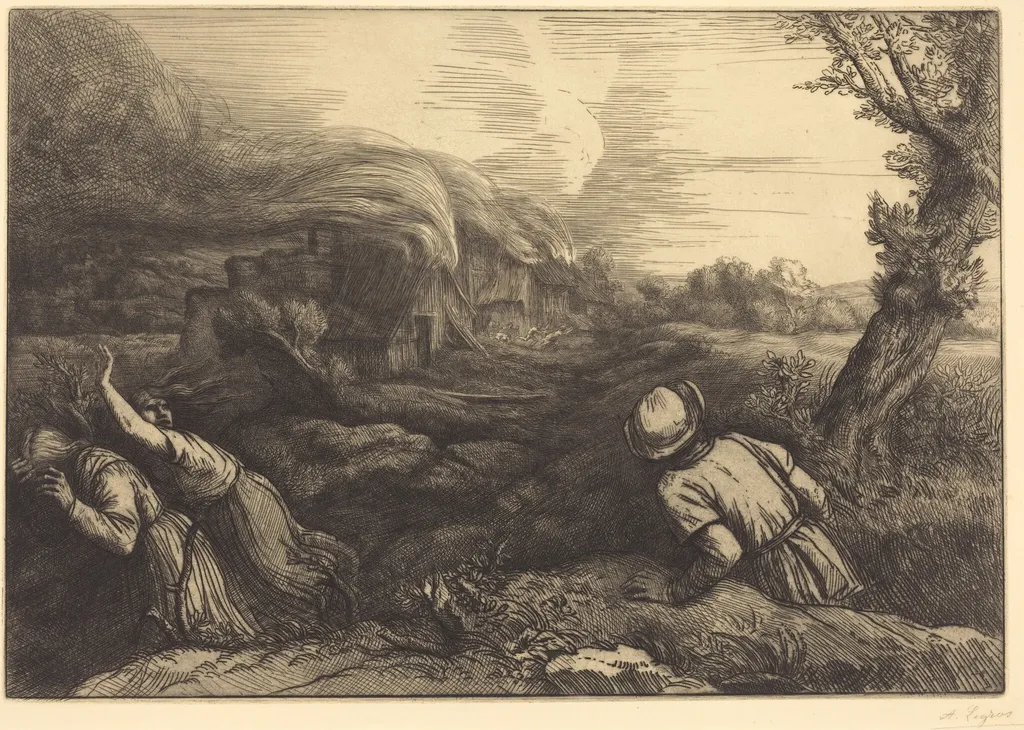
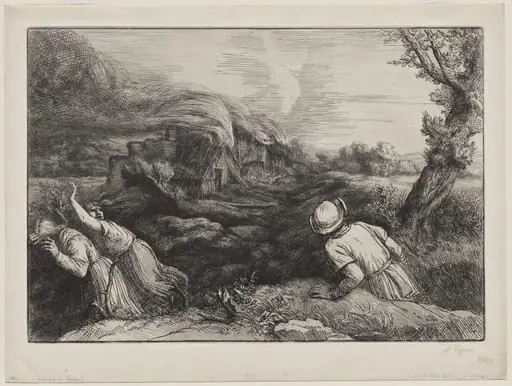
Fire in the Hamlet (L'incendie du hameau) is an ink print by the Romanticist artist Alphonse Legros. It dates from 1874 and is held in the collection of the National Gallery of Art.
About this work
Overview
Fire in the Hamlet (L'incendie du hameau), created by Alphonse Legros in 1874, is an etching and drypoint print depicting a chaotic village fire. The work showcases Legros' technical prowess in intaglio techniques.
Subject & Meaning
The print captures a moment of desperation and panic as a small village burns. Figures in the foreground convey distress, while the surrounding chaos—smoke, flames, and fleeing animals—emphasizes the scene's turmoil.
Technique & Style
Legros employed drypoint, an intaglio method where the artist scratches directly into a metal plate, to achieve sharp lines and intense textures. These visual elements amplify the sense of movement and drama, aligning with Romantic-era dramatic expression.
History & Provenance
Created in 1874, this work reflects Legros' contribution to the revival of etching in Britain, a movement influenced by his relocation to London in 1863.
Context
As a French artist in Britain, Legros bridged European techniques with British artistic revival. His use of drypoint for dramatic effect situates the work within the broader Romantic tradition of emphasizing emotional intensity.
Legacy
While specific legacy details of *Fire in the Hamlet* are not provided, the piece contributes to Legros' reputation as a versatile artist who helped reestablish etching as a viable medium in late 19th-century Britain.
Artist & collection

Artist
Alphonse Legros (French pronunciation: ; 8 May 1837 – 8 December 1911) was a French, later British, painter, etcher, sculptor, and medallist.

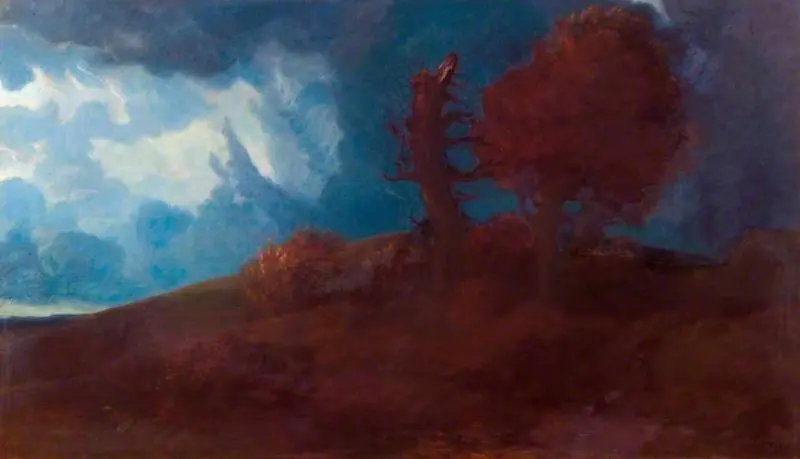
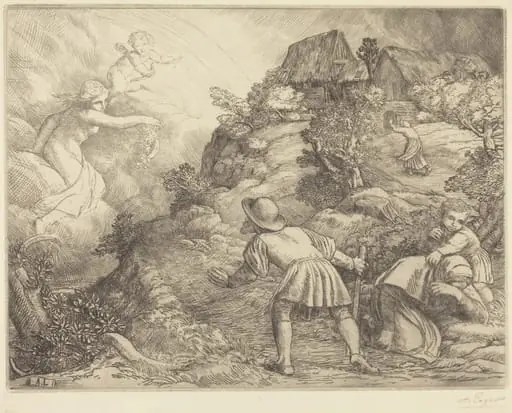 Allegory of the Peasant and Fortune (Le paysan et la fortune: Sujet allegorique
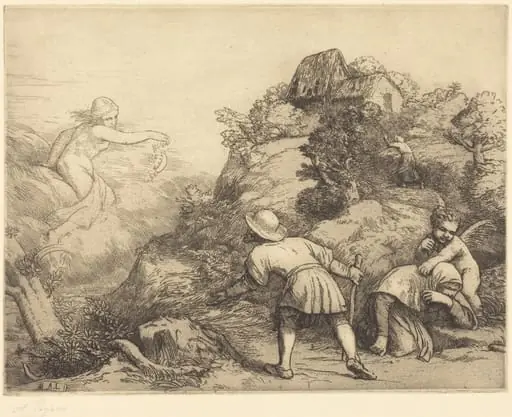 Allegory of the Peasant and Fortune (Le paysan et la fortune: Sujet allegorique
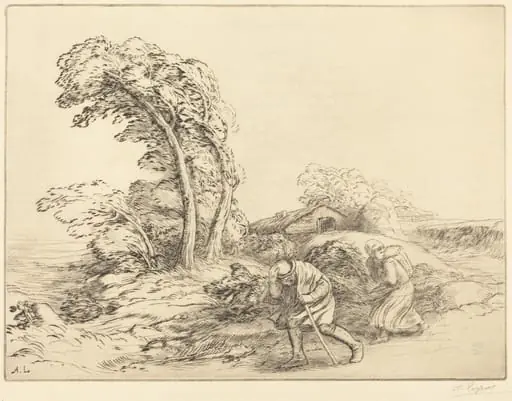 Gust of Wind (Un coup de vent)
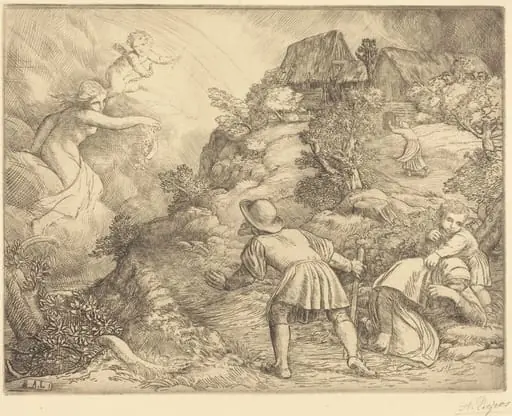 Allegory of the Peasant and Fortune (Le paysan et la fortune: Sujet allegorique)
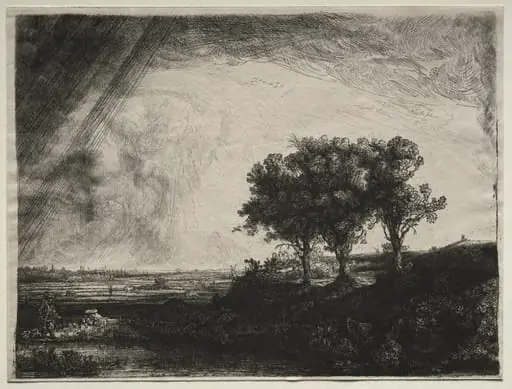 The Three Trees
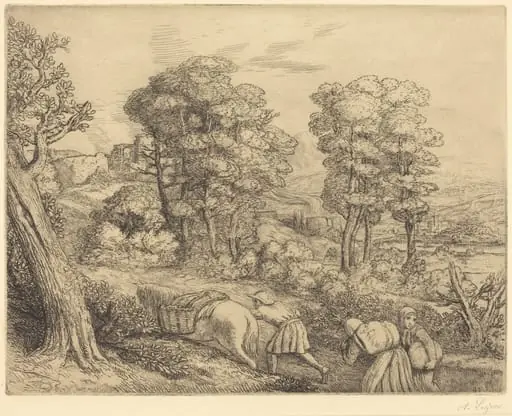 Return to the Farm (Le retour a la ferme)
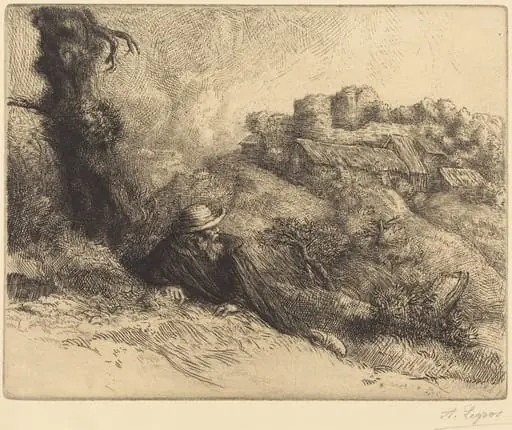 View of a Chateau (Chateau des Revenants)
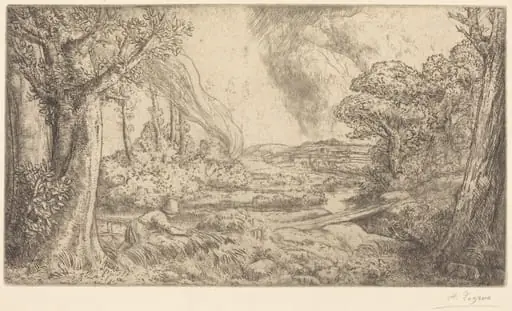 Landscape (Paysage)
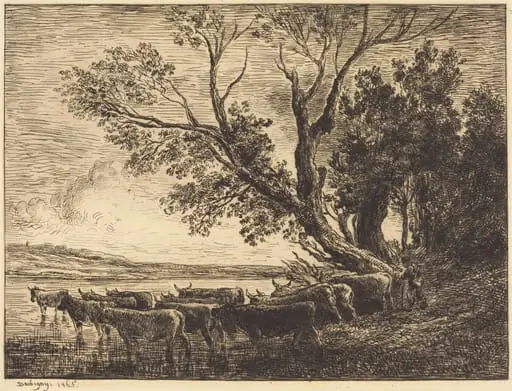 The Ford (Le Gue)
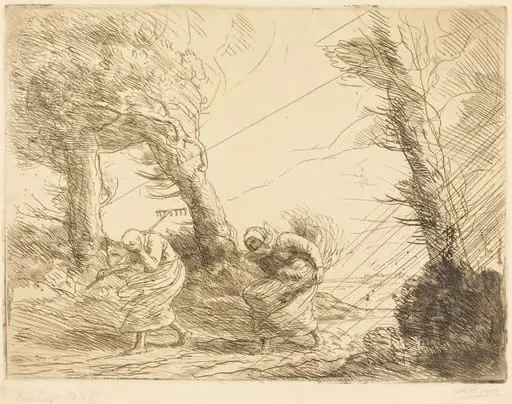 Harvesters Surprised by the Storm (Moissonneuses surprises par l'orage)
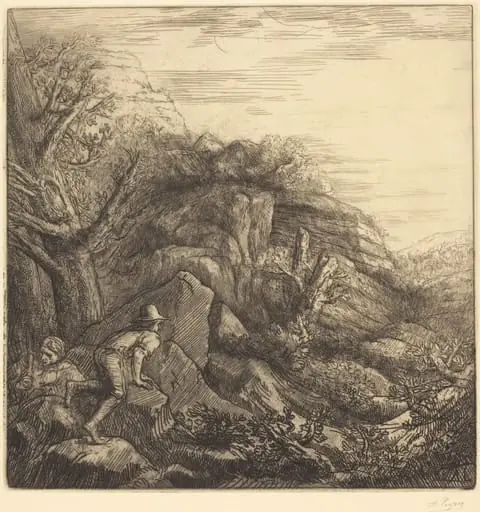 Sunrise (Un lever de soleil)
 The Village in Flames (L'Incendie du Hameau)