Artwork
Along the Thames (Sur la Tamise)
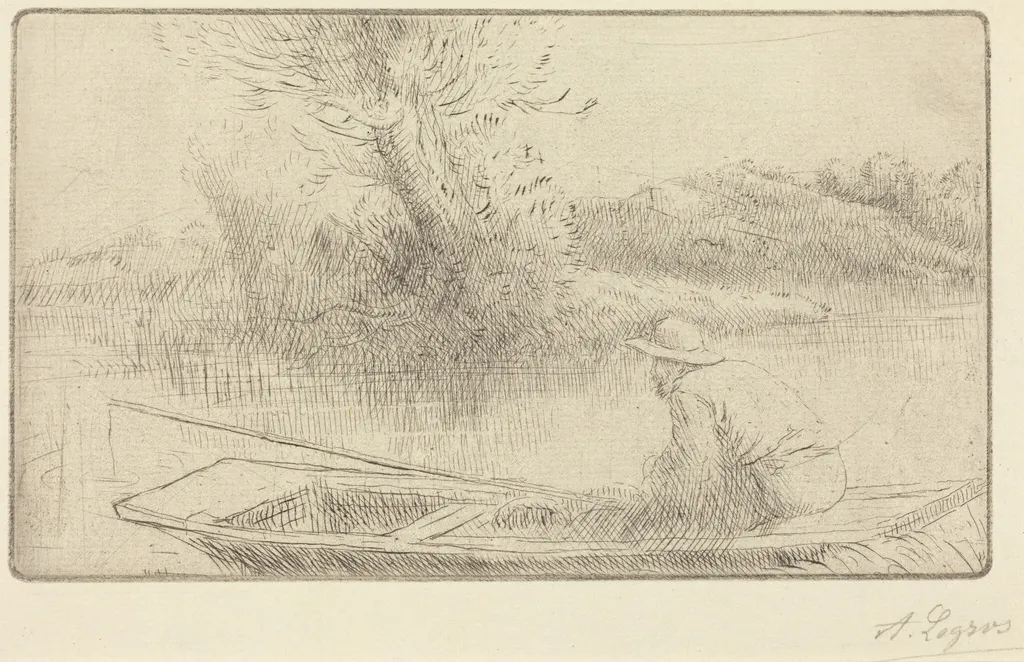
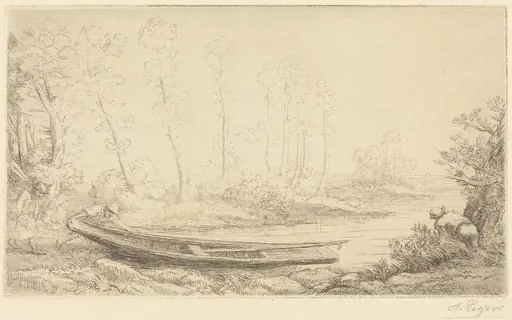
Along the Thames (Sur la Tamise) is an ink print by the Romanticist artist Alphonse Legros. It dates from 1874 and is held in the collection of the National Gallery of Art.
About this work
Overview
Alphonse Legros, a French artist who moved to London in 1863 and later became a British citizen, produced *Along the Thames (Sur la Tamise)* in 1874.
Alphonse Legros, a French artist who moved to London in 1863 and later became a British citizen, produced *Along the Thames (Sur la Tamise)* in 1874. The work is an intaglio print combining etching and drypoint, reflecting his deep engagement with printmaking. Legros was instrumental in revitalizing the medium in Britain through both his practice and his role as an educator at the Slade School of Art.
Subject & Meaning
The scene captures a quiet stretch of the River Thames, where calm water reflects the overgrown bank. A solitary tree rises amid dense reeds and tall grass, while two small, unadorned boats drift near the shore. The composition avoids narrative or human activity, emphasizing solitude and the untamed character of the riverside. It reflects a late 19th-century interest in unidealized natural landscapes.
Technique & Style
Legros employed etching and drypoint to create a textured, spontaneous effect. The lines are irregular and incised with a direct, almost sketchlike hand, suggesting immediacy rather than polish. Drypoint’s burr adds soft, velvety darks, while etched lines define structure. The roughness of the marks mirrors the wildness of the vegetation, aligning technique with subject to convey a sense of unmediated observation.
History & Provenance
Created during Legros’s early years in England, the print emerged from a period when he was deeply involved in the British art scene. Though no specific early ownership records are widely documented, the work aligns with his broader output of Thames-related prints from the 1870s. It was likely circulated among collectors and students, contributing to the renewed appreciation for etching as a serious artistic medium in Victorian Britain.
Context
In the 1870s, British artists increasingly turned to nature as a subject untainted by industrialization. Legros’s focus on the Thames’ margins—away from urban bustle—resonated with contemporary movements that valued direct observation and atmospheric truth. His approach echoed French Realism and the Barbizon School, yet his technique remained distinctively personal, rooted in the tactile possibilities of intaglio.
Legacy
Legros’s prints, including this one, helped reestablish etching as a respected medium in Britain. His emphasis on expressive line and naturalism influenced a generation of printmakers. Though less known today than his contemporaries, his pedagogical work and quiet, observant prints like *Along the Thames* laid groundwork for the British etching revival of the late 19th century.
Own this work as a print
Artist & collection

Artist
Alphonse Legros (French pronunciation: ; 8 May 1837 – 8 December 1911) was a French, later British, painter, etcher, sculptor, and medallist.

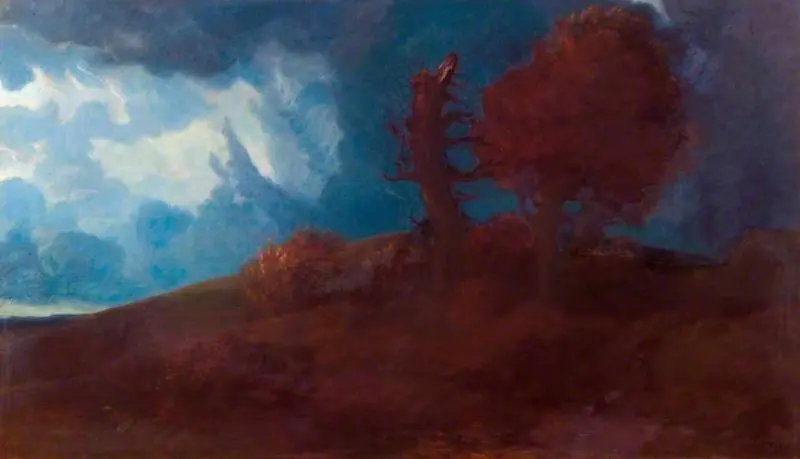
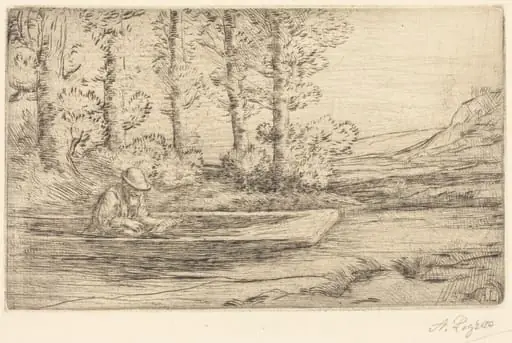 Landscape (Paysage)
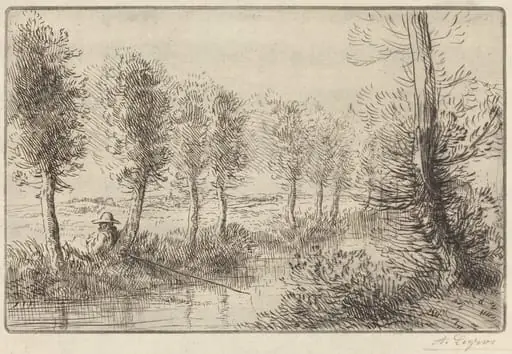 Near the Mill (Pres du moulin)
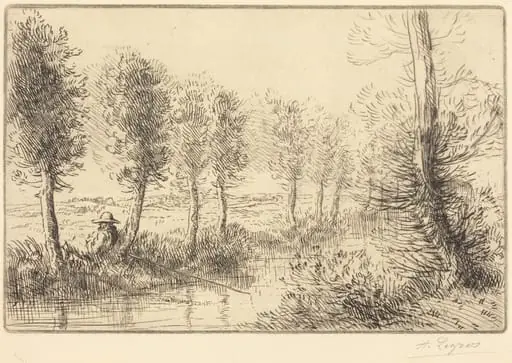 Near the Mill (Pres du moulin)
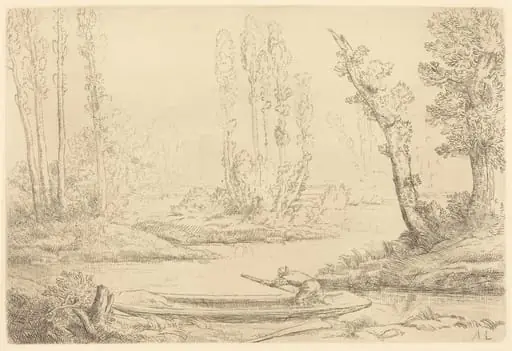 Banks of the Somme near Amiens (Bord de la Somme pres d'Amiens)
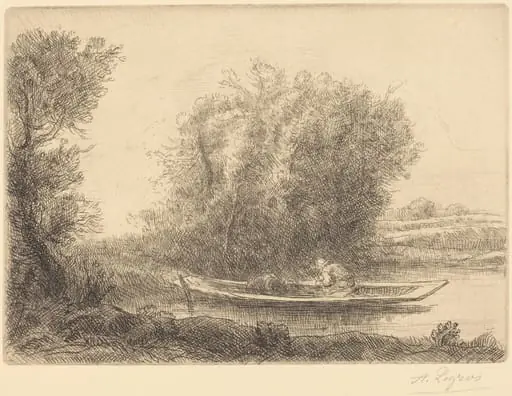 Bend in the River (Un coin de riviere)
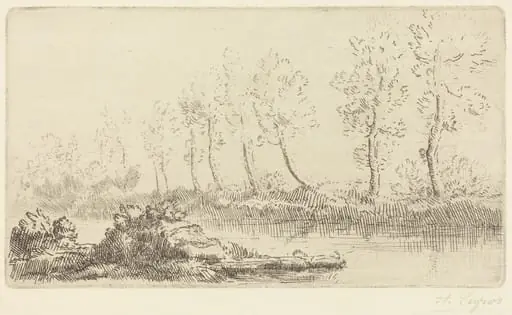 Banks of the Adour (Bord de l'Adour)
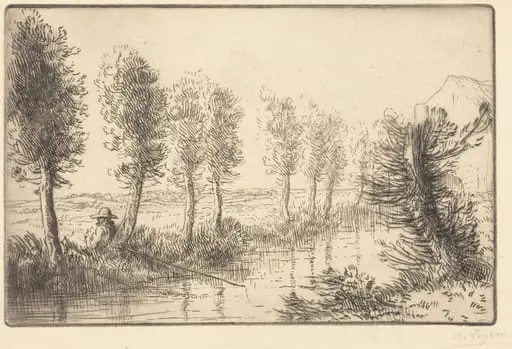 Near the Mill (Pres du moulin)
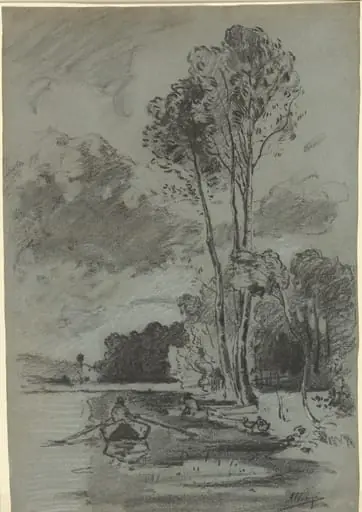 Landscape with Three Tall Trees
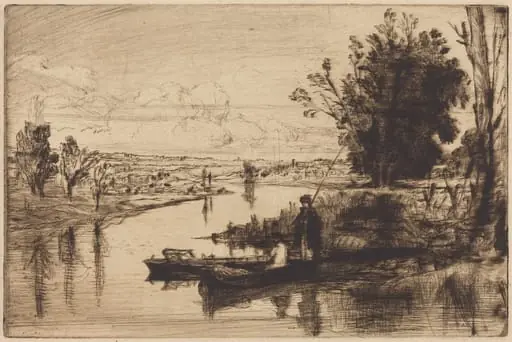 Thames Fishermen
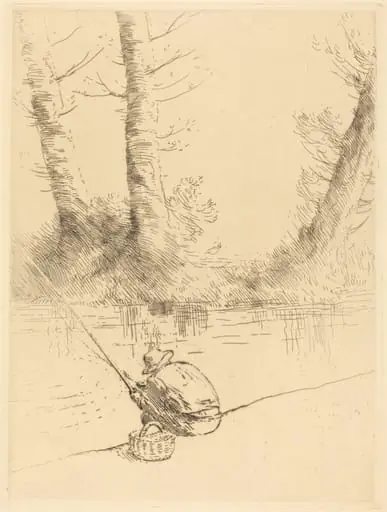 Angler (Le pecheur a la ligne)
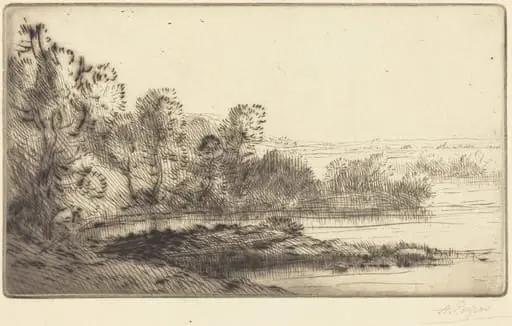 Along the Terne (Sur la terne)
 Man with a Punt, Figure to the Right (Pecheurs des truites)