Artwork
Berenice, 2nd plate
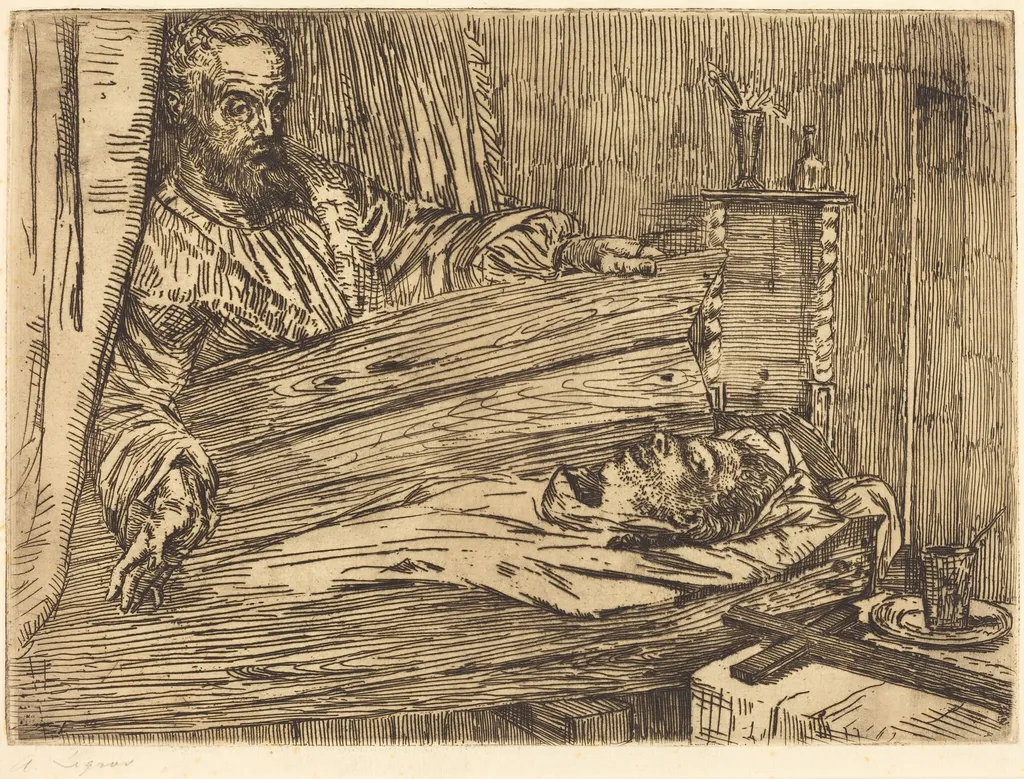
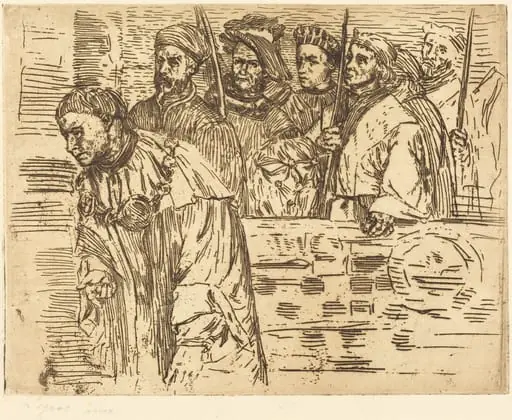
Berenice, 2nd plate is an ink print by the Romanticist artist Alphonse Legros. It dates from 1874 and is held in the collection of the National Gallery of Art.
About this work
Overview
A French-born artist who moved to Britain in 1863, Legros was instrumental in reinvigorating the practice of etching among British artists.
Berenice, 2nd plate is an etching by Alphonse Legros, produced in 1874 during his time in London. A French-born artist who moved to Britain in 1863, Legros was instrumental in reinvigorating the practice of etching among British artists. This work belongs to a series exploring the figure of Berenice, a historical and literary subject, and exemplifies his commitment to printmaking as a serious artistic medium.
Subject & Meaning
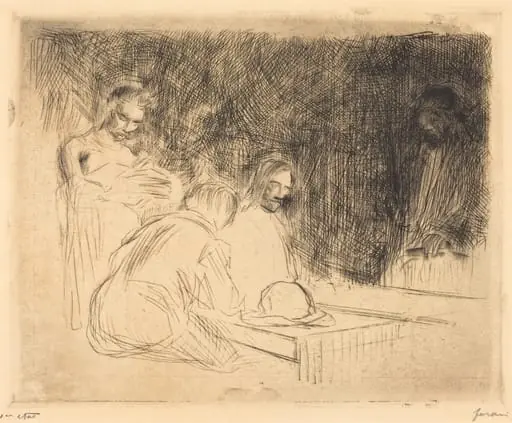
The image depicts a man seated at a table, holding a length of wood, his gaze lowered in quiet concentration. Though titled after Berenice, the figure is not a direct representation of the historical queen but rather an introspective study of labor and solitude. The somber mood and minimal setting suggest contemplation, possibly referencing themes of duty, isolation, or inner struggle, common in Legros’s humanist approach.
Technique & Style
Legros employed bold, incised lines and dense tonal contrasts typical of his etching technique. The dark, heavy shadows and sharp contours define the figure and cluttered table, creating a sense of weight and immediacy. The composition avoids decorative flourish, favoring structural clarity and emotional restraint. His handling of the plate emphasizes texture and volume, reflecting his training in both sculpture and drawing.
History & Provenance
Created in 1874, this etching was part of Legros’s active period in London, where he taught at the Slade School and influenced a generation of British printmakers. The work was likely produced for private circulation or exhibition, as was common among etchers of the time. Its survival in institutional collections attests to its recognition within late 19th-century print circles, though it remains less widely known than his paintings.
Context
Legros worked during a revival of interest in etching as an independent art form, distinct from reproductive prints. His engagement with literary and historical subjects aligned with broader European trends, yet his approach was grounded in observation rather than idealization. The quiet intensity of this image reflects a shift away from Romantic drama toward a more restrained, psychologically grounded realism.
Legacy
Though not widely exhibited today, Berenice, 2nd plate exemplifies Legros’s contribution to the British etching revival. His emphasis on direct, expressive line work and thematic seriousness influenced students at the Slade and helped reestablish etching as a vehicle for personal expression. The work remains a quiet but significant document of his artistic philosophy and technical mastery.
Artist & collection

Artist
Alphonse Legros (French pronunciation: ; 8 May 1837 – 8 December 1911) was a French, later British, painter, etcher, sculptor, and medallist.